Quick answer
Alamitos Heights homes date mostly from the 1930s to the 1950s, mixing raised foundations and slabs. Drywood termites in attics and trim are the most common termite call, followed by subterranean termites near damp, shaded soil. Being close to the lagoon and park means mosquitoes, roof rats and spiders are steady visitors. We match termite treatment to how far a colony has spread and handle yard pests with targeted outdoor work.
What the lagoon and the trees bring
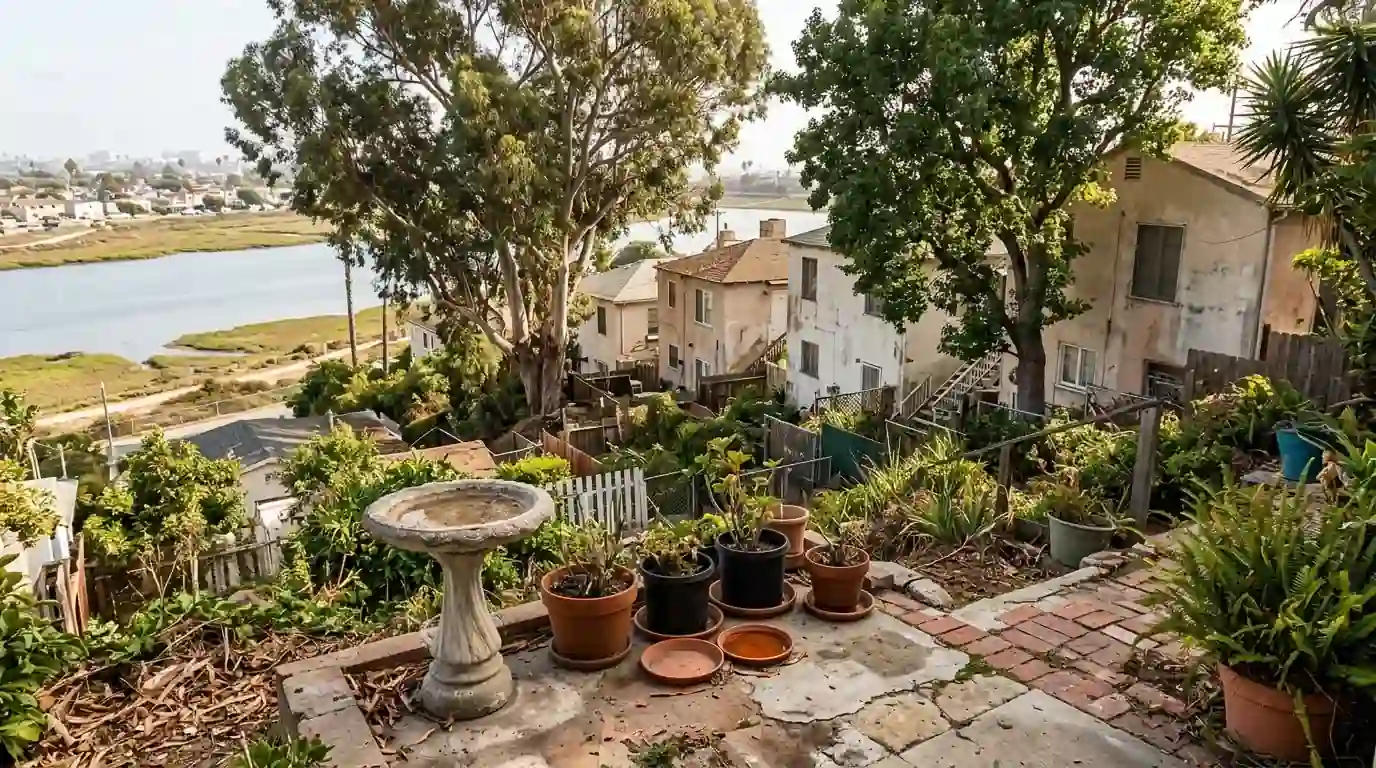
Colorado Lagoon is a tidal body of water connected to Alamitos Bay, and homes on the slope above it get morning moisture and shade from big trees. Recreation Park and the golf course add even more canopy. Roof rats thrive in that kind of cover, and many owners first hear them at night in late fall. We look for entry points along rooflines where limbs touch, and we seal gaps around vents and eaves after trapping.
Damp, shaded soil also favors western subterranean termites. Homes with raised floors and crawlspaces, or with planters and patios against the walls, show up with mud tubes more often than drier lots. A single shaded corner where the downspout drains can be enough.
Drywood colonies in homes from the 1930s to 1950s
Housing here ranges from Spanish Revival and Tudor cottages to postwar ranch homes and later remodels. Attic framing, exposed rafter tails, window frames and garage rafters are the usual drywood sites. Remodels sometimes trap old colonies in walls that were closed up without treatment, and the pellets only show up years later. When activity is limited to one window frame or a section of eave, spot treatment works. When it shows up in several rooms or the attic is widely affected, fumigation is the more complete option.
Garages on these lots deserve their own look. Many are original to the house, framed with lumber that was never painted inside and used for storage that sits against the walls for years. We move what we need to, check rafters and sill plates, and treat the garage either with the house or on its own. A homeowner who finds wings on the garage floor in September has likely found a drywood flight, and saving a few specimens makes the next step easier to decide.
Mosquitoes on lagoon-side blocks
Many people assume the lagoon breeds the mosquitoes that bite them in the backyard. In practice, the invasive Aedes mosquitoes that bite during the day breed in very small amounts of standing water: plant saucers, buckets, birdbaths, clogged gutters and toys left in the yard. Long Beach has its own vector control program through the city health department, and its advice matches ours: dump and scrub containers weekly.
We inspect yards for breeding spots, treat shaded resting areas in shrubs and ground cover, and point out containers that need attention. Treatment works best paired with that weekly routine.
Practical access notes
Streets in the Heights are mostly residential with reasonable parking, although some blocks near the park fill up on weekends. Lots vary in size and some are on a slope, which affects how tarps are draped and how equipment is moved. Planting along walls usually needs trimming before fumigation, and soil gets watered as part of prep. We cover these details during the inspection so the day goes smoothly.
Selling a home here usually means a termite report, and the lagoon side of the neighborhood often produces Section 2 notes about moisture and soil against siding. Fixing the drainage, pulling soil back from the stucco line and repairing a soft sill before listing can keep those items from turning into negotiation points later.
What we treat most in Alamitos Heights
Drywood termites
Common in attic framing, rafter tails and window frames of 1930s to 1950s cottages and ranch homes, including walls closed up during remodels.
Western subterranean termites
Favor damp, shaded soil near the lagoon slope, especially where downspouts drain against foundations.
Aedes mosquitoes
Breed in plant saucers, buckets and clogged gutters in shady yards and bite during daylight hours.
Roof rats
Nest in the heavy tree canopy near Recreation Park and reach attics along overhanging limbs.
Brown widow spiders
Build webs under patio furniture, in garage corners and along fence rails in shaded yards.