Quick answer
Norwalk is about sixteen miles from our Long Beach office but only a few minutes from our Downey headquarters on Florence Avenue. We treat subterranean termites with soil treatment and bait stations, tent or spot-treat drywood colonies in attic framing, and handle Argentine ants, spiders, roaches and rodents in the city's 1950s neighborhoods.
Getting to Norwalk from Downey
Most of our Norwalk visits start at our Downey headquarters, a short drive east on Firestone Boulevard or Imperial Highway. That keeps inspection times flexible and makes return visits, such as bait station checks or clearance after a fumigation, easy to fit into a normal day. The 5 and the 105 meet near the Norwalk Metro station, so even addresses on the far side of the city are quick to reach.
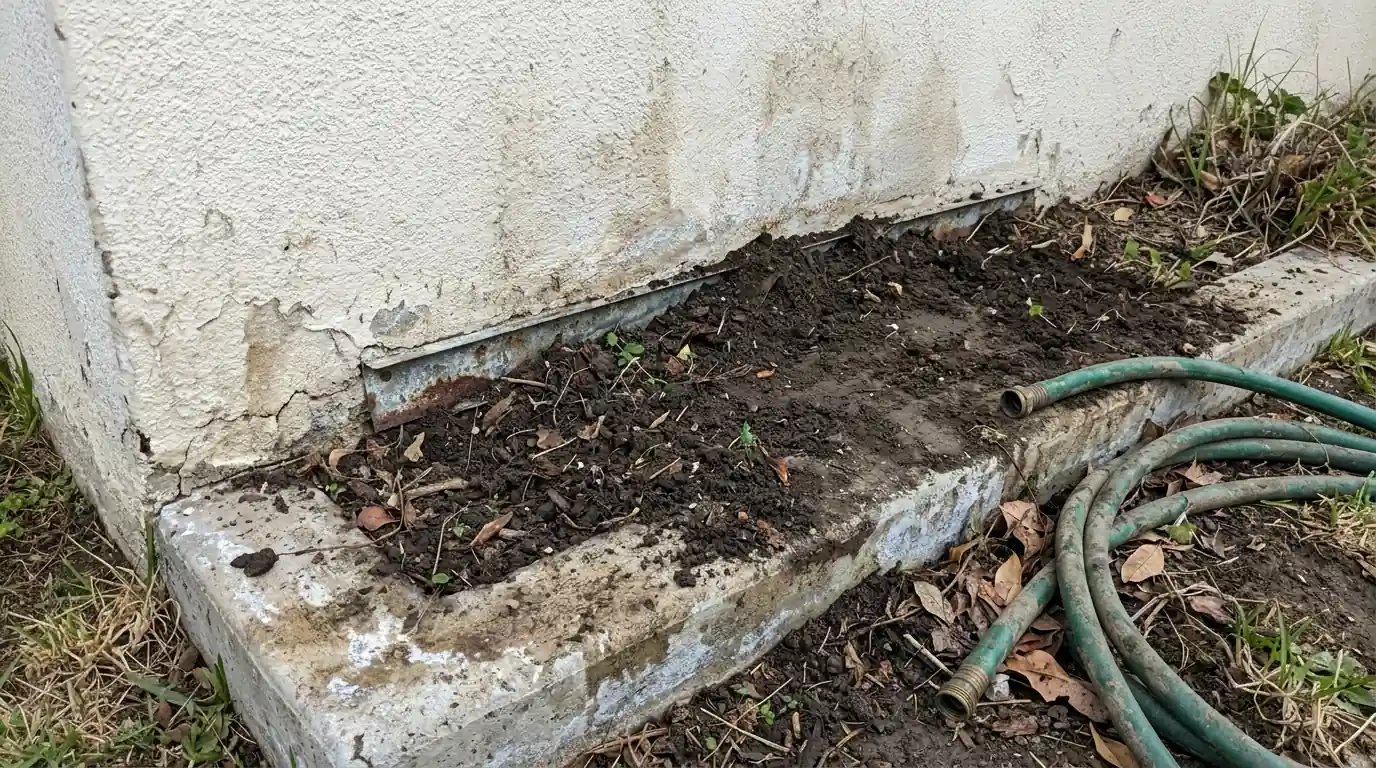
Slab foundations and the soil around them
Norwalk was dairy and farm country until the early 1950s, when developers built tract neighborhoods of single-story stucco homes on concrete slabs. A slab gives subterranean termites no crawlspace to cross in plain sight, so they work their way up through hidden gaps instead: expansion joints, cracks that open as the slab settles, the sleeve around a plumbing line, and the edge where stucco meets the ground.
Irrigation makes it easier for them. Lawns, planters and fruit trees watered on timers keep a band of damp soil right against the foundation, and a lot of Norwalk homes have flower beds or planters built higher than the weep screed at the base of the stucco. When soil sits above that line, termites can reach the framing behind the stucco without ever showing a mud tube outside.
Choosing between liquid treatment and baiting
Liquid treatment uses a non-repellent termiticide placed in the soil all around the foundation, by digging a shallow trench and rodding the product down, and by drilling through concrete patios or driveways where they meet the house. Termites passing through the treated soil pick it up and share it with the colony. It works quickly and is a good fit when tubes are visible or damage is active.
Bait stations go into the soil at intervals around the house. Termites find them while foraging, feed on the bait and carry it home. Baiting is slower but disrupts less of the yard, and the station checks double as ongoing monitoring. We explain both options with the costs for your specific house after the inspection.
Up in the attic: drywood colonies
Above the slab, Norwalk homes have wood-framed attics, fascia boards and rafter tails, and drywood termites are as common here as anywhere in the region. Look for small piles of six-sided pellets on window sills, the garage floor or the top of the water heater, and for winged swarmers indoors on hot afternoons in late summer and early fall.
When the colony is confined to one board, a localized treatment can work. When activity shows up in several spots, whole-house fumigation is usually the more reliable choice.
Other pests that keep Norwalk owners calling
Inland summer heat pushes Argentine ants indoors from July on, and their colonies are huge and interconnected, so one trail can come back after another is sprayed. Baits and perimeter treatment work better than repeated spraying. Black widow spiders like the garages, block walls and stored boxes common in these homes. Roof rats use backyard fruit trees, and around the busy commercial corridors German cockroaches are a steady concern for restaurants and apartments.
What we treat most in Norwalk
Western subterranean termites
Enter Norwalk slab homes at expansion joints, plumbing sleeves and soil piled above the stucco weep screed, often without visible tubes.
Drywood termites
Colonies in attic framing and rafter tails of 1950s tract homes, with pellets on sills and garage floors in late summer.
Argentine ants
Large linked colonies that move indoors during inland summer heat, best handled with baits and perimeter work.
Black widow spiders
Settle in garages, block walls, stacked boxes and patio furniture across the city.
Roof rats
Feed on backyard fruit trees and enter attics through gaps at the roofline and torn vent screens.