Quick answer
A Wrigley bungalow often has three ages of wood under one roof: the original house, a later addition and a newer porch or deck. Seams between them leave gaps, and wood porches near the soil draw subterranean termites and rot. Drywood termites work the attic and trim. Most Wrigley calls we take involve a home sale, a porch that feels soft, or pellets on a sill, and we treat and repair based on what the inspection shows.
Where additions meet the original house
Many Wrigley homes grew over time. A back bedroom was added in the 1950s, a family room in the 1970s, a laundry porch was closed in. Each addition was built with the materials and methods of its day, and the line where it ties into the original structure is often the weak point. Roofing seams leak, flashing fails, foundations differ in height, and soil collects against siding.
We look closely at those joins. A raised original floor next to a slab addition can leave an open gap that subterranean termites use. A roof tie-in that leaks keeps framing damp and invites decay. Drywood termites take advantage of cracked trim and unsealed seams to start new colonies. Sorting out which part of the house has which problem is the first job.
Soft porches and front steps
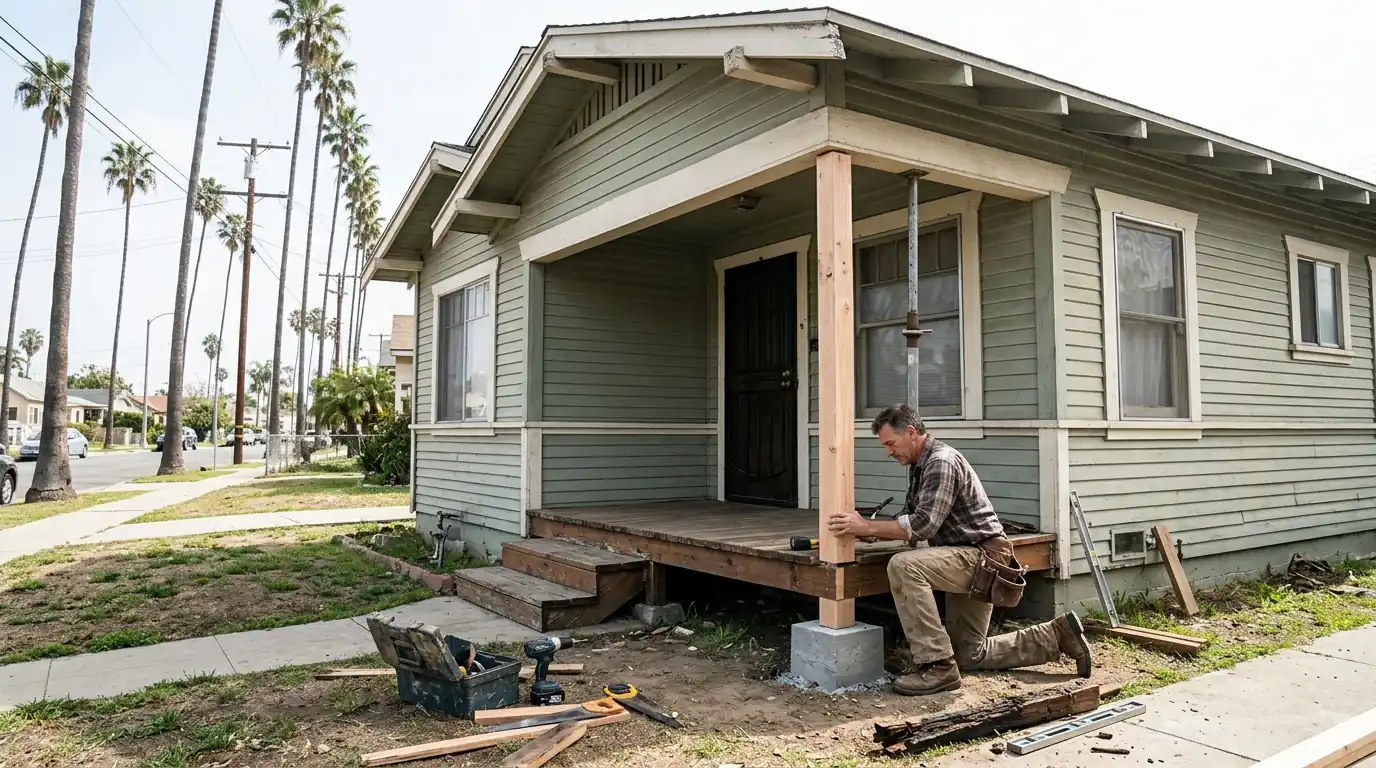
Wood front porches are part of the Wrigley look. Many sit low to the ground, with posts on concrete footings or sometimes directly on soil, and steps that have been patched for decades. Water from roofs, sprinklers and potted plants keeps them damp. We probe porch decking, joists and posts for decay and termite galleries and look for mud tubes on footings.
Repairs range from replacing a few deck boards and a post base to rebuilding steps or reframing a section of porch. Posts set on raised piers, clearance between wood and soil, and treated lumber where it fits the design all help the new work last. A porch that is repaired correctly often removes a Section 1 item and a Section 2 item from a termite report at the same time.
Termite reports when a Wrigley home sells
Homes in Wrigley sell steadily, and almost every sale involves a California wood destroying pest inspection report. It covers the house, garage and other structures, sorting findings into Section 1, which is active infestation or damage, and Section 2, which is conditions likely to lead to trouble. Lenders often want Section 1 items cleared before closing, and a completion notice documents that.
Ordering the report before listing gives sellers time to compare treatment options, such as tenting versus local work, and to finish repairs without an escrow deadline. Buyers benefit too, because they know exactly what was found.
Life along PCH and Willow
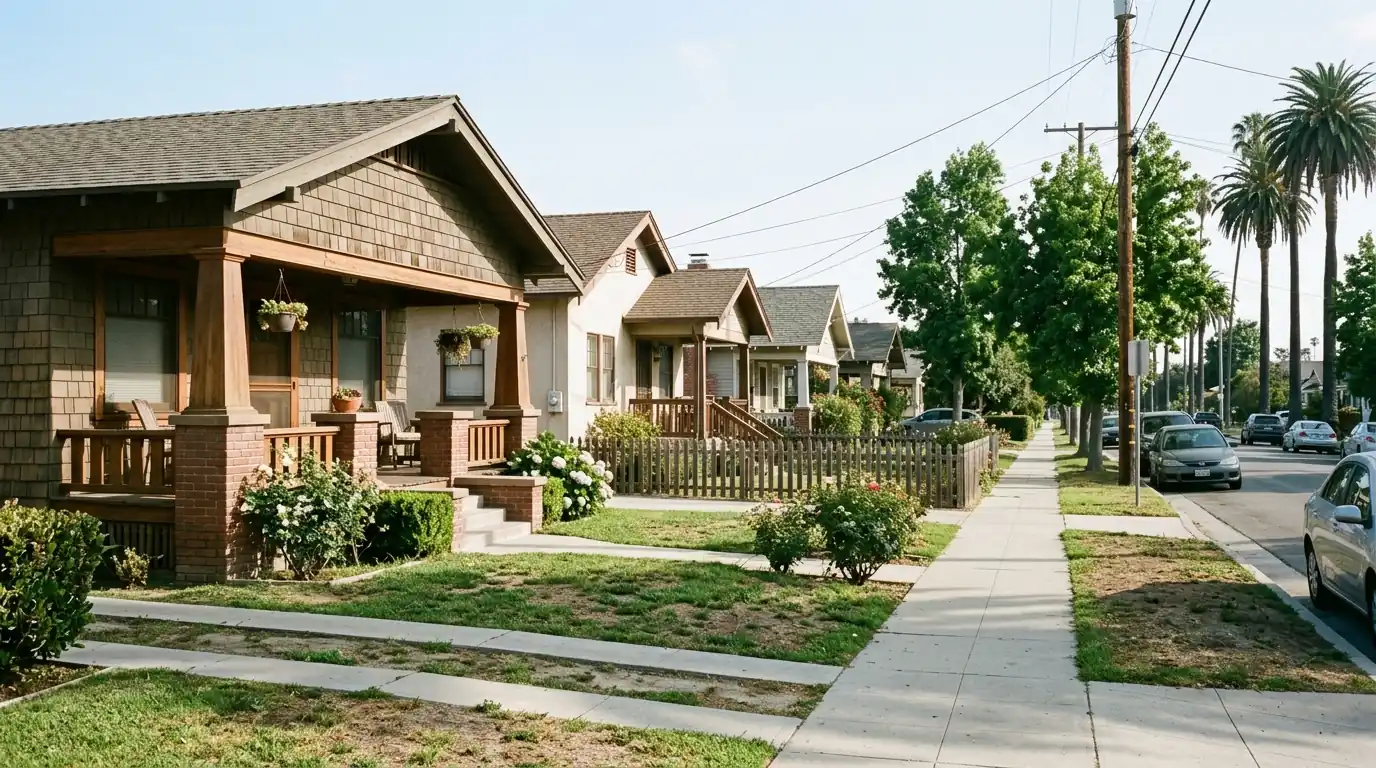
Commercial strips along the boulevards bring American cockroaches up from sewers and alleys, and roof rats live in palms and backyard fruit trees. Street parking is generally available, and many lots have alley access, which helps us stage equipment for fumigation without blocking driveways.
Garages in Wrigley often open onto the alley and were built at the same time as the house, with bare rafters and a wood sill plate sitting on an old slab. We check them as closely as the home. Pellets on a car hood or on boxes stored on shelves usually mean a drywood colony in the rafters above, and those can often be treated locally if the house itself is clean.
What we treat most in Wrigley
Western subterranean termites
Reach wood porches, low steps and the gap where a slab addition meets a raised original floor.
Drywood termites
Settle in attic framing, porch ceilings and cracked trim on 1920s to 1940s bungalows and their additions.
Wood decay fungus
Softens porch decking, post bases and framing under leaking roof tie-ins between old and new sections.
American cockroaches
Come up from sewers and alleys near the commercial corridors and wander into kitchens and bathrooms at night.
Roof rats
Nest in palms and fruit trees and use alley wires and fences to reach rooflines.