Quick answer
El Dorado Park Estates homes are mostly 1950s and 1960s ranch houses on larger lots near the park and river. Drywood termites colonize attics and eaves, and subterranean termites enter through slab joints and planters. Gophers from the park edges tear up lawns. We inspect and treat termites by type and extent, from spot work to tenting, and trap gophers in their tunnels while recommending barriers for planting beds.
Living next to a big park has a pest side
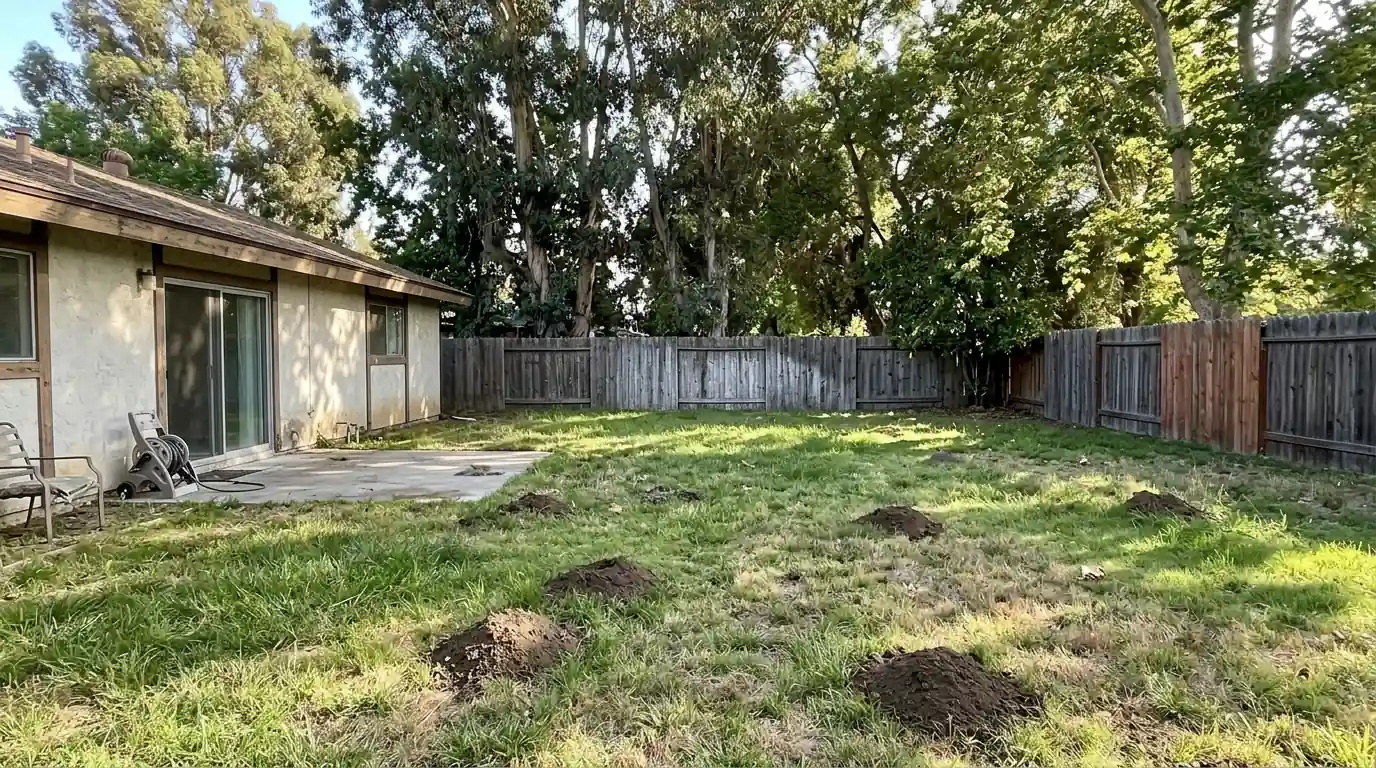
El Dorado Park is one of the largest green spaces in Long Beach, with lakes, groves of trees and a nature center, and the San Gabriel River runs along its eastern edge. Open ground like that supports gophers, ground squirrels, rabbits, raccoons and plenty of insects. Homes along the edge of the Estates feel it first. Gophers push under fences into backyard lawns and vegetable beds, leaving fresh fan-shaped mounds overnight.
We trap gophers below ground in active tunnels, which is effective and keeps bait out of reach of pets and wildlife. For raised beds and new plantings, wire mesh under the soil keeps them out over the long term. Fixing irrigation that overwaters lawns also helps, because soft, damp soil is easier to tunnel.
Ranch houses with bigger lots and longer eaves
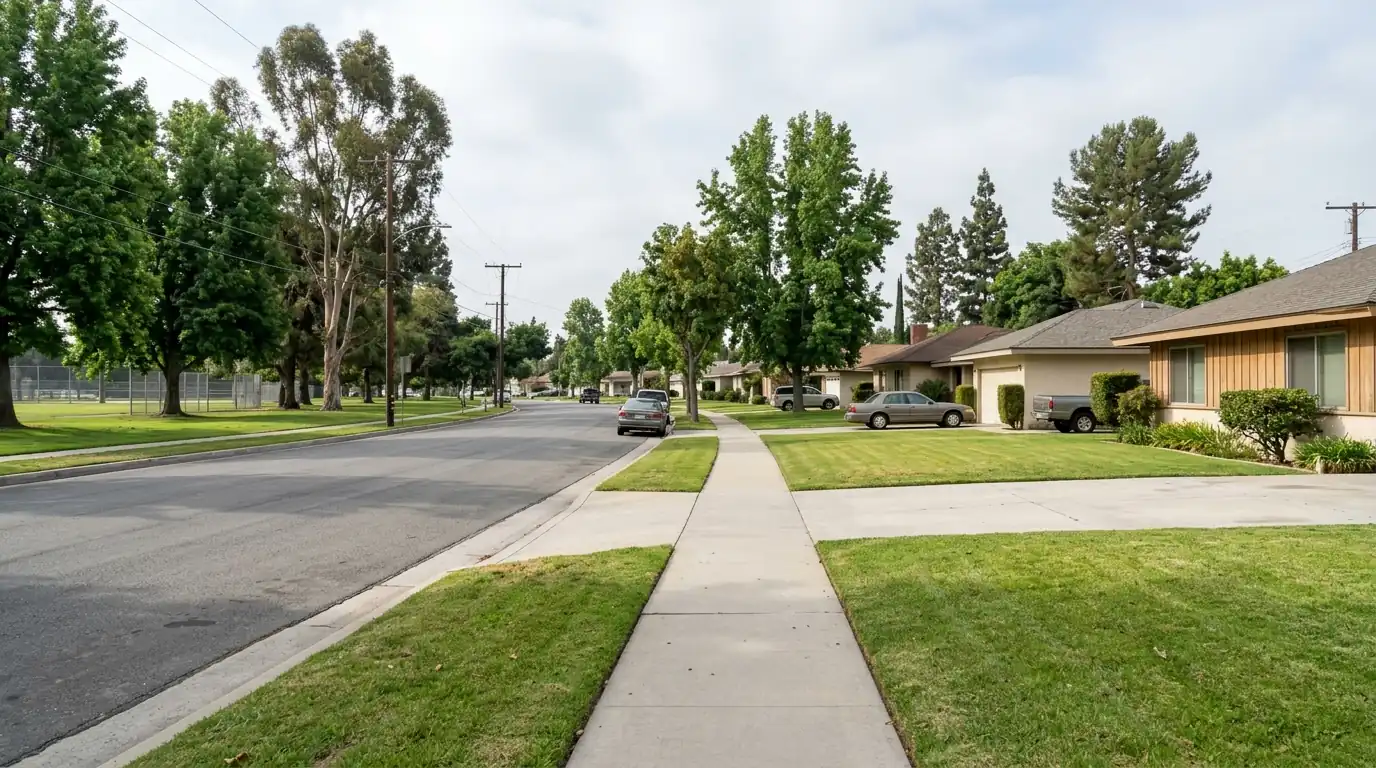
Homes here are typically one story, with wide, overhanging eaves, wood fascia and attics framed with dimensional lumber. Many have been remodeled with new rooms, vaulted ceilings or patio covers attached to the house. Drywood termites find their way into exposed rafter tails, patio cover beams and the fascia on sunny faces. Larger lots usually make tenting straightforward: there is room to drape tarps, our crew can park in front, and neighbors are not right up against the walls.
When pellets appear in one patio beam or one window frame and nothing else, local treatment makes sense. When they appear across the attic, in walls and in the garage, fumigation reaches everything at once.
Subterranean termites at slabs and planters
Most homes in the Estates sit on concrete slabs. Western subterranean termites reach the wood through cracks, expansion joints and gaps around plumbing, and often where raised planters, brick borders or soil-filled beds sit against the stucco. A planter that holds wet soil above the slab line puts termites within reach of the sill plate. Treating soil around the foundation and moving or lowering planters solves most of these cases.
Swarms in spring are a common first sign. Winged termites come out near a slab crack, sliding door or bathroom, often on a warm afternoon after rain.
Mosquitoes and wasps near open water
Standing water in backyard saucers, fountains and pet bowls breeds invasive day-biting Aedes mosquitoes, which are a summer nuisance across Long Beach. Paper wasps build under eaves and patio covers. We treat yard breeding spots and nests and point out water that should be dumped weekly.
Yellowjackets deserve a separate word. Late in summer they nest in old gopher and squirrel holes in lawns, and mowing over an entrance can set off a defensive swarm. If you notice a steady stream of wasps flying into the ground at one spot, keep children and pets away and call before mowing that part of the yard. We treat the nest at the entrance and come back to confirm it is dead.
What we treat most in El Dorado Park Estates
Gophers
Move from El Dorado Park and river edges into backyard lawns and garden beds, leaving fresh mounds and chewed roots.
Drywood termites
Colonize wide eaves, patio cover beams and attic rafters of 1950s and 1960s ranch homes.
Western subterranean termites
Enter slab homes through joints and around raised planters that hold damp soil against stucco.
Ground squirrels
Dig burrows along slopes and fence lines on lots near open parkland.
Aedes mosquitoes
Breed in small containers around patios and bite during the day through summer and fall.