Quick answer
Artesia calls split between businesses and homes. Restaurants and markets on Pioneer Boulevard deal with German cockroaches, flies, rodents and pantry insects in bulk flour, rice and spice stock. Nearby postwar houses on slabs see drywood termites in attics and garages, Argentine ants and roof rats. We set up recurring service with records for food businesses and plan termite treatment for homes after an attic and exterior inspection.
Pest service for kitchens on Pioneer Boulevard
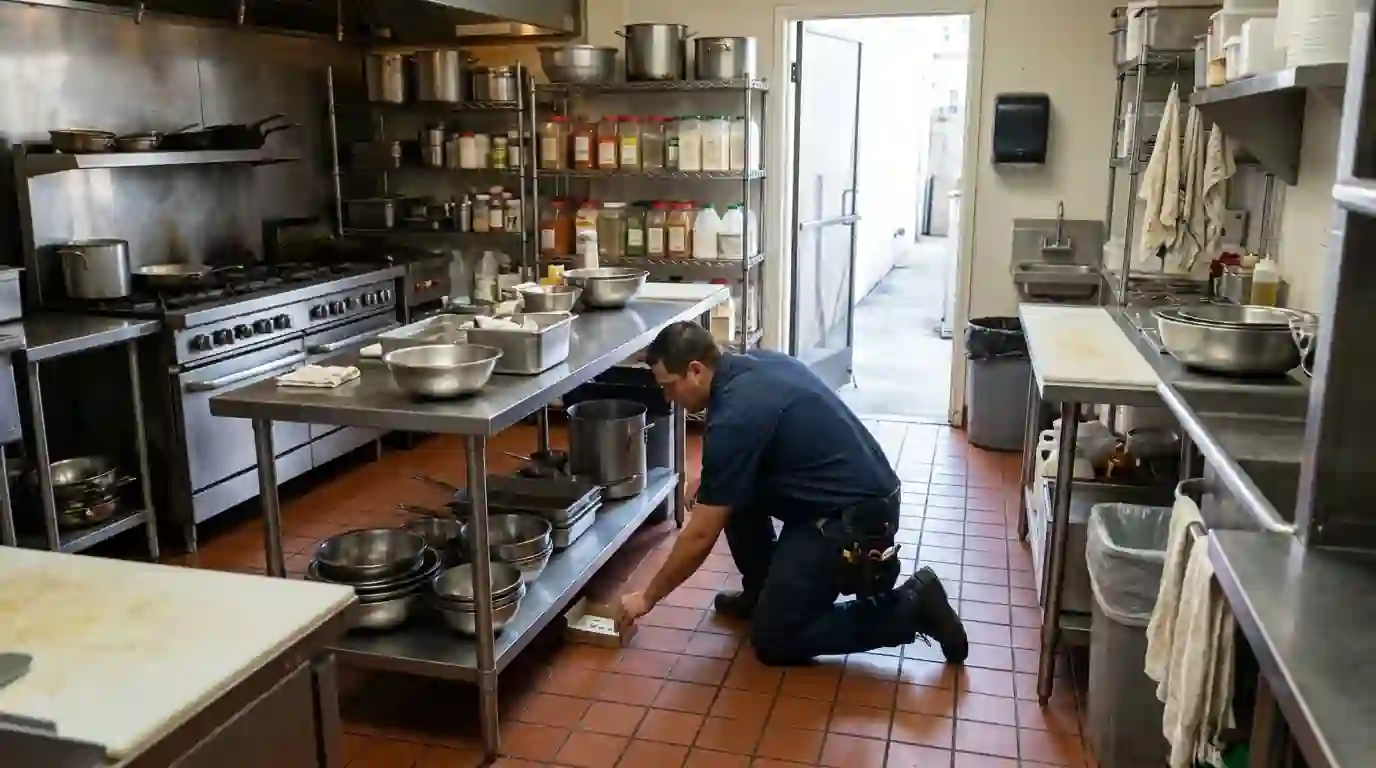
The Pioneer Boulevard corridor is known for South Asian restaurants, sweet shops, sari and jewelry stores and grocers, many of them in older one-story commercial buildings with shared walls and rear alleys. Kitchens run long hours, stoves and fryers stay warm, and deliveries arrive in cardboard all week. Those are ideal conditions for German cockroaches, which shelter in motor housings, under prep tables and inside wall voids behind sinks.
Our commercial service focuses on monitoring and targeted treatment rather than broad spraying in food areas. We place glue monitors to track activity, use baits and growth regulators in cracks and equipment voids, and note sanitation and structural issues for the manager, such as gaps around pipes or a leaking dish machine. Each visit is recorded so the business has a history on hand when the county health inspector comes by.
Spices, flour and rice: keeping pantry pests out of stock
Grocers and restaurants that buy dry goods in bulk sometimes find Indian meal moths fluttering near the shelves, or tiny beetles such as cigarette beetles and drugstore beetles in spices, chili powder, lentils and flour. Homes see the same insects when a bag from a large sack ends up in a kitchen cabinet. These pests arrive in product more often than they move in from outside.
The answer is mostly inspection and rotation. We help find the source package, recommend sealed containers and first-in, first-out stocking, and use pheromone traps to monitor moths. For homes, emptying and vacuuming the affected cabinet and discarding infested goods solves most cases; insecticides play a small role near food.
Drywood termites in the houses behind the shops
Artesia was dairy country before it filled with tract houses in the 1950s, and much of that housing remains: single-story homes on slabs with wood-framed attics, attached or detached garages and stucco walls. Drywood termites show up as pellets on garage floors and under attic access hatches. Detached garages and older patio covers often have more activity than the house, because their wood is exposed and seldom repainted.
When the colonies are limited, we drill and inject the affected boards. When they turn up in many parts of the house and garage, tenting is the dependable fix. Small lots and close neighbors here mean we plan tarp placement and the SoCalGas shutoff ahead of time.
Flies, rodents and the alleys behind the corridor
Trash enclosures behind restaurants attract house flies and blow flies in warm weather, and they draw Norway rats that burrow along alley edges and roof rats that run along utility lines. We recommend tight-fitting dumpster lids, regular pressure washing of enclosures and door sweeps on rear doors. Exterior bait stations and interior traps handle rodents, while fly lights and drain cleaning cut down flies indoors.
What we treat most in Artesia
German cockroaches
Hiding in warm equipment and wall voids in restaurant kitchens along Pioneer Boulevard and in kitchens of nearby homes.
Indian meal moths and stored product beetles
Showing up in bulk flour, rice, lentils and spices in markets and home pantries, usually arriving in the product itself.
Drywood termites
Pellets in detached garages, patio covers and attics of 1950s homes on small lots near the commercial strip.
Norway rats
Burrowing along alleys and trash enclosures behind restaurants and markets, entering through gaps under rear doors.
House flies
Breeding in dumpster residue and floor drains behind food businesses, especially on hot summer days.