Quick answer
On a Bluff Heights inspection the crawlspace usually matters most. Raised floors over bare soil let western subterranean termites build mud tubes up piers and stem walls into the mudsill, while broken vent screens let in rats and moisture. Mission Revival homes add a second weak point: flat roofs behind parapets that trap water and rot the framing. We treat the soil or install bait, fix screens and rotted wood, and handle any drywood found upstairs separately.
Reading the dirt under an early 1900s floor
Many houses in this historic district north of Bluff Park date to the first decades of the last century, before slab foundations were common. The floor sits on joists and girders, resting on short posts and a perimeter stem wall, with a foot or two of crawl height above the soil. Our inspector goes in through the access panel with a light and a probe and works around the whole footprint, checking every post base, the mudsill and the subfloor under bathrooms and the kitchen.
What we look for: mud tubes the width of a pencil climbing concrete, posts set straight on dirt rather than on a pier block, scrap lumber left behind from old remodels, and wet soil under a leaking drain. Any of those can let subterranean termites into the framing. We also note grade problems outside, such as planting beds built up against the siding over the decades, because they hide entry points that never show from the crawlspace.
Mission Revival parapets and the rot behind them
Mixed among the Craftsman bungalows are stucco houses in the Mission Revival style, with shaped parapets around a flat or low-pitched roof. Those parapets are handsome and hard on wood. Water collects at the base, scuppers clog with leaves, and the roofing at the inside corner cracks after years of sun. Moisture then soaks into the framing behind the stucco, feeding wood decay fungus and, in very wet spots, dampwood termites.
From the outside the only clue may be a stain, bubbling paint on the ceiling below, or stucco that sounds hollow when tapped. We open suspect areas, cut out decayed wood, replace it with sound lumber and coordinate with the roofer so the leak is closed before the wall goes back together.
Treating subterranean termites on an old raised floor
For an active subterranean colony we usually trench along the stem wall inside the crawlspace and outside along the foundation, then apply a non-repellent liquid termiticide to the soil. Where a porch slab or concrete walk butts against the house, we drill through it and treat below. If the yard is a mature garden that the owner wants left undisturbed, bait stations set in the soil around the house are the alternative, checked on a regular schedule.
Once the colony is handled, we repair what it ate. That might mean replacing a section of mudsill, sistering a damaged joist or setting a post on a new pier block. Bare crawlspace lumber that has never been painted can take a borate spray while we are under the house.
Vent screens, rats and a dry crawlspace
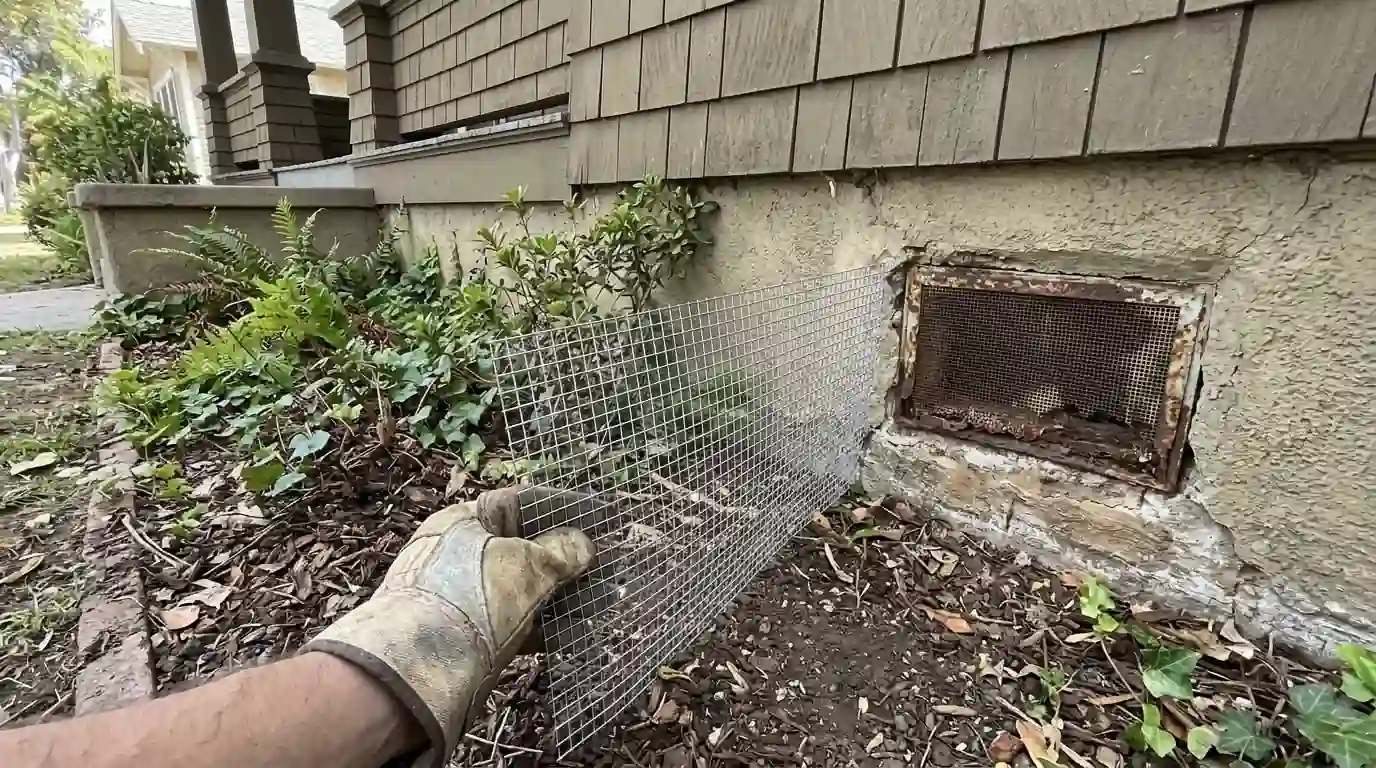
Original foundation vents on these homes were covered with fine metal screen that rusts through after decades of ocean air. Once it fails, roof rats and Norway rats move in under the floor, cats and opossums follow, and leaves and moisture blow in. Replacing screens with heavier galvanized mesh is a modest job that does a lot: it keeps animals out and lets air move so the soil and framing stay drier. We check every vent during the inspection and note which ones need it.
What we treat most in Bluff Heights
Western subterranean termites
Spring swarms rising from crawlspace soil or porch cracks, and mud tubes along stem walls under homes built in the first decades of the 1900s.
Wood decay fungus
Brown, cube-cracked framing behind Mission Revival parapets and under bathrooms, wherever water has sat against old lumber for years.
Norway rats
Burrowing under raised floors through rusted foundation vent screens and nesting in insulation or debris left in the crawlspace.
Drywood termites
Pellets under porch beams and rafter tails on Craftsman homes, usually swarming on a warm late summer afternoon.
Black widow spiders
Webs in crawl hatches, foundation vents and stored lumber, so we wear gloves and inspect corners before reaching in.