Quick answer
In La Mirada the usual mix is drywood termites in attic framing and fascia of postwar tract houses on slabs, subterranean termites at slab cracks and patio joints, and Argentine ants that surge into kitchens during hot spells. Large parks and greenbelts add yellowjackets, wasps and gophers. We inspect the attic and garage, treat drywood locally or by tenting, use soil treatment or bait for subterranean colonies, and bait ant trails at the source.
Tract homes built on former groves
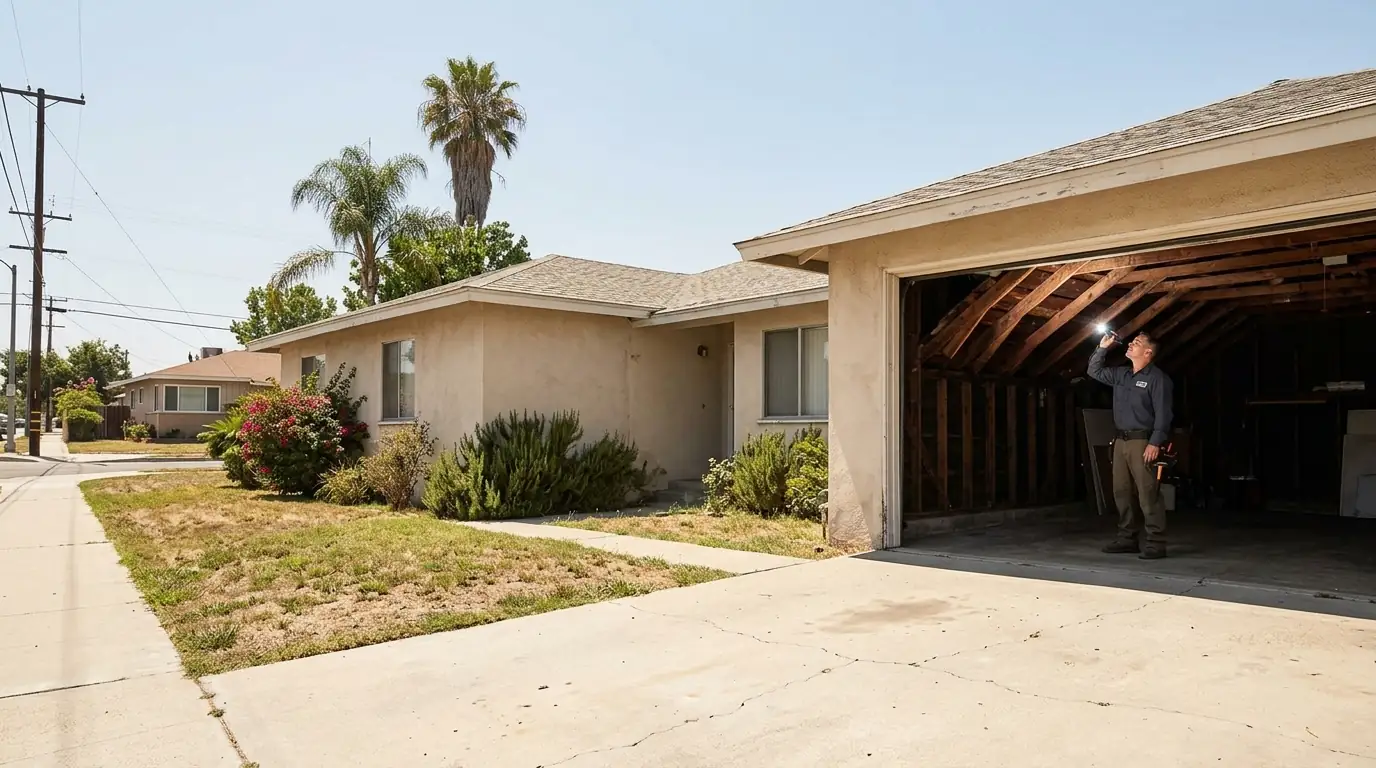
Most La Mirada neighborhoods went up in a short burst during the 1950s and early 1960s, when developers turned groves into blocks of single-story ranch homes on concrete slabs. Floor plans repeat from street to street: low-pitched roofs, wood-framed attics, stucco walls, wooden fascia and an attached two-car garage. Many have been updated with new roofing and windows, but the original framing is still in place.
That repeating construction helps us. We know where drywood colonies usually start in these plans: the fascia at the garage door header, the gable end vents, the open rafters over the garage, and the window trim on the side that gets afternoon sun. We check those first, then the rest of the attic. A clean garage ceiling does not rule out termites above the living spaces, so we look at both.
Inland heat and drywood swarm timing
La Mirada is far enough from the coast that summers run noticeably hotter than in Long Beach, with fewer foggy mornings. Drywood termites respond to that warmth. Swarms often appear on sunny afternoons from late summer into the fall, sometimes indoors, around windows and light fixtures. Subterranean swarms come earlier, on warm days after spring rain.
If you find winged insects or discarded wings on a windowsill, keep a few in a sealed bag. Drywood swarmers, subterranean swarmers and flying ants look similar at a glance but call for different treatments, and a sample helps us plan the right one.
Argentine ants around slab homes
Argentine ants build huge, interconnected colonies across whole blocks, nesting under concrete, in irrigated beds and beneath pavers. When the weather turns hot and dry, they move indoors looking for water, entering through slab cracks, around plumbing and under baseboards. Spraying the trail inside only pushes them to another entry.
We place slow-acting baits along trails outdoors and at entry points so foragers carry them back to the nests, and treat the foundation edge with a non-repellent product. Trimming shrubs off the walls and fixing leaky irrigation lines near the house cuts down how often they return.
Parks, greenbelts and stinging insects
La Mirada Regional Park, Creek Park and the many smaller parks give the city a lot of open turf and trees, and some neighborhoods back onto them. Yellowjackets nest in ground holes and wall voids in late summer, paper wasps hang combs under eaves and patio covers, and honey bee swarms settle in trees or in wall cavities in spring. Africanized bees are present in Southern California, so a colony should never be disturbed. We remove wasp nests, treat yellowjackets at the entrance and handle bees with care, including sealing the void afterward so new swarms do not move in.
What we treat most in La Mirada
Drywood termites
Pellets dropping from garage rafters, fascia boards and gable vents in 1950s and 1960s tract homes, with swarms in the warm late summer.
Argentine ants
Pouring into kitchens and bathrooms through slab cracks and plumbing gaps when inland heat dries out the yard.
Western subterranean termites
Mud tubes along slab edges, expansion joints and where a newer patio slab meets the original foundation.
Yellowjackets
Ground nests in lawns near the parks and greenbelts and in wall voids, most aggressive from August through October.
Pocket gophers
Mounds in front lawns and parkway strips, especially on streets that back onto open park turf.