Quick answer
Homes in Carroll Park are a century old, sit on raised foundations and still wear much of their original wood siding and trim. A California termite report for escrow will usually note drywood activity in attics or trim, earth-to-wood contact, and some decay where water has collected. We write the report, explain which items are Section 1 and Section 2, then treat and repair so a completion notice can be issued before close.
What a pre-sale inspection covers on a century-old house
In California, a wood destroying pests and organisms report records what an inspector can see in accessible areas: the attic, the crawlspace, the exterior, garages, porches and decks. On a Carroll Park house that means crawling the full raised floor, checking every rafter tail and window frame, and looking closely at the original lap or shingle siding where it meets soil, steps and planting beds.
Findings fall into groups. Section 1 items are active infestations, infections or damage, such as live drywood termites in a window casing or rotted wood at a back porch. Section 2 items are conditions that are likely to lead to trouble later, such as soil touching siding or a plumbing drip under the bathroom. Areas we cannot reach, such as a sealed wall or a finished ceiling, can be listed for further inspection. Lenders and buyers commonly ask for Section 1 work to be finished before escrow closes.
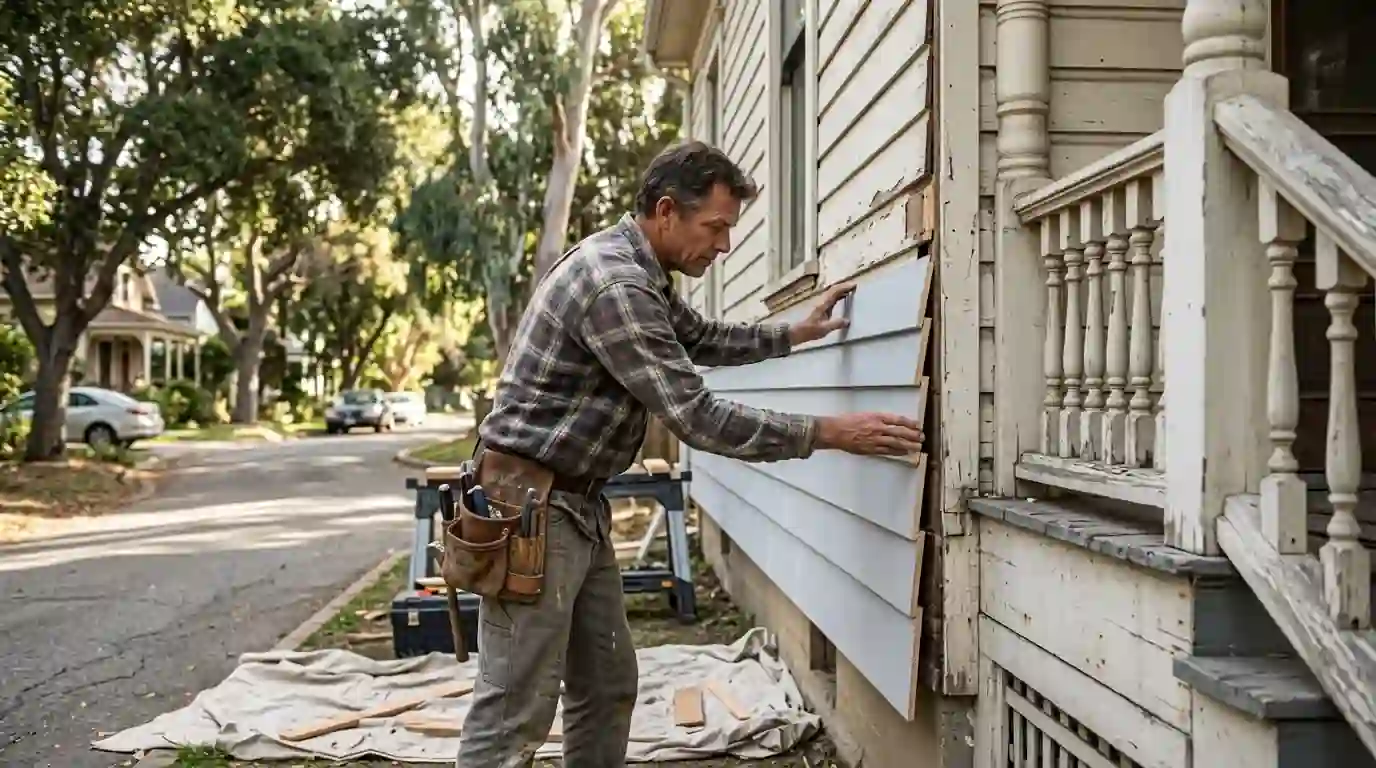
Matching original siding and trim during repairs
Owners here care about keeping the character of a historic house, and the district's review guidelines generally favor repair over wholesale replacement of original features. Termite and rot repairs on these homes therefore lean toward the surgical: cutting out only the damaged section of a siding board, splicing in new wood with the same reveal and profile, rebuilding the lower end of a porch column, or patching a window sill rather than removing the frame.
Old-growth lumber in these houses is denser than much of what is sold today, so we choose stock and fasteners with that in mind and leave the new wood primed and ready for paint. If a damaged piece is too far gone to save, we photograph it before removal so the owner has a record.
The curving streets and what they mean for tenting
The district's lanes bend and narrow, homes sit close to one another, and street trees overhang many roofs. When a report calls for fumigation, we visit to plan where trucks and tarps can stage, how close the tarps can come to neighboring houses, and which limbs need trimming. Owners selling a home often want tenting done between listing and close, so we work backward from the escrow date to allow two to three days under tarps, gas shutoff and relight, and clearance testing.
Common items on Carroll Park termite reports
From home to home the same findings tend to repeat. Drywood pellets in the attic and below window frames on the sunny sides. Subterranean mud tubes at a pier or along the stem wall where the soil is damp. Decay at the bottom of porch posts, at stair treads and where downspouts empty against the foundation. Rusted or missing crawlspace vent screens. Firewood or old lumber stacked against the house. Each one has a straightforward fix, and clearing the Section 2 items, though optional for the sale, often prevents the next owner's Section 1.
What we treat most in Carroll Park
Drywood termites
Pellets below window casings, in attic framing and on porch beams of homes built in the 1910s and 1920s, a frequent Section 1 finding.
Western subterranean termites
Mud tubes climbing crawlspace piers and stem walls where garden soil stays damp along the raised foundations.
Wood decay fungus
Soft, brown and cracked wood at porch post bases, stair treads and siding near downspouts, listed on reports as infection.
Roof rats
Traveling the street tree canopy over the curving lanes and nesting in attics through worn eave vents.
Silverfish
Found in old attics, closets and bookshelves where paper, glue and humidity from the marine layer give them food and cover.