
Quick answer
Termite fumigation, or tenting, covers the whole house with tarps and fills it with sulfuryl fluoride gas, which penetrates every piece of wood and kills drywood termite colonies wherever they are, including inside walls. The house is vacated for about two to three days, then aired out and tested before re-entry. It does not leave residual protection, so later inspections matter.
Drywood termites can live in several separate colonies in one house, each hidden inside a rafter, a window header or a wall stud. Local treatment works when those colonies are few and reachable. When they are spread through the structure, or tucked into walls and low attic corners nobody can get to, fumigation is the method that reaches all of them at once.
The idea is simple even if the logistics are not. The house is sealed under tarps, the gas is released and held at a measured concentration for the time needed to penetrate the wood, and then the tarps come off and the house is aired out. Nobody re-enters until a clearance test confirms the gas inside is down to the allowed level. Most of your effort goes into the prep the day before.
Why the gas reaches what drills and sprays cannot
Sulfuryl fluoride is a gas, not a liquid or foam. Under a sealed tarp, it moves through air spaces, wall cavities, attic insulation and the wood itself, reaching galleries deep inside studs and beams. Drywood termites breathe it in and die wherever they are in the colony, including the reproductives at the center that local treatments sometimes miss. Because the dose is calculated for the volume of the structure and the time under the tarp, the whole house receives a consistent treatment.
That reach is what makes fumigation predictable. A local treatment depends on finding each colony and drilling into the right gallery. Fumigation does not need to know where the colonies are. It treats every board under the tarp at the same time. The tradeoff is that the gas leaves nothing behind once it clears, so it does not stop a new swarm from starting a colony next season.
When tenting is the right answer instead of spot treatment
Activity in several separate rooms
Pellets or kick-out holes in the attic, garage and living spaces at once usually mean multiple colonies. Treating each spot leaves the ones nobody has found.
Colonies inside walls or ceilings
Pellets falling from a ceiling seam or a closed soffit point to galleries we cannot drill into without opening finished surfaces.
Low attics and blocked framing
Shallow-pitch roofs and packed insulation make many rafters unreachable. Gas goes where a drill cannot.
Repeat local treatment has not held
If new pellets keep appearing in different spots after local treatment, the infestation is probably larger than it looked.
An escrow report calls for clearance
When a sale needs Section 1 drywood items cleared and activity is widespread, fumigation is often the clearest path to a completion notice.
Infested furniture or built-ins
Antique dressers, wood cabinets and built-in bookcases can host colonies. Fumigation treats them in place along with the structure.
From the prep call to the day you move back in
Inspection and fumigation plan
We confirm drywood activity, measure the structure, note roof type, chimneys and attached fences, and plan how the tarps will seal the house.
Prep instructions and gas shutoff
You receive a written prep list. We arrange for SoCalGas to shut off gas service where the home has it, and to relight pilots after clearance.
Tarps sealed and warning posted
The crew covers the house with tarps, seals the bottom edges with sand snakes, installs secondary locks on entry doors and posts warning signs.
Warning agent and fumigant released
A warning agent is introduced first, then sulfuryl fluoride is released and its concentration monitored so it stays in the house long enough to penetrate the wood.
Aeration and tarp removal
After the exposure period, the tarps come off and the house is ventilated with fans and open windows to clear the gas.
Clearance test before re-entry
Air inside each living space is tested with a detection device. Re-entry is allowed only when readings are at or below the allowed level.
Secondary locks removed
Once clearance is confirmed, we remove the secondary locks and signs, and you can return, unpack and have gas service restored.
Typical fumigation pricing for Long Beach homes
Fumigation is priced by the cubic volume of the structure and how difficult it is to seal. A single-story slab ranch is simpler than a two-story Craftsman with dormers, chimneys and a detached garage that needs its own tarp. These ranges cover common Long Beach housing.
| Typical job | Typical range |
|---|---|
| Single-story home up to about 1,400 square feet | $1,385 to $2,460Simple roof line, slab or raised foundation, attached garage under the same tarp. |
| Single-story home 1,400 to 2,400 square feet | $2,185 to $3,640Larger footprint or a more complex roof with several gables or a chimney. |
| Two-story home or complex roof | $3,285 to $5,860Extra height, dormers, steep pitches or tile roofs that need extra protection. |
| Detached garage or accessory unit | $685 to $1,560A separate structure tented on the same visit as the main house. |
What moves the price
- Cubic volume of the home, including attic space and attached garages
- Roof type, since tile, slate and steep roofs take more care to cover
- Number of separate structures that need their own tarps
- Tight lots and close neighbors that affect tarp access and handling
- Chimneys, solar panels, satellite dishes and roof equipment
- Fences, trellises or patio covers attached to the house
The numbers above reflect typical Long Beach tenting jobs and are not a quote; we set your price after measuring and inspecting the house. Compare more jobs in the treatment price guide.
Getting the house ready the day before
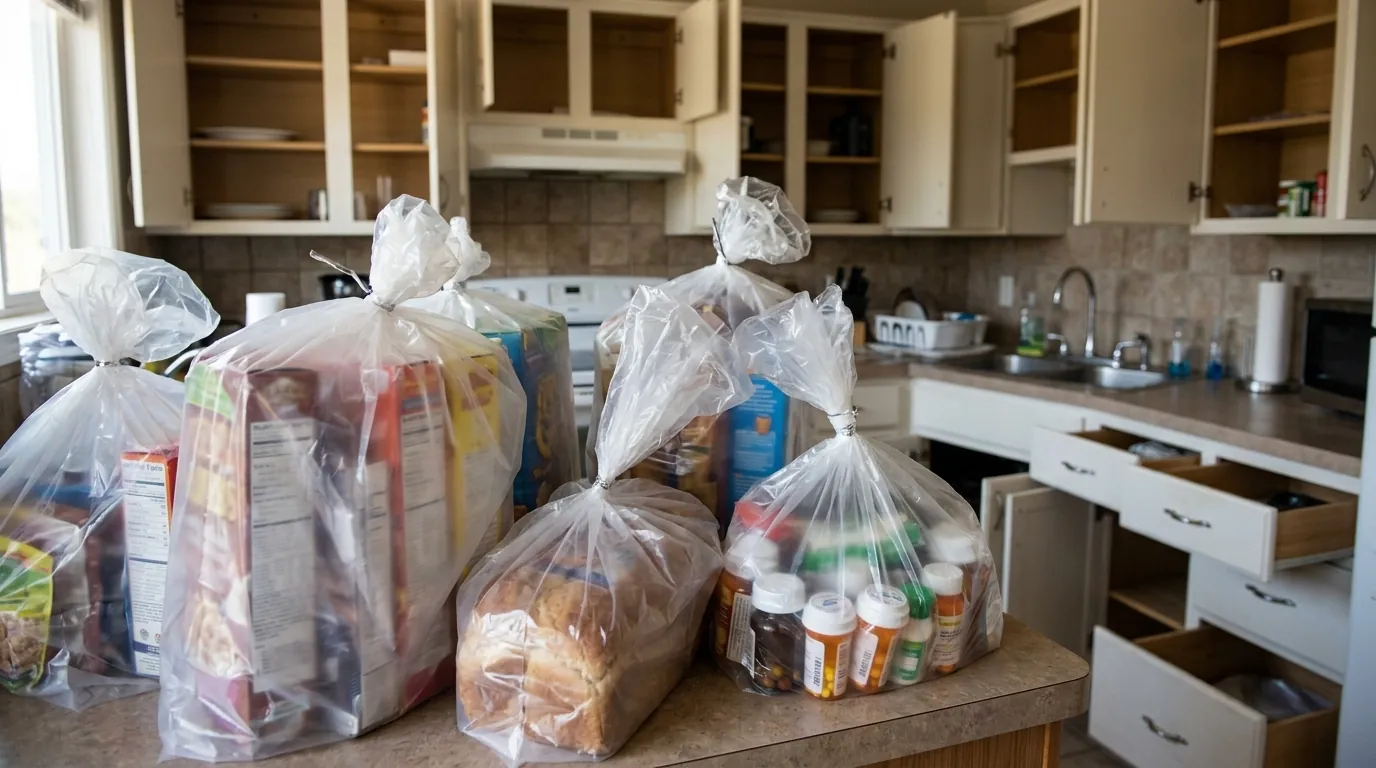
Prep takes most of a day for a typical household. Food, medicine and pet food that stays inside must be sealed in special fumigation bags or removed. Anything already factory sealed in glass or metal can usually stay as is, but opened packages, the refrigerator and freezer contents and anything in paper or plastic boxes need bagging or removal. People, pets and houseplants must leave, and that includes fish tanks.
Outside, water the soil around the foundation the day before so the tarps seal better, and trim back plants that touch the walls. Gardens and shrubs near the house can be damaged when tarps are pulled over them, so moving pots and trimming branches protects them. Open interior doors, cabinets and drawers so the gas circulates freely. Our written checklist covers each step in order. If you have a safe or locked cabinet, leave it open or tell us so we can plan around it.
Fumigation compared with heat and local treatment
Heat treatment also treats the whole structure, by raising wood temperature high enough to kill drywood termites, and it lets people return the same day. It struggles in houses with dense framing, insulated walls or heat-sensitive belongings, and it may not reach every board evenly. Local treatment, such as orange oil injection, is the least disruptive but only treats what it can reach.
We recommend fumigation when activity is widespread, hidden or in areas heat would struggle to penetrate evenly. When the inspection shows one or two well-defined colonies in reachable framing, a local treatment is usually the better fit and saves you the move out. We explain which category your house falls into after the inspection. Cost matters too: a local treatment for two small colonies usually costs less than a tent, while chasing many colonies spot by spot can end up costing more.
After the tarps come off
When clearance is confirmed, you can move back in, unseal your bags, restock the kitchen and have the gas relit. Some people notice a faint smell from the warning agent for a short while, which fades with ventilation. There is no residue to clean off surfaces from the fumigant itself. Opening windows for a few extra hours on the first day is a reasonable step if you want more fresh air.
Dead termites do not disappear. You may still see pellets falling out of old galleries for weeks or months, especially when vibration from doors or wind shakes them loose. Clean them up and watch whether new piles appear. If you see fresh pellets in a new location after several months, call so we can look. Many homeowners pair fumigation with a protection plan for the years after, since a cleared house can still be reinfested by next season's swarm.
Tenting on Long Beach lots, from Naples to Lakewood Village
Lot size and spacing shape how a fumigation day goes here. In Naples and along the Belmont Shore alleys, houses sit close together, sometimes only a few feet from the neighbor, and tarps have to be handled carefully between walls, fences and canal-side railings. We plan those jobs with extra attention to where tarps drape and how the crew moves around tight side yards.
Older homes in Bluff Park and Belmont Heights often have chimneys, dormers and tall wood siding, which add tarp work and sometimes need extra sealing at the base. Slab ranch homes in Lakewood Village and Los Altos are more straightforward to tarp but often have detached garages or patio covers tied into the house. Late summer and early fall are busy months for fumigation because that is when drywood termites swarm and people notice new pellets. Booking a few weeks ahead helps if you want a particular date.
Fumigation prep checklist
- Seal food, medicine and pet food in fumigation bags or remove it from the house
- Remove people, pets, fish and houseplants from the house
- Open all interior doors, cabinets, closets and drawers
- Water the soil around the foundation the day before
- Trim plants and move potted plants away from the walls
- Leave keys for every exterior door, gate and garage
Tenting soon? Use the fumigation prep checklist.
Where we do termite fumigation
- Downtown Long Beach 90802
- North Long Beach 90805
- Belmont Shore 90803
- Bixby Knolls 90807
- California Heights 90807
- Los Altos 90815
- Naples 90803
- Rose Park 90804
- Wrigley 90806
- Signal Hill 90755
- Lakewood 90712
- Downey 90240
- Torrance 90503
- Carson 90745
- Compton 90220
- Norwalk 90650
- Bellflower 90706
- Garden Grove 92840
- Westminster 92683
- Seal Beach 90740
- Cerritos 90703
- Whittier 90601
Not listed? We cover all of Long Beach and the nearby cities; call and we will confirm your street.
Termite Fumigation questions
How long will we be out of the house during a fumigation?
Most homes are vacated for about two to three days, from the morning the tarps go up until the clearance test confirms it is safe to return. Plan to stay with family, at a hotel or elsewhere for two nights. Larger or more complex structures sometimes take a little longer to aerate.
Do mattresses and clothing need to be removed or bagged for tenting?
Mattresses with waterproof covers that are sealed on all sides should have the covers removed or opened before tenting. Clothing, bedding and furniture can stay. The fumigant moves through fabrics and airs out with the house, leaving no residue to wash out.
Will fumigation also take care of ants, roaches or spiders?
The fumigant targets the pests listed on its label, including drywood termites and some other wood pests. It may kill some other insects present at the time, but it leaves no protection afterward, so new ants or roaches can come back right away. General pest control is a separate service.
What happens to plants growing close to the house during tenting?
Tarps sit on the ground along the walls, so plants directly against the house can be crushed or exposed. Watering the soil, trimming plants back and moving pots away before the tarps go up gives your landscaping the best chance. Trees and shrubs further out are usually fine.
Is it normal to see pellets after a house has been fumigated?
Yes. Old pellets stay in galleries and fall out when doors close, wind shakes the house or the wood dries. Clean up what you see and watch the same spot. If fresh piles keep appearing in a new location several months later, call us to inspect.
Related services
Termite Inspection
A termite inspection is a visual and probing check of every accessible part of the house: attic framing, eaves, window and door.
DetailsLocalized Drywood Termite Treatment
Localized drywood termite treatment targets specific colonies instead of the whole structure.
DetailsTermite Heat Treatment
Heat treatment raises the temperature inside the wood of a house, or of one section of it, until drywood termites die, usually.
DetailsTermite Protection Plan
A termite protection plan is a recurring agreement where we inspect your home on a set schedule, usually once or twice a.
DetailsReal Estate Termite Inspection
A real estate termite inspection produces the state-format California wood destroying pests inspection report.
Details