Quick answer
Wood-boring beetles lay eggs in or on wood, and the larvae tunnel inside for one to several years before chewing round exit holes. Treatment depends on the beetle and where it is: borate soaked into bare wood for crawlspace and attic framing, moisture control for beetles that need damp wood, and fumigation when infested wood is widespread or finished. We first confirm the holes are active, since many beetles emerge once and never return.
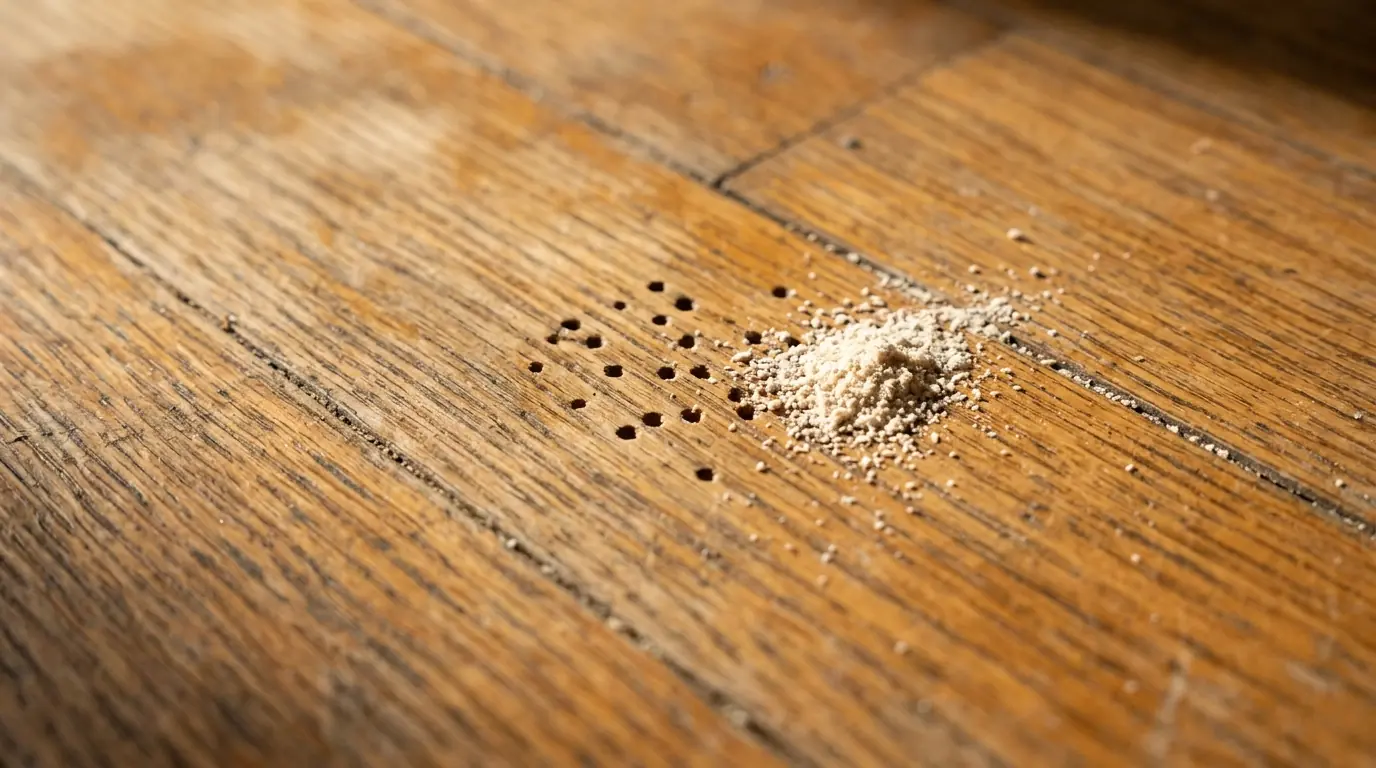
Unlike termites, wood-boring beetles do most of their damage as larvae hidden inside the wood, and you usually only see the adults' exit holes and the powdery frass they push out. Holes are round, not the oval kick-out holes drywood termites make, and the frass feels like flour or fine talc instead of the hard six-sided pellets termites produce. That difference is one of the first things we check when someone calls about pellets.
In Southern California homes, the beetles we find most are powderpost beetles in hardwood flooring, trim and furniture, and anobiid beetles, sometimes called furniture or deathwatch beetles, in damp crawlspace framing. We also see flat-headed borers emerging from new lumber, which looks alarming but often needs no treatment. Getting the species right saves you from paying for a treatment you do not need.
The beetles we find in Southern California homes
Several beetle families bore into wood, and their habits differ enough that the name matters.
- Lyctid powderpost beetles: attack hardwoods such as oak flooring, ash trim and bamboo; flour-fine frass and very small holes; can reinfest dry hardwood
- Anobiid beetles: attack softwood and hardwood with higher moisture, often in crawlspaces; gritty frass with pellets; slow, multi-year life cycle
- Bostrichid beetles: larger holes, often in hardwood lumber or imported bamboo and wicker items; usually limited to the infested piece
- Flat-headed borers: oval holes in new softwood framing; they came in with the lumber and generally do not reinfest seasoned wood
Signs of beetles in your wood, and whether they are still active
Small round exit holes
Holes about the size of a pinhead to a pencil lead, perfectly round, scattered across the surface of floors, beams, trim or furniture.
Flour-fine powder piles
Light, powdery frass collects below the holes. Powderpost frass feels like flour; anobiid frass has tiny pellets mixed in and feels gritty.
Fresh holes in old finish
Bright, clean holes through dark finish or paint are newer than holes that have darkened or filled with dust and wax.
Powder reappearing after cleaning
If you sweep or vacuum and new frass returns in a few weeks, larvae are still feeding inside.
Damp crawlspace framing
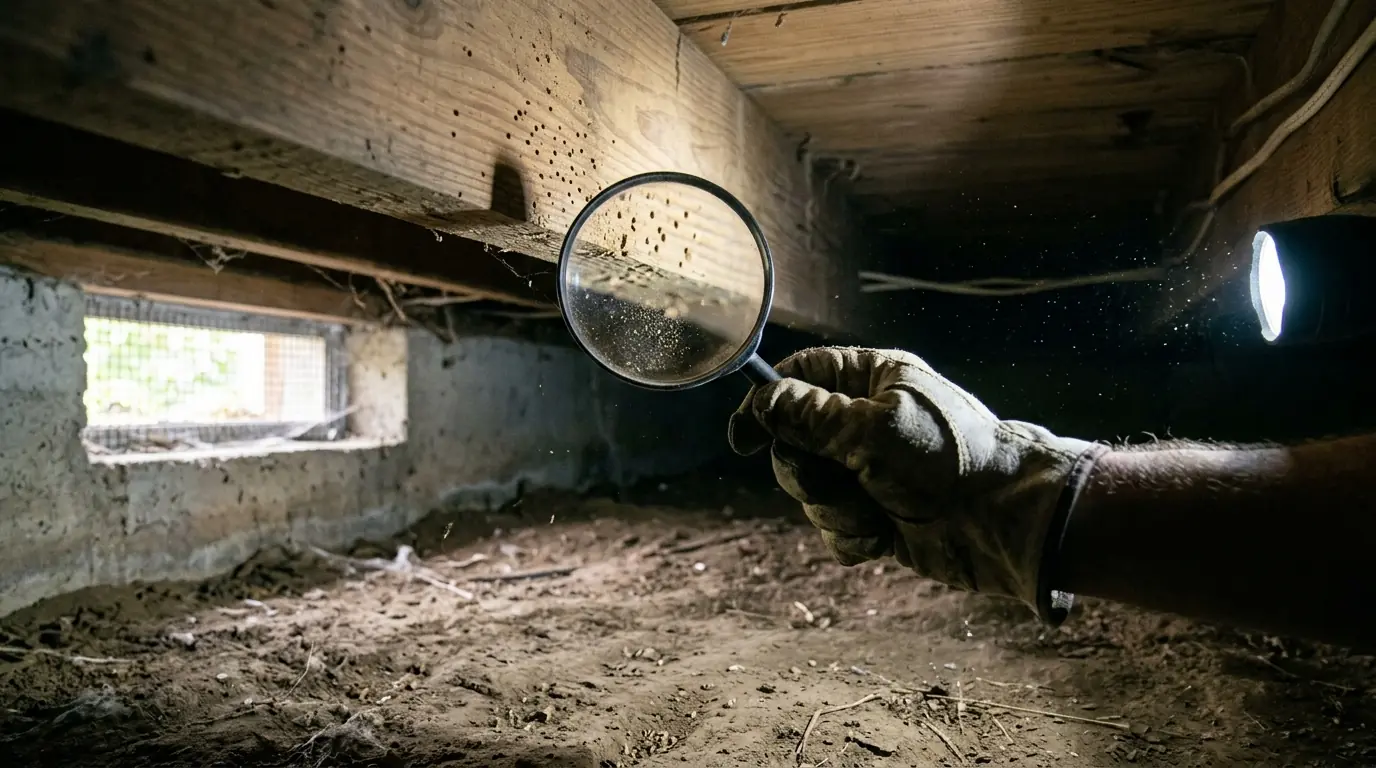
Anobiid beetles need wood above normal moisture, so musty crawlspaces with poor vents often show holes in joists and subfloor.
Oval holes in new lumber
Larger oval holes in recently built framing often come from flat-headed borers that came in with the lumber and will not reinfest dry wood.
How we identify and treat wood-boring beetles
Identify the beetle
We examine exit hole size and shape, frass texture, the wood species and its moisture, and any adult beetles found. Each points to a different family and treatment.
Test for activity
Holes can be decades old. We look for fresh frass and bright holes, and may mark or seal existing holes so new ones are obvious at a recheck.
Check moisture levels
A moisture meter reading on crawlspace and attic framing tells us whether a damp-loving beetle can keep going, and whether ventilation or a vapor barrier is needed.
Treat exposed bare wood
For unfinished framing, we spray borate, which soaks into the wood and kills larvae as they feed and discourages new egg laying on treated surfaces.
Plan for finished wood
Painted, sealed or varnished floors and furniture block borate. Widespread infestation in finished wood may call for fumigation, while a single piece can be removed or treated separately.
Recheck in the next season
Adults emerge mostly in spring and summer, so a follow-up inspection after that season confirms whether new holes have appeared.
Typical costs for beetle treatment
Many beetle calls end with an inspection only, because the holes turn out to be old or from a borer that cannot reinfest. When treatment is needed, cost follows square footage and whether the wood is bare or finished.
| Typical job | Typical range |
|---|---|
| Inspection and identification | $125 to $245Exit hole and frass assessment, moisture readings and a written recommendation |
| Borate on crawlspace framing | $585 to $1,690Spray applied to bare joists, sills and subfloor in a typical crawlspace |
| Borate on attic framing | $465 to $1,385Exposed rafters and ceiling joists, priced by attic area and access |
| Whole-structure fumigation | $1,585 to $4,280For widespread infestation in finished floors, trim and built-ins |
What moves the price
- Which beetle is present and whether it can reinfest dry wood
- Whether infested wood is bare framing or painted and finished
- Square footage of crawlspace, attic or flooring involved
- Moisture correction such as vents or a vapor barrier
- Access height and clearance in crawlspaces and attics
These are typical ranges, not a quote, and the inspection sets the price once the beetle and its location are confirmed. Compare more jobs in the treatment price guide.
Why beetle frass is easy to confuse with termite pellets
We get many calls from people who found powder on a floor or windowsill and assumed termites. The texture tells the story. Drywood termite pellets are hard, six-sided grains about the size of a sesame seed or smaller, and they roll when you push them with a fingertip. They pile up under oval kick-out holes. Powderpost frass is soft and fine, like flour or baby powder, and smears instead of rolling. Anobiid frass sits between the two, with tiny bun-shaped pellets mixed in powder.
The holes help too. Termites push pellets out of small openings they seal again, so you rarely see a clean open hole. Beetle exit holes stay open and are perfectly round. If you are not sure, save a sample in a small bag and keep it for the inspection. It takes us only a moment to tell them apart with a hand lens.
Antique furniture, bamboo and imported wood
A surprising number of beetle problems start with an object, not the house. Antique dressers, carved chests, wicker baskets, bamboo blinds and imported hardwood furniture can carry larvae that emerge months or years later. If you see fresh holes and powder in one piece, isolate it from wood floors and other furniture until it is assessed.
Small pieces can sometimes be treated on their own rather than treating the whole house. Larger infestations in finished floors and built-in cabinetry are where whole-structure fumigation comes in, since fumigant gas penetrates finished wood that borate cannot reach. Before buying antiques at estate sales or swap meets, look underneath and inside drawers for bright holes and powder, and walk away from pieces that show both.
Where beetles show up in Long Beach housing
The raised-foundation homes of Belmont Heights, Rose Park, California Heights and Wrigley are where anobiid beetles do best. Many of these crawlspaces have bare soil, limited venting and decades-old fir framing that picks up moisture from the ground and the marine air. When we find small round holes and gritty frass on joists, the fix often includes improving crawlspace ventilation or adding a vapor barrier along with borate.
Powderpost beetles turn up in the oak and maple floors of older homes in Bixby Knolls and Los Cerritos, and in homes where reclaimed or imported hardwood flooring was installed during a remodel. In The Plaza, the exposed post-and-beam framing of Cliff May Ranchos sometimes shows beetle holes alongside drywood termite activity, so we check both. Downtown and in Alamitos Beach, we see beetle activity mostly in furniture and bamboo items rather than in condo framing.
Where we do wood-boring beetle treatment
- Downtown Long Beach 90802
- North Long Beach 90805
- Belmont Shore 90803
- Bixby Knolls 90807
- California Heights 90807
- Los Altos 90815
- Naples 90803
- Rose Park 90804
- Wrigley 90806
- Signal Hill 90755
- Lakewood 90712
- Downey 90240
- Torrance 90503
- Carson 90745
- Compton 90220
- Norwalk 90650
- Bellflower 90706
- Garden Grove 92840
- Westminster 92683
- Seal Beach 90740
- Cerritos 90703
- Whittier 90601
Not listed? We cover all of Long Beach and the nearby cities; call and we will confirm your street.
Wood-Boring Beetle Treatment questions
Are old beetle holes in my floor a reason to treat?
Not by themselves. Many holes in older homes are decades old and the beetles that made them are long gone. We look for bright, clean holes and fresh powder to judge activity. If there is doubt, we can mark existing holes and recheck after the next emergence season before recommending treatment.
Will beetles spread from an antique dresser to my house?
Powderpost beetles from an infested hardwood piece can lay eggs in nearby unfinished hardwood, so it is wise to move the piece away from wood floors and other furniture until it is assessed. Finished, sealed surfaces are less attractive to egg-laying adults, which prefer bare wood pores and cracks.
Does borate work on painted or varnished wood?
No. Borate has to soak into bare wood to work, and paint, varnish and most sealers block it. For finished floors, trim or cabinetry with active beetles, options include fumigation, removing the affected piece or, for small areas, sanding to bare wood before treatment.
How long do wood-boring beetle larvae live inside wood?
Depending on the species and moisture level, larvae can feed for one to five years or more before emerging as adults. That long hidden stage is why holes may appear long after a piece of furniture or lumber came into the house, and why a follow-up check is part of the plan.
Can a crawlspace vapor barrier help with beetles?
Yes, for anobiid beetles especially. They need wood with higher moisture content, and covering bare soil with a vapor barrier plus clear vents lets the framing dry. Drier wood slows or stops their development, and it also helps with decay fungi and dampwood termites.
Related services
Borate Wood Treatment
Borate treatment applies a water-based solution of boron salts, such as Bora-Care or Tim-bor, to bare unpainted wood.
DetailsTermite Fumigation
Termite fumigation, or tenting, covers the whole house with tarps and fills it with sulfuryl fluoride gas, which penetrates every piece of.
DetailsTermite Inspection
A termite inspection is a visual and probing check of every accessible part of the house: attic framing, eaves, window and door.
Details