Quick answer
Lynwood homes on raised foundations often show subterranean termite mud tubes on piers and stem walls, damaged mudsills and joists, rusted crawlspace vent screens and rats under the floor. Drywood termites add pellets in attics, porches and garages. We inspect the crawlspace and attic, treat the soil or install bait for subterranean colonies, repair damaged framing, replace screens, and treat drywood locally or by tenting depending on how far it has spread.
What lives under a Lynwood floor
Between the 105 and the 710, many Lynwood streets are lined with small bungalows and postwar homes built with a perimeter concrete stem wall, wooden posts on pier blocks and a short crawlspace. After seventy to a hundred years, several things have usually changed down there. Soil has crept up against the framing outside, plumbing has been rerouted, old pier blocks have shifted and debris from remodels has piled on the dirt.
Western subterranean termites take advantage of all of it. They tunnel up from the soil through mud tubes on concrete, into the mudsill, posts and floor joists. Damage follows the grain in layers and is often packed with soil. We crawl the entire space with a light and probe, sound the framing, and note every tube, every soft board and every place where wood touches earth.
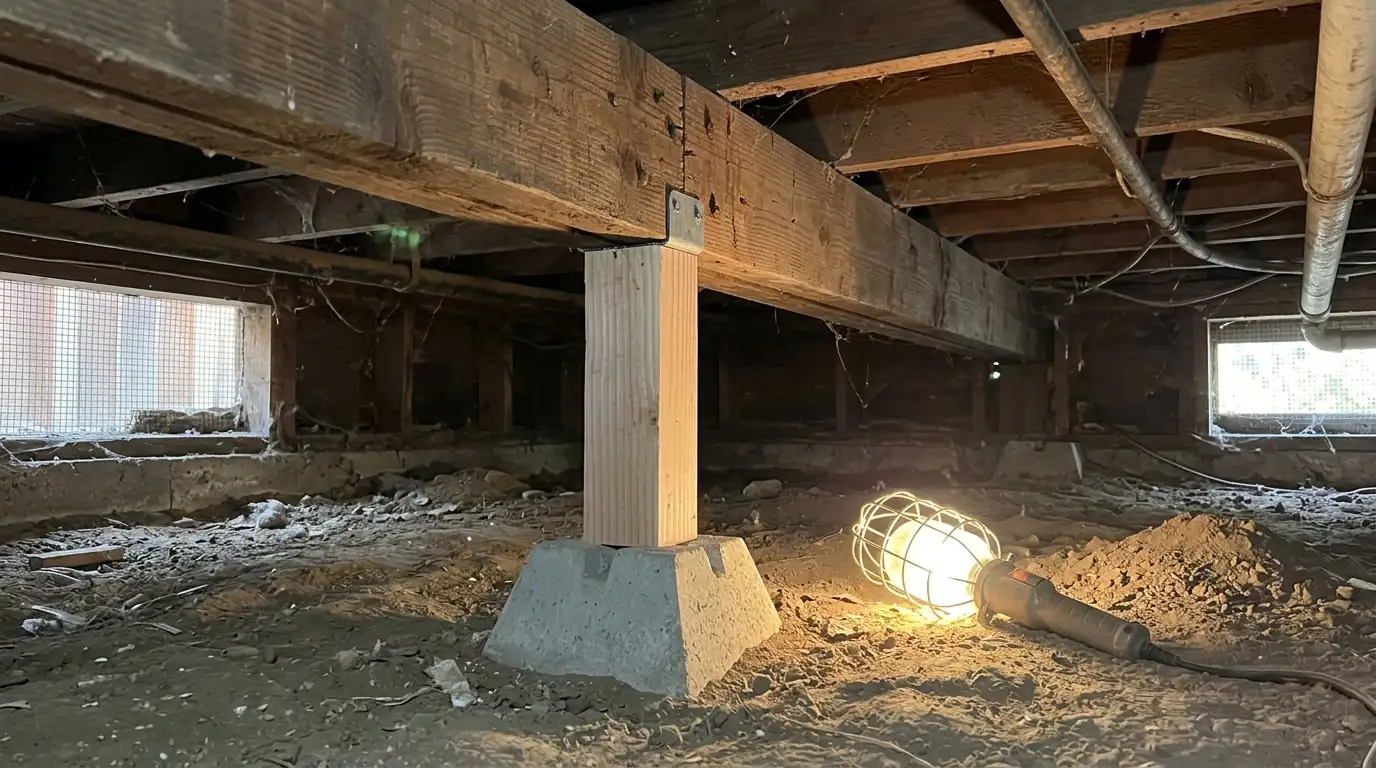
Repairing sills, posts and joists
Once the colony is under control, the damage needs to be fixed. Typical crawlspace repairs in Lynwood include replacing a section of mudsill under an exterior wall, sistering new lumber alongside a weakened joist, cutting out rotted posts and setting new ones on concrete pier blocks with a moisture barrier, and removing old form boards and wood scraps from the soil.
Where a slow drain leak under a bathroom or kitchen has kept the soil and framing wet, decay fungus is often mixed in with termite damage. The plumbing has to be fixed first. We note each issue separately on the report, since termite damage, fungus damage and earth-to-wood contact are different findings.
Soil treatment or bait around an older foundation
For a liquid treatment we trench along the stem wall inside the crawlspace and outside the foundation, then apply a non-repellent termiticide. Where a concrete porch, driveway or walkway meets the house, we drill through it and treat the soil below. Bait stations placed in the soil around the perimeter are an alternative, especially when a yard is fully paved or densely planted. Either way, we recommend lowering soil that has risen against the siding and keeping planters and wood piles away from the walls.
Rats, vents and the freeway corridors
Original foundation vents with fine metal screen rust through over time, and the openings let Norway rats, roof rats and other animals into the crawlspace. Rats nest in old insulation, chew pipes and wiring, and leave droppings that attract other pests. Neighborhoods near rail lines, freeway embankments and commercial corridors along Long Beach Boulevard and Atlantic Avenue see steady rodent pressure.
We trap in the crawlspace and attic, replace damaged vent screens with heavier galvanized mesh, close gaps around pipes and at the foundation, and clean up nesting debris. Keeping the crawlspace closed and ventilated also helps it stay drier, which works against termites and decay.
What we treat most in Lynwood
Western subterranean termites
Mud tubes on piers and stem walls and soil-packed damage in mudsills and floor joists of raised-floor homes from the 1920s to the 1950s.
Norway rats
Entering crawlspaces through rusted foundation vents and nesting in old insulation and debris left under the floor.
Drywood termites
Pellets in attics, porch beams and garage rafters, often swarming on a warm afternoon in late summer or early fall.
Wood decay fungus
Brown, cracked framing under bathrooms and kitchens with long-term plumbing leaks, mixed in with termite damage.
American cockroaches
Large roaches coming up from sewer lines and drains into crawlspaces and ground floor rooms on warm nights.