Quick answer
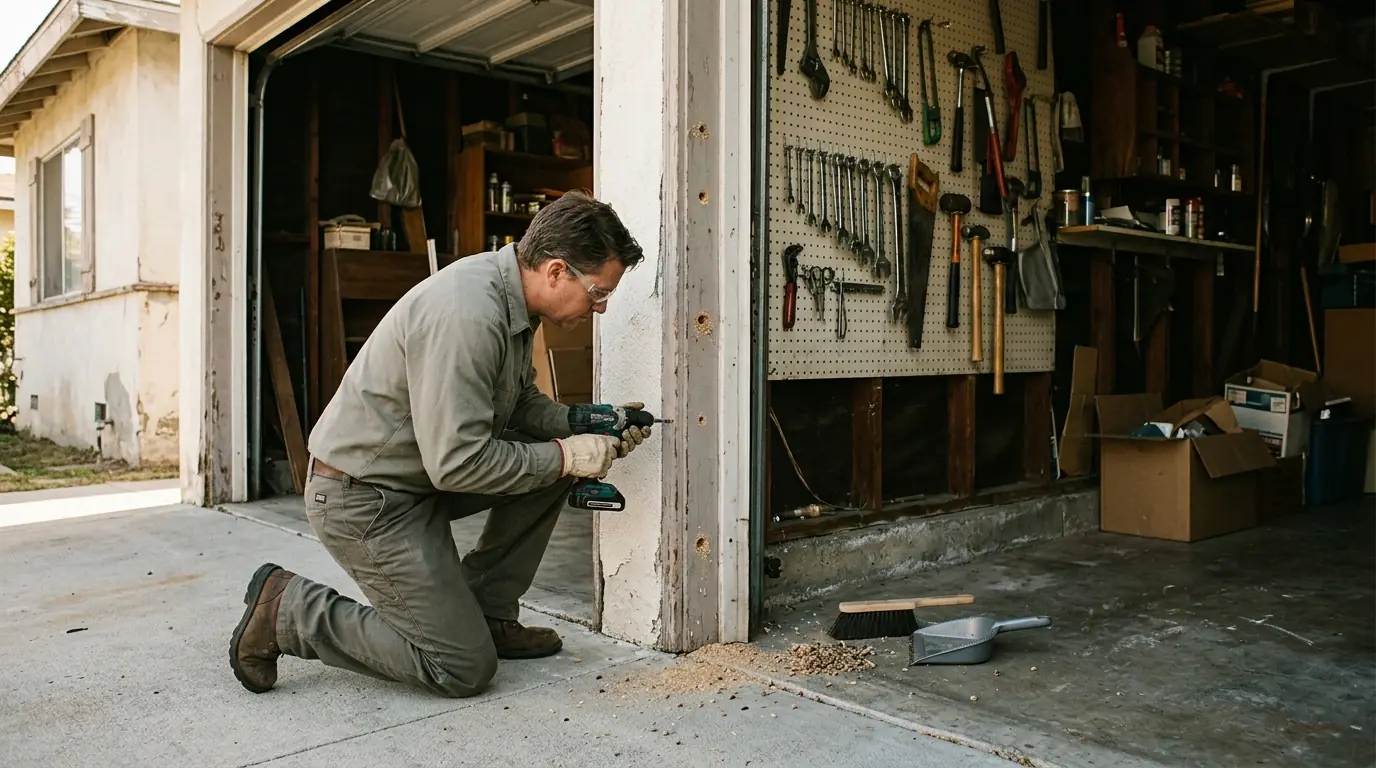
Localized drywood termite treatment targets specific colonies instead of the whole structure. We find the galleries, drill small holes into them and inject a labeled termiticide, foam or orange oil, or we remove and replace badly infested wood. You stay in the house, work usually takes a few hours, and it fits when activity is limited to areas we can see and reach.
Drywood termites are not always everywhere. A young colony in a garage door jamb, a pair of kick-out holes in a window sill or a single infested rafter tail on the sunny side of the roof are common findings, especially in homes that are inspected regularly. For those cases, treating the colony where it lives is more sensible than relocating the household for a tent.
Local treatment relies on accuracy. The inspector has to trace the gallery from the kick-out holes, decide where the colony body sits inside the board, and choose a product that will travel through the galleries. Done well, it kills the colony in that piece of wood without disturbing the rest of the house. The limitation is the colony nobody has found, which is why a good inspection comes first.
The honest tradeoff: convenience versus hidden colonies
The appeal of local treatment is obvious. No tent, no move-out, no bagging food, no gas shutoff. The household carries on while we work in one room. For a colony that is clearly defined and reachable, that is the right tradeoff.
The risk is what we cannot see. A drywood colony inside a wall stud or a closed soffit may show no pellets for months, and local treatment does nothing for it. If the house has several colonies, treating the visible ones may simply mean the others show up later. That is why we look at the whole structure before recommending local treatment and say plainly when we think the activity is too widespread.
We also tell you how confident we are. If an inspection shows one colony in a garage door frame and nothing else in a well-ventilated attic, local treatment is a strong choice. If there are signs in four rooms and a low attic we cannot fully reach, we will say fumigation is the safer option.
Findings that point to a spot treatment
One or two clusters of kick-out holes
A few holes in one board with pellets below suggests a single colony that can be traced and injected directly.
Activity in exposed framing
Rafters, beams, garage framing and trim that we can see and drill along their length are good candidates for local treatment.
A recently tented house with a new spot
A single new colony in a house fumigated a few years ago is usually a fresh swarm, small enough to treat in place.
Infested furniture or a single fixture
A wood cabinet, a door or a piece of trim can be treated or replaced without involving the rest of the structure.
Tenting is not practical
Homes with tenants who cannot leave, medical needs or attached units sometimes need a local approach even when it carries more risk.
How we find and treat a drywood colony in place
Trace the gallery
Starting at the kick-out holes and pellet piles, we tap, probe and sometimes use a moisture meter or listening device to follow the gallery and estimate the colony size.
Choose the right product
Depending on the wood and location, we use a labeled liquid termiticide, a foam that expands through galleries, or orange oil. Severely damaged wood may be replaced instead.
Drill small injection holes
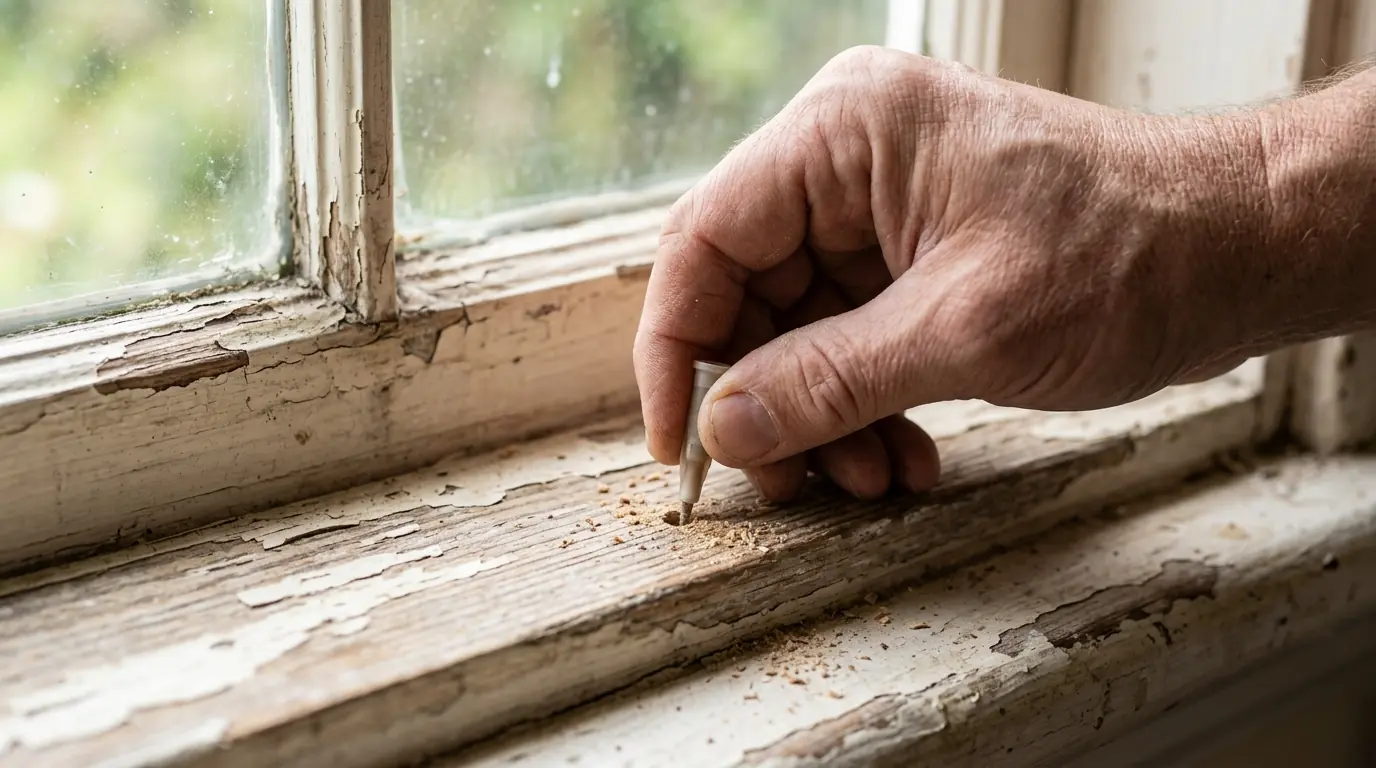
Holes about the diameter of a pencil lead are drilled along the board at intervals so the product reaches the full length of the galleries.
Inject and spread the product
The product is injected under low pressure until it fills the galleries. Foam and orange oil can travel along the grain well beyond the drill point.
Seal and touch up
Holes are plugged with wood putty or caulk. Paint touch-up is usually left to you or your painter so the color matches.
Check the spot later
We recommend cleaning up pellets and watching the area. A follow-up visit confirms no fresh pellets are coming from the treated wood.
What localized drywood treatment usually costs
Local treatment is priced by how many separate areas need work, how far the galleries run and how hard the wood is to reach. One accessible door frame costs far less than several rafters in a low attic. Here are common Long Beach scenarios.
| Typical job | Typical range |
|---|---|
| Single area, easy access | $285 to $585One door frame, window sill or section of garage framing with a small colony. |
| Two to four areas in one visit | $585 to $1,385Several separate colonies in trim, framing and attic rafters treated together. |
| Attic rafter or beam treatment | $465 to $1,640Multiple rafters in an attic with reasonable headroom and clear access. |
| Remove and replace infested trim | $185 to $865 per unitShort sections of trim, molding or fascia where replacement is simpler than injection. |
What moves the price
- Number of separate colonies and how far apart they are
- Length of galleries inside each board
- Access, such as attic headroom, ladder height and finished surfaces
- Product choice, whether liquid, foam or orange oil
- Need to replace wood rather than inject it
Spot treatment figures are typical and not a quote, because the number of colonies we find on inspection drives the final price. Compare more jobs in the treatment price guide.
Liquid, foam or orange oil: choosing the product
Each product has strengths. Liquid termiticides labeled for drywood treatment work well in galleries that run in straight lines and can be drilled at short intervals. Foams expand inside the wood, carrying the active ingredient through branching galleries and hollow spaces. Orange oil, made from d-limonene extracted from orange peels, spreads along the grain and kills termites on contact.
We choose based on the wood, the location and how the galleries run. Fine trim near living spaces may get one product, a hollow beam another. In some cases replacing the board is simpler and more reliable than treating it, especially when the wood is already badly damaged. Replacement also removes the colony entirely rather than leaving dead termites inside.
Spot heat is another tool for a single board or a small piece of furniture. A heating unit raises the temperature of the wood in that one area until the colony inside dies, with no chemical left behind. It works best on smaller, isolated pieces.
Mistakes that make spot treatment fail
The most common mistake is treating the pellet pile instead of the colony. Pellets fall to the floor below the kick-out hole, but the colony may be several feet up the board. Injecting only where pellets land misses the galleries above. Tracing the gallery is the step that matters most.
Another mistake is skipping the inspection of the rest of the house. Treating one window frame while a second colony grows in the attic just moves the problem. A third is store-bought sprays on the surface of the wood. Drywood termites live inside, so surface sprays do not reach them and often just scatter the pellets that help us locate the gallery. Patching kick-out holes with putty and painting over them before treatment is a fourth, since it hides the evidence without touching the colony.
- Treating only where pellets land
- Skipping a full-house inspection
- Spraying the surface of infested wood
- Ignoring pellets that return after treatment
Where we usually do spot treatments around Long Beach
In older Long Beach homes, the most common local treatment sites are wood window frames, door jambs and exposed rafter tails. Craftsman bungalows in Belmont Heights and Rose Park often have original wood windows, and a colony in one sash is a classic spot treatment. Spanish Colonial homes in California Heights often have exposed wood beams over porches and entries that drywood termites target.
In the 1950s ranch homes of Los Altos and El Dorado Park Estates, garages are the common site. Exposed garage framing, the bottom of door jambs and wood shelving show activity that is easy to reach and treat. Cliff May Ranchos in the Plaza have exposed post-and-beam ceilings and board-and-batten siding. Those exposed beams are prime drywood habitat and also very accessible, so local treatment of specific beams is common there. On every one of these homes, we still inspect the whole house first.
Before a spot treatment visit
- Do not sweep up the pellets or spray the area before we arrive
- Clear furniture and items from in front of the affected wood
- Move stored boxes away from garage framing that needs treatment
- Keep pets and children out of the work area for a few hours
- Leave attic access clear if rafters are being treated
Where we do localized drywood termite treatment
- Downtown Long Beach 90802
- North Long Beach 90805
- Belmont Shore 90803
- Bixby Knolls 90807
- California Heights 90807
- Los Altos 90815
- Naples 90803
- Rose Park 90804
- Wrigley 90806
- Signal Hill 90755
- Lakewood 90712
- Downey 90240
- Torrance 90503
- Carson 90745
- Compton 90220
- Norwalk 90650
- Bellflower 90706
- Garden Grove 92840
- Westminster 92683
- Seal Beach 90740
- Cerritos 90703
- Whittier 90601
Not listed? We cover all of Long Beach and the nearby cities; call and we will confirm your street.
Localized Drywood Termite Treatment questions
Can I stay home during a localized drywood termite treatment?
Yes. Local treatment does not require vacating the house. We ask that people and pets stay out of the immediate work area while we drill and inject, and that you follow any ventilation or re-entry times given on the product label, which are usually short.
How do I know the spot treatment actually worked?
Clean up all pellets near the treated area and watch it over the next several weeks. Some old pellets may still fall out as the wood moves. If fresh piles keep appearing at the same spot after a month or two, call so we can check whether the colony extends further.
Will the drill holes from treatment be visible on my trim?
The holes are small, about the size of a pencil lead, and are filled with wood putty or caulk after injection. On painted trim, a light touch-up usually makes them hard to see. On stained or clear-finished wood, a matching wood filler works best.
Is a spot treatment acceptable for an escrow termite report?
It can be, when the inspection shows limited, accessible activity. Local treatment is a standard recommendation for Section 1 drywood findings in one or two areas. When activity is widespread, reports usually recommend fumigation instead, and lenders follow the report.
Related services
Orange Oil Termite Treatment
Orange oil treatment uses d-limonene, an extract from orange peels, injected into drywood termite galleries through small drilled holes.
DetailsTermite Fumigation
Termite fumigation, or tenting, covers the whole house with tarps and fills it with sulfuryl fluoride gas, which penetrates every piece of.
DetailsTermite Inspection
A termite inspection is a visual and probing check of every accessible part of the house: attic framing, eaves, window and door.
DetailsTermite Damage Repair
Termite damage repair means cutting out wood that termites have hollowed or weakened and installing new material so the structure is sound.
DetailsTermite Protection Plan
A termite protection plan is a recurring agreement where we inspect your home on a set schedule, usually once or twice a.
Details