Quick answer
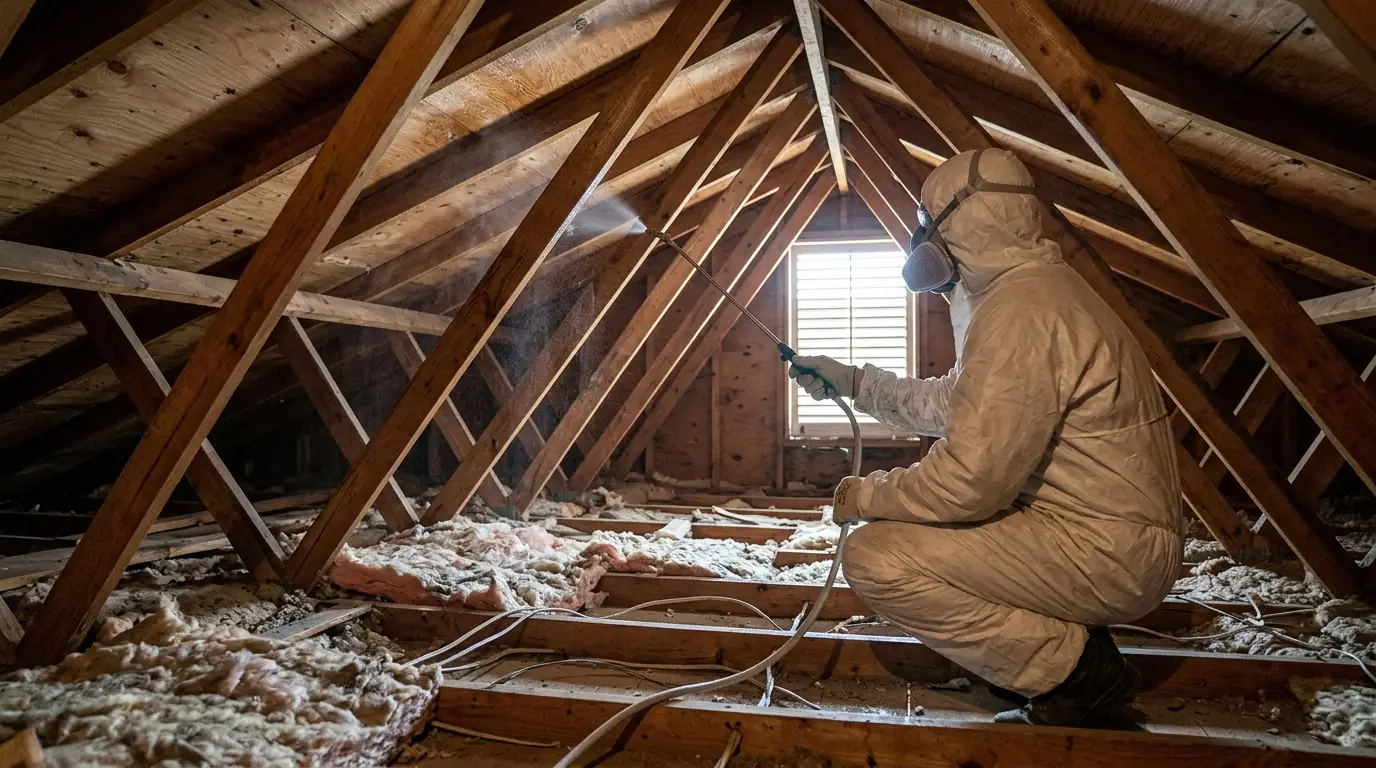
Borate treatment applies a water-based solution of boron salts, such as Bora-Care or Tim-bor, to bare unpainted wood. The borate soaks into the surface layers and stays there, making the wood toxic to termites, wood-boring beetles and decay fungi that feed on it. It works on attic rafters, crawlspace joists, sill plates and new lumber, but cannot soak through paint, stain or sealer, so it is preventive and localized rather than a whole-house cure.
Borate is one of the most useful tools in termite work because it lasts in the wood for years as long as the wood is not exposed to constant rain or soil contact, which can leach it out. Insects that chew treated wood ingest the borate, which interferes with their digestion. Decay fungi cannot establish in it either. For a homeowner, that means a single application on exposed framing can protect it long after the treatment visit.
The limitation is reach. Borate only treats surfaces it can be sprayed or brushed onto, and only bare wood. Painted fascia, finished floors and the inside of closed walls are out of reach. That is why we usually pair borate with other work: after fumigation to protect attic framing going forward, during a remodel while studs are open, or in a crawlspace as part of a dampwood or beetle plan.
What borate protects against, and what it does not
Borate is effective on wood that insects or fungi try to eat, so it works against drywood termites boring into treated framing, subterranean termites feeding on treated sill plates, wood-boring beetle larvae, and decay fungi. It does not kill an established colony living deep inside untreated wood elsewhere in the house, and it does not act as a soil barrier against subterranean termites.
Think of borate as protection for the wood you can reach, not as a treatment for the whole structure.
- Protects: bare attic, crawlspace and new framing; repaired areas; exposed beams
- Does not reach: painted trim, finished floors, closed walls, furniture
- Does not replace: fumigation for widespread drywood colonies or soil treatment for subterranean termites
- Weakens with: constant rain, soil contact or standing water, which can leach borate out
Borate after tenting: why many owners add it
Fumigation is the only treatment that reaches every board in the house at once, but it has no lasting effect. Once the tarps come off and the house is cleared, a new swarm of drywood termites can start a colony the following fall. Treating the attic framing with borate after fumigation adds a layer of protection in the area where drywood colonies most often start.
The attic is the logical target because rafters, ceiling joists and the underside of roof sheathing are usually bare wood and are where swarmers often enter through vents and gaps. Treating them does not make the house termite proof, since trim and exterior wood are painted, but it reduces the chance that a new colony takes hold in the framing. Pair it with sealing attic vent screens and repainting exposed exterior wood for the best result.
What borate treatment typically costs
Borate is priced by the area of exposed framing, with access being the biggest variable. A wide-open remodel goes quickly, while a low crawlspace or a packed attic takes much more time.
| Typical job | Typical range |
|---|---|
| Open remodel or addition framing | $345 to $1,180Exposed studs, plates and sheathing in one remodel area or a small addition |
| Attic framing | $465 to $1,420Accessible rafters, ceiling joists and roof sheathing in a typical single-story attic |
| Crawlspace framing | $545 to $1,640Joists, girders, sill plates and subfloor underside in a raised-foundation home |
| Spot borate after repair | $145 to $385Framing around a repaired termite or rot area, added to the repair visit |
What moves the price
- Square footage of exposed wood to be treated
- Crawlspace height or attic clearance and insulation in the way
- Whether one or two coats are needed on thicker members
- Combining borate with fumigation, repair or remodel visits
- Travel and setup for small spot treatments
These are typical ranges, not a quote, and the inspection sets the price based on the wood we can reach. Compare more jobs in the treatment price guide.
How a borate application is done
Confirm the wood is bare
We check that surfaces are unpainted and unsealed. A drop of water that soaks in quickly means borate will penetrate; water that beads means a finish is blocking it.
Clean and prepare
Dust, insulation, cobwebs and debris are moved or brushed off framing so the solution contacts the wood. Wood should be reasonably dry for best absorption.
Mix to the label rate
The borate concentrate is mixed with water to the rate the label calls for. Some products include a glycol carrier that helps the borate move deeper into wood.
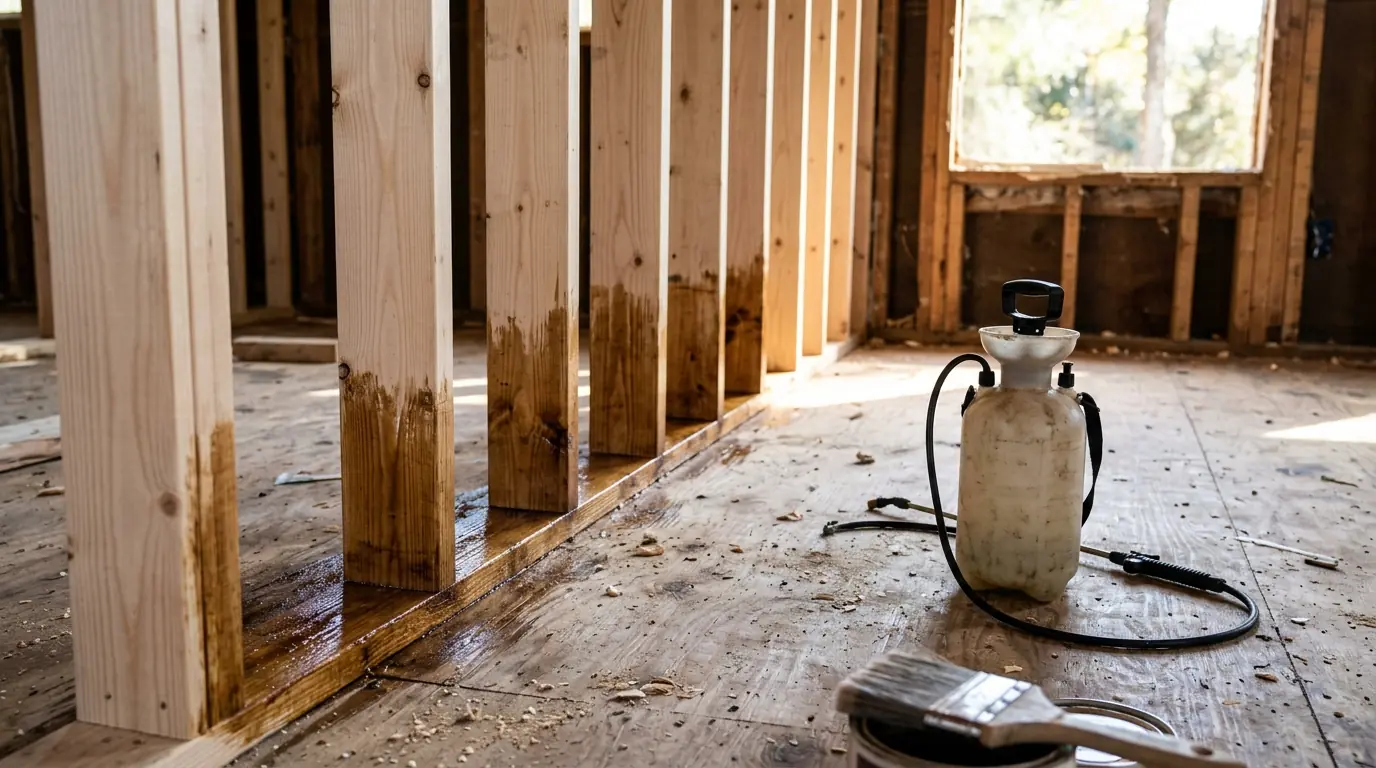
Spray or brush every face
We apply a wet, even coat to all accessible faces of each member, paying close attention to end grain, joints and the junctions where framing meets concrete.
Second coat where needed
Thicker members such as beams and sill plates may get a second application after the first has soaked in, to build up concentration.
Let it dry and document
Treated wood dries in a few hours. We note which areas were treated so future inspectors and contractors know which framing carries protection.
Good times to borate your wood
Walls open during a remodel
Kitchen, bath or room remodels expose studs, plates and sheathing that will be sealed behind drywall for decades. It is the best chance to treat them.
After a fumigation
Tenting kills the colonies present but leaves no residual. Borating accessible attic framing afterward adds protection against the next swarm.
New addition or ADU framing
Fresh lumber is bare and fully absorbent. Treating it before insulation and drywall protects the whole frame.
Damp crawlspace framing
Joists and sills near the soil benefit from borate, which discourages decay fungi, beetles and dampwood termites in wood that picks up moisture.
Repaired termite damage
When we cut out damaged wood, the surrounding sound framing gets borate so remaining galleries and future colonies meet treated wood.
Exposed beams and rafters
Open-beam ceilings and exposed rafter undersides that were never painted can take borate, though appearance should be checked first.
Is borate safe around a family and pets?
Borate products have low toxicity to people and pets compared with many termiticides, which is why they are widely used inside homes on exposed framing. They have little odor and do not off-gas once dry. Like any pesticide, they must be used according to the label, and the treated area should be left alone until it dries, which usually takes a few hours.
During application we keep people and pets out of the attic, crawlspace or room being treated, protect insulation and stored items from overspray, and avoid surfaces that will contact food. Once dry, treated framing can be covered with insulation and drywall right away. If you have specific health concerns, we share the product label before the visit so you can review it.
Borate in Long Beach attics and crawlspaces
Long Beach has a lot of bare framing that is easy to treat. The raised-foundation bungalows of Belmont Heights, California Heights and Rose Park have open crawlspaces where joists and sills sit a couple of feet above bare soil, and the marine air keeps that wood damper than an inland home. Borate there protects against beetles, decay and subterranean termites working up from the soil.
In the 1950s ranch homes of Los Altos, Lakewood Village and El Dorado Park Estates, the target is the attic, where wide-open framing sits above slab floors and is a frequent drywood colony site. Cliff May homes in The Plaza are a special case: the exposed beams in living spaces are often stained, which blocks borate, but the attic sections and garage framing can still be treated. ADU builds across the city are the best opportunity of all, since every stud is bare until the drywall goes up.
Before a borate visit
- Clear stored boxes and holiday decorations from attic areas to be treated
- Open the crawlspace hatch area and move items stored in front of it
- Tell your remodel contractor the treatment date so insulation waits until it dries
- Keep pets and children out of the treatment area until the wood dries
- Cover or move anything stored under exposed beams in a garage
- Ask for the product label ahead of time if you want to review it
Where we do borate wood treatment
- Downtown Long Beach 90802
- North Long Beach 90805
- Belmont Shore 90803
- Bixby Knolls 90807
- California Heights 90807
- Los Altos 90815
- Naples 90803
- Rose Park 90804
- Wrigley 90806
- Signal Hill 90755
- Lakewood 90712
- Downey 90240
- Torrance 90503
- Carson 90745
- Compton 90220
- Norwalk 90650
- Bellflower 90706
- Garden Grove 92840
- Westminster 92683
- Seal Beach 90740
- Cerritos 90703
- Whittier 90601
Not listed? We cover all of Long Beach and the nearby cities; call and we will confirm your street.
Borate Wood Treatment questions
How long does borate keep protecting the wood?
In wood that stays dry and protected from rain and soil contact, borate remains in place for many years because it has no reason to wash out. Exterior wood exposed to weather or wood touching soil loses borate faster, which is why it is mainly used inside attics, crawlspaces and walls.
Can borate kill termites already living in my attic?
It can affect termites that feed on treated surface wood, but it penetrates only so far, and a well-established colony deep inside a beam may survive. For an active drywood infestation, borate is usually combined with drill-and-inject treatment, or used after fumigation, rather than relied on alone.
Will borate stain or discolor exposed wood?
Most borate products dry clear or leave a faint white residue on the surface, particularly on dark or stained wood. On framing that will be covered, appearance does not matter. On exposed beams or visible wood, we test a small hidden spot first so you can see the result before we treat the rest.
Can I paint over borate-treated wood?
Yes, once it is fully dry. The borate is already absorbed into the wood, so paint or primer over it is fine and actually helps keep moisture out. The reverse does not work: borate cannot be applied effectively over existing paint.
Does borate help against subterranean termites in a slab home?
Only on the wood it touches, such as exposed sill plates or framing near slab joints during a remodel. It does not create a barrier in the soil. For subterranean termites entering through a slab, a soil treatment or bait system is the main control, with borate as a supplement.
Related services
Termite Fumigation
Termite fumigation, or tenting, covers the whole house with tarps and fills it with sulfuryl fluoride gas, which penetrates every piece of.
DetailsPre-Construction Termite Treatment
Pre-construction treatment applies a labeled termiticide to the soil before the slab is poured, creating a treated zone under and around the.
DetailsWood-Boring Beetle Treatment
Wood-boring beetles lay eggs in or on wood, and the larvae tunnel inside for one to several years before chewing round exit.
DetailsTermite Protection Plan
A termite protection plan is a recurring agreement where we inspect your home on a set schedule, usually once or twice a.
Details