Quick answer
Flies are controlled by finding and removing the breeding material, not by spraying the adults. Fruit flies breed in fermenting produce and sticky residue, drain flies in the organic film inside drains, phorid flies in broken drain lines and wet debris, and house flies in garbage and pet waste. We identify the fly, locate the source, clean and treat drains with biological drain treatments, adjust sanitation and use light traps or baits for the adults that remain.
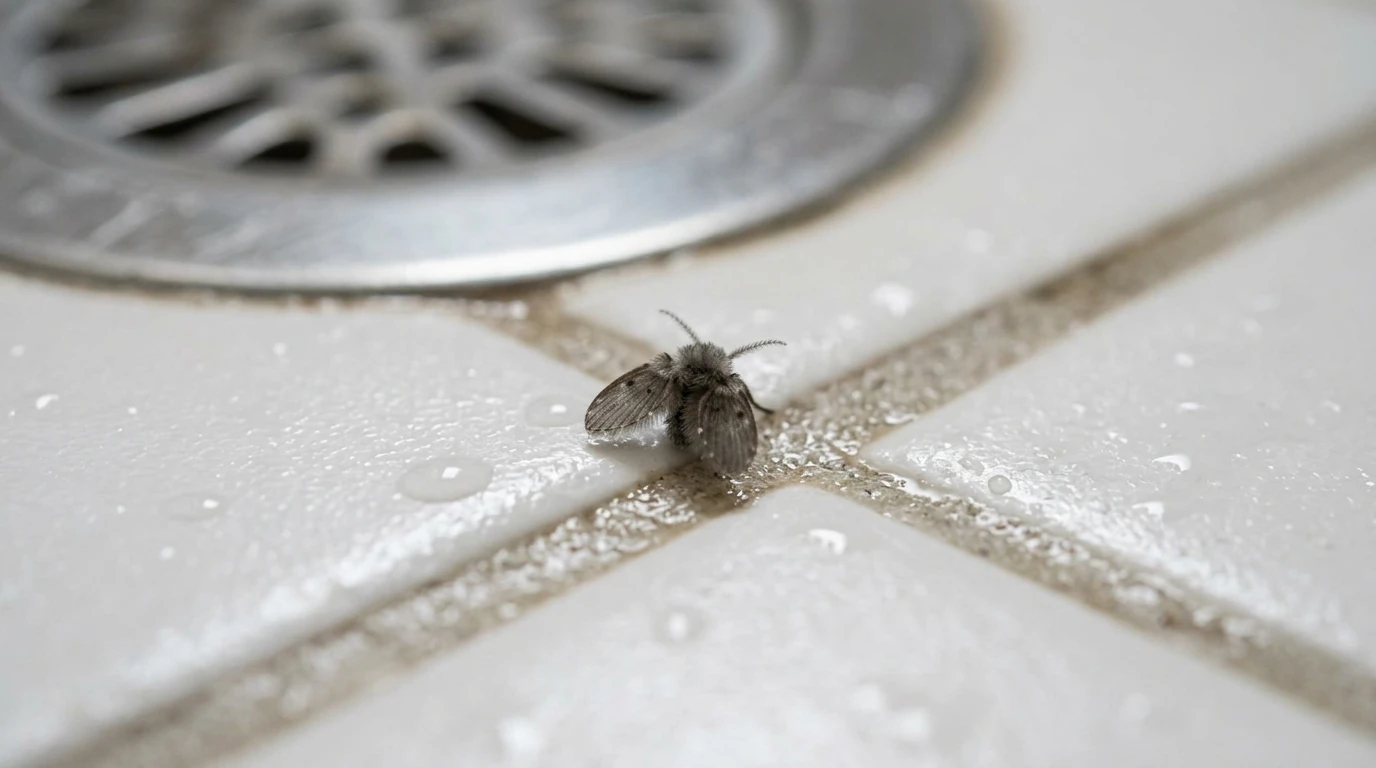
Different flies point to different problems, so identification comes first. Fruit flies are tan with red eyes and hover around ripe bananas, wine glasses and recycling bins. Drain flies, sometimes called moth flies, are fuzzy and gray, rest on bathroom and kitchen walls and hop more than fly. Phorid flies are small, humpbacked and run across surfaces in quick bursts, often rising from floor drains or cracks in a slab. House flies and blow flies are the larger, buzzing ones drawn to garbage, compost and pet waste.
Each species can go from egg to adult in a week or two in warm weather, so a few flies turn into many very quickly. Surface spraying kills adults you can see while new ones keep emerging from the source. Our work is tracing that source, removing or cleaning it, and then knocking down the adults so the population collapses instead of cycling.
Drains are the hidden fly factory
The inside of a kitchen or bathroom drain is lined with a soft layer of grease, soap, hair and food that never fully washes away. Drain fly and fruit fly larvae live in that film. Pouring bleach down the drain kills a few larvae in the top inch of the pipe, but it runs past the film without breaking it up, and the flies keep coming.
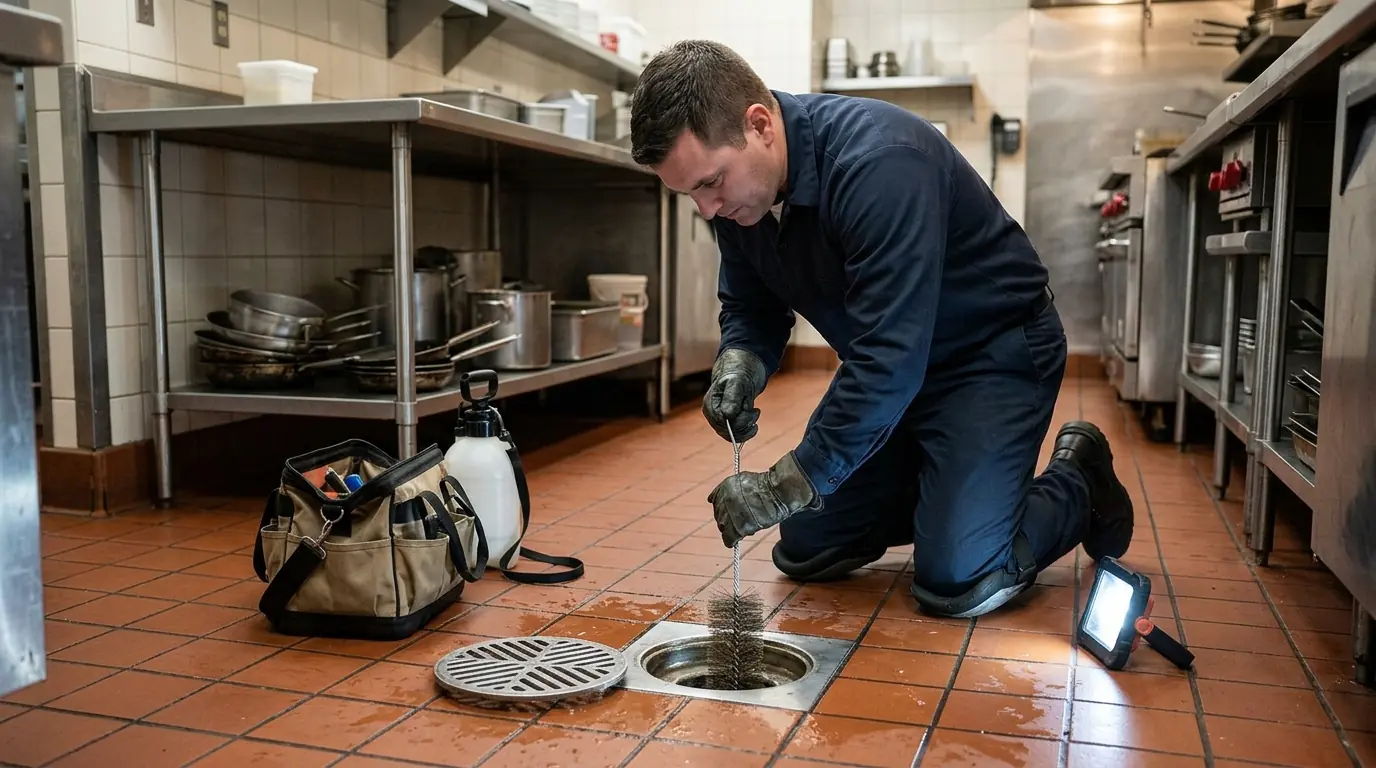
Mechanical cleaning is what works. A long, stiff drain brush scrubs the film loose, and a biological or enzyme drain treatment digests what remains over several days. In commercial kitchens, floor drains under dish machines, ice machines and soda lines are some of the worst sources, along with mop sinks and floor sinks.
If the drains are clean and flies still appear near a floor drain or slab crack, a broken or separated pipe under the slab may be leaking into the soil below. Phorid flies breed in that wet, organic soil, and the fix is a plumbing repair rather than any amount of treatment.
Reading the clues: which fly you have and where it breeds
Small flies around produce
Fruit flies over fruit bowls, garbage disposals, recycling and wine or soda bottles breed in fermenting sugars and sticky residues nearby.
Fuzzy gnats on bathroom walls
Drain flies resting on tile and walls near showers and sinks are breeding in the slimy film that coats the inside of drain pipes.
Flies rising from floor drains
Small flies in a restaurant or garage that appear near floor drains or a slab crack can mean phorid flies in a broken drain line or wet debris below.
House flies at the trash
Large flies around trash bins, compost and dog runs breed in rotting organic material and animal waste within a few days.
Sudden burst of blow flies
Shiny green or blue flies appearing indoors in numbers often mean a dead rodent or bird in a wall, attic or crawlspace.
Flies return after cleaning
If flies come back days after a thorough kitchen cleanup, the source is hidden: under an appliance, inside a drain or in a void.
How we track down and shut off a fly source
Identify the species
We catch or photograph specimens to confirm fruit, drain, phorid, house or blow fly, since that tells us what kind of material is breeding them.
Find the breeding site
We check drains, garbage disposals, under refrigerators and dishwashers, recycling bins, mop sinks, floor drains, trash enclosures and pet areas. Tape over a drain overnight shows whether flies are emerging from it.
Clean and treat drains
Drains are scrubbed with a brush to break up the organic film, then treated with a biological or enzyme drain product that digests the material larvae feed on.
Correct sanitation gaps
We point out spills under equipment, damp mops, leaking dumpsters, broken tiles and food residue that support breeding, and what to change.
Reduce adult flies
Light traps, sticky monitors, labeled fly baits and targeted residual treatments at resting areas cut down adults while the source clears.
Follow up on hidden sources
If flies persist, we look for less obvious sources such as a cracked drain under a slab or a dead animal in a wall.
What fly control costs for homes and businesses
For homes, fly work is usually one visit to find and treat the source plus a follow-up. Restaurants, bars and food processors often need a recurring program because new breeding material builds up every day.
| Typical job | Typical range |
|---|---|
| Residential fly or gnat service | $145 to $265 per visitSource inspection, drain cleaning and treatment, and adult control in one home. |
| Drain treatment program | $65 to $145 per monthMonthly biological drain treatment for kitchens, bathrooms or floor drains. |
| Restaurant or bar fly program | $95 to $245 per monthDrains, trash areas, back door and light traps on a recurring schedule. |
| Commercial fly light installation | $185 to $395 per unitWall-mounted light traps placed away from food prep and serving areas. |
What moves the price
- Type of fly and how hard its breeding source is to find
- Number of drains and floor drains that need cleaning and treatment
- Whether the property is a home, restaurant, bar or food warehouse
- Condition of drains, tile, grout and trash enclosures
- How often new breeding material builds up and the visit frequency needed
- Whether a broken drain or a dead animal requires additional work
These are typical ranges, not a quote, and the inspection sets the price. Compare more jobs in the treatment price guide.
Kitchen habits that end fruit fly problems
Fruit flies need only a thin layer of fermenting sugar to breed. A single overripe tomato, the juice at the bottom of a recycling bin or a damp sponge can raise a new generation. Once the source is gone, adults die off within about a week or two.
- Refrigerate ripe produce or keep it covered during warm months
- Rinse bottles and cans before putting them in recycling
- Empty the kitchen trash daily when fruit flies are active
- Run the garbage disposal with cold water and scrub the splash guard
- Replace or wash sponges, dish rags and mop heads often
- Check potato and onion bins for a hidden soft or rotting item
Why bug zappers and sprays are not enough
Outdoor bug zappers mostly kill moths and beetles and very few biting flies, and electrocuting insects near food can scatter fragments. Indoor fly sprays knock down adults for a moment but do nothing about larvae in drains or garbage, and spraying near food prep is not appropriate in a home or a restaurant.
Indoor commercial light traps are different. They use glue boards rather than electric grids, are mounted away from food prep areas and catch flies without scattering them. They work best as a monitor and a backup to sanitation, showing whether a problem is building and which part of the building it comes from. Fly baits placed in trash enclosures and outdoor areas reduce house flies where they gather, without being applied near food.
Fly pressure in Long Beach kitchens and courtyards
Fly problems climb in Long Beach from late spring through early fall, when warm days speed up breeding and doors stay open to the ocean breeze. Older courtyard apartments in Rose Park, Alamitos Beach and Belmont Shore have original cast iron drain lines and shared trash areas in alleys, both reliable fly sources. In the 1920s bungalows of Wrigley and Belmont Heights, old drains under kitchen and bathroom floors can crack and leak into the crawlspace, which draws phorid flies.
Restaurants and bars along Pine Avenue, Second Street, Fourth Street and the East Village Arts District deal with flies at back doors, grease traps and dumpster enclosures shared with neighbors. Homes with backyard chickens, compost or dog runs in Bixby Knolls, Los Cerritos and North Long Beach see more house flies in summer. A dead roof rat in an attic, common after rodent work or a neglected trap, is a frequent cause of sudden blow fly outbreaks in homes across the city.
Where we do fly control
- Downtown Long Beach 90802
- North Long Beach 90805
- Belmont Shore 90803
- Bixby Knolls 90807
- California Heights 90807
- Los Altos 90815
- Naples 90803
- Rose Park 90804
- Wrigley 90806
- Signal Hill 90755
- Lakewood 90712
- Downey 90240
- Torrance 90503
- Carson 90745
- Compton 90220
- Norwalk 90650
- Bellflower 90706
- Garden Grove 92840
- Westminster 92683
- Seal Beach 90740
- Cerritos 90703
- Whittier 90601
Not listed? We cover all of Long Beach and the nearby cities; call and we will confirm your street.
Fly Control questions
How do I know if my fruit flies are coming from the drain?
Cover the drain opening overnight with a piece of clear tape or a plastic cup smeared with a little oil. If small flies are stuck to it the next morning, they are breeding inside the drain. If not, look for fermenting produce, recycling, sponges or spills under appliances.
Will pouring bleach down the drain kill drain flies?
Usually not for long. Bleach flows quickly past the organic film where larvae live and does not scrub it loose. Cleaning the inside of the pipe with a stiff drain brush, then using a biological or enzyme drain product over several days, removes the material that feeds them.
Why are there suddenly large shiny flies inside my house?
A sudden burst of shiny green or blue blow flies often means a dead animal, such as a rat, mouse or bird, inside a wall, attic, crawlspace or chimney. The flies breed in the carcass and emerge in a week or two. Finding and removing the carcass stops them.
Do restaurants need a monthly fly program?
Most food service businesses do, because drains, trash and back door areas produce new breeding material daily. A recurring program with drain treatments, light traps and inspections keeps fly numbers low between health department visits and catches new sources early, such as a leaking dumpster or a slow floor drain.
Related services
Commercial Pest Control
Commercial pest control in Long Beach is a scheduled program built around the site: monthly or twice-monthly service for restaurants, rodent stations.
DetailsPantry Pest Control
Pantry pests are solved by finding and discarding every infested food package first, then treating the cracks and shelf joints where larvae.
DetailsRodent Control
Rodent control starts with knowing which animal you have: roof rats in attics and trees, Norway rats in alleys and under slabs.
Details