Quick answer
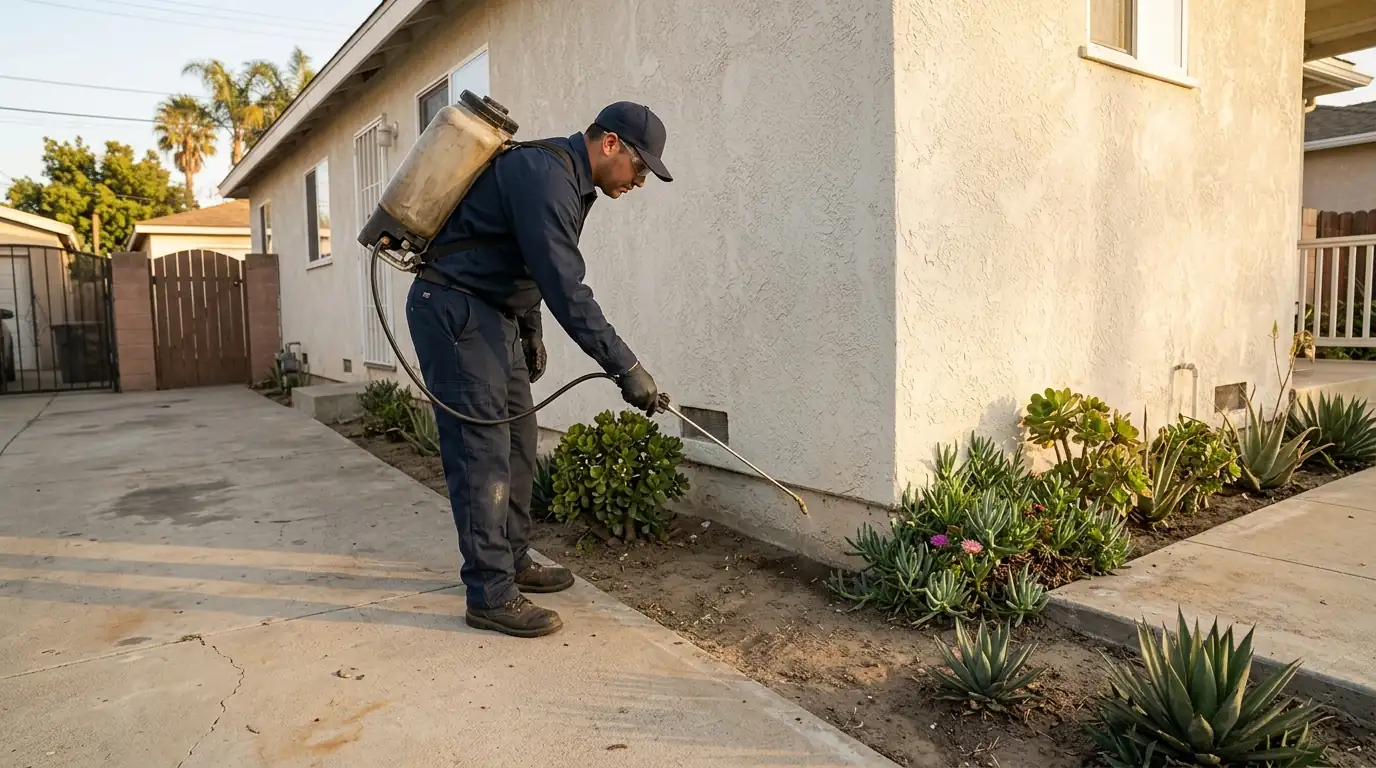
General pest control is a recurring service, usually every other month or quarterly, that treats the outside of the home to stop crawling insects before they get in, with interior treatment only where activity is found. It covers common Long Beach pests such as Argentine ants, cockroaches, spiders, silverfish, earwigs and crickets. Each visit includes inspection, targeted exterior treatment, web and nest removal, and advice on entry points and moisture.
Most household insects in Long Beach live outside and come in looking for water, food or shelter, especially when the weather turns hot and dry in late summer or after the first winter rains. A planned program puts a treated zone around the foundation, eaves, doors and windows so fewer of them make it inside. When they do, interior work is focused on the specific spots where activity shows up, rather than spraying baseboards throughout the house.
This kind of service is not for termites, rodents, bed bugs or stinging insect nests, which each need their own approach and are handled as separate services. It is for the everyday crawling pests that, left alone, turn into a constant low level problem. Each visit, our technician walks the property, notes what has changed since last time, and adjusts the treatment to the season.
Why the outside of the house gets most of the attention
The idea behind a modern pest program is to stop insects at the edge of the home rather than treat the living space. Ants, roaches, spiders and earwigs nearly all live outside and walk in. A band of treatment around the foundation and at the entry points intercepts them where they travel, and it means less product is used inside where people live, cook and sleep.
Inside, we rely on baits and crack-and-crevice applications that put product into voids and hiding spots instead of on open surfaces. Gel baits for roaches and ants are especially useful because insects carry the bait back to their nests. That approach is more effective than spraying baseboards and keeps exposure low for children and pets.
Seasonal pest pressure through a Long Beach year
Pest activity follows the weather, and a good program shifts its focus through the year rather than repeating the same visit.
- Late winter and spring: ants move after rain, subterranean termite swarms, spiders start building, earwigs in damp beds
- Early summer: ant pressure rises sharply as soil dries, silverfish and crickets appear in garages
- Late summer and early fall: peak ant invasions during heat waves, drywood termite swarms, black and brown widows in full activity
- Late fall and winter: cockroaches and rodents move indoors with the first cold nights and rain, ants return after storms
What recurring pest control usually costs in Long Beach
Recurring plans are priced per visit, and the first visit often costs more because it includes a heavier initial treatment and a full inspection. Home size, lot size and how much activity is present drive the numbers.
| Typical job | Typical range |
|---|---|
| Initial service visit | $145 to $285 per visitFull inspection, interior and exterior treatment, web removal and entry point review |
| Bimonthly recurring service | $75 to $135 per visitExterior focused visits every other month with interior touch ups as needed |
| Quarterly recurring service | $95 to $165 per visitFour visits a year timed to seasonal pest pressure |
| One-time service call | $165 to $315Single treatment for a specific problem without a recurring schedule |
What moves the price
- Square footage of the home and size of the lot
- Severity of the current problem at the first visit
- Number of outbuildings, garages or ADUs included
- Dense ivy, palms or landscaping that need extra treatment
- Visit frequency, with more frequent schedules costing less per visit
These are typical ranges, not a quote, and the inspection at the first visit sets the price for your home. Compare more jobs in the treatment price guide.
What happens on a general pest control visit
Walk the property
We check the foundation, eaves, entry points, garage, yard and any spots you report, looking for ant trails, roach harborage, webs, droppings and moisture problems.
Treat the exterior perimeter
A labeled product is applied in a band around the foundation and at key entry points such as door thresholds, weep screeds, pipe penetrations and garage door seals.
Remove webs and nests
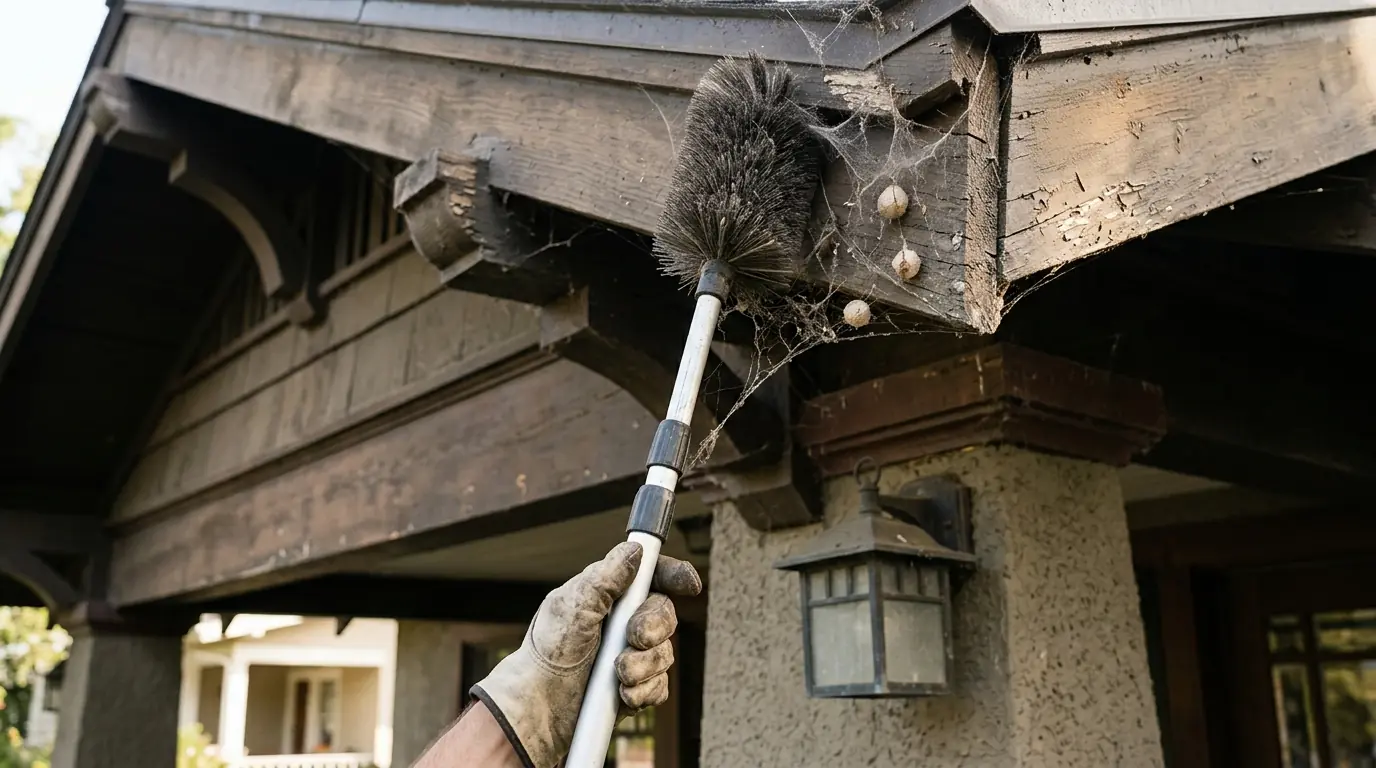
Spider webs, egg sacs and mud dauber nests are cleared from eaves, windows, porches and garage corners we can reach.
Target interior hot spots
If activity is found inside, we use gel baits, crack-and-crevice treatment or dusts in specific places, such as under the sink or behind appliances, not broad spraying.
Point out entry and moisture fixes
We note gaps around pipes, torn screens, missing door sweeps, leaking hose bibs and soil against the foundation, and explain which matter most.
Adjust for the next visit
Each visit is recorded, so the next one targets what is active that season, such as ants in summer or roaches after the first rain.
Signs a recurring pest plan makes sense for your home
Ant trails every summer
Argentine ants invading the kitchen or bathroom each year is the most common reason Long Beach homeowners start a recurring plan.
Roaches near water sources
American cockroaches from the alley, sewer or garden turning up near drains, water heaters and garages a few times a season.
Webs reforming on eaves
Spider webs that come back within days of sweeping, especially around porch lights, windows and garage corners.
Silverfish or earwigs inside
Insects appearing in bathrooms, closets and laundry areas often point to moisture and gaps that a regular program addresses.
Landscaping against the house
Ivy, mulch, dense shrubs and wood piles near walls give pests shelter right at the foundation, raising pressure year round.
Pests after neighbors treat
In dense neighborhoods, insects pushed from one property often move to the next. A steady barrier keeps your home from being the easy option.
What you can do between visits
Pest control works best when the house is less inviting. Keep soil, mulch and ivy a few inches below the bottom of stucco and siding so there is a visible gap. Trim shrubs and branches so they do not touch walls or the roofline. Fix dripping hose bibs and sprinkler heads that keep the foundation wet, since moisture attracts ants, roaches, silverfish and earwigs alike.
Inside, wipe up crumbs and sticky spills, store pet food in sealed containers, and do not leave pet bowls out overnight if ants are active. Seal gaps where pipes enter under sinks. When you see a new ant trail, avoid spraying it with a store-bought aerosol, because repellent sprays split Argentine ant colonies and scatter them. Let us know instead so the baits we place can do their work.
The everyday pests of Long Beach neighborhoods
Argentine ants are the number one complaint across the city, from the courtyard apartments of Alamitos Beach to the ranch homes of Los Altos. Their colonies connect under sidewalks and yards for blocks, and a hot August week or a heavy rain can send them into kitchens all at once. In neighborhoods with alleys, like Belmont Shore and Bluff Park, American cockroaches come up from storm drains and sewer lines and wander into garages and laundry rooms.
Homes in Bixby Knolls and Los Cerritos with mature trees, dense shrubs and ivy see more spiders, earwigs and sow bugs because the landscaping holds moisture and shelter against the walls. In the 1950s tracts of El Dorado Park Estates and Lakewood Village, block walls and wood fences along the back of the lot are favorite spots for black widows. Older raised-foundation homes in Wrigley and Rose Park have crawlspace vents and gaps that let crickets, silverfish and roaches move in from below.
Where we do general pest control
- Downtown Long Beach 90802
- North Long Beach 90805
- Belmont Shore 90803
- Bixby Knolls 90807
- California Heights 90807
- Los Altos 90815
- Naples 90803
- Rose Park 90804
- Wrigley 90806
- Signal Hill 90755
- Lakewood 90712
- Downey 90240
- Torrance 90503
- Carson 90745
- Compton 90220
- Norwalk 90650
- Bellflower 90706
- Garden Grove 92840
- Westminster 92683
- Seal Beach 90740
- Cerritos 90703
- Whittier 90601
Not listed? We cover all of Long Beach and the nearby cities; call and we will confirm your street.
General Pest Control questions
How often should a Long Beach home have pest control service?
For most single-family homes, every other month or quarterly visits keep common pests in check. Bimonthly service works better where Argentine ants are heavy or the yard has dense landscaping. Quarterly is often enough for homes with less pressure. We can adjust the schedule once we see how your property responds.
Do I need to be home for recurring service visits?
Not usually. Most of the work is exterior, so we can treat the perimeter, eaves and yard without you there as long as gates are open to us and pets are inside. If interior treatment is needed, we arrange a visit when someone can let us in.
Does general pest control cover termites or rats?
No. Termites need an inspection and a specific treatment such as fumigation, local treatment or soil work, and rodents need trapping and exclusion. Both are separate services. Our technician does keep an eye out for signs of either during regular visits and lets you know if something turns up.
Is it normal to see more insects right after a treatment?
For a short time, yes. Insects disturbed by the treatment may move out of hiding and become more visible for a few days before activity drops. With ant baits, you may see ants feeding on the bait, which is what we want, since they carry it back to the colony.
What should I do with pets during a pest visit?
Keep dogs and cats inside or away from the yard during exterior treatment and until the product has dried, usually an hour or two. Cover fish tanks if interior work is planned, and remove pet bowls from treated areas. We tell you which areas were treated before we leave.
Related services
Ant Control
Argentine ants form huge connected colonies with many queens, so killing the ants you see does little.
DetailsSpider Control
Spider control works by removing webs and egg sacs, treating the cracks and sheltered spots where spiders hide, and reducing the insects.
DetailsSilverfish Control
Silverfish thrive where humidity stays high and starchy food is easy: bathrooms, laundry rooms, garages, attics and boxes of paper or fabric.
DetailsRodent Control
Rodent control starts with knowing which animal you have: roof rats in attics and trees, Norway rats in alleys and under slabs.
Details