Quick answer
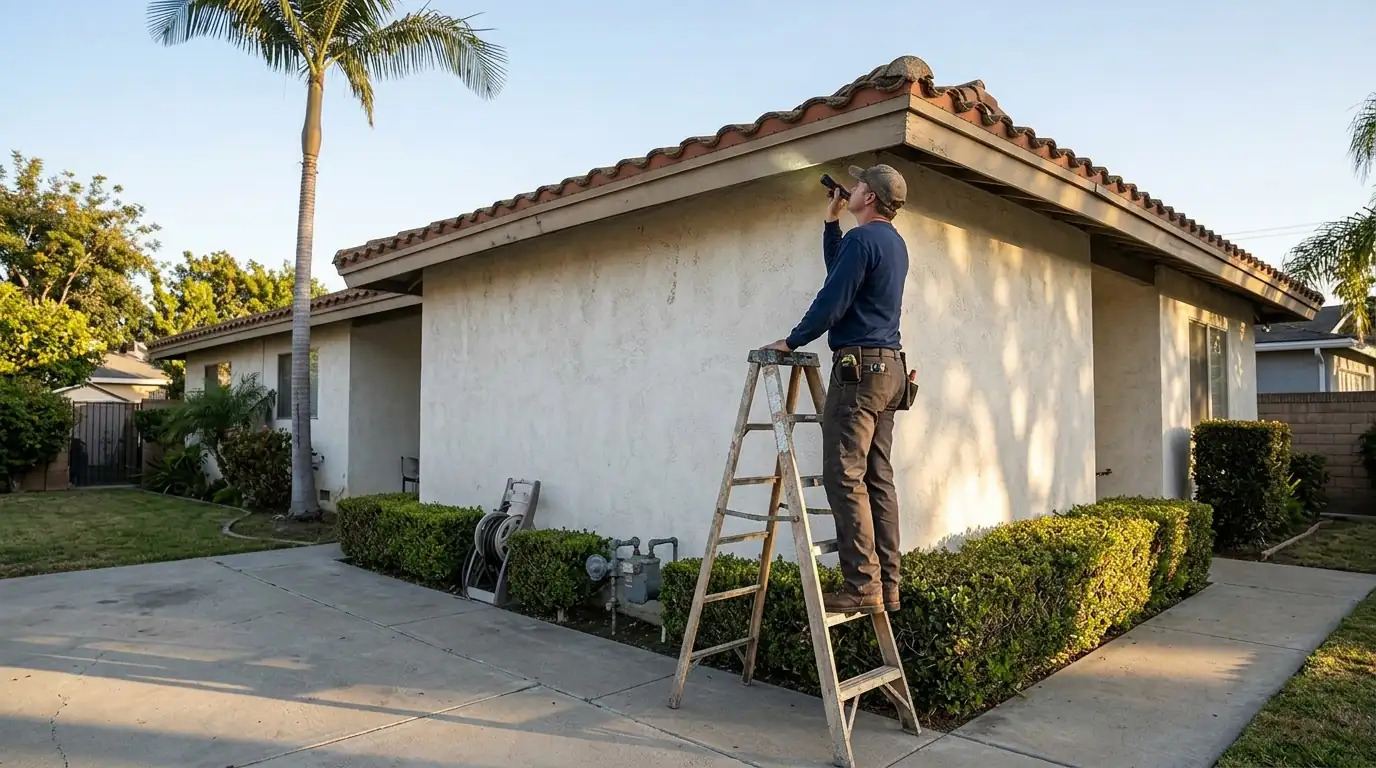
A termite protection plan is a recurring agreement where we inspect your home on a set schedule, usually once or twice a year, and treat new drywood spots or subterranean activity found during those visits at the terms the plan lists. Plans can also include bait station monitoring. The goal is early detection, so small local treatments replace large ones later.
Fumigation kills every drywood colony in a house on the day it is done, but it leaves nothing behind to stop the next swarm. In coastal Long Beach, winged drywood termites fly every late summer, and a pair that lands in an attic vent can start a new colony within weeks. Subterranean termites keep foraging in the soil whether or not the last treatment worked. Protection is about watching for that next round.
A plan puts your home on a calendar. We come back at agreed intervals, inspect the same areas the first time, compare against the diagram we already have, and deal with anything new while it is small. The value is less in any single visit and more in the record: a house inspected yearly has a history that shows exactly when and where activity began.
Why a tented house still needs watching afterward
Sulfuryl fluoride gas reaches every piece of wood under the tarp, which is why fumigation is so effective against drywood termites. Once the tarps come off and the gas clears, though, nothing in the wood keeps new termites out. A swarm that lands on a fascia board the following September faces the same untreated wood it would have found before the tent went up.
New colonies grow slowly. It can take a few years before a young drywood colony produces enough pellets for anyone to notice. A house inspected every year during that window gets caught at the one or two kick-out hole stage, when a single drill-and-inject visit finishes the job. A house nobody checks may not show signs until the colony has spread across several rafters.
That is also why the first two or three years after a tent matter most. The house is clean, the record starts at zero and any new kick-out hole is easy to date.
Plan inspections compared with calling only when you see pellets
Calling when you see something is reasonable, and plenty of homeowners do it. The trouble is that most visible drywood signs show up in places people rarely look: the top of attic insulation, the back of a garage shelf, the sill of a window behind a heavy curtain. By the time pellets reach a spot you walk past every day, the colony has usually been working for a while.
A scheduled visit flips that around. We go to the hidden places first, every time, and compare them with the last report. Small changes stand out because there is a record to compare against. Over several years that record also helps if you sell, since it shows the home was watched and treated promptly.
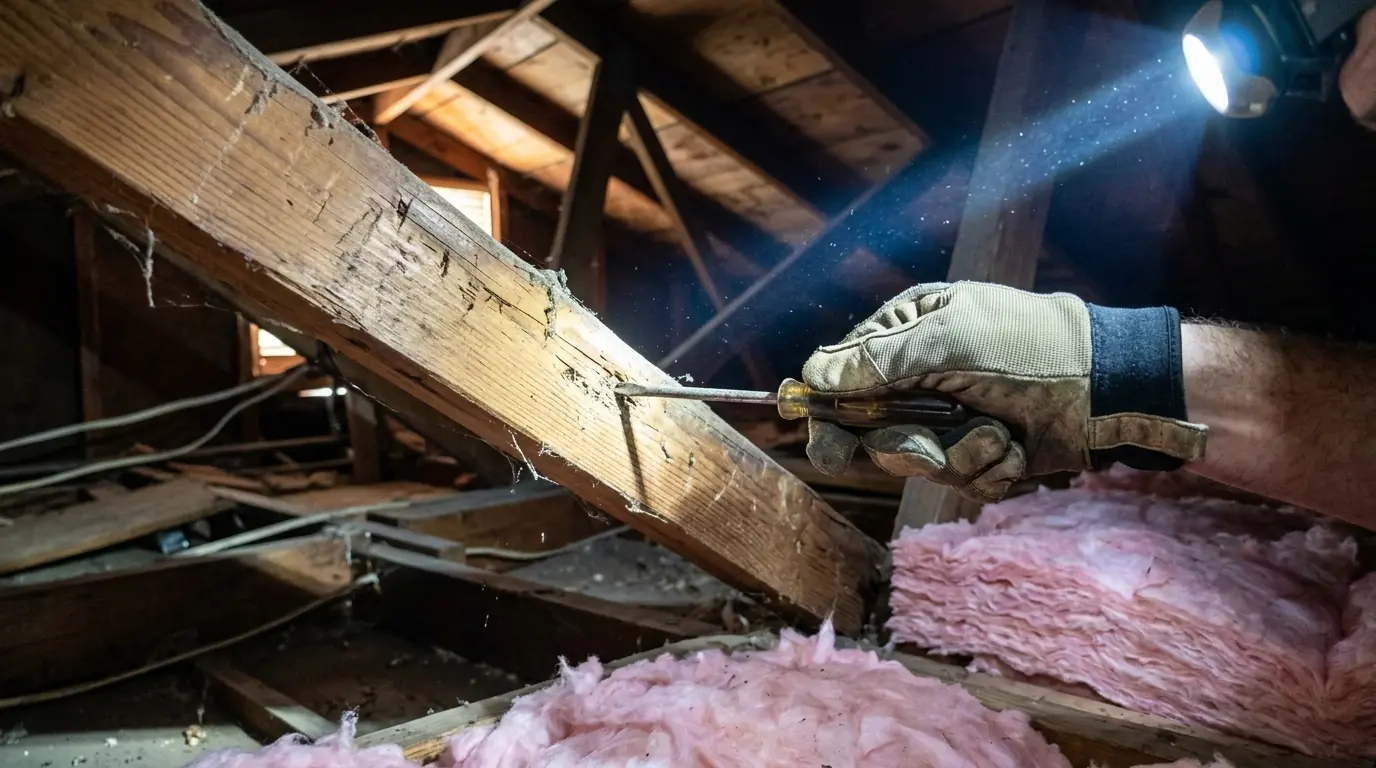
- Attic insulation surfaces under rafters and ridge boards
- Garage sill plates and the base of door jambs
- Crawlspace piers, girders and plumbing penetrations
- Fascia, rafter tails and window trim on sunny exposures
How protection plan pricing is set
Plans are priced by the size of the home, how many visits per year it needs and what the plan includes. A drywood-only inspection plan costs less than one that also covers bait station monitoring or crawlspace subterranean coverage.
| Typical job | Typical range |
|---|---|
| Annual inspection plan, slab home | $145 to $285 per yearOne scheduled inspection, written update and terms for treating new drywood spots. |
| Twice-yearly plan, raised foundation home | $265 to $485 per yearTwo inspections including crawlspace checks and records for subterranean and drywood activity. |
| Bait station monitoring plan | $325 to $585 per yearScheduled station service, bait replacement when needed and activity logs for each station. |
| Small multi-unit building plan | $385 to $865 per yearDuplex to fourplex with shared attics, garages and laundry rooms on one schedule. |
What moves the price
- Square footage and the number of buildings on the lot
- How many visits per year the home actually needs based on its risk
- Whether bait stations or crawlspace subterranean coverage are part of the plan
- Recent treatment history, such as a fumigation within the last few years
- Conditions like wood-to-soil contact that increase follow-up work
These are typical yearly ranges, not a quote; the baseline inspection sets what your plan includes and costs. Compare more jobs in the treatment price guide.
What happens over the course of a plan year
Baseline inspection and diagram
Every plan starts from a full inspection. We map the house, record past treatment areas, and note conditions such as earth-to-wood contact that raise the risk of new activity.
Agree on the visit schedule
Most homes get one inspection a year. Older raised-foundation homes, properties near water or homes with bait stations may get two or more visits.
Seasonal timing of visits
We like to inspect after drywood swarm season in fall and, for subterranean concerns, after spring swarms, when fresh activity is most visible.
Touch-up treatment of new spots
If a new drywood kick-out hole or a fresh mud tube appears, we treat it on the terms written in the plan rather than starting from scratch.
Station service where installed
For bait systems, each station is opened, checked for activity, cleaned and rebaited as needed, and the findings logged against the station map.
Written update after each visit
You get a short report after every visit noting what changed, what we treated and any moisture or wood-to-soil conditions to correct before the next one.
Homes that get the most out of a protection plan
Recently fumigated houses
Tenting clears existing colonies but adds no residual barrier. A plan after fumigation watches for new drywood swarms in the years when the house is most likely to be reinfested.
Homes treated locally for drywood
Spot treatments work on the colonies found, but hidden ones may surface later. Regular inspections catch those early and keep repeat treatment small.
Raised foundations with crawlspaces
Older homes with wood close to soil, piers and plumbing under the floor give subterranean termites more ways in, and a scheduled crawl catches tubes early.
Homes with bait stations installed
Bait systems only work if someone checks and services them. A plan covers that monitoring on the schedule the system needs.
Owners planning to sell in a few years
A clean inspection history and early fixes keep the future escrow report shorter and reduce surprises during negotiation.
Rentals and inherited properties
Owners who are not living in the house often miss pellets and wings. Scheduled visits give an outside set of eyes on a property you rarely see.
Pairing a plan with borate and moisture fixes
Inspections find problems, but some conditions invite them. Bare attic framing and crawlspace lumber can be sprayed with a borate product while the wood is unpainted, which makes it less attractive to termites and wood decay fungi. When we see a remodel exposing new framing, we often suggest a borate application before drywall goes back up. Borate cannot soak through paint or stain, so it only helps on bare lumber.
Moisture is the other half. Subterranean and dampwood termites need it, and wood decay fungus follows it. Sprinkler heads aimed at siding, a slow drip under a kitchen sink or soil piled against stucco all show up on plan reports as items to correct. Fixing them between visits makes the next inspection quieter and lowers the chance of treatment. We note each of these on the visit report with the location, so they are easy to find and fix.
Questions to ask before you agree to any termite plan
Read what the plan actually covers. Some plans include only inspections. Others include treatment of new drywood spots within limits, bait station service, or coverage for subterranean activity only. Ask whether whole-structure fumigation is ever included or always quoted separately, and how the plan handles a finding in an area that was listed as inaccessible. Also ask how far apart visits are scheduled and what happens if a visit is missed.
Ask how renewal works, what the yearly cost will be if nothing is found and whether the plan transfers to a buyer if you sell. Ask to see a sample visit report. A plan is only as useful as the records it produces, so a clear diagram and plain notes after each visit matter more than a long list of promises. Plans with vague wording tend to cause disputes later, so clarity up front helps both sides.
Setting the inspection calendar for coastal Long Beach
Western drywood termites here tend to swarm on warm, sunny afternoons from late summer into fall, often just after the first real heat wave pushes inland air toward the coast. A plan visit scheduled for October or November catches fresh kick-out holes from those swarms while they are still easy to see. Homes in Belmont Heights, Rose Park and the Wrigley district, with 1920s framing and exposed eaves, are where we see that annual pattern most clearly.
Subterranean swarms come in spring after rain, typically February through May. Raised-foundation houses in California Heights and Los Cerritos, where mature landscaping keeps soil damp against stem walls, benefit from a spring crawlspace check. In the 1950s slab tracts of Lakewood Village and Los Altos, one visit a year is usually enough, timed after the fall swarms to look at attic framing, garage sill plates and slab edges where sprinklers keep the soil wet.
Where we do termite protection plan
- Downtown Long Beach 90802
- North Long Beach 90805
- Belmont Shore 90803
- Bixby Knolls 90807
- California Heights 90807
- Los Altos 90815
- Naples 90803
- Rose Park 90804
- Wrigley 90806
- Signal Hill 90755
- Lakewood 90712
- Downey 90240
- Torrance 90503
- Carson 90745
- Compton 90220
- Norwalk 90650
- Bellflower 90706
- Garden Grove 92840
- Westminster 92683
- Seal Beach 90740
- Cerritos 90703
- Whittier 90601
Not listed? We cover all of Long Beach and the nearby cities; call and we will confirm your street.
Termite Protection Plan questions
Does a protection plan replace fumigation if my house has widespread drywood termites?
No. A plan is for watching and treating new, small activity. If an inspection finds colonies in several areas or in places we cannot reach, the recommendation may still be fumigation first, followed by a plan to protect the house in the years after.
Can I start a protection plan if my house was treated by a different company?
Yes. We start with our own baseline inspection and ask for any records you have of the earlier work, such as fumigation dates or treated areas. That history helps us decide where to look closely and how often the house should be visited.
What happens if a plan visit finds termites in a spot that needs repair?
We treat the activity according to the plan terms and note the damaged wood in the visit report. Wood replacement, such as a damaged fascia board or rafter tail, is usually priced separately, and we explain the options before any repair work begins.
Is one visit a year really enough in Long Beach?
For many slab homes with stucco and limited exposed wood, yes. Older raised-foundation homes, properties near the water, and homes with bait stations often benefit from two visits. The baseline inspection tells us which group your house falls into, and the schedule can change if findings change.
Do I have to be home for each plan inspection?
We need access to the attic, garage and crawlspace, so someone has to let us in. Many owners leave a key with a neighbor or a property manager. We send a short written update after each visit, so you can review the findings later even if you were not there.
Related services
Termite Inspection
A termite inspection is a visual and probing check of every accessible part of the house: attic framing, eaves, window and door.
DetailsTermite Bait Stations
Termite bait stations are plastic cylinders set into the soil around a house, usually every 10 to 20 feet.
DetailsBorate Wood Treatment
Borate treatment applies a water-based solution of boron salts, such as Bora-Care or Tim-bor, to bare unpainted wood.
DetailsTermite Fumigation
Termite fumigation, or tenting, covers the whole house with tarps and fills it with sulfuryl fluoride gas, which penetrates every piece of.
DetailsLocalized Drywood Termite Treatment
Localized drywood termite treatment targets specific colonies instead of the whole structure.
Details