Quick answer
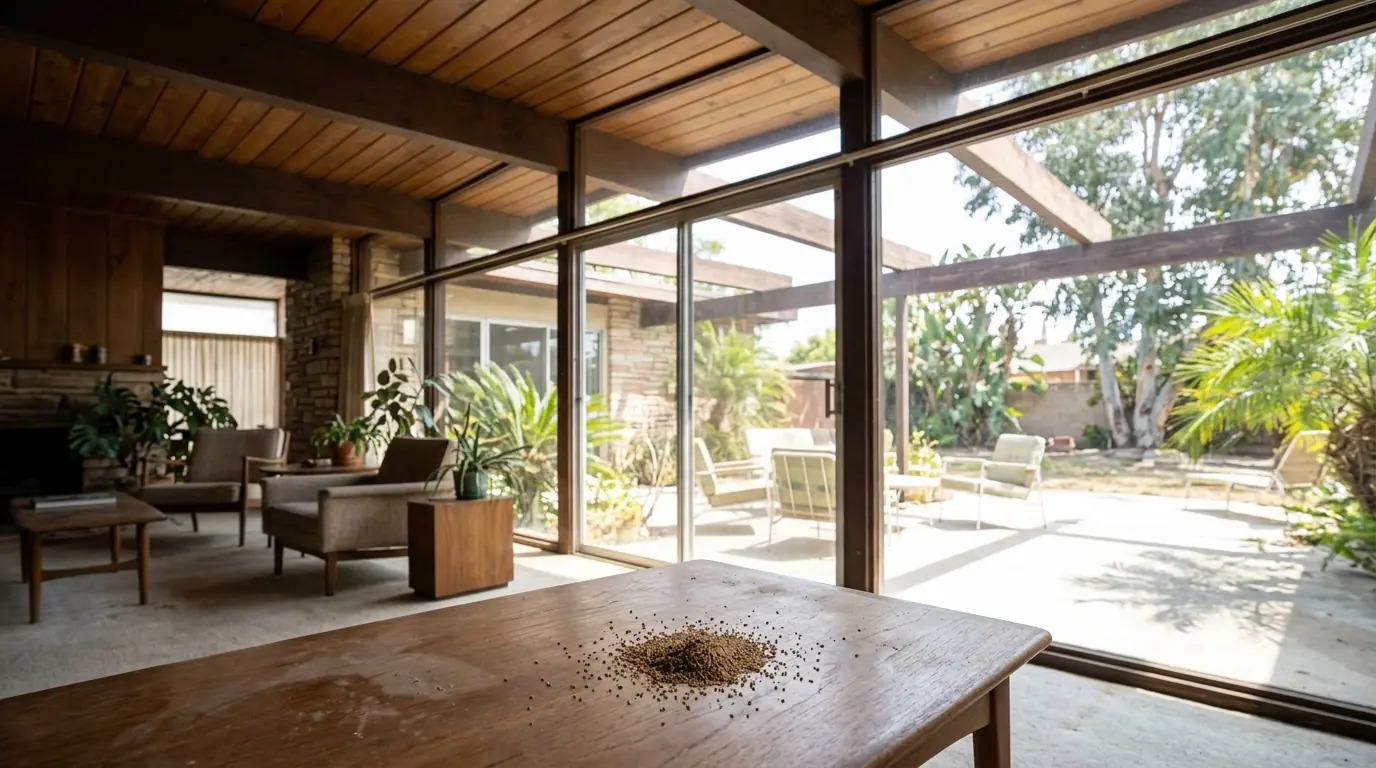
Custom homes in Park Estates often show off their wood: exposed ceiling beams, long overhangs, board siding and shake accents. Drywood termites colonize exactly those pieces, and pellets falling from a beam in a living room are a common first sign. One accessible beam can be drilled and injected; activity in several beams, the attic and the trim points to tenting. Large lots and quiet streets make fumigation logistics easier than in most of Long Beach.
Why exposed timber attracts drywood termites
Midcentury custom homes in this part of east Long Beach were designed to feel open, with beamed ceilings that run from the living room out past the glass to the patio. When a beam crosses from inside to outside, its exterior end weathers, the finish cracks and swarming drywood termites find an opening. The colony can then work its way along the beam into the house. Owners usually notice a little pile of tan or dark pellets on the floor or a coffee table under the same spot every few weeks.
Shake accents, wood soffits and board-and-batten siding can host colonies too. Because these surfaces are visible, we take care to plan any drilling so holes are small, placed in less visible faces, and filled and touched up afterward.
Spot treatment versus fumigating a large home
Drill-and-inject treatment works when we can define the colony: the pellets come from one beam, the beam is accessible along its length, and nothing else in the house shows activity. Orange oil or another labeled product goes into the galleries through small holes, and we recheck later. The limitation is the colony we cannot see, inside a wall or in an attic area without access.
Larger homes with several rooms of beams, an attic over the bedroom wing and a garage are good candidates for fumigation. These lots are wide, landscaping is set back from walls in many cases, and streets have space for trucks. That cuts prep time compared with tight beach lots. Prep still includes bagging food and medicine in fumigation bags, removing indoor plants and pets, watering soil near the house and coordinating gas service with SoCalGas when the home uses gas.
Patios, pools and wood that gets wet
Many Park Estates homes have pools, covered patios and long wood fences. Patio cover posts sitting on concrete can wick water at the base and rot, which also invites subterranean termites from nearby soil. Pool equipment areas with leaking fittings keep fence posts and gates wet. We check these spots, note them on the report, and repair or replace decayed posts and rails when needed.
Subterranean termites also show up where slabs meet additions or patios. Treating the soil at those joints, or installing bait stations around a large footprint, keeps them from reaching interior walls.
Other pests around a midcentury yard
Mature trees bring roof rats, especially where limbs hang over the roof. Lawns near the campus and nearby parks get gophers. Paper wasps nest under overhangs and in patio cover beams, and Argentine ants trail across pool decks in summer. A seasonal service visit covers these together.
Homes here are often sold to buyers who want the original midcentury character intact, so a pre-listing termite report is worth ordering early. It lets the seller treat a beam colony, repair a rotted patio post or correct soil against siding on their own schedule instead of under an escrow deadline. We describe each finding with its location, so a buyer can see exactly what was found and what was done about it.
What we treat most in Park Estates
Drywood termites
Colonize exposed ceiling beams that cross from interior to exterior, wood soffits and shake accents on 1950s custom homes.
Western subterranean termites
Reach patio cover posts and slab edges where additions and patios meet the original house.
Roof rats
Climb mature trees and travel limbs that overhang long, low rooflines.
Paper wasps
Nest under deep eaves and in the corners of patio covers and pool cabanas.
Argentine ants
Trail along pool decks and into kitchens when summer heat dries out the soil.