Quick answer
Argentine ants form huge connected colonies with many queens, so killing the ants you see does little. Effective control uses slow-acting baits the workers carry back to feed the queens and brood, plus a non-repellent treatment outside along foundations and trails that ants pass through without detecting. Repellent sprays and wipes push the colony to split and enter somewhere else. Most invasions drop sharply within one to two weeks of a correct treatment.
The Argentine ant is the dominant ant across coastal Southern California. It arrived over a century ago and has displaced most native ants because its colonies do not fight each other. Nests under one yard are linked by trails to nests under the next yard and the one after that, forming what is effectively one supercolony across whole neighborhoods. Each nest holds many queens, and new nests form by budding when a group of workers and queens simply walks off to a new spot.
That biology explains why ant problems in Long Beach feel endless. You are not dealing with one nest in the wall but with a network that stretches far beyond your property line. The practical goal is to cut the population around your home low enough that ants stop foraging inside, and keep it there through the seasons when they push indoors hardest.
How to tell you have Argentine ants, and how bad it is
Small, uniform brown ants
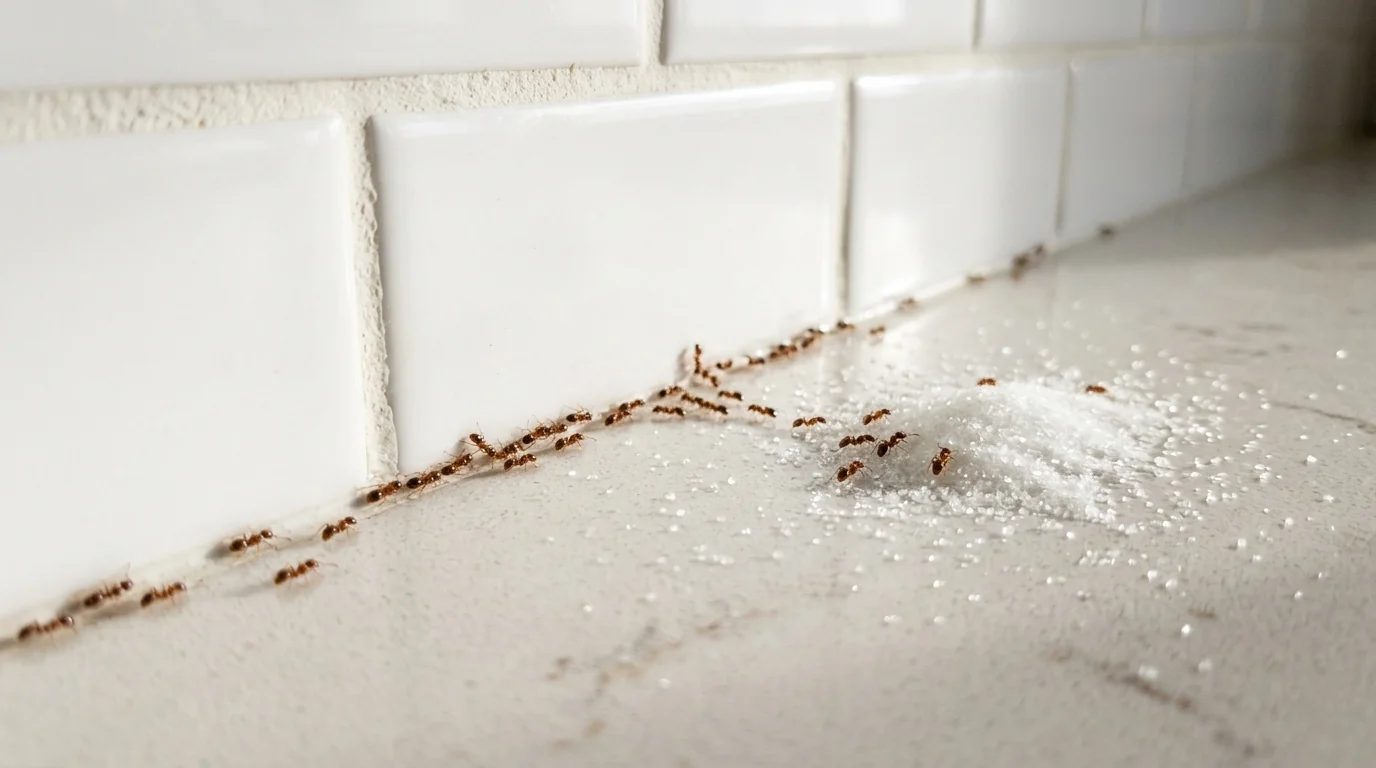
Workers are all about one eighth of an inch, light to dark brown, with no big-headed soldiers. They move quickly in narrow, steady lines.
Trails along edges
They follow baseboards, countertop backsplashes, window frames, wiring and plumbing lines, often entering where a pipe or cable passes through a wall.
Faint musty smell when crushed
Many people describe a stale, greasy odor when Argentine ants are squashed, unlike the sharper smell of odorous house ants.
Sudden surge after weather
Large invasions often follow a heat wave, when ants look for water, or heavy rain, when nests flood and the colony moves to higher, drier ground.
Ants tending plant pests
Ants climbing citrus, roses or hibiscus to farm aphids, scale and mealybugs for their sweet honeydew, which feeds the colony.
Nests under pavers and pots
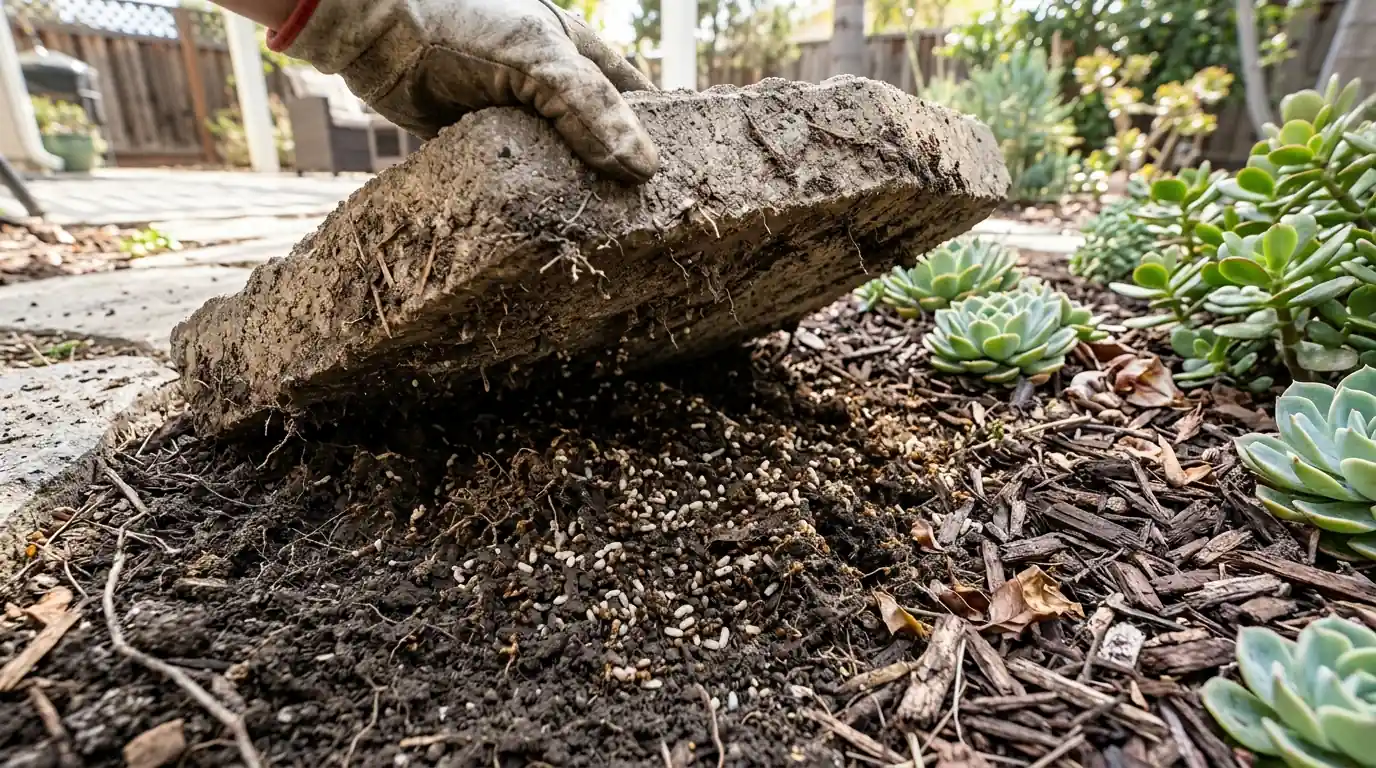
Lifting a stepping stone, flower pot or garden edging and finding a mass of ants, white larvae and several queens.
How we bring an Argentine ant invasion under control
Follow the trails out
We trace the ants from where you see them inside to where they enter the walls and then to the outside nests and foraging trails, so treatment goes where the colony lives.
Place slow-acting bait
Liquid or gel sugar baits go along active trails inside and out. They work slowly on purpose, so workers survive long enough to share the bait with queens and larvae.
Treat the exterior with non-repellents
A non-repellent product is applied along the foundation, entry points and trail routes. Ants walk through it unaware and spread it to nestmates through contact.
Seal the indoor entry points
Where trails enter through gaps around pipes, outlets or windows, we seal or note them for sealing once the ants stop using them.
Address aphids and honeydew
Heavy ant traffic on shrubs and trees is often fed by plant pests. We point out which plants are feeding the colony and how to break that food source.
Recheck and adjust
We check bait uptake and trail activity in one to two weeks, and refresh bait or extend the exterior treatment if pressure persists.
Before your ant treatment
- Do not spray or wipe the trails for a day or two beforehand, so we can follow them
- Note the rooms and times of day where ants are worst
- Put away open food and pet food, but leave the trail itself visible
- Clear the area under the kitchen and bathroom sinks
- Leave side gates open and keep pets inside during exterior work
- Tell us about any fruit trees or roses with sticky leaves or aphids
Why grocery store sprays make ant problems worse
The instinct when you see an ant trail is to spray it, and the trail vanishes for a day. What happens out of sight is the problem. Repellent sprays and strong cleaners tell the colony that the route is dangerous, so foragers divert and find another way in, often through several new entry points. Stressed Argentine ant nests also bud, sending queens off to start new nests, which can spread the problem into more walls.
Baits and non-repellent products work the opposite way. They let ants keep using their trails and deliver the active ingredient back to the nest. That is why we ask people not to spray or wipe trails right after a treatment, and to let ants feed on the bait. Seeing ants on the bait station for a few days is a good sign, even if it is hard to watch.
Bait, spray or both: matching the method to the situation
Neither tool is enough on its own for a serious Argentine ant problem, so we use them together.
- Indoor bait only: light trails in one room with a clear entry point; low product use inside
- Exterior non-repellent only: ants foraging outside and probing doors and windows without established indoor trails
- Both together: active indoor trails plus heavy outside traffic, the usual Long Beach summer case
- Plus plant care: when ants are farming aphids or scale on citrus or roses that sit against the house
Typical ant control costs in Long Beach
A single ant treatment can be effective for weeks, but in a neighborhood with heavy Argentine ant pressure, recurring exterior service is usually what keeps them out of the house long term.
| Typical job | Typical range |
|---|---|
| One-time ant treatment | $165 to $335Interior baiting, exterior non-repellent perimeter and a follow-up check |
| Severe invasion or multi-unit | $285 to $585Heavy activity in several rooms, a duplex, or a building with shared walls |
| Recurring ant-focused service | $75 to $145 per visitBimonthly or quarterly exterior treatment with bait refresh inside |
| Follow-up bait visit | $65 to $125Additional bait placement if a second wave appears after the first treatment |
What moves the price
- How many rooms and entry points the ants are using
- Size of the yard and amount of mulch, ivy and pavers
- Plant pests such as aphids and scale feeding the colony
- Shared walls in duplexes, fourplexes and courtyard buildings
- Whether repellent sprays have already split the colony
These are typical ranges, not a quote, and the inspection sets the price based on how much ant activity we find. Compare more jobs in the treatment price guide.
Keeping Argentine ants out after the treatment works
Once the invasion collapses, a few habits keep it from rebuilding. Store sugar, honey, syrup and pet food in sealed containers, and rinse recycling before it goes into the bin. Fix dripping faucets and leaks under sinks, since ants come in for water as much as food during hot spells. Keep bark mulch and ground cover pulled back from the foundation, and trim plant branches that touch walls, rooflines or utility lines, which ants use as bridges.
Aphids, scale and whiteflies on landscape plants are a hidden food source that keeps colonies strong. Hosing aphids off, controlling scale on citrus and wrapping tree trunks with a sticky band can cut the honeydew supply. In neighborhoods with very heavy pressure, a recurring exterior treatment in late spring and through the summer, timed before the heat waves, does the most to prevent the August kitchen invasion.
When and where Long Beach ants invade
Argentine ant pressure rises across Long Beach from May to October, with the biggest indoor invasions during heat waves in August and September and again right after the first fall and winter rains. Homes on the narrow lots of Belmont Shore and Belmont Heights often share a continuous colony with every neighbor on the block, so ants return quickly unless the exterior is treated.
In Bixby Knolls, Los Cerritos and Lakewood Village, mature citrus trees and rose beds carry aphids and scale that feed huge ant populations right next to the house. Courtyard apartments in Alamitos Beach and Rose Park have ants traveling through shared walls and plumbing chases, which is why multi-unit buildings respond best when several units are treated together. The slab ranch homes of Los Altos and El Dorado Park Estates see ants entering through expansion joints, garage door edges and the gaps where plumbing comes through the slab.
Where we do ant control
- Downtown Long Beach 90802
- North Long Beach 90805
- Belmont Shore 90803
- Bixby Knolls 90807
- California Heights 90807
- Los Altos 90815
- Naples 90803
- Rose Park 90804
- Wrigley 90806
- Signal Hill 90755
- Lakewood 90712
- Downey 90240
- Torrance 90503
- Carson 90745
- Compton 90220
- Norwalk 90650
- Bellflower 90706
- Garden Grove 92840
- Westminster 92683
- Seal Beach 90740
- Cerritos 90703
- Whittier 90601
Not listed? We cover all of Long Beach and the nearby cities; call and we will confirm your street.
Ant Control questions
How long until the ants are gone after baiting?
Most Argentine ant invasions drop noticeably within three to seven days and are largely under control in one to two weeks, as the bait works through the nests. You may see more ants around the bait at first. If trails persist after two weeks, the bait or exterior treatment usually needs to be extended.
Why do Argentine ants come in when it rains?
Their nests are shallow, under pavers, mulch and soil near the surface. Heavy rain floods them, and the colony moves queens and brood to drier, higher ground, often inside wall voids, under flooring or in potted plants. Hot, dry spells cause a similar push indoors as they search for water.
Are the tiny ants in my bathroom the same as the kitchen ants?
In Long Beach, they usually are. Argentine ants visit bathrooms for water, especially in summer, and they enter through gaps around drain pipes and tub surrounds. If the ants in the bathroom are very small and pale yellow, they may be a different species, so let us know and we will identify them.
Will treating my yard affect bees and other insects?
We apply exterior products to the foundation, entry points and ant trails, not to flowering plants where bees forage. Baits are placed in stations or along trails where ants find them. If you have flowering shrubs against the house, we avoid treating blooms and work around them.
Can ants damage my house the way termites do?
Argentine ants do not damage wood. They are a nuisance and can contaminate food, and they sometimes nest in wall voids and insulation. Carpenter ants, which are much larger, can excavate damp or decayed wood, but they are far less common in Long Beach than Argentine ants.
Related services
General Pest Control
General pest control is a recurring service, usually every other month or quarterly, that treats the outside of the home to stop.
DetailsPantry Pest Control
Pantry pests are solved by finding and discarding every infested food package first, then treating the cracks and shelf joints where larvae.
Details