Quick answer
In Belmont Heights the crawlspace tells most of the story. Older raised foundations invite subterranean termites, which climb piers and cripple walls through mud tubes, and plumbing leaks under bathrooms feed fungus that rots sill plates. Drywood termites work the attic and porch trim at the same time. A typical plan pairs soil treatment or bait for the subterranean colony with local or whole-structure work for drywood, then repairs the rotted wood.
What we usually find crawling under a Belmont Heights floor
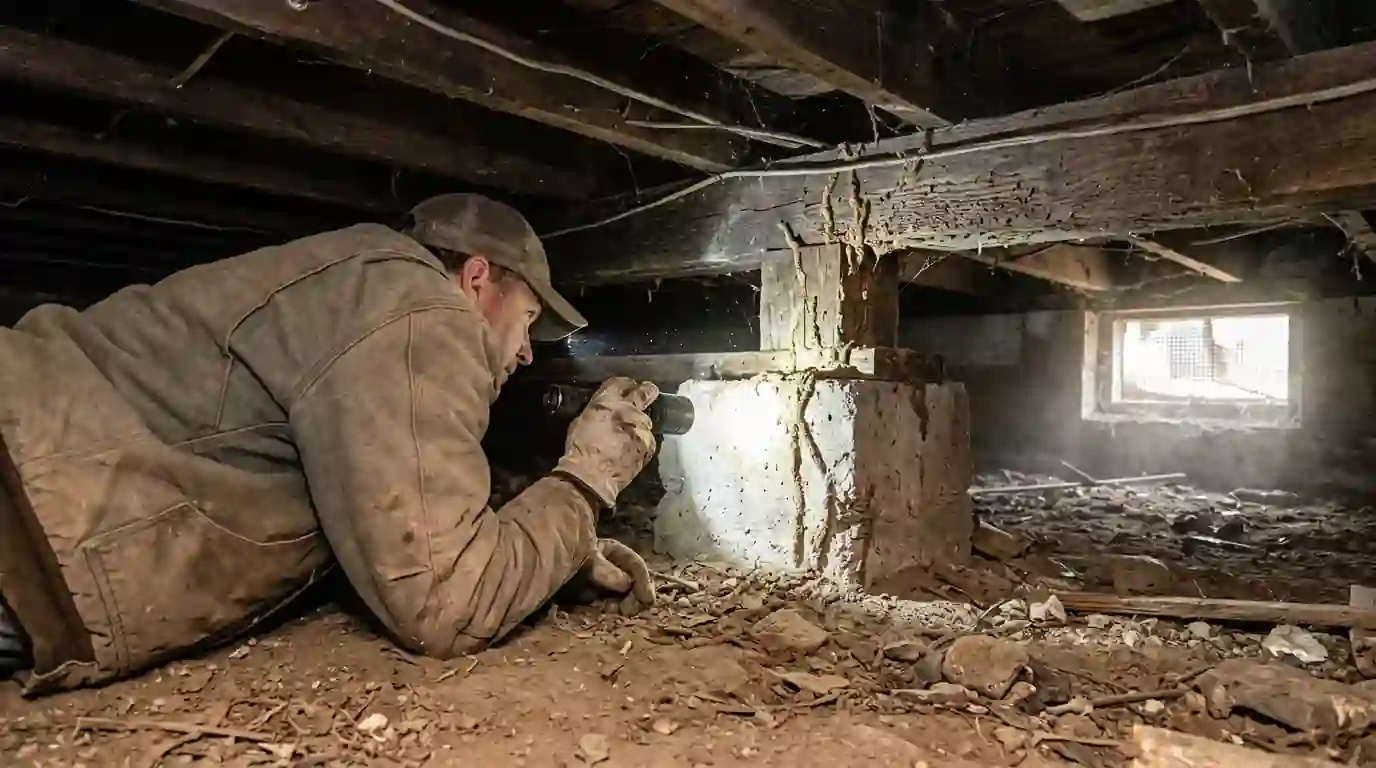
The crawl hatch on these houses might be in a hall closet or behind a lattice panel at the side yard. Once inside, our inspector checks every pier post and the sill plate around the perimeter with a flashlight and a probe. Pencil-width mud tubes running up a concrete pier are the classic sign of western subterranean termites. So are soft spots in the mudsill where the grain has been hollowed out and packed with soil.
We also look for the things that turn a small problem into a big one: form boards left in the soil from when the foundation was poured a century ago, scrap lumber stored on the dirt, cellulose debris, and vent screens that have rusted open. A leaking drain under the bathroom or kitchen is common in homes this age, and constant moisture brings fungus damage that looks like brown, cracked, cube-shaped wood.
Two termite species, one house
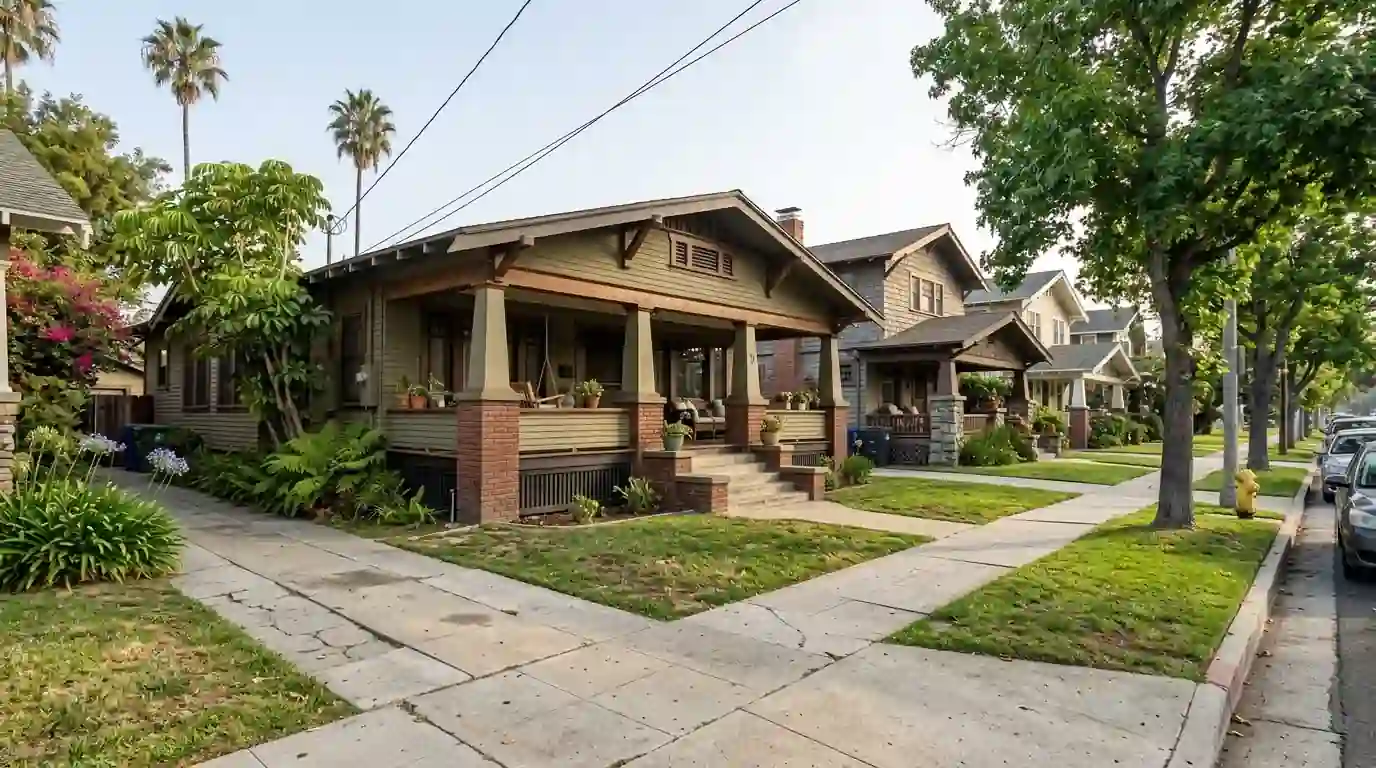
Many homes between Broadway and Seventh Street carry both kinds of termites at once. The drywood colonies live up high in rafter tails, attic sheathing, window casings and the tapered porch columns that define the Craftsman look. The subterranean colonies come up from the ground. Treating only one leaves the other working.
For the soil side we trench and rod a non-repellent liquid termiticide around the foundation and at piers, or install a bait system when landscaping or a neighbor's well-loved garden makes trenching awkward. For the drywood side the choice depends on how widespread the pellets are: drill and inject for a few contained spots, tenting when activity shows up across the attic and multiple walls. Bare crawlspace framing is a good candidate for borate after treatment, because nothing has ever been painted down there.
Fixing the wood before it shows up on a report
A Section 2 note on a termite report, such as earth-to-wood contact at the back steps, often becomes a Section 1 finding a few years later. We handle the repairs that close those gaps: replacing a rotted porch post and setting it on a concrete pier, cutting out a damaged section of sill and sistering new lumber, lowering soil or mulch that has crept up against the siding, and replacing broken crawl vent screens. When the cause is a leak, the plumbing has to be fixed first or the new wood will rot too.
On an original Craftsman, matching the profile of trim and siding is part of the job. We replace only what is damaged, keep salvageable boards, and leave surfaces ready for paint so the house still looks like itself.
Seasons on a raised-floor street
Spring is when subterranean swarmers appear, often on a warm afternoon after rain, rising from a crack in the porch slab or a gap in the floorboards. Late summer brings the drywood flights from the attic and window frames. If you see winged insects indoors in either season, save a few in a jar or sealed bag. The wing shape and body color tell us which treatment to plan.
What we treat most in Belmont Heights
Western subterranean termites
Mud tubes on crawlspace piers and the foundation, plus hollowed sill plates on houses where the soil grade has crept up over the decades.
Drywood termites
Pellets dropping from Craftsman porch beams, attic rafters and window casings, especially on the south and west faces that get the most afternoon sun.
Wood decay fungus
Dry rot under bathrooms and kitchens with slow leaks; the wood turns brown, cracks into cubes and crumbles when probed.
Roof rats
Nesting in mature street trees and climbing into attics through gaps at the eaves and old gable vents.
Black widow spiders
Common in crawlspaces, around crawl hatches and in the corners of detached garages, which is one reason we check under floors with care.