Quick answer
Signal Hill is about three miles from our Pine Avenue office, so it is one of the quickest trips we make. We handle drywood termite inspections and tenting, subterranean termite treatment, ant and spider control, and rodent work for hillside houses, townhome associations and the condo buildings that went up on former oil field land.
A small city built on an old oil field
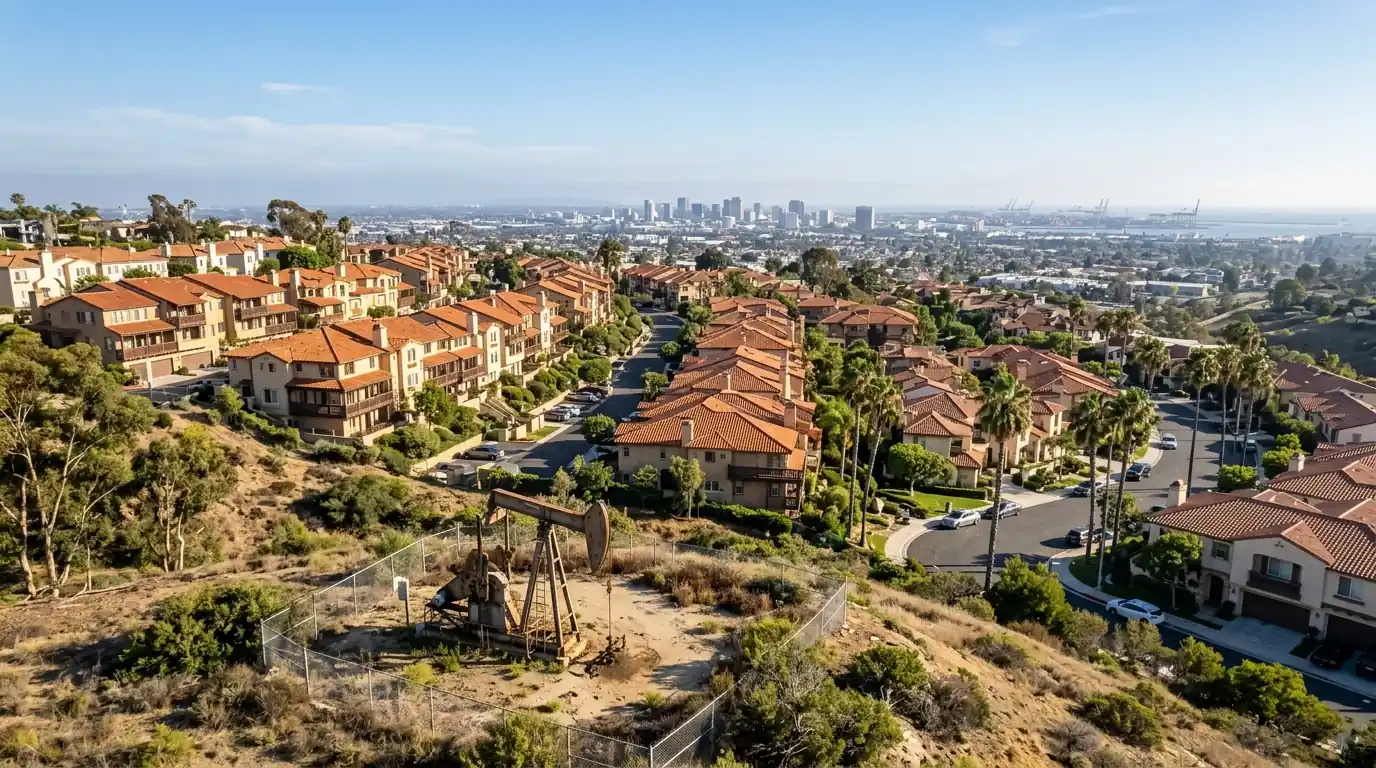
Signal Hill is the rise you see from almost anywhere in Long Beach, and it is completely surrounded by Long Beach on all sides. Oil was struck here in the early 1920s, and for decades the hill was crowded with derricks. As the field slowed, much of that land was cleared and rebuilt, so the city now mixes 1920s and 1940s homes on the lower streets with townhome and condo complexes from the 1980s onward on the slopes and near the top.
That mix means the inspections vary a lot within a few blocks. Older houses may sit on raised foundations or have early additions on separate slabs. Newer complexes are usually slab-on-grade with wood framing above, shared attics and long runs of wood fascia. A handful of working pump jacks still turn on the hillside, a reminder of how recently the ground was industrial.
Wind, views and what they do to exterior wood
Homes near Hilltop Park and along the upper streets catch more wind and more sun than the flat neighborhoods around them. Sun on the south and west faces dries and cracks paint on fascia and window trim, and those cracks are exactly where drywood termite swarmers land in late summer to start new colonies. On view decks, the boards and joists take morning fog followed by afternoon sun, a cycle that loosens fasteners and opens checks in the wood.
On a typical Signal Hill call our inspector starts outside, looking at the eaves, deck framing and garage door jambs, then goes into the attic with a flashlight and probe. We look for the six-sided pellets drywood termites push out, and for blistered or sunken paint that hides tunnels just below the surface.
Townhome and condo associations on the hill
Many Signal Hill residents live in attached townhomes where a single roof covers four, six or more units. When drywood termites spread through a shared attic, spot treatment in one unit rarely solves it, because the colony crosses the firewall line through the roof sheathing and fascia. The association often decides between whole-building fumigation and a schedule of localized treatments.
Because tenting a building means every resident leaves for two to three days, boards usually want clear findings before they vote. Our reports note which units show activity, where the damage sits, and whether it touches common area wood such as balcony railings and carport framing. Hillside complexes also have tight driveways and limited guest parking, so we plan tarp and equipment staging with the property manager ahead of time.
When pests come out on Signal Hill
Late summer is the busiest stretch. The first hot spell of August or September tends to set off drywood swarm flights, and owners find winged termites on window sills and light fixtures in the evening. Argentine ants push indoors during the same heat, then again after the first fall rain.
Spring brings subterranean termite swarms on warm days after rain, often from the base of a slope where irrigation runoff collects. Black widows and brown widows settle into block walls, meter boxes and patio furniture through the warm months, and roof rats travel the hillside palms and ivy year round.
What we treat most in Signal Hill
Drywood termites
Common in sun-cracked fascia, view deck framing and shared townhome attics, with pellet piles showing up on window sills and garage floors.
Subterranean termites
Colonies near the base of slopes where irrigation water drains, coming up through slab cracks and at the seam of older additions.
Widow spiders
Black widows and brown widows in block retaining walls, meter boxes, under patio chairs and in garage corners on hillside lots.
Roof rats
Use palms and ivy on the slopes, then run along fences and utility lines to reach attic vents and roof gaps.
Argentine ants
Trail in from irrigated slopes and planters during late summer heat and again after the first rains of fall.