Quick answer
Westminster is about fifteen miles from our Long Beach office on the 405 or Westminster Boulevard. We run scheduled pest programs for restaurants, bakeries and markets in Little Saigon along Bolsa Avenue, covering German cockroaches, rodents, flies and pantry pests, and we handle drywood and subterranean termites, ants and roof rats in the city's tract neighborhoods.
Food businesses along Bolsa Avenue
Little Saigon took shape in the late 1970s and 1980s as Vietnamese refugee families opened shops and restaurants on Bolsa Avenue and the surrounding streets, and the district now stretches across Westminster and into Garden Grove. Shopping plazas hold restaurants, bakeries, grocery markets, herb and dry goods stores, and cafes side by side, often sharing walls, plumbing lines and rear service alleys.
That density is where pest problems spread. German cockroaches move between tenants through shared wall voids and plumbing. Rodents use rear dumpster areas and loading doors. Flies breed in drains and trash, and pantry insects such as Indian meal moths and grain beetles can arrive in bulk rice, flour, spices and dried goods.
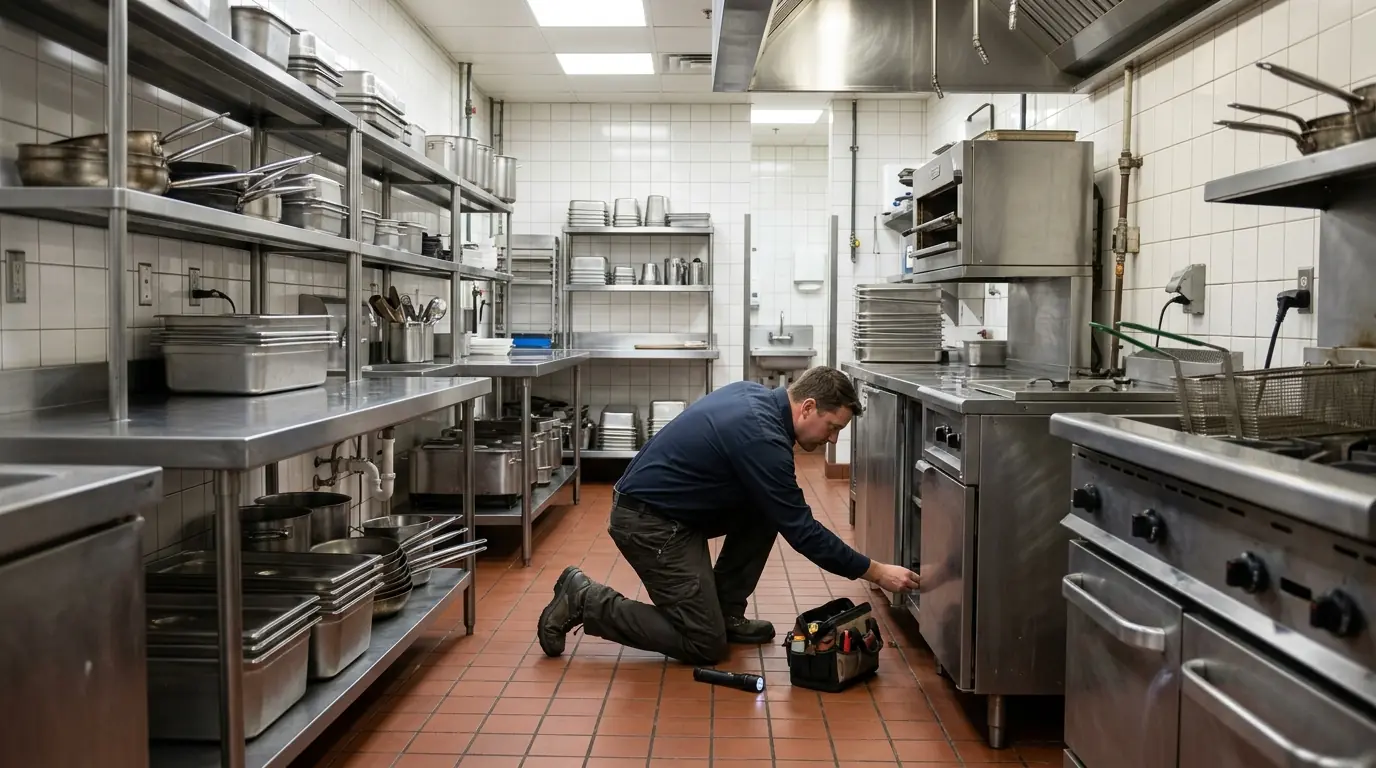
Setting up a commercial program
A food business needs regular service, not a one-time spray. Our programs start with an inspection of the kitchen, storage, dining area and exterior, then a written plan that sets the visit frequency and lists what will be done each time. Typical steps include gel baits and growth regulators in cracks near equipment, exterior rodent stations along the building, sealing gaps where pipes pass through walls, drain treatments for flies and monitoring traps in storage areas.
We keep service notes for each visit, which helps when a health inspector asks what pest control is in place. When a plaza has several tenants with the same problem, it works best when the property manager coordinates treatment across the whole building.
1960s tract homes off Beach Boulevard
Away from the commercial corridors, Westminster is mostly single-story and two-story tract homes built in the late 1950s and 1960s on slab foundations. Drywood termites settle in attic framing, fascia and garage door headers, with pellets showing up on window sills and garage floors. Subterranean termites enter at slab cracks, plumbing and the seams of later additions.
We see a lot of backyard fruit trees and vegetable gardens in Westminster yards. They are a big draw for roof rats and for Argentine ants that farm aphids on the plants. Trimming trees back from the roof, sealing attic vents and bait placement along the foundation help keep both outside.
Weather from the coast to the inland edge
The southern part of the city, closer to Huntington Beach, catches more of the marine layer, which keeps wood decks and fences damp longer and can draw dampwood termites. The northern side warms up more in summer, which brings stronger drywood swarms in late summer and early fall and more indoor ant trails during heat waves. Subterranean swarms come in spring on warm days after rain.
For businesses, summer is also when flies and cockroaches build fastest, so we often tighten the visit schedule from June through September and ease back once the weather cools. Homeowners tend to notice ants and termite swarmers in the same stretch, which makes late summer a sensible time for an attic and eave check.
What we treat most in Westminster
German cockroaches
Spread between restaurants, bakeries and markets in Little Saigon plazas through shared walls and plumbing.
Rodents
Use rear service alleys, dumpster areas and loading doors behind commercial plazas, and backyard fruit trees in neighborhoods.
Pantry pests
Indian meal moths and grain beetles arrive in bulk rice, flour, spices and dried goods in markets and home pantries.
Drain flies and house flies
Breed in floor drains, grease traps and trash areas behind restaurants along Bolsa Avenue.
Drywood termites
Colonies in the attic framing, fascia and garage headers of 1960s tract homes across the residential neighborhoods.