Quick answer
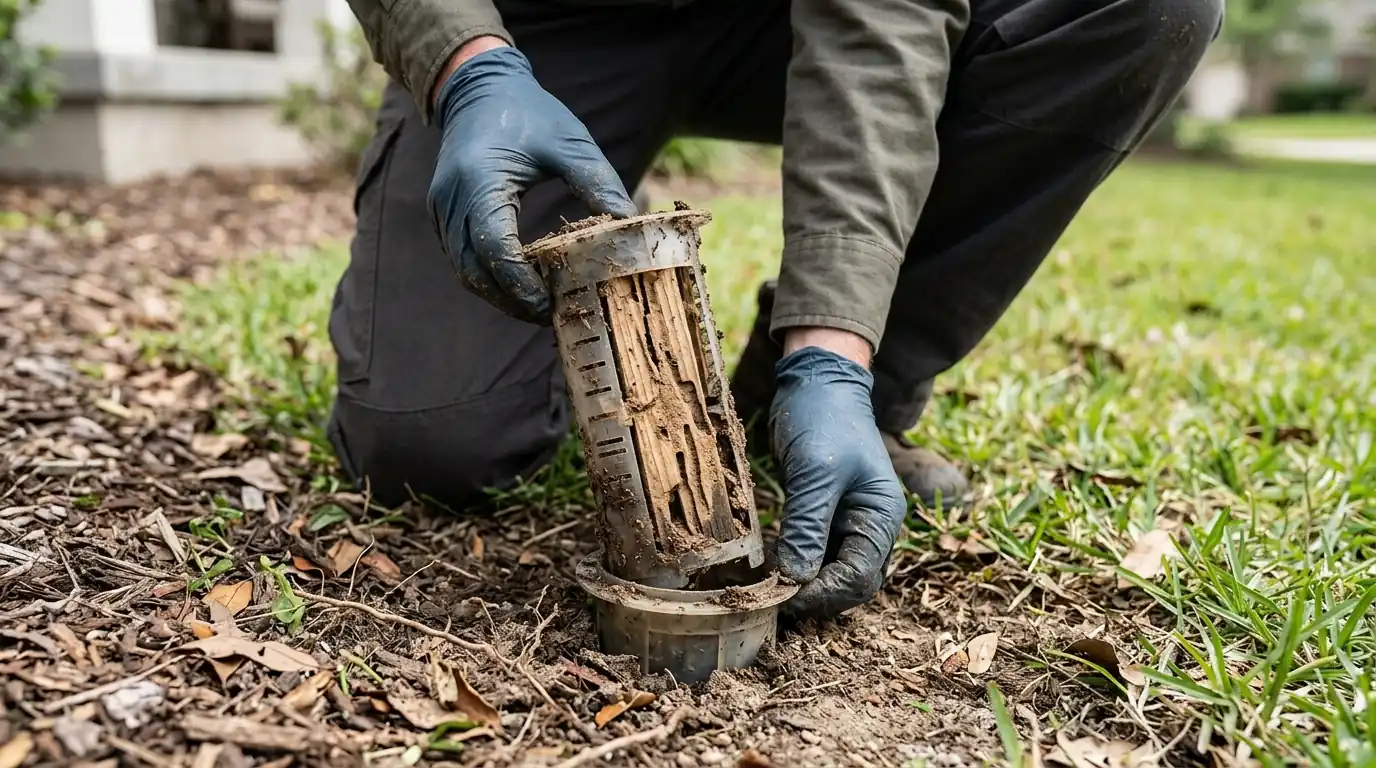
Termite bait stations are plastic cylinders set into the soil around a house, usually every 10 to 20 feet. They hold wood or cellulose monitors and, once termites find them, a slow-acting bait that workers carry back to the colony. Over weeks to months, the colony declines. Bait systems need regular service visits and work only on subterranean termites, not drywood.
Bait works with termite behavior instead of against it. Subterranean workers forage through the soil looking for food. When they find a station, they feed on the bait and share it with nestmates. The active ingredient, a growth regulator in most systems, stops termites from molting properly. Because it acts slowly, workers have time to spread it through the colony before any die.
The result is a method that targets the colony itself rather than building a barrier around the house. It uses very little product, needs no trenching along the whole foundation and leaves landscaping mostly intact. The tradeoff is time and attention: stations must be checked on a schedule, bait replaced when consumed, and the system kept in service for as long as you want protection.
Why bait is slow on purpose
A fast-acting poison would kill the termites that touch it and leave the rest of the colony untouched. Workers that die quickly near a food source can also warn others away. Bait systems avoid that by using a growth regulator, an ingredient that interferes with molting. Termites that eat it keep working normally for a while and share the bait with nestmates before the effect builds up.
Colonies can contain hundreds of thousands of termites spread over a large area of soil. Reaching the whole colony takes time. Results often show within a few months, but timing depends on soil temperature, colony size and how quickly termites find the stations. Cooler months slow feeding. Patience is part of the process, and regular service keeps bait available the whole time.
Because results build slowly, bait is sometimes paired with a spot liquid treatment where termites are actively damaging the house, especially before a sale or when damage is visible.
Station placement and why spacing matters
Termites forage randomly through the soil until they find food. The closer the stations are, the sooner foragers find them. Typical spacing is 10 to 20 feet around the house, with additional stations near known activity, downspouts, plumbing lines, planters and other damp spots where termites tend to gather.
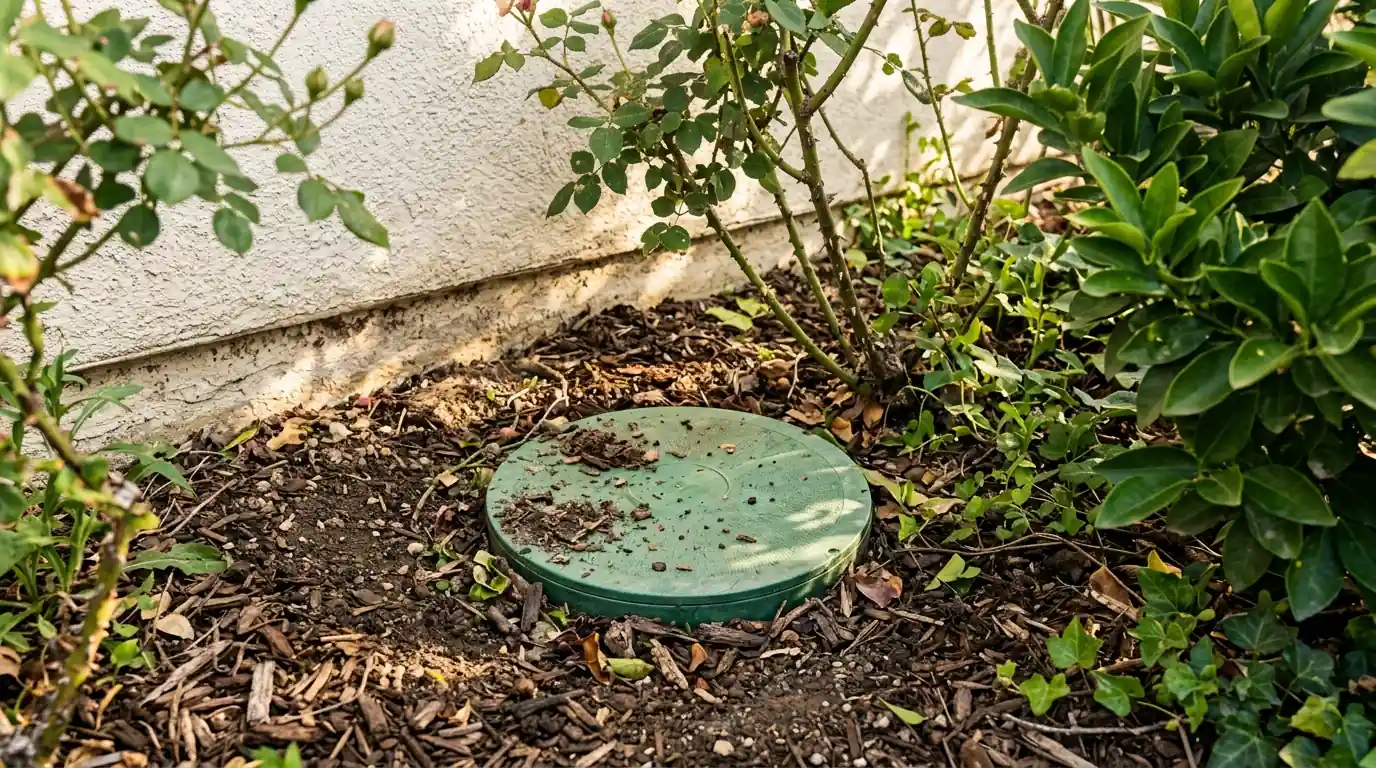
Stations have to be in soil, not concrete. Homes with patios and walkways along most walls may need stations placed at the edges of hardscape or in nearby beds. In those cases, we sometimes add stations in the yard to intercept termites before they reach the house. Station lids sit flush with the ground, so mowers and foot traffic pass over them without issue. Narrow side yards with a fence close to the house still work, as long as there is a strip of soil to set stations into.
- Near known mud tubes and damage
- At downspouts and hose bibs
- Along planters and damp beds
- At corners and long walls
Bait station costs for Long Beach homes
Bait systems have an installation cost and an ongoing service cost. Installation depends on the perimeter length and the number of stations. Service is usually billed yearly and covers scheduled checks and bait replacement.
| Typical job | Typical range |
|---|---|
| Installation, typical home | $985 to $2,240Around 15 to 30 stations placed around the foundation with an initial layout. |
| Additional stations | $45 to $95 per stationExtra stations near active areas, additions, garages or long walls. |
| Annual monitoring and service | $345 to $585 per yearScheduled station checks, bait replacement and activity records. |
| Activity spot treatment | $285 to $685Optional targeted liquid treatment at an active entry point while bait works. |
What moves the price
- Perimeter length and number of stations needed
- Landscaping, hardscape and concrete that limit station placement
- Level of current activity and how quickly results are needed
- Service frequency agreed in the monitoring plan
- Whether liquid spot treatment is added near active areas
Station counts change with every yard, which is why these are typical ranges and not a quote until we walk the perimeter and lay out stations. Compare more jobs in the treatment price guide.
Installing and servicing a bait system
Inspect and plan station layout
We confirm subterranean termites and map the perimeter, marking spots near known activity, moisture and soil that stays damp.
Install stations in the soil
Stations are set flush with the ground at intervals around the house, with closer spacing near active areas. Lids sit level with soil or lawn.
Monitor for termite feeding
During early visits, stations are checked for termite activity. Some systems start with monitors and switch to bait once termites are found.
Add or replace bait
When termites are feeding, bait is added or topped up so the colony keeps receiving the active ingredient.
Track colony decline
We record feeding at each station. Over weeks to months, feeding slows and stops as the colony collapses.
Keep up scheduled service
After control is reached, stations stay in place and are checked on a regular schedule to catch any new colony that moves in.
When a bait system is a good choice
Landscaping you want to keep intact
Mature plantings, hardscape and brick borders along the foundation make trenching disruptive. Stations go in small holes between plants.
Subterranean activity confirmed
Mud tubes, soil-packed damage or spring swarms show a soil colony that bait can reach. Bait does nothing for drywood termites in the attic.
Wells, ponds or sensitive areas nearby
Where soil treatment near water features or vegetable beds is a concern, bait uses far less product in a contained station.
Ongoing monitoring is wanted
Stations double as early warning. Termite hits in a station show activity before it reaches the house.
Follow-up after liquid treatment
Some owners add stations after a soil treatment to monitor for new colonies over the long term.
Living with a bait system over the years
Once installed, a bait system is mostly invisible. Station lids look like small round caps in the soil. You can garden around them, but avoid burying them under mulch, pavers or new planters, since we need to open them on every visit. If you remodel or add hardscape, tell us so stations can be moved rather than lost.
The system works only while it is serviced. Stations that are not checked can run out of bait or be disturbed without anyone noticing. Keeping the service schedule matters more than the installation itself. When you sell, the system and service records can be useful to buyers, who may continue the plan.
Keep sprinklers from flooding stations and keep pets from digging around the lids. If a lid goes missing or a station looks disturbed, mention it before the next visit so we can replace it and check for termites at the same time.
Monitor-first and bait-first systems compared
Bait systems come in two broad styles. Monitor-first systems start with untreated wood or cellulose inside each station. On each visit we check for feeding, and only when termites show up do we add the active bait. That approach uses less product and works well for long-term watching on homes without heavy current activity.
Bait-first systems load every station with active bait from day one. Termites that find any station begin carrying the active ingredient right away, which can shorten the time to control when activity is already confirmed. Products such as Sentricon, Advance and Trelona each have their own station design, bait and service schedule.
We choose based on what the inspection finds. A house with live mud tubes on the foundation usually benefits from bait-first stations near the active areas. A recently treated house that needs ongoing watching may suit a monitor-first layout. Either way, the stations, the records and the visit schedule are what make the system protect the house.
Bait systems in Long Beach yards and soil
Bait suits many Long Beach homes because of how yards here are built. Spanish and Craftsman homes in Bixby Knolls, Los Cerritos and Virginia Country Club have deep, established beds of roses, citrus and mature shrubs against the foundation. Trenching through those beds is destructive, while stations can slip between plants with minimal disruption.
In the slab ranch tracts of Los Altos, Park Estates and El Dorado Park Estates, irrigated lawns and planters keep the soil moist year round, which supports subterranean colonies and lets termites find stations steadily. Homes near Colorado Lagoon and the San Gabriel River often have soil that stays damp, and bait stations placed near those damp edges catch foraging termites early. Sandy soil near the coast in Belmont Shore and Naples drains quickly, so stations there go near downspouts, hose bibs and other spots that stay wetter than the surrounding ground.
Where we do termite bait stations
- Downtown Long Beach 90802
- North Long Beach 90805
- Belmont Shore 90803
- Bixby Knolls 90807
- California Heights 90807
- Los Altos 90815
- Naples 90803
- Rose Park 90804
- Wrigley 90806
- Signal Hill 90755
- Lakewood 90712
- Downey 90240
- Torrance 90503
- Carson 90745
- Compton 90220
- Norwalk 90650
- Bellflower 90706
- Garden Grove 92840
- Westminster 92683
- Seal Beach 90740
- Cerritos 90703
- Whittier 90601
Not listed? We cover all of Long Beach and the nearby cities; call and we will confirm your street.
Termite Bait Stations questions
How long does a termite bait system take to eliminate a colony?
It varies with colony size, soil temperature and how quickly termites find the stations. Many colonies decline within a few months of steady feeding, while others take longer, especially through cool winter months. Regular service keeps the bait available so feeding continues until activity stops.
Do bait stations attract termites to my house?
No. Stations do not draw termites from far away. Subterranean termites are already foraging in the soil around homes, and stations simply give them a food source they will find during normal foraging. The bait then reaches the colony that is already present.
Can I install bait stations myself from a hardware store?
Store-bought stakes exist, but they usually lack the bait products and service schedule that professional systems rely on. Placement, monitoring and bait replacement are what make a system work. Without regular checks, stations run dry or get missed, and a colony keeps feeding unnoticed.
Will bait stations protect my attic from drywood termites?
No. Bait systems only reach subterranean termites that forage through soil. Drywood termites live in the attic and framing without soil contact and never visit stations. Drywood activity needs fumigation, heat or local treatment in the wood itself.
Related services
Subterranean Termite Treatment
Subterranean termite treatment targets the colony in the soil rather than the wood alone.
DetailsTermite Protection Plan
A termite protection plan is a recurring agreement where we inspect your home on a set schedule, usually once or twice a.
DetailsTermite Inspection
A termite inspection is a visual and probing check of every accessible part of the house: attic framing, eaves, window and door.
DetailsPre-Construction Termite Treatment
Pre-construction treatment applies a labeled termiticide to the soil before the slab is poured, creating a treated zone under and around the.
Details