Quick answer
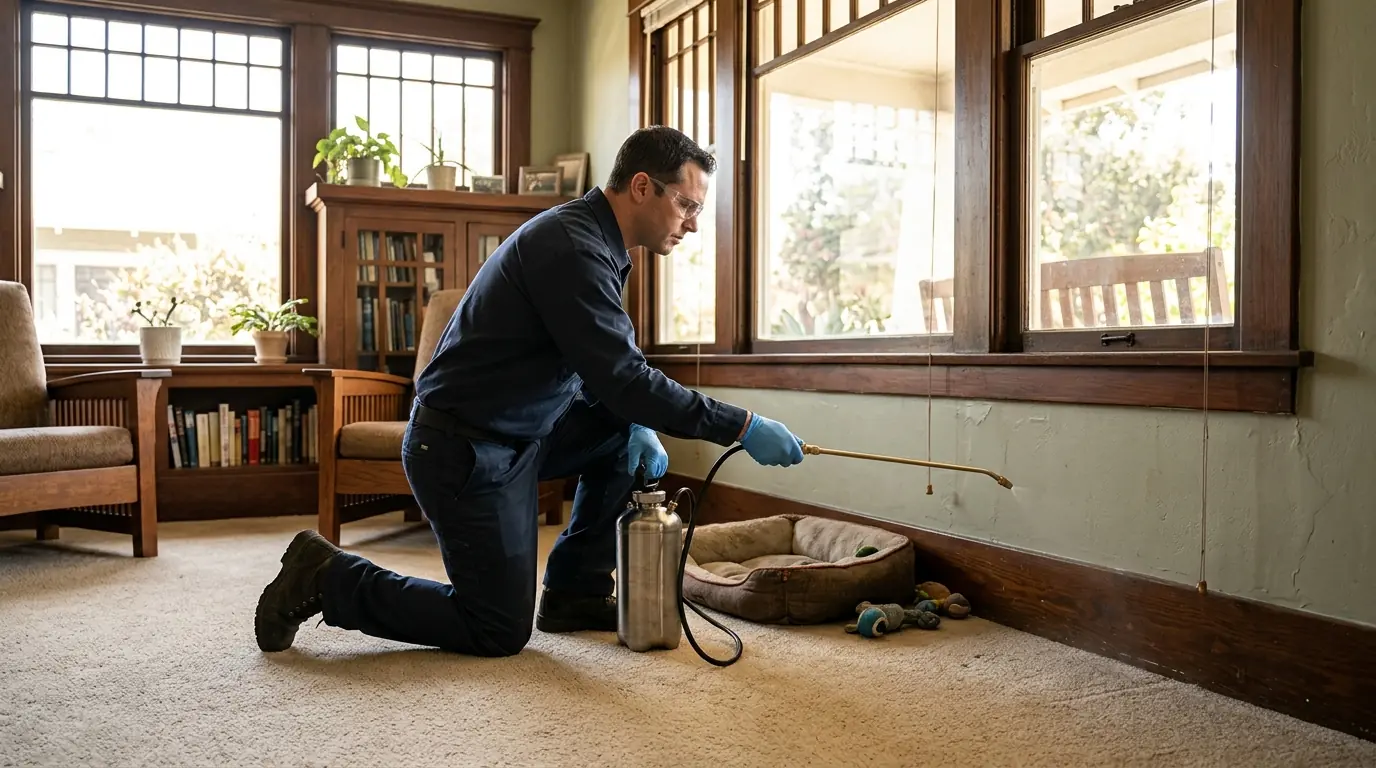
Lasting flea control in Long Beach means treating three places at the same time: the pet (through your veterinarian), the indoor areas where eggs and larvae collect, and the outdoor or crawlspace spots where wildlife and stray cats rest. We apply an adulticide plus an insect growth regulator indoors, treat shaded yard and under-house areas, and plan a follow-up because cocoons keep hatching for roughly two to three weeks after the first visit.
Almost every flea problem we see in Long Beach is the cat flea, Ctenocephalides felis, which feeds on cats, dogs, opossums, raccoons and people alike. Adult fleas spend their lives on an animal, but the eggs they lay fall off wherever that animal sleeps, scratches or walks. Within days those eggs become larvae that hide deep in carpet pile, couch seams, pet bedding and the dusty soil under a raised floor. That hidden population is why a flea collar or a single bath rarely ends the problem.
Our job is to break the life cycle in the places your pet treatment cannot reach. We find where the larvae are developing, treat those zones with products labeled for indoor and outdoor flea work, and set up the timing so the fleas still sealed in cocoons hatch into treated surfaces instead of starting a new generation. You stay in charge of the pet side with your vet, and we handle the house, the yard and the underfloor space.
Signs the fleas are breeding in the house, not just riding in on the pet
Bites around ankles and calves
Clusters of small, itchy red bites on the lower legs, often after walking across carpet or sitting on the couch, point to adults hatching from the floor.
Flea dirt in pet bedding
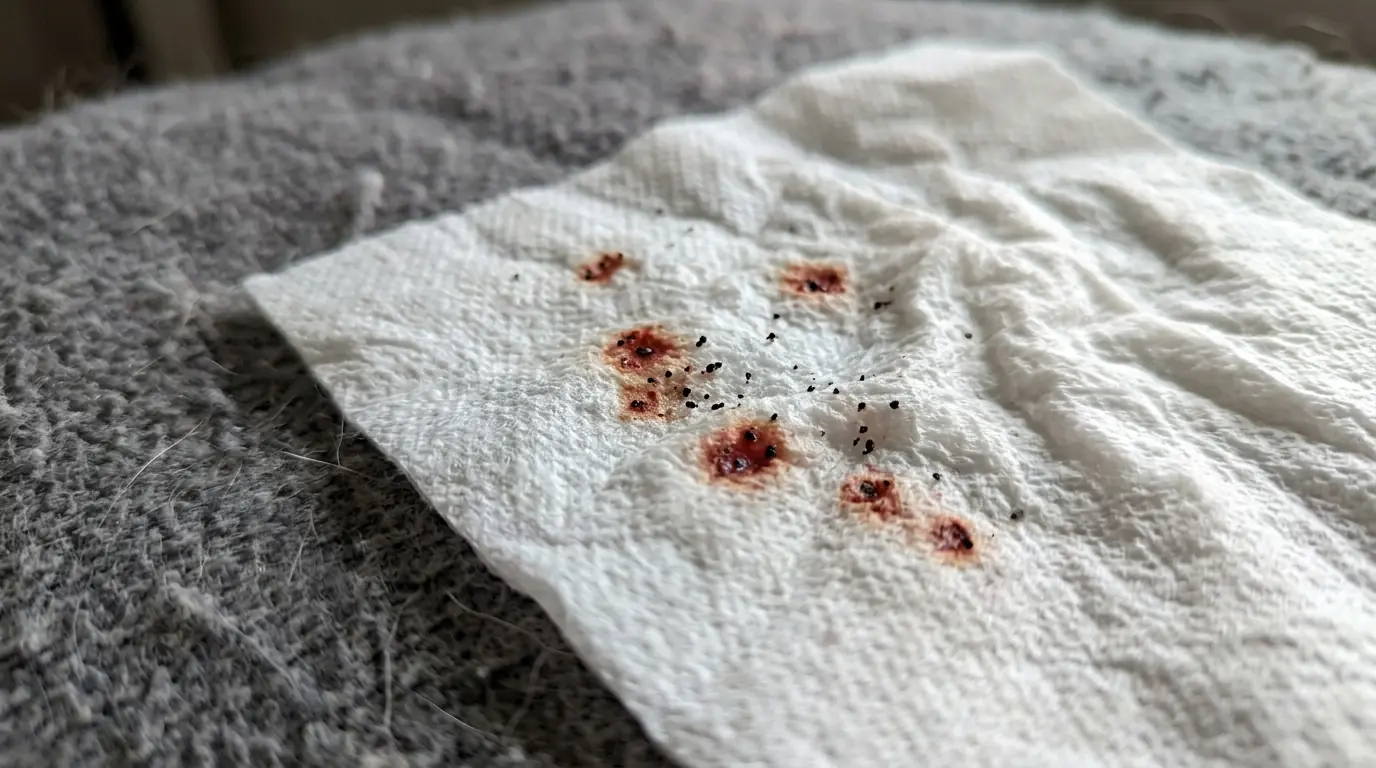
Tiny black specks that turn reddish brown on a damp paper towel are digested blood. Finding them where the pet sleeps means eggs are dropping there too.
Fleas after the pet was treated
If the dog or cat is on a current vet-recommended product and you still see live fleas, newly emerged adults are coming from the environment.
A surge after a vacation
Coming home to a burst of jumping fleas is classic. Cocoons sit dormant in an empty house and hatch the moment footsteps and body heat return.
Wildlife under the house
Opossums, raccoons and stray cats denning in a crawlspace or under a deck shed flea eggs that later find their way up through floor gaps and vents.
Fleas in a home with no pets
New owners sometimes inherit a flea population from a previous tenant pet, or from animals living under a porch, and get bitten within days of moving in.
How we break the flea life cycle in one coordinated push
Map where the pet rests
We walk the home with you and note every sleeping spot, favorite window, couch end and car seat, then check the yard and crawlspace for wildlife sign, flea dirt and the shaded, damp soil where larvae thrive.
Line up the pet treatment
We ask that every dog and cat in the household be on a vet-recommended flea product before or on the day of service, since an untreated pet keeps laying eggs into freshly treated carpet.
Treat indoor larval zones
We apply a labeled adulticide combined with an insect growth regulator to carpets, rugs, under furniture edges, closets and pet areas. The growth regulator keeps eggs and larvae from maturing into biting adults.
Treat yard and underfloor spots
Outside we focus on shaded areas under decks, along fences, beside foundations and in crawlspaces where animals rest. Sunny, dry lawn rarely holds larvae, so we do not broadcast across the whole yard.
Address the wildlife source
If opossums or feral cats are using the crawlspace, we point out the openings so they can be sealed once the animals have left, otherwise the yard reinfests from the same den.
Follow up after emergence
We return roughly two to three weeks later, after the protected pupae have hatched, to retreat any hot spots and confirm bites have dropped off.
Getting the house ready for flea treatment
- Pick up toys, shoes, clothes and storage bins from floors and under beds
- Vacuum all carpets, rugs and upholstery right before we arrive
- Wash and dry pet bedding on high heat that morning
- Make sure every dog and cat has had its vet-recommended flea product
- Cover or remove fish tanks and turn off the aquarium pump during treatment
- Plan for people and pets to stay out until treated surfaces are dry, usually a few hours
Why fleas seem to come back two weeks after treatment
The flea pupa sits inside a sticky silk cocoon that collects dust and carpet fibers, which makes it hard to see and very hard for any treatment to penetrate. A fully formed adult can wait inside that cocoon for weeks, sometimes months, until it senses vibration, carbon dioxide and warmth. That is why people often notice more fleas in the days after we treat, not fewer.
Those newly hatched fleas are dropping onto surfaces that still carry the treatment, so they die before they can feed long enough to lay eggs. The growth regulator does the quieter work of stopping larvae from ever reaching the cocoon stage. Put together, the population collapses over two to four weeks instead of overnight. Knowing this timeline ahead of time keeps people from panicking and reapplying store sprays on top of our treatment, which rarely helps and can disturb the treated layer.
What you do at home makes the treatment work faster
Vacuuming is the single most useful thing you can do, and it helps in two ways. It pulls eggs, larvae and flea dirt out of the carpet, and the vibration coaxes adults out of their cocoons sooner so they contact the treated surface. Vacuum daily for the first two weeks, including under couch cushions and along baseboards, and empty the canister or seal and toss the bag outside each time.
Wash pet bedding, throw blankets and washable cushion covers in hot water and dry them on high heat. Keep the pet on the product your veterinarian recommends without gaps, because a single missed month gives a surviving flea time to restart the cycle.
- Vacuum every day for about 14 days, then every few days after
- Hot wash and high-heat dry all pet bedding weekly for a month
- Do not shampoo or steam the carpet for about two weeks after treatment
- Keep pets off freshly treated floors until the surfaces are fully dry
What flea treatment usually costs for a Long Beach home
Price follows the size of the area we treat and how many places the fleas are developing. A one-bedroom apartment with a single cat is a different job from a three-bedroom Craftsman with two dogs, a deck and an opossum under the floor. Most homes need an initial visit and one follow-up.
| Typical job | Typical range |
|---|---|
| Apartment or condo interior | $165 to $285 per visitCarpet, furniture edges and pet areas inside one unit, with growth regulator included. |
| House interior and yard | $235 to $395 per visitIndoor treatment plus shaded yard zones, patio edges and fence lines. |
| Crawlspace and underfloor add-on | $95 to $185 per visitTreating soil under a raised foundation where animals have been resting. |
| Follow-up emergence visit | $115 to $215 per visitSecond treatment timed for the hatch of cocoons left from the first visit. |
What moves the price
- Square footage of carpet and rugs, since bare tile and wood floors need far less product
- Number of pets and whether every animal is on a current vet-recommended product
- Whether wildlife is denning under the house, deck or porch
- How much shaded, damp outdoor area the pets use during the day
- Clutter on floors and under beds that limits how much surface we can reach
- Whether a follow-up is needed for a heavy or long-running infestation
These are typical ranges for planning only, not a quote, and the price for your home is set once we inspect it. Compare more jobs in the treatment price guide.
Fleas, wildlife and flea-borne typhus in Los Angeles County
Fleas are more than an itch in this part of Southern California. Public health agencies in Los Angeles County, including the Long Beach health department, have reported cases of flea-borne typhus in recent years, an illness spread when infected flea feces get into a scratch or bite. Opossums, rats and free-roaming cats are the animals most often tied to the fleas that carry it.
That is a strong reason not to tolerate animals living under the house. When we treat a crawlspace or the soil under a porch, we are also looking for the entry gaps, torn vent screens and loose skirting that let opossums and cats move in. Clearing the den, treating the soil and sealing the openings removes the flea source rather than just knocking down the fleas already indoors. If anyone in the household has a fever and rash after flea bites, a doctor should hear about the flea exposure.
Where Long Beach flea problems usually start
The raised-foundation bungalows in Rose Park, Belmont Heights and Wrigley are some of the most common flea jobs we take on, because the crawlspace under the floor is a dry, sheltered den for opossums and stray cats. Floor vents and gaps around old plumbing let the larvae and newly hatched adults work their way into the rooms above, so the bites start in a back bedroom long before anyone spots an animal under the house.
Downtown and Alamitos Beach see a different pattern: apartment and courtyard units where a previous tenant had a cat or dog and the carpet held cocoons through the turnover. Fleas also build up fast in the warm months, roughly May through October, when mild coastal nights and irrigated, shaded side yards give larvae everything they need. In the slab ranch homes of Los Altos and El Dorado Park Estates the indoor population is usually smaller, and the yard, the dog run and the shady strip beside the garage are where we concentrate.
Where we do flea control
- Downtown Long Beach 90802
- North Long Beach 90805
- Belmont Shore 90803
- Bixby Knolls 90807
- California Heights 90807
- Los Altos 90815
- Naples 90803
- Rose Park 90804
- Wrigley 90806
- Signal Hill 90755
- Lakewood 90712
- Downey 90240
- Torrance 90503
- Carson 90745
- Compton 90220
- Norwalk 90650
- Bellflower 90706
- Garden Grove 92840
- Westminster 92683
- Seal Beach 90740
- Cerritos 90703
- Whittier 90601
Not listed? We cover all of Long Beach and the nearby cities; call and we will confirm your street.
Flea Control questions
Why am I still getting flea bites if my dog is on flea medicine?
Pet products kill fleas once they jump on the animal, but they do nothing about the eggs, larvae and cocoons already in your carpet and yard. New adults keep hatching from those stages for weeks and will bite people while they look for a host. Treating the environment with a growth regulator alongside the pet product is what ends the cycle.
How long after flea treatment will I stop seeing fleas?
Most homes see a sharp drop within the first week and very few fleas by the third or fourth week. A short rise in activity during the first several days is normal, because cocoons are hatching into treated surfaces. Daily vacuuming speeds this up, and a follow-up visit catches any late emergence.
Can I get fleas without having any pets?
Yes. Fleas left behind by a previous owner pet can survive in cocoons for months, and opossums, raccoons or stray cats living under a porch or crawlspace bring fleas right to the house. In homes without pets, the underfloor space and shaded yard areas are often the real source.
Do you treat the whole lawn for fleas?
Usually not. Flea larvae die quickly in direct sun and dry soil, so open, sunny lawn rarely needs treatment. We concentrate on shaded, protected places where pets and wildlife lie down: under decks, along fence lines, beside foundations, in dog runs and in crawlspaces.
Is it safe for my cat to come back inside after flea treatment?
Pets and people can return once the treated surfaces are completely dry, which typically takes a few hours depending on ventilation. Keep birds, fish and reptiles covered or out of the treated rooms during application. We go over the specific product and re-entry timing with you before we start.
Related services
General Pest Control
General pest control is a recurring service, usually every other month or quarterly, that treats the outside of the home to stop.
DetailsRodent Exclusion
Rodent exclusion is the physical work of closing every opening a rat or mouse can use: roof returns, attic and foundation vents.
DetailsBed Bug Treatment
Bed bug treatment begins with a careful inspection to confirm bugs and map every room involved.
DetailsSpider Control
Spider control works by removing webs and egg sacs, treating the cracks and sheltered spots where spiders hide, and reducing the insects.
Details