Quick answer
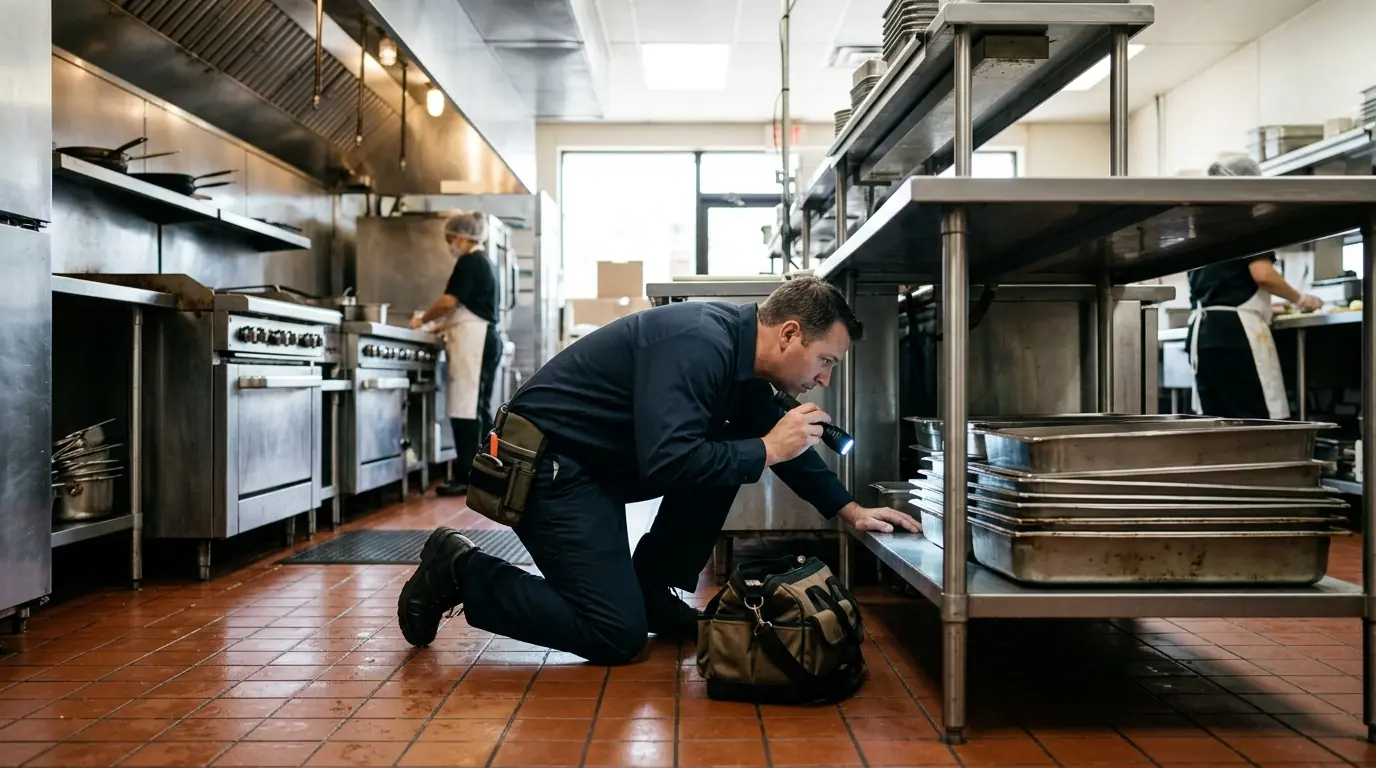
Commercial pest control in Long Beach is a scheduled program built around the site: monthly or twice-monthly service for restaurants, rodent stations and dock monitoring for warehouses, and unit-by-unit response plus common area service for property managers. We focus on inspection, sanitation and exclusion findings, targeted treatments, and written service records with pest activity and corrective actions, which is what health inspectors and auditors ask to see.
Businesses face pest pressure that homes do not. A restaurant receives deliveries every day, runs hot, wet equipment around the clock and handles food waste that draws cockroaches, flies and rats. A warehouse near the port receives pallets and containers from all over the world and has dock doors that stay open for hours. An apartment building shares walls, plumbing and trash enclosures, so one unit with German cockroaches or bed bugs can spread them to the next.
A good commercial program prevents problems instead of reacting to them. We set up service around how your site operates: the hours you are closed, the areas that cannot be treated during service, delivery days, and what your inspectors, auditors or property owners expect to see in the records. Each visit includes inspection, monitoring device checks, targeted treatment and a written report noting what we found and what needs fixing.
Preparing for a Long Beach health inspection
Long Beach runs its own health department, separate from Los Angeles County, and its inspectors check restaurants, markets and food facilities for evidence of pests and conditions that support them. Live cockroaches, rodent droppings or flies in a food area can result in violations, and serious infestations can lead to closure until the problem is corrected.
Inspectors also look at what you are doing about pests. Current service reports, a record of corrective actions and a clean, sealed facility show active control. The items below come up again and again.
- Keep recent pest service reports on site and easy to find
- Fix door sweeps, wall gaps and holes around pipes noted in reports
- Clean under and behind equipment where grease and food collect
- Keep dry storage off the floor and away from walls
- Keep dumpster lids closed and enclosures clean
- Repair leaking faucets, drains and refrigeration lines
Warehouses, docks and port-area facilities
Warehouses and distribution centers around the Port of Long Beach, the 710 corridor and West Long Beach face constant rodent pressure. Rats live in rail yards, drainage channels, landscaping and the gaps under parked trailers, and they follow scent trails into dock doors that stay open during loading. Pallets and incoming shipments can carry insects and occasionally rodents from other facilities.
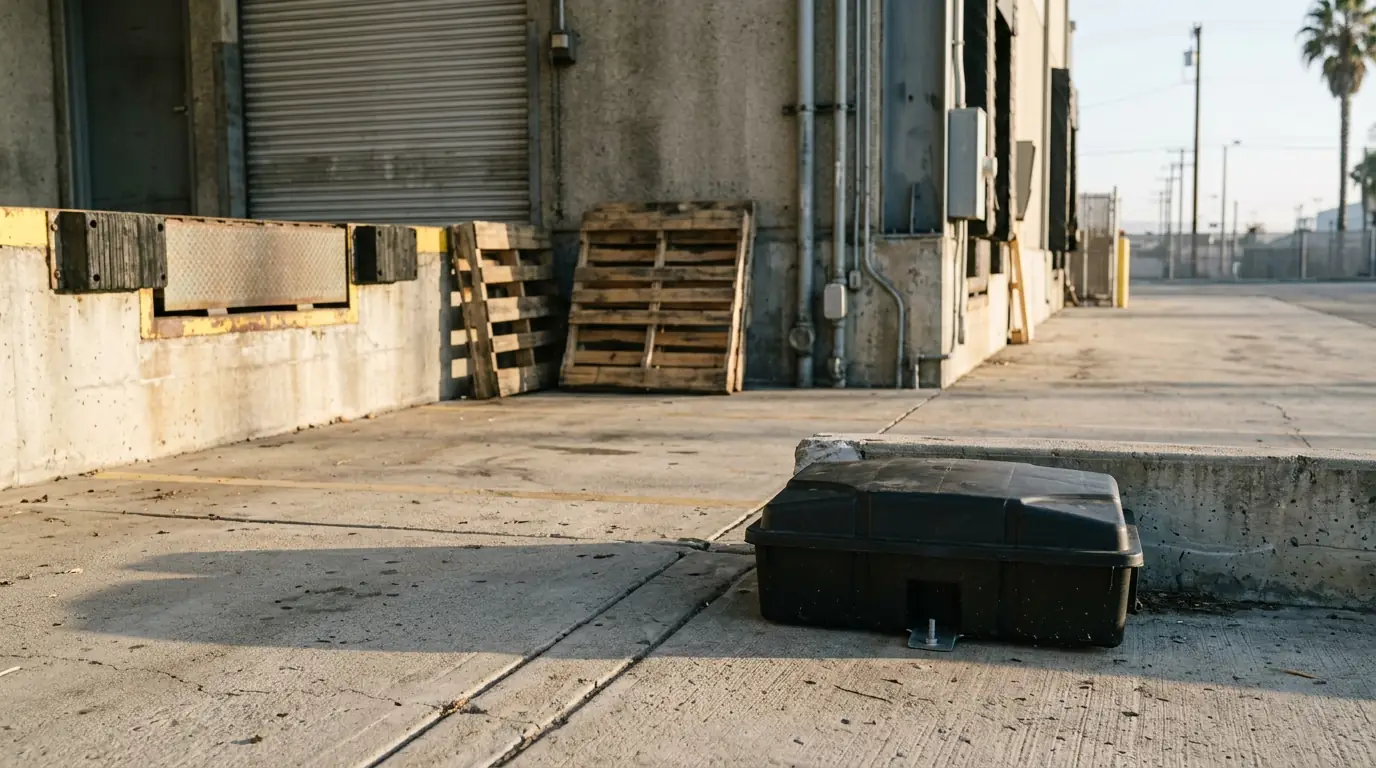
Warehouse programs focus on exclusion and monitoring. Exterior rodent stations around the building perimeter, interior traps along walls and at dock doors, and insect monitors in storage areas let us track activity on a map. Dock door seals, closed doors when not in use, and gaps sealed under roll-up doors keep rodents out. Many food and product warehouses also need documentation that meets their customer or audit standards, which we provide in every service report.
Bird activity is another issue at warehouses, with pigeons roosting in open rafters and on dock canopies. Netting and other deterrents are often part of a larger facility program.
Commercial service pricing in Long Beach
Commercial programs are priced by property type, size, number of monitoring devices and service frequency. A small cafe on monthly service costs far less than a large warehouse with dozens of rodent stations or a multi-building apartment complex.
| Typical job | Typical range |
|---|---|
| Restaurant or bar program | $95 to $285 per monthMonthly or twice-monthly kitchen, bar, storage and exterior service with written reports. |
| Warehouse or distribution center | $185 to $645 per monthExterior and interior rodent stations, dock monitoring, fly lights and insect checks. |
| Apartment or property management | $145 to $485 per monthCommon area and exterior service plus unit treatments as needed. |
| Office or retail space | $75 to $195 per monthRoutine service for offices, retail stores and medical suites. |
| Unit treatment for property managers | $125 to $285 per unitIndividual apartment treatments for cockroaches, ants or other pests. |
What moves the price
- Property type and square footage, plus the number of buildings or units
- Number of rodent stations, traps, insect monitors and fly lights to service
- Service frequency, such as monthly or twice monthly for food service
- Current pest pressure and whether an initial cleanout is needed
- Inspection or audit documentation the site needs to meet
- After-hours scheduling required to avoid disrupting operations
These are typical ranges, not a quote, and the site inspection sets the price for your program. Compare more jobs in the treatment price guide.
How a commercial program is set up and run
Walk the whole site
We inspect kitchens, storage, dock areas, trash enclosures, exteriors, roofs, drains, utility rooms and common areas, and talk with managers about past problems and inspection history.
Map monitoring devices
Rodent stations, interior traps, insect monitors and fly lights are placed at key spots and numbered on a site map so activity can be tracked over time.
Set the service schedule
Visits are scheduled for times that do not interfere with operations, such as before opening, after closing or on slow days, and frequency matches the pest pressure.
Treat with targeted methods
We use gel baits, crack and crevice treatments, dusts in voids, drain treatments and exterior barriers, keeping products away from food and food contact surfaces.
Report and recommend
Each visit produces a written report: pests found, devices checked, products used, and corrective actions such as door sweeps, sealing gaps or sanitation fixes.
Respond between visits
When staff or tenants spot activity between scheduled service, we come back to inspect and treat, and log the response in the records.
Situations where a business needs a regular program
German cockroaches in the kitchen
Even a few roaches near dish machines, prep tables or bar coolers mean an established population that will grow without regular treatment.
Rodent droppings in storage
Droppings in dry storage, behind equipment, along warehouse racking or at dock doors are a serious inspection and contamination issue.
Flies around drains and trash
Fruit flies at the bar, drain flies in the dish area or house flies at the back door point to breeding sources that need routine treatment.
Tenant complaints that repeat
Ongoing calls about ants, roaches or rodents in the same building usually mean shared walls and common areas need a coordinated plan.
A health inspection is coming
Health inspectors look for live pests, droppings, harborage and the pest records the business keeps. Regular service with written logs shows active control.
Customer or food safety audits
Food distributors and warehouses often face audit standards that require documented pest programs, device maps and trend records.
Working with property managers and multifamily owners
In apartment buildings, pests move through shared walls, plumbing chases and trash areas. Treating one unit at a time without treating its neighbors or the common areas often fails. A building-wide approach works better: regular exterior and common area service, prompt response to tenant reports, and inspection of adjacent units when German cockroaches or bed bugs are found.
California law requires landlords to provide written notice before entering a unit for pest treatment, and many buildings use our service reports to document entry, findings and tenant prep compliance. We coordinate treatment dates with managers, provide prep instructions to share with tenants and report units where clutter or sanitation prevents effective treatment.
Commercial pest pressure from Pine Avenue to the port
Restaurants along Pine Avenue, the Promenade and the East Village Arts District operate in older buildings with shared walls, basements and alleys, where German cockroaches and Norway rats move between businesses. Second Street in Belmont Shore has a long row of restaurants and bars backing onto alleys and shared trash areas, which concentrates flies and rodents. Fourth Street Retro Row, Bixby Knolls along Atlantic Avenue and Long Beach Boulevard all have smaller restaurants and cafes that need steady monthly service.
West Long Beach and the industrial areas near the port, the 710 freeway and the LA River are dominated by warehouses, truck yards and logistics buildings with constant rodent pressure. Property managers across Alamitos Beach, Rose Park, downtown and North Long Beach run older courtyard buildings and larger complexes where cockroaches, bed bugs and rodents need building-wide plans. Warm, dry late summer drives ants and flies indoors, and fall cooling pushes rodents into buildings.
Where we do commercial pest control
- Downtown Long Beach 90802
- North Long Beach 90805
- Belmont Shore 90803
- Bixby Knolls 90807
- California Heights 90807
- Los Altos 90815
- Naples 90803
- Rose Park 90804
- Wrigley 90806
- Signal Hill 90755
- Lakewood 90712
- Downey 90240
- Torrance 90503
- Carson 90745
- Compton 90220
- Norwalk 90650
- Bellflower 90706
- Garden Grove 92840
- Westminster 92683
- Seal Beach 90740
- Cerritos 90703
- Whittier 90601
Not listed? We cover all of Long Beach and the nearby cities; call and we will confirm your street.
Commercial Pest Control questions
How often should a restaurant have pest control service?
Most restaurants in Long Beach need service at least monthly, and many busy kitchens benefit from twice-monthly visits, especially in summer. Frequency depends on menu, volume, building age, shared walls with other businesses and past pest history. A site with active cockroaches usually needs more frequent service until the population is under control.
What pest control records do health inspectors want to see?
Inspectors typically want proof of an active pest control program, such as recent service reports showing dates, pests found, areas treated, products used and recommended corrective actions. Keeping these reports on site, along with a record of repairs and sanitation fixes made, shows that pest issues are being managed.
Can pest service be done without closing the restaurant?
Yes. Most commercial service is scheduled before opening, after closing or during slow periods. Gel baits, crack and crevice treatments and monitoring checks can be done with minimal disruption. Products are kept away from food and food contact surfaces, and we work around prep and serving schedules.
Do warehouses near the Port of Long Beach have more rodent problems?
Generally yes. Port-area warehouses sit near rail lines, drainage channels, truck yards and other industrial sites where rats thrive, and dock doors stay open for long periods. Exterior bait stations, interior traps, good door seals and keeping doors closed when not in use are the core of warehouse rodent control.
Can a property manager set up pest service for an entire apartment building?
Yes. Building programs usually include routine exterior and common area service plus individual unit treatments when tenants report pests. Coordinated building-wide treatment works better than single units, because cockroaches and bed bugs move through shared walls and plumbing. We provide reports managers can use for records and tenant notices.
Related services
Rodent Control
Rodent control starts with knowing which animal you have: roof rats in attics and trees, Norway rats in alleys and under slabs.
DetailsFly Control
Flies are controlled by finding and removing the breeding material, not by spraying the adults.
DetailsBird Control
Bird control is mostly about making a roost or nest spot physically unusable: spikes and post-and-wire systems on ledges and signs, netting.
DetailsCommercial Termite Control
Commercial termite control covers inspection, treatment and records for buildings that are leased, occupied by a business or held as investment property.
Details