Quick answer
In Lomita we mostly see drywood termites in the attics and trim of postwar houses, subterranean termites where older homes have raised floors or cracked slab edges, roof rats in fruit trees and backyard palms, and German cockroaches in small multi-unit buildings. Termite work is planned after an inspection: local treatment for contained spots, tenting when activity is spread out. Rodent jobs pair trapping with sealing the roofline and foundation vents.
Postwar houses on small lots below the Palos Verdes hills
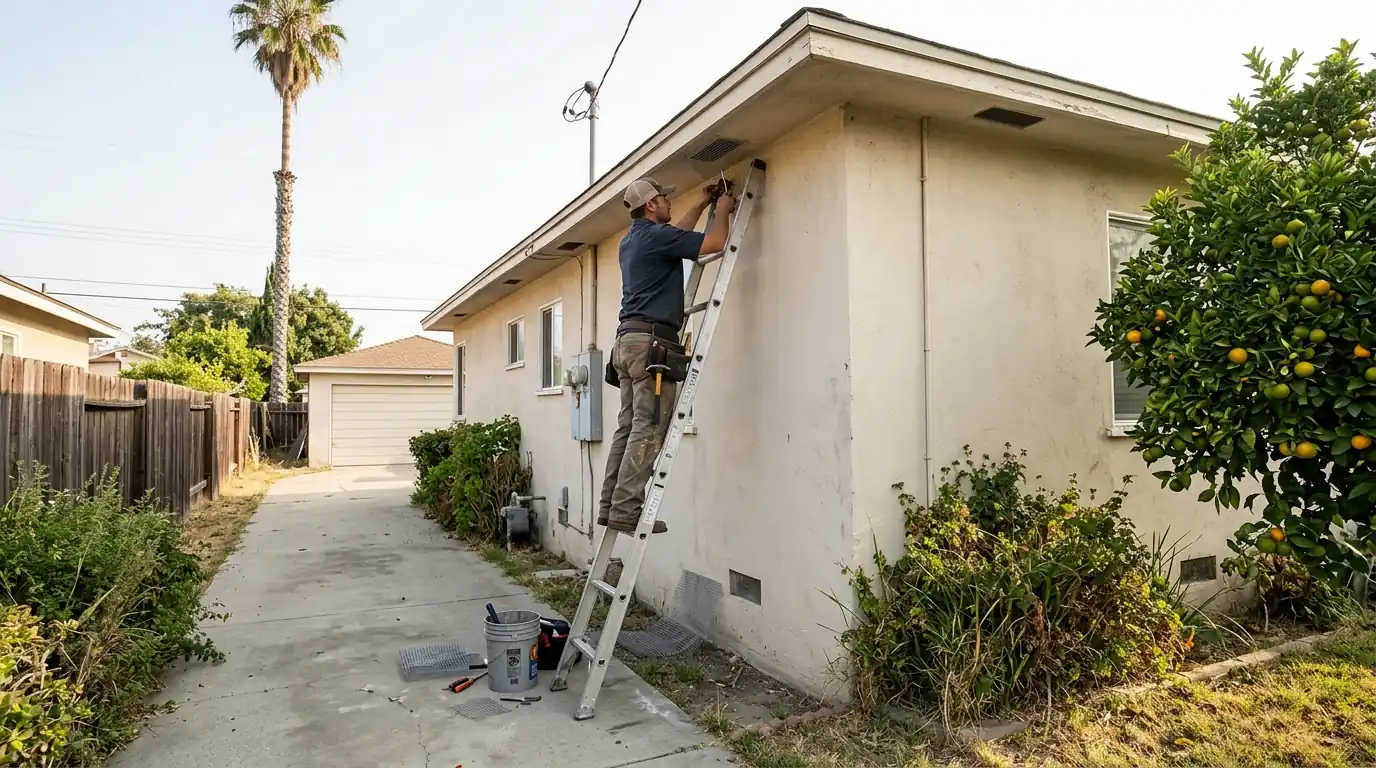
Much of Lomita was built out in the years after World War II, when small single-story houses with wood-framed attics, stucco or wood siding and detached garages filled the blocks off Narbonne Avenue, Lomita Boulevard and Pacific Coast Highway. Plenty have been added onto over the decades, which leaves seams where a newer roof meets the original one. Some of the earliest homes sit on raised floors; most later ones are on slabs.
That mix gives both termite species something to work with. Drywood termites fly into attic vents and settle in rafters, fascia boards and window trim. Subterranean termites rise from the soil through cracks at slab edges, under porches, and into the cripple walls of raised-floor houses. On an inspection we open the attic, check the garage closely and walk the exterior for mud tubes and pellets.
Small apartment buildings and shared problems
Lomita has a large share of small apartment buildings, often two stories with outdoor stairways and carports, built in the 1950s and 1960s. German cockroaches move between units through plumbing walls, and a single infested apartment can keep a whole building supplied. We treat with baits and growth regulators placed in kitchens and bathrooms, and work best when the owner lets us service neighboring units on the same visit.
Wooden exterior stairs and landings in these buildings deserve a look during any termite inspection. They catch rain, often have bare end grain, and can carry both drywood activity and decay. Repairs there are as much a safety matter as a pest one.
Roof rats, fruit trees and backyard palms
Backyards here are often planted with citrus, avocado, loquat and tall palms. Roof rats nest in dense palm skirts and climb into attics along fences and power lines, feeding on fruit at night. Common signs are hollowed-out oranges still on the tree, droppings in the garage and scratching overhead after dark.
We trap inside the attic and garage and close entry points at eaves, vents and pipe openings with metal mesh and sealant. Picking up fallen fruit, trimming palm skirts and keeping branches several feet from the roof make a real difference in how fast the problem stays solved.
Weather from the coast
Lomita sits a few miles inland from the ocean, close enough that marine fog reaches it on many late spring mornings, but far enough that late summer afternoons turn warm and dry. Those warm afternoons, often after the first heat wave of August or September, are when drywood swarmers come out of attic and trim colonies. Spring rains bring subterranean swarms up from the soil, sometimes indoors through floor cracks.
What we treat most in Lomita
Drywood termites
Pellets in garages and below attic hatches of postwar houses, with colonies along the seams where an addition meets the original roof.
Western subterranean termites
Mud tubes at slab edges, under porch steps and inside the cripple walls of the older raised-floor homes.
Roof rats
Nesting in palm skirts and dense citrus, eating fruit at night and slipping into attics through worn eave vents.
German cockroaches
Spreading between units in two-story apartment buildings through shared plumbing walls and kitchen cabinets.
Argentine ants
Trailing from lawns and planter beds into kitchens, especially during the first hot spell of summer and after heavy watering.