Quick answer
In Los Cerritos, subterranean termites are a bigger share of our work than in the beach neighborhoods. Deep, irrigated lots, foundation plantings and mulch beds keep soil moist against the house, and termites follow that moisture up into sills and siding. We treat with a non-repellent liquid in the soil or install bait stations, depending on landscaping. Drywood termites still show up in attics and trim, and they are handled separately.
Gardens that hold water against the foundation
The neighborhood grew up around Rancho Los Cerritos, the adobe ranch house that is now a historic site, near the Los Angeles River. Homes from the 1920s and 1930s here often sit on big parcels with old hedges, ivy, climbing roses and lawns watered several times a week. That is lovely to look at and helpful to western subterranean termites, which need moist soil and wood in contact with it or close to it.
On inspection we pay attention to where planting beds meet the house. Mulch heaped above the foundation line, ivy covering the lower siding, sprinklers spraying the walls and downspouts emptying beside the footing all raise the risk. Termites can build mud tubes behind dense ivy for a long time before anyone notices them. Sometimes the first sign is a swarm on a warm spring day, coming out of a baseboard or a crack in a back patio.
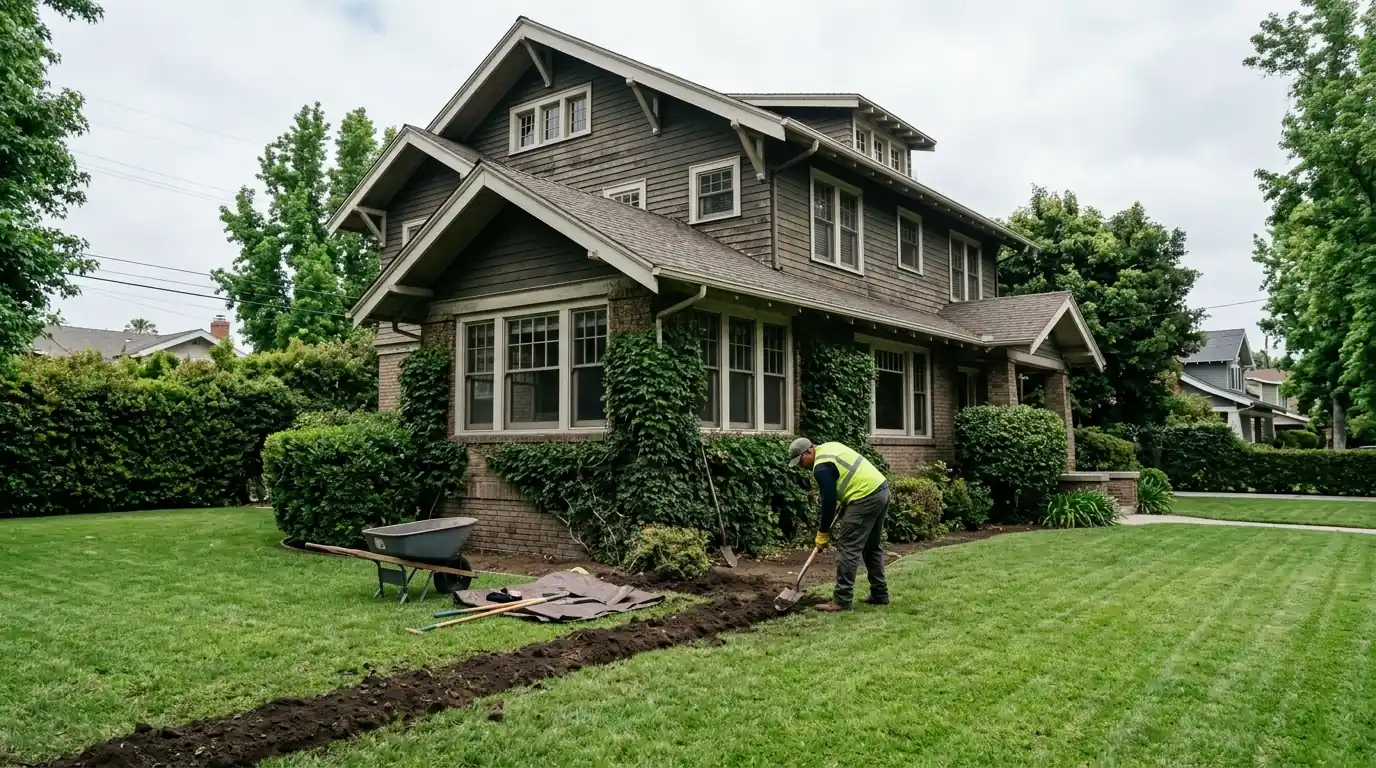
Liquid barrier or bait: choosing for a landscaped lot
A liquid treatment trenches and rods a non-repellent termiticide such as fipronil or chlorantraniliprole into the soil along the foundation, and drills through patios or garage slabs where they meet the house. Termites passing through the treated zone carry it back to the colony. It works quickly, but it requires digging along every foot of foundation, which can disturb established plants and hardscape.
Bait stations go into the soil at intervals around the house and are checked on a schedule. Termites feed on the bait and share it, which suppresses the colony over time. Bait is slower but gentler on gardens, and it fits owners who want ongoing monitoring. On many Los Cerritos properties we combine approaches: liquid where activity is heavy, stations elsewhere.
Drywood upstairs, rats in the hedges
These homes often have large attics, second-floor additions and wood windows. Drywood termites colonize the dry framing and trim independently of the soil colonies, so an inspection covers both. Roof rats nest in dense hedges, ivy and fruit trees, then travel along fences and branches to the roof. Clearing ivy off walls helps with rats and subterranean termites at the same time, which makes it one of the most useful changes owners can make.
Access and timing on a deep lot
Streets here are quiet and parking is easy, but long driveways, gates and backyard structures add time to a job. Guest houses, pool houses and garages are inspected as separate structures. Spring swarm season is the time most owners notice subterranean activity, and fall is good for drywood follow-up after the late summer flights.
What we treat most in Los Cerritos
Western subterranean termites
Mud tubes behind ivy and foundation plantings, damage in sill plates, and spring swarms from patio cracks on irrigated deep lots.
Drywood termites
Colonies in large attics, wood windows and second-floor additions on 1920s and 1930s homes.
Roof rats
Nest in hedges, ivy and backyard fruit trees, then use fences and limbs to reach the roof.
Gophers
Tunnel through lawns and garden beds on larger lots, leaving fan-shaped mounds and damaged roots.
Argentine ants
Farm aphids on roses and citrus, then trail indoors along foundations during hot, dry spells.