Quick answer
In a Cliff May Rancho, the structural wood is also the finish: exposed ceiling beams, posts, tongue-and-groove decking and board-and-batten siding. Drywood termites in those pieces drop pellets straight into living spaces. A colony limited to one or two beams can be treated with drill-and-inject methods, while activity in several beams and walls calls for fumigation. Low-slope roofs and the lack of a traditional attic change how we inspect and how tarps go on.
A house with no attic to hide termites
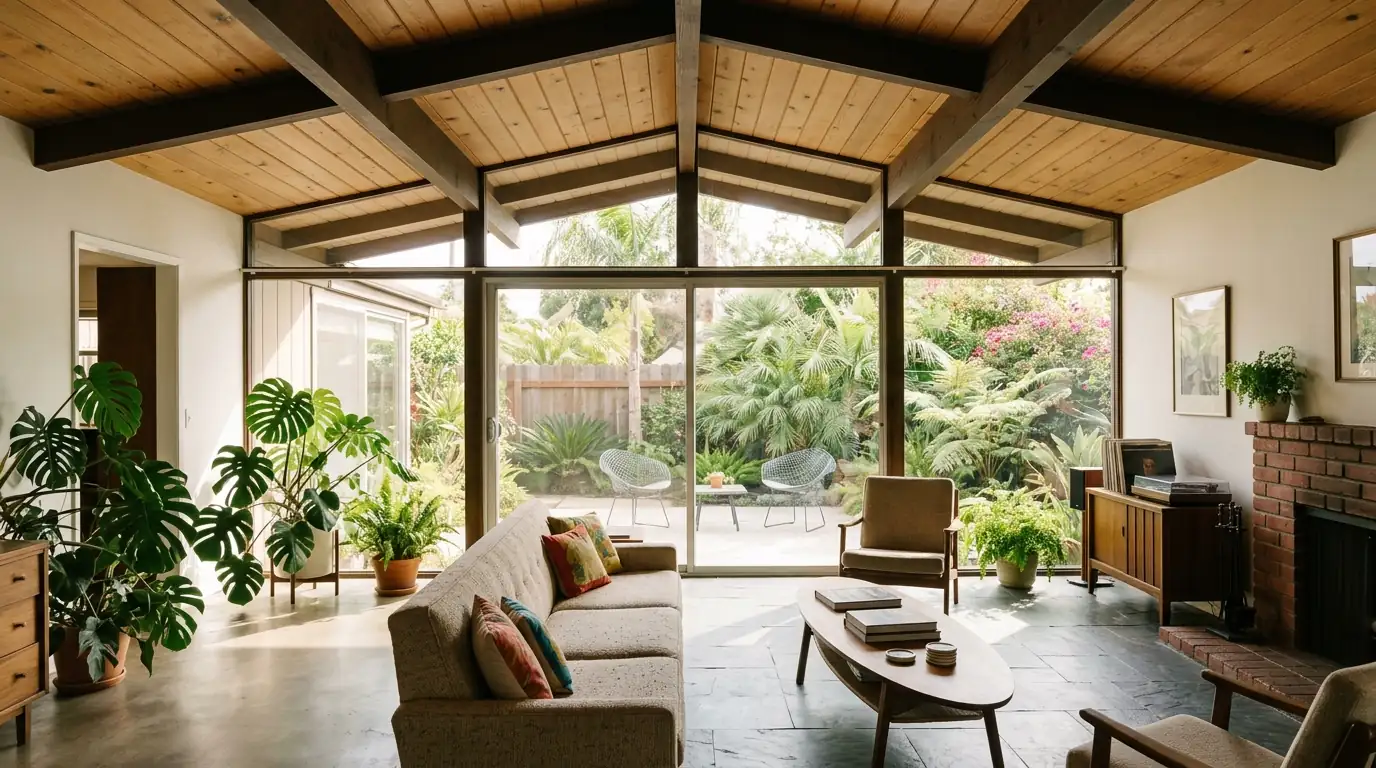
Cliff May and his partners designed these homes to be built quickly with prefabricated panels and exposed structure. Ceilings are often the underside of the roof deck, carried on beams you can see from the sofa. There is no attic for termites to work quietly in, so problems show up sooner, but they also show up in plain sight. Owners call us after finding pellets on a kitchen counter, a bedroom floor or the top of a bookcase under a beam.
Our inspection follows the structure. We look at each beam along its length, at posts and their bases, at the joints where beams meet the exterior wall, and at the outside ends that extend past the glass. Board-and-batten siding is checked on every face, along with fascia and the wood around clerestory windows.
Treating visible beams without spoiling them
Owners in the Plaza care about the look of their homes, and many have refinished beams and decking by hand. When a colony is confined, we drill small holes into the galleries from the least visible face, inject orange oil or another labeled product, and plug the holes. A single treatment area can often be finished in a few hours. The tradeoff is that a second colony hiding in a beam we did not drill can keep going, so we follow up.
When activity is spread across several beams and walls, fumigation reaches all of the wood at once without drilling. Gas leaves no residue on finished surfaces, which matters for owners who have stained or oiled their ceilings.
Fumigating a low, wide house
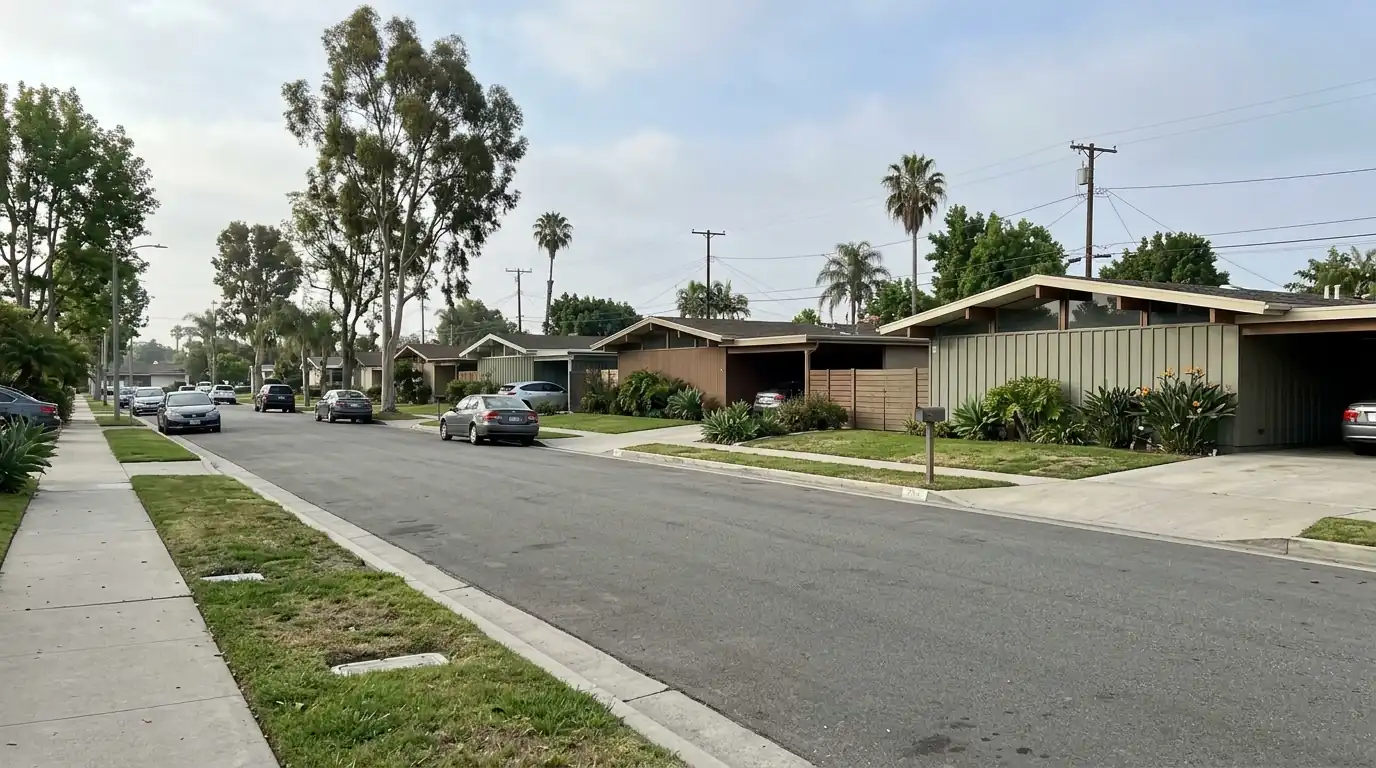
These houses are single story with low-slope roofs, often covered in rock or composition material. Tarps need care on roof edges and around rooftop equipment, and we check the roof surface before fumigation day. Lots in the Plaza are generally generous, with front patios and back gardens, and streets allow easy parking. Plants against the board-and-batten walls get cut back, and soil is watered.
Indoors, the open plan simplifies preparation: interior doors and cabinets are opened, food and medicine are sealed in fumigation bags or removed, and pets and houseplants leave with you. SoCalGas shuts off service and relights afterward where the home uses gas. Re-entry follows clearance testing, typically 2 to 3 days after tent-down.
Siding, patios and the garden side
Board-and-batten siding meets the ground in a few places on many Ranchos, especially where gardens were raised over the years. Wood that touches soil invites subterranean termites and decay. Patio covers and pergolas that extend the indoor beams outdoors take weather on top and need checking at their bases. We repair rotted battens and post bottoms with matching lumber and treat bare wood with borate when it is exposed during repair.
Roof rats use citrus and pine trees around the neighborhood to reach the low roofs, and Argentine ants find their way in along the slab edges. These get handled together with termite work when we visit.
What we treat most in The Plaza
Drywood termites
Colonize exposed ceiling beams, tongue-and-groove decking and board-and-batten siding on 1950s Cliff May Ranchos.
Western subterranean termites
Reach siding battens and patio posts where garden soil has risen against the wood over decades.
Roof rats
Climb backyard citrus and pines onto low roofs and nest in gaps at roof edges and equipment curbs.
Argentine ants
Enter along slab edges and glass walls when summer heat or winter rain pushes colonies indoors.
Wood decay fungus
Shows up in batten bottoms and pergola post bases that stay wet from sprinklers and garden beds.