Quick answer
Seal Beach is about seven miles from our Long Beach office, just over the San Gabriel River on Pacific Coast Highway. Most of our work there covers drywood termites in older cottages, dampwood termites and dry rot in wood kept wet by marine air, condo and senior community programs in Leisure World, and rodent and ant control near the beach.
Old Town cottages and the marine layer
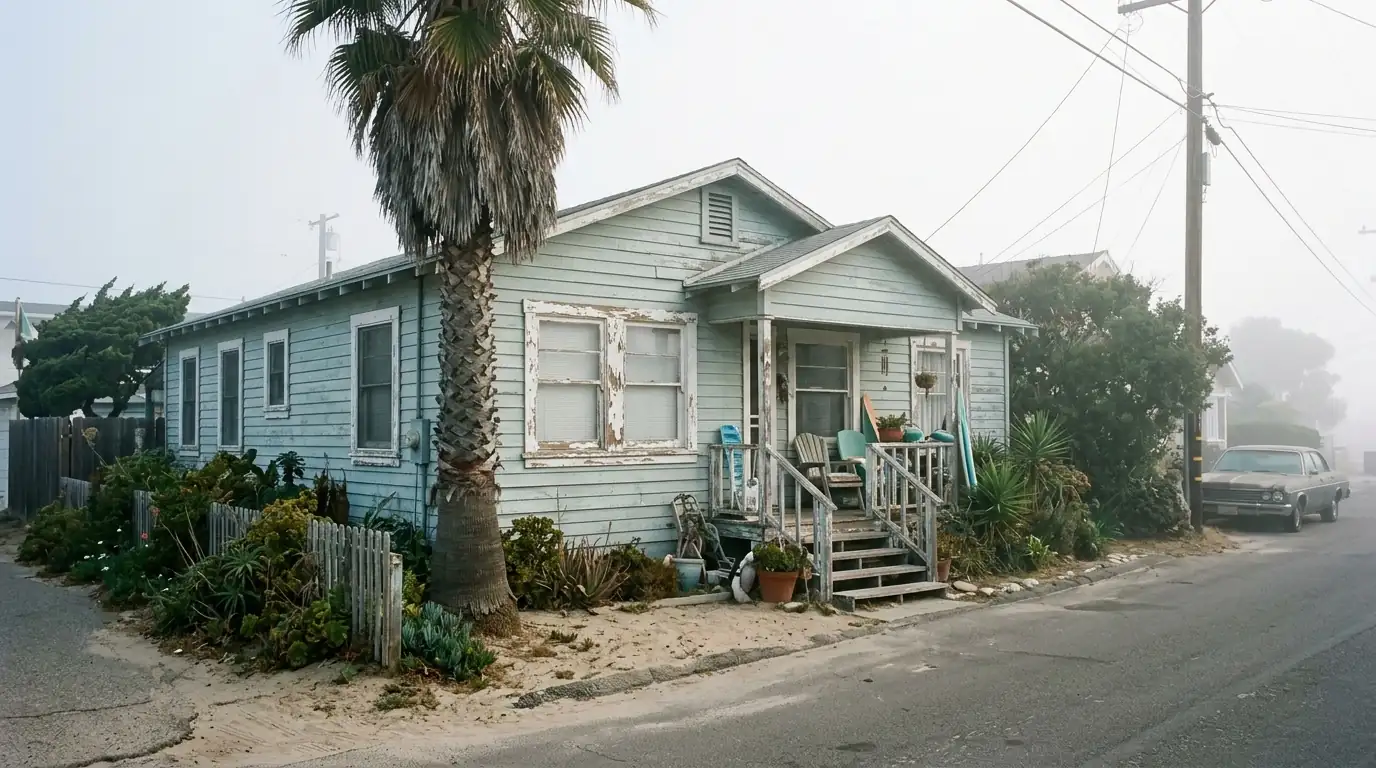
The blocks between Pacific Coast Highway and the beach, around Main Street and the pier, hold some of the oldest homes in this part of Orange County. Many are small wood-sided cottages and bungalows on narrow lots, some rebuilt into two-story houses, some still close to their early form. They sit within a few hundred yards of the sand, so damp salt air reaches them most mornings from late spring into summer.
That air is hard on exterior wood. Paint fails sooner on the ocean side of a house, end grain on sills and rafter tails soaks up moisture, and the bottom few inches of siding near a planter or sprinkler head can stay wet for weeks. We find drywood termites in the attics and eaves here, but we also find a lot of fungus damage, often called dry rot, which needs repair rather than pest treatment.
Telling dampwood termites from drywood in a beach house
Pacific dampwood termites are larger than drywood termites and they need wood that stays wet: a leaking shower pan, a deck post buried in soil, a fence board on a wet planter. Their pellets are bigger and less uniform than the tiny six-sided pellets drywood termites push out. In Seal Beach, we see dampwood activity most often in decks, garden structures and wood near failed plumbing.
The fix is different too. Fumigation will kill dampwood termites, but they come back if the moisture stays. The lasting solution is to stop the leak, cut out the soft wood, replace it and keep the new lumber off the soil. A drywood colony in dry attic framing, by contrast, does not depend on a leak and calls for tenting or targeted treatment.
Leisure World and other shared communities
Leisure World Seal Beach is a large age-restricted community of attached single-story units grouped into mutual corporations, each with its own board and maintenance rules. In buildings where several units share a roof and attic, a drywood infestation is a shared problem and treatment decisions run through the mutual and the community's management rather than a single owner.
We prepare findings that show which units and which common elements are involved, and we keep fumigation prep simple for residents: bagging food, medicine and pet food, removing plants and arranging the gas shutoff. For condo buildings near the beach and along the Seal Beach Boulevard corridor, the same approach applies, with tarp staging planned around parking and neighboring walls.
Seasons on the coast
Seal Beach stays cooler than inland cities, so its drywood swarms can lag a little and spread over a longer stretch of late summer and early fall. Fog and mild temperatures keep dampwood and fungus problems active for more of the year than they would be farther inland. Argentine ants are steady through the summer and roof rats use the palms along the beach streets and the greenbelts year round.
What we treat most in Seal Beach
Dampwood termites
Large termites in wet deck posts, fence bases, garden structures and wood around leaking showers in houses near the beach.
Drywood termites
Colonies in the attics, eaves and window trim of Old Town cottages and in shared attics of attached buildings.
Dry rot and fungus damage
Soft, crumbling wood on the ocean side of houses, at sill plates and at the base of siding where moisture lingers in the salt air.
Roof rats
Nest in beach street palms and dense hedges, and enter older cottages through gaps at the roofline and loose vent screens.
Argentine ants
Steady summer trailing into kitchens, especially in homes with irrigated planters pushed up against the walls.