Quick answer
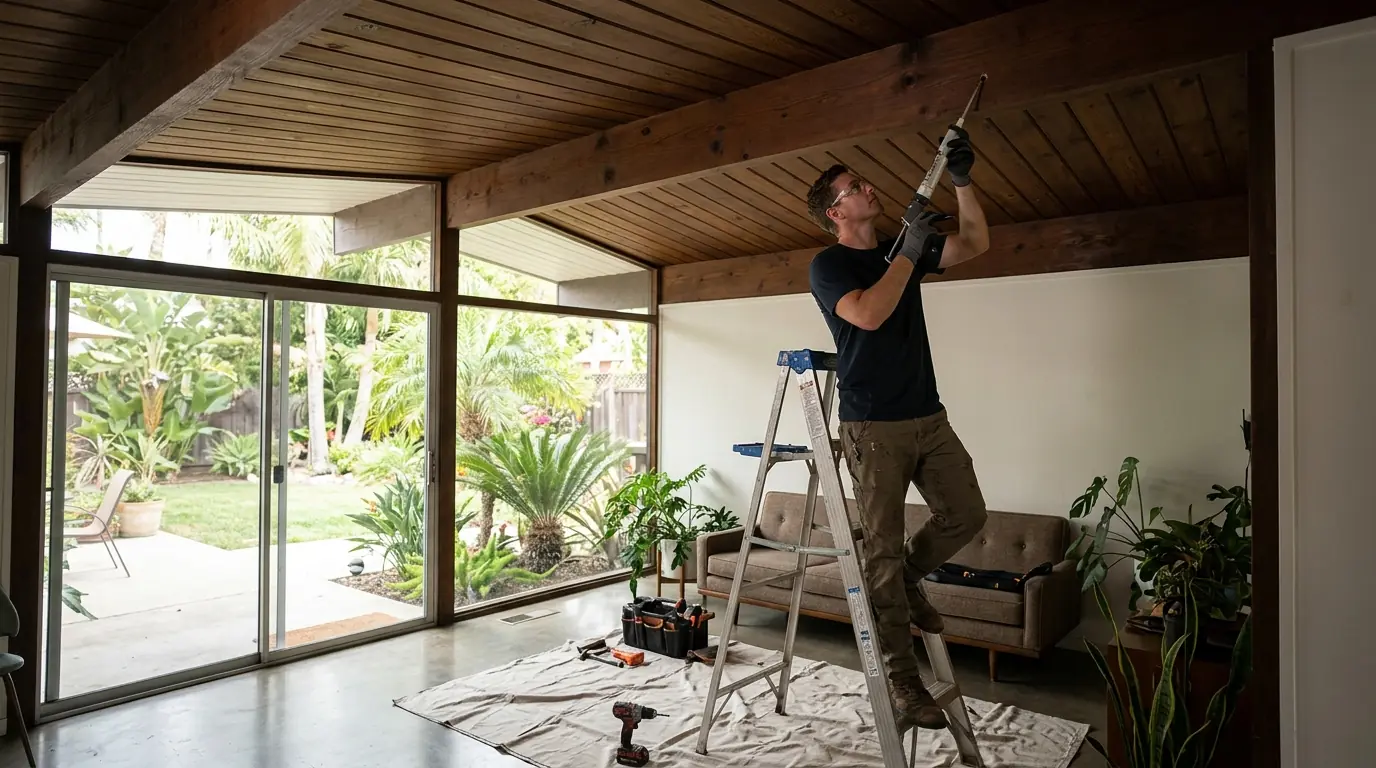
Orange oil treatment uses d-limonene, an extract from orange peels, injected into drywood termite galleries through small drilled holes. It kills termites on contact and travels along the grain inside the board. It works well for limited, accessible colonies in trim, beams, rafters and furniture, but it only reaches wood it is injected into, so it is not a substitute for fumigation when activity is widespread.
Orange oil gets a lot of attention, and some of it oversells what the product does. The active ingredient, d-limonene, is a solvent that dissolves the exoskeleton of termites it touches and breaks down the cells of their eggs. When it is injected into a gallery, it spreads along the wood fibers and reaches termites inside that board. That makes it a real, effective tool for the right situation.
What it is not is a whole-house treatment. Orange oil works only where it is injected, and only as far as it spreads through the wood. If a house has colonies in several walls and a low attic, injecting the visible spots leaves the hidden ones alive. We use orange oil when the inspection shows a limited number of colonies we can see and reach, and we say so when a different method fits better.
What d-limonene does inside a drywood gallery
Drywood termite colonies live in a network of galleries carved inside a board. When orange oil is injected into one of those galleries, it flows along the open channels and soaks into the wood fibers around them. Termites that touch it die as the solvent breaks down their outer layer, and eggs exposed to it fail to develop.
The key word is contact. Orange oil does not linger as a lasting barrier the way some soil treatments do, and it does not move as a gas through walls the way fumigant does. Its reach depends on how well the drill pattern covers the gallery. That is why the inspection and the hole spacing matter so much. A well-planned injection reaches the whole colony in that board. A rushed one leaves sections untouched.
Orange oil also does not travel from one board to another unless the galleries connect. A colony that has moved from a rafter into the ridge board needs both boards injected.
Situations where orange oil is a strong fit
A colony in exposed trim or beams
Window trim, door casings, exposed ceiling beams and porch posts are easy to drill along their length, which lets orange oil reach the whole gallery.
Activity in attic rafters with headroom
Rafters in an attic tall enough to work in can be drilled and injected at close intervals, giving good coverage of the colony.
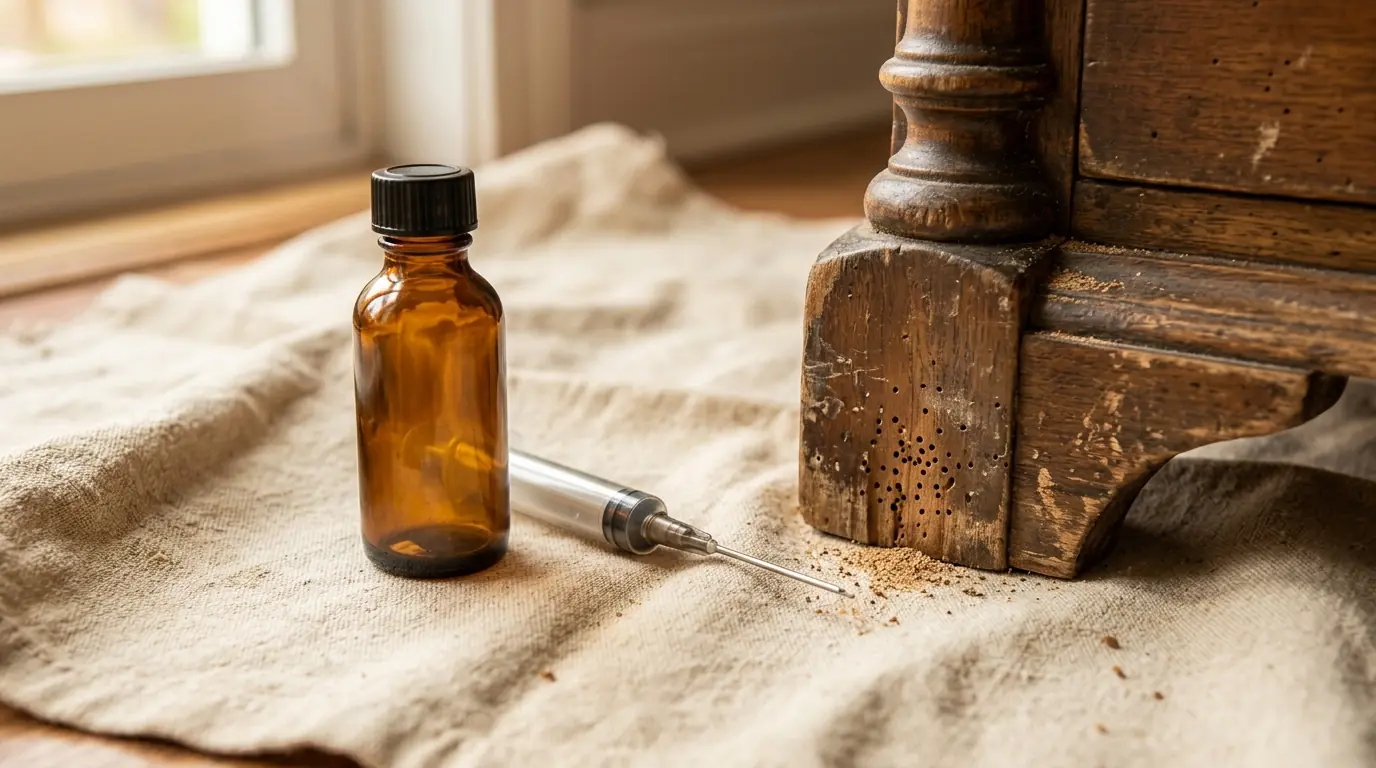
Infested wood furniture
Antique dressers, tables and cabinets with drywood activity can be injected without moving them out of the house.
A household that cannot vacate
Elderly residents, medical equipment or pets that cannot leave easily make a no-tent option attractive when the activity allows it.
Follow-up after an older fumigation
A single new colony years after a tent is usually small and well defined, which suits targeted injection.
What an orange oil treatment visit looks like
Confirm the termite and the colony limits
We confirm drywood termites from pellets and galleries, then map how far the colony extends in the board using tapping, probing and visible kick-out holes.
Plan the drill pattern
Holes are spaced along the board so the oil reaches every section of the gallery. Denser woods and longer galleries need closer spacing.
Drill into the galleries
Small holes are drilled until the bit breaks into a hollow gallery, which we can feel as a sudden drop in resistance.
Inject the orange oil
The oil is injected under low pressure. It flows along the gallery and wicks into the surrounding wood, killing termites it contacts.
Plug and clean up
Holes are filled with wood putty or plugs, and excess oil is wiped from surfaces. The citrus smell fades over a few days.
Recheck for new pellets
You sweep away the old pellets and keep an eye on the board. On a return visit we look for any new pellet piles below the injected wood.
Typical cost of orange oil treatment in Long Beach
Orange oil is priced by the number of areas treated, the amount of wood that needs drilling and how accessible it is. A single piece of trim is a short job. Multiple rafters in an attic or several beams on a porch take more time and product.
| Typical job | Typical range |
|---|---|
| Single trim or frame area | $265 to $545One window frame, door casing or small section of exposed wood. |
| Several areas in one visit | $565 to $1,465Two to four separate colonies in trim, framing or exposed beams. |
| Attic rafters or porch beams | $485 to $1,785Longer runs of wood that need more holes and more oil to cover fully. |
| Wood furniture piece | $185 to $465 per unitDresser, cabinet or table treated in place in the home. |
What moves the price
- How many separate colonies need treatment
- Length and density of the wood being injected
- Attic headroom or ladder height needed to reach the wood
- Finished surfaces such as stained trim that need careful plugging
- Whether a follow-up visit is included
These orange oil figures are typical, not a quote, and the count of injection areas found on inspection sets what you pay. Compare more jobs in the treatment price guide.
Clearing up common orange oil myths
The first myth is that orange oil treats the whole house. Some ads imply that injecting a few spots protects the entire structure. It does not. It treats the wood it is injected into, and that is all. If you have widespread activity, orange oil alone will leave colonies behind.
The second myth is that being made from citrus means it carries no risk at all. D-limonene is a solvent, and it is applied according to its label with care around people, pets and finishes. It can soften some finishes and should not be splashed on plastic or painted surfaces. We protect nearby surfaces and wipe up excess.
The third myth is that one treatment ends the termite question for good. Orange oil leaves no protection in untreated wood, so the house can be reinfested by a new swarm later, just as after fumigation.
- It treats only the wood it is injected into
- It is applied with care like any labeled product
- It does not prevent future swarms
- Inspections after treatment still matter
How orange oil stacks up against tenting and heat
Compared with fumigation, orange oil is far less disruptive: no tarps, no moving out, no gas shutoff, no bagging food. It is also more limited. Fumigation reaches every board in the house; orange oil reaches only the boards we inject. For a house with one or two well-defined colonies, orange oil often makes more sense. For a house with activity in many rooms, fumigation is more reliable.
Compared with whole-structure heat, orange oil is again more targeted. Heat tries to bring all the wood in a house up to a lethal temperature, while orange oil works one board at a time. In practice, the choice between orange oil and the other methods comes down to how widespread the activity is and how confident we are that we have found every colony. Cost follows the same logic. A few injected boards cost less than a tent, but many separate injection sites can approach or pass the price of fumigation while still carrying the risk of a missed colony.
Long Beach homes where orange oil tends to work well
Homes with exposed wood are often the best candidates. The Cliff May Ranchos in the Plaza neighborhood have exposed ceiling beams and post-and-beam framing that drywood termites love, and those beams are easy to reach and drill. Spanish Revival homes in Bixby Knolls and Los Cerritos often have exposed beams over entries, porch posts and wood corbels that suit targeted injection.
Craftsman homes in Wrigley and Belmont Heights have original wood window frames and door casings where single colonies show up, often on the side that gets afternoon sun. Furniture is another frequent job: an inherited dresser or a wood cabinet in a Bluff Park home with pellets on the floor beneath it can be treated in place. In each case we check the attic, the garage and the rest of the house first, because a colony in visible trim sometimes means another one in the framing.
Where we do orange oil termite treatment
- Downtown Long Beach 90802
- North Long Beach 90805
- Belmont Shore 90803
- Bixby Knolls 90807
- California Heights 90807
- Los Altos 90815
- Naples 90803
- Rose Park 90804
- Wrigley 90806
- Signal Hill 90755
- Lakewood 90712
- Downey 90240
- Torrance 90503
- Carson 90745
- Compton 90220
- Norwalk 90650
- Bellflower 90706
- Garden Grove 92840
- Westminster 92683
- Seal Beach 90740
- Cerritos 90703
- Whittier 90601
Not listed? We cover all of Long Beach and the nearby cities; call and we will confirm your street.
Orange Oil Termite Treatment questions
Does orange oil leave a strong smell in the house?
There is a noticeable citrus smell during and right after treatment, and it fades over a few days with normal ventilation. Opening windows near the treated area helps. Some people find the smell pleasant, others prefer to air the room out well before using it again.
Can orange oil damage paint or wood finishes?
D-limonene is a solvent, and if it is spilled or wiped across some finishes it can soften or dull them. We protect nearby surfaces, inject carefully and wipe off any excess right away. Inside the wood, where it is injected, it does not change the appearance of the surface.
How long does it take for orange oil to kill the termites?
Termites that the oil contacts die quickly, often within a day. You may still see some pellets fall as the wood moves and old galleries empty. If fresh pellets are still appearing from the same spot after several weeks, the colony may extend beyond where the oil reached.
Can orange oil be used on subterranean termites?
It is mainly used for drywood termites living inside boards. Subterranean termites nest in the soil, so treating the wood alone leaves the colony intact. Subterranean activity calls for soil treatment or a bait system that reaches the colony underground.
Related services
Localized Drywood Termite Treatment
Localized drywood termite treatment targets specific colonies instead of the whole structure.
DetailsTermite Fumigation
Termite fumigation, or tenting, covers the whole house with tarps and fills it with sulfuryl fluoride gas, which penetrates every piece of.
DetailsTermite Heat Treatment
Heat treatment raises the temperature inside the wood of a house, or of one section of it, until drywood termites die, usually.
DetailsTermite Inspection
A termite inspection is a visual and probing check of every accessible part of the house: attic framing, eaves, window and door.
Details