Quick answer
Commercial termite control covers inspection, treatment and records for buildings that are leased, occupied by a business or held as investment property. In Long Beach that usually means drywood treatment of wood framing, trim and storefront fixtures, soil treatment for subterranean activity along slabs and planters, and fumigation of whole wood-framed buildings when needed, all scheduled around tenants, deliveries and opening hours.
Commercial buildings bring the same termites as houses, but different constraints. A restaurant cannot close for three days without planning. A retail strip with six tenants needs every one of them to agree on a date. An apartment owner has to give legal notice before entering units. A warehouse with wood mezzanines may need treatment around inventory that cannot move. The treatment itself is familiar; the scheduling and communication are what make commercial work succeed.
We start by walking the property with the owner or manager, then inspecting each space we can reach, including roof framing, storage rooms, back-of-house areas and exterior wood. The report sorts findings by tenant space and common area, which helps owners decide what to address, what lease terms apply, and how to present the plan to the people who occupy the building.
Matching the method to the building type
Wood-framed apartment buildings and mixed-use buildings with apartments over shops behave like large houses. Drywood colonies end up in attic framing, balconies and window trim, and fumigation is often the most reliable answer when activity is spread out. The extra work is relocating residents and coordinating several tenants at once.
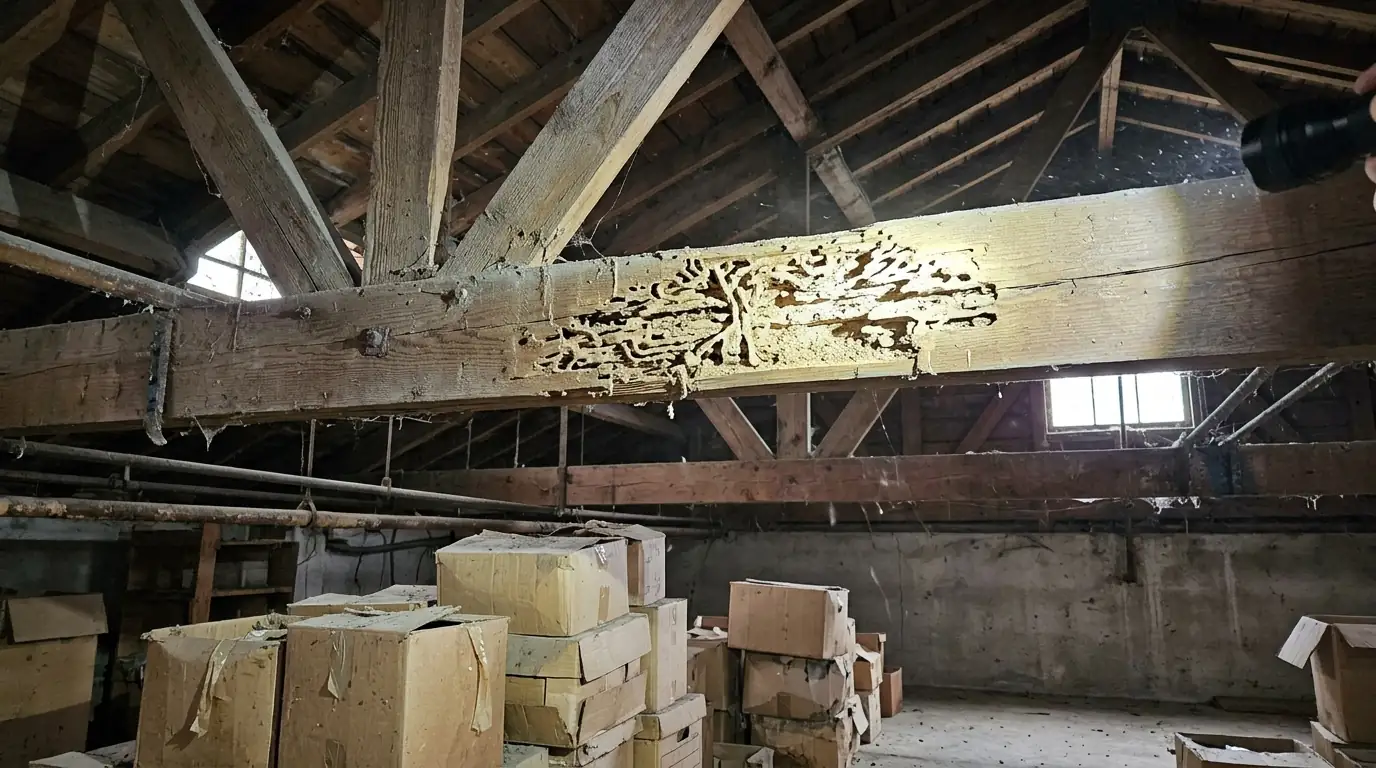
Brick and concrete buildings are different. The masonry does not feed termites, but wood floors, roof framing, mezzanines, door frames and built-in fixtures do. Those are usually treated locally because tenting a large masonry building is impractical. Concrete tilt-up warehouses and strip centers mostly face subterranean termites coming through slab joints and planters, which calls for soil treatment or baiting rather than drywood methods.
Restaurants and food businesses need extra care. Any treatment near food prep areas follows label directions closely, and we plan timing so equipment and food can be protected or removed before work starts.
Warning signs property managers report most
Pellets on shelving and fixtures
Wood display fixtures, millwork counters and back-room shelving can host drywood colonies. Pellets that keep returning under one fixture are worth an inspection.
Swarmers inside a storefront
Winged termites flying toward a front window or lights on a warm afternoon usually mean a colony in the building, not one that blew in from outside.
Mud tubes on slab walls
Tubes along concrete walls in storage rooms, stairwells or parking areas point to subterranean termites entering through joints and plumbing penetrations.
Soft wood at the roof edge
Fascia, rafter tails and wood trellises on older commercial buildings take both termite and moisture damage, often flagged during reroofing.
Damage noted in a lease or sale
Appraisals, lender inspections and tenant improvement work often uncover activity. A dedicated report lets owners act before a deal deadline.
Damp wood near planters and drains
Planters against storefront walls, clogged roof drains and leaking condensate lines keep wood wet and invite subterranean and dampwood termites.
How we keep a commercial property running during treatment
Property walk with the owner
We review tenant spaces, access rules, alarm codes, loading areas and any past termite work, and identify which areas are common and which are leased.
Inspection by space
Each tenant space, roof framing area, storage room and exterior wall is inspected and diagrammed, with findings sorted so the owner can see where activity sits.
Plan built around operations
We propose treatment with timing that fits the business: early mornings, closed days, weekends or phased work so only one space is affected at a time.
Tenant notices and prep
Owners receive written instructions for tenants covering dates, food and product handling, ventilation and any time the space must be vacated.
Treatment carried out
Local drywood treatment, soil treatment or whole-building fumigation is done to the approved plan, with signage and access controlled during work.
Records for the property file
The owner gets a summary of treated areas, completion paperwork and recommended follow-up, useful for leases, refinancing and insurance files.
Commercial termite pricing in Long Beach
Commercial work is priced to the building. Square footage, construction type and how much of the work has to happen outside normal hours drive the number. A concrete tilt-up warehouse with a wood roof is a very different job from a wood-framed apartment building or a 1920s brick storefront with wood floors.
| Typical job | Typical range |
|---|---|
| Commercial inspection and report | $185 to $585Small retail, office or mixed-use building, with findings sorted by tenant space. |
| Local drywood treatment | $465 to $2,480Drill and inject treatment of framing, fixtures or trim in one or more spaces. |
| Soil treatment along slab and planters | $1,185 to $5,640Liquid termiticide applied along foundations, planters and plumbing penetrations. |
| Fumigation of a wood-framed building | $3,485 to $12,860Apartment or mixed-use building tarped and cleared, priced by volume and roof shape. |
What moves the price
- Total cubic volume and roof design for fumigation jobs
- After-hours or weekend work needed to keep the business open
- Number of tenant spaces and the coordination each one requires
- Construction type, including brick, concrete, steel or wood framing
- Food handling, inventory or equipment that must be protected or moved
- Access limits such as alarms, locked roof hatches and loading docks
Commercial figures above are typical ranges only and not a quote, and the price for your property is set after we inspect it. Compare more jobs in the treatment price guide.
Keeping tenants informed and the doors open
Most commercial jobs can be done without closing a business. Local drywood treatment usually takes a few hours per area, and we can schedule it before opening or on a closed day. Soil treatment happens outside, along the building, and rarely affects operations beyond some blocked planters for an afternoon.
Fumigation is the exception, since the whole structure must be vacated for roughly two to three days. For a mixed-use building, that means planning closures for every business and relocation for every resident. Starting the conversation early, giving written notices and choosing dates around slow periods makes a big difference.
Clear tenant notices matter. People want to know what is happening, when, whether they need to remove anything and when they can return. We give owners plain written instructions they can forward or post.
- Dates and times the space is affected
- What tenants need to bag, cover or remove
- When the space can be reopened
- A phone number answered 24/7 for questions
Records owners use for leases, lenders and sales
Commercial owners often need termite paperwork for reasons beyond pest control. Lenders refinancing a building may ask for current reports. Buyers in a sale often want proof that past activity was treated. Some leases make the landlord responsible for structural pests and the tenant responsible for interior fixtures, so a clear record of where activity was found helps sort out who handles what. A report written by space makes that conversation shorter.
We keep reports organized by building and space, with dates and diagrams, so owners can show a history of inspections and treatments. For properties with several buildings, a yearly inspection schedule helps owners plan costs instead of reacting to surprises during lease renewals or sales. Owners of several small rental buildings in the same area often group them on one inspection calendar, which keeps the paperwork consistent across the portfolio. When a building changes hands, that file travels with it.
Commercial corridors and building types we see around Long Beach
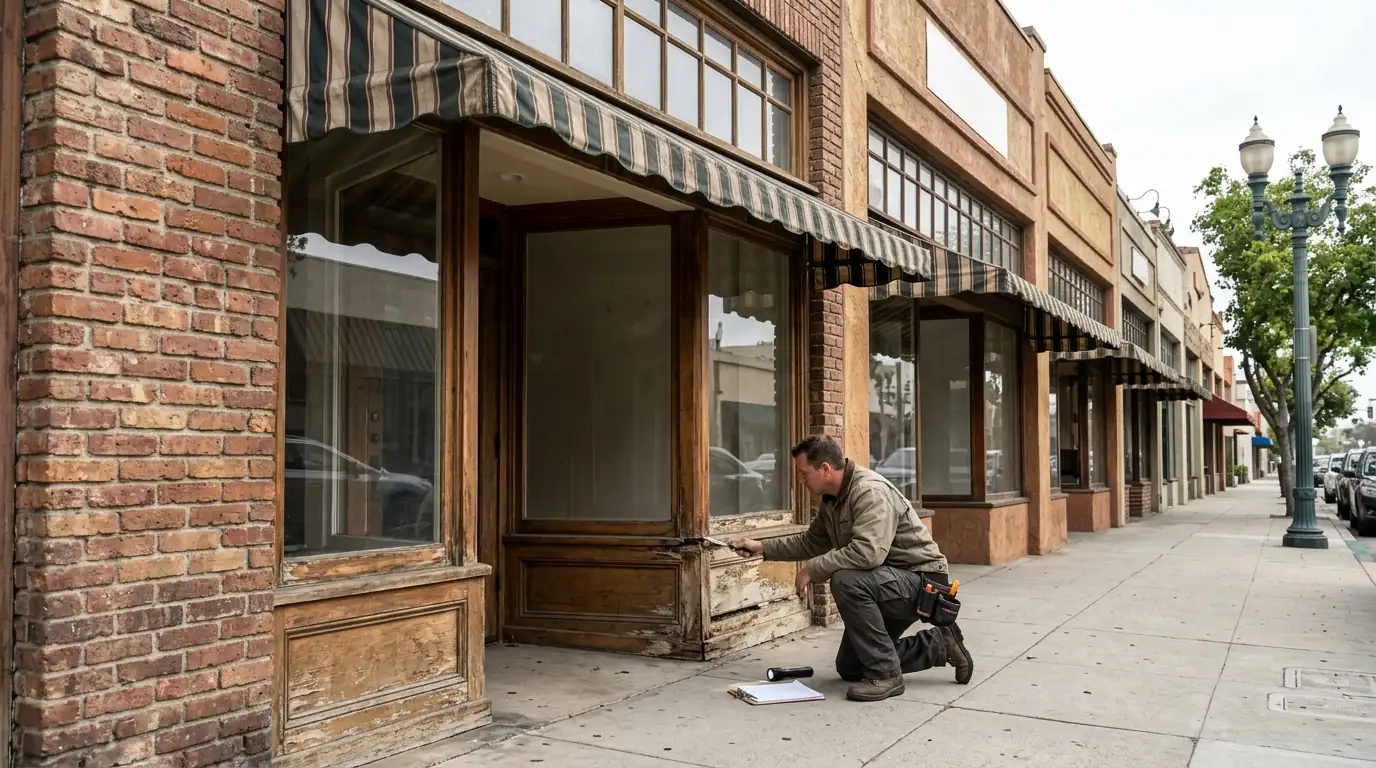
Long Beach business streets carry a lot of older wood. Storefronts along Retro Row on 4th Street, Bixby Knolls on Atlantic Avenue and Belmont Shore on 2nd Street often date to the 1920s through 1950s, with wood floors, wood storefront frames and wood roof framing behind brick or stucco faces. Drywood activity in those buildings frequently shows up in display windows, back storage rooms and under the roof.
Downtown, older commercial buildings near Pine Avenue and the Promenade sit beside newer mixed-use towers, and planter beds on podium decks can attract subterranean termites to the slab. North Long Beach and the areas near the 710 freeway have more concrete warehouses and strip centers where slab joints and landscaped edges are the main entry points. Small apartment buildings across Rose Park, Wrigley and Alamitos Beach are the most common commercial termite jobs we see, and those owners need a plan that respects tenant notice rules.
Where we do commercial termite control
- Downtown Long Beach 90802
- North Long Beach 90805
- Belmont Shore 90803
- Bixby Knolls 90807
- California Heights 90807
- Los Altos 90815
- Naples 90803
- Rose Park 90804
- Wrigley 90806
- Signal Hill 90755
- Lakewood 90712
- Downey 90240
- Torrance 90503
- Carson 90745
- Compton 90220
- Norwalk 90650
- Bellflower 90706
- Garden Grove 92840
- Westminster 92683
- Seal Beach 90740
- Cerritos 90703
- Whittier 90601
Not listed? We cover all of Long Beach and the nearby cities; call and we will confirm your street.
Commercial Termite Control questions
Can a restaurant stay open during termite treatment?
For local drywood or soil treatment, usually yes, if the work is scheduled before opening or on a closed day and food prep areas are protected according to the product label. Whole-building fumigation requires closing for roughly two to three days, so it is planned well ahead around slower periods.
Who is responsible for termite treatment in a leased commercial space?
That depends on the lease. Many leases make the landlord responsible for the structure and the tenant responsible for interior fixtures and improvements. We write findings by location so owners, tenants and their advisers can apply the lease terms, but we do not interpret the lease ourselves.
How do you treat termites in a brick building that cannot be tented?
We focus on the wood inside the masonry: roof framing, floor joists, door and window frames, mezzanines and fixtures. Drywood colonies there are usually treated by drilling and injecting the galleries. Subterranean activity is handled with soil treatment along foundations and planters or with a bait system.
What notice should apartment tenants get before termite work?
California law sets notice rules for entering occupied rental units, and fumigation also requires written notices to occupants before treatment. Owners should give notice that meets those rules. We provide plain written instructions that owners can share with tenants, covering dates, prep and when the unit can be reoccupied.
Related services
Commercial Pest Control
Commercial pest control in Long Beach is a scheduled program built around the site: monthly or twice-monthly service for restaurants, rodent stations.
DetailsCondo & HOA Termite Treatment
Condo and HOA termite treatment starts with an inspection of every unit and common area so the board knows where activity is.
DetailsTermite Fumigation
Termite fumigation, or tenting, covers the whole house with tarps and fills it with sulfuryl fluoride gas, which penetrates every piece of.
DetailsSubterranean Termite Treatment
Subterranean termite treatment targets the colony in the soil rather than the wood alone.
DetailsTermite Inspection
A termite inspection is a visual and probing check of every accessible part of the house: attic framing, eaves, window and door.
Details