Quick answer
A real estate termite inspection produces the state-format California wood destroying pests inspection report. It separates active infestation and damage (Section 1) from conditions that could lead to future problems (Section 2), lists areas that need further inspection, and estimates the work. Once Section 1 items are treated and repaired, a completion notice documents the work so escrow can move toward clearance.
An escrow termite report is not the same as a casual look around the attic. It follows a format California sets, it goes to several people at once, and its wording affects who pays for what. Sellers want it accurate so there are no surprises late in escrow. Buyers want it complete so they are not inheriting a hidden colony. Agents and lenders want it on time.
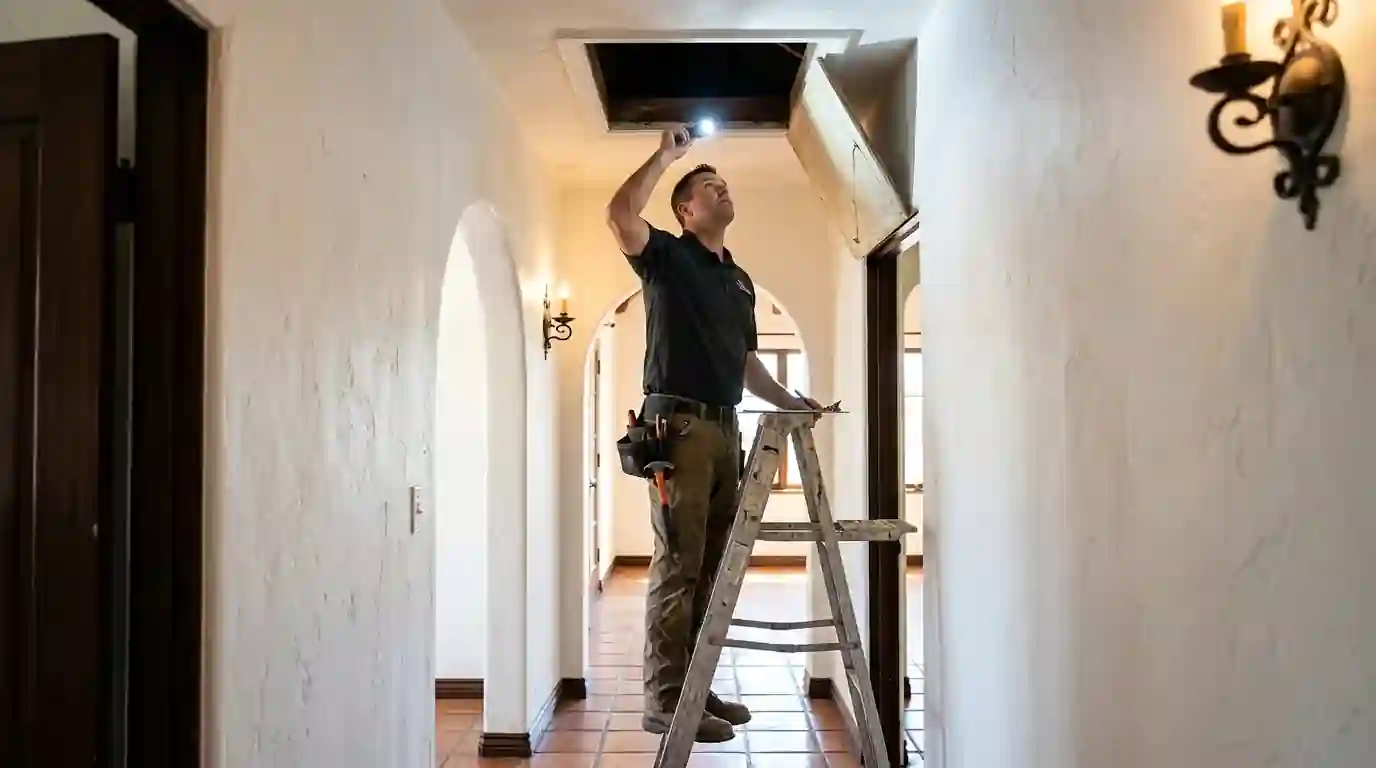
We inspect the whole structure and any attached decks, garages and fences that tie into it, then write the findings by section with a diagram. Each finding carries a recommendation and a cost estimate for the work. If you hire us to complete the Section 1 items, we do the treatment and wood repair, then issue the completion paperwork that closes those findings out.
Section 1, Section 2 and further inspection items in plain terms
Section 1 lists what is wrong right now: live termites, active wood decay fungus and damage caused by either. These are the items lenders usually want cleared, because they affect the structure being financed. If the report shows drywood pellets coming from a rafter or a subterranean tube on a pier, that is a Section 1 finding with a treatment recommendation and often a repair item for damaged wood.
Section 2 lists conditions that are likely to lead to infestation or decay if left alone. Earth-to-wood contact at a fence post bolted to the house, a leaking shower pan, a planter built against stucco or excess moisture in the crawlspace are typical. They are real issues, but they are not active damage, and lenders often do not require them. Buyers and sellers decide between themselves whether to address them.
Further inspection items cover areas the inspector could not see, or saw evidence that points inside a closed space. A stained ceiling below a bathroom or pellets falling from a closed soffit are examples. The report recommends opening or accessing the area so it can be properly evaluated, and that follow-up can add findings.
When a sale calls for a formal termite report
The lender requires clearance
Many loans, especially some government-backed programs, ask for a report showing the home is free of active infestation before funding. Ask your loan officer early so the timing fits escrow.
The buyer asked for it in the offer
Purchase agreements in California often name who pays for the inspection and for Section 1 work. Once that is agreed, the report becomes a contract item with a deadline.
The seller wants to list with a report
Some sellers order a report before listing so buyers see the findings up front. That can reduce renegotiation and shortens the escrow timeline.
An older report is out of date
A report reflects conditions on the day of the inspection. If a prior report is several months old or the home changed hands, a fresh inspection protects everyone.
A refinance or estate transfer
Trust administrators, probate sales and some refinances ask for a current report to document the condition of the property before it changes hands.
How an escrow inspection moves from visit to completion notice
Schedule around escrow dates
Tell us the close date and who needs the report. We set the inspection early enough that treatment and repair can finish before the contingency period runs out.
Full structure inspection
We check the attic, crawlspace or slab edge, garage, exterior wood, decks and porches, noting every finding on a diagram and listing areas that were inaccessible on inspection day.
Report written by section
Findings are sorted into Section 1, Section 2 and further inspection items, each with a recommendation. The report goes to the parties you name, such as both agents and escrow.
Bids for the recommended work
Each recommendation carries a price, so the buyer and seller can negotiate credits or agree on who pays for treatment, wood replacement or moisture corrections.
Treatment and wood repair
We fumigate, treat locally or address subterranean activity as the findings require, then replace or reinforce damaged wood listed in the report.
Completion notice issued
When the work is done, we issue the completion notice that documents which items were completed, which the lender and escrow use for the clearance step.
Typical pricing for escrow reports and clearance work
The report fee is modest compared with the work it can lead to. What moves the final number is the treatment the findings call for and how much damaged wood needs replacement. The figures below cover common Long Beach scenarios for single-family homes and small multi-unit buildings.
| Typical job | Typical range |
|---|---|
| Escrow termite report, single-family home | $115 to $225Full inspection, diagram, sectioned findings and cost estimates for recommended work. |
| Escrow report for a duplex to fourplex | $195 to $395All units, shared areas, garages and attached structures diagrammed on one report. |
| Localized Section 1 treatment | $385 to $1,240Drill and inject or spot treatment for a few accessible drywood or subterranean areas. |
| Whole-house fumigation for clearance | $1,685 to $3,940Common when drywood activity is spread through attic, trim and framing in several areas. |
| Wood repair for Section 1 damage | $285 to $2,860Replacing fascia, rafter tails, trim, sill plates or deck boards damaged by termites or rot. |
What moves the price
- How widespread active infestation is and whether colonies are reachable for local treatment
- Amount of damaged wood that must be removed and replaced to clear Section 1
- Whether Section 2 moisture or earth-to-wood corrections are included in the agreement
- Raised foundation access and the condition of the crawlspace
- Number of units, decks and attached structures covered by the report
Treat these figures as typical Long Beach ranges rather than a quote, since the report itself defines the scope and the price. Compare more jobs in the treatment price guide.
Advice for sellers getting ahead of the report
Sellers have the most control before the inspection, not after. Clearing storage from garage walls and attic access, opening the crawlspace panel and fixing obvious leaks under sinks reduces both inaccessible areas and Section 2 findings. A tidy, reachable property produces a cleaner report and fewer further inspection items that stall escrow.
If you suspect drywood activity, consider ordering the inspection before listing. A pre-listing report lets you choose between fumigation and local treatment on your own schedule, rather than under a buyer deadline. It also lets you price the home knowing what the clearance work will cost.
- Order the report early so treatment and repair fit the timeline
- Fix dripping hose bibs and sprinkler heads that spray onto siding
- Pull soil and mulch down so wood siding is not buried
- Keep receipts from any prior treatment for the inspector to review
What buyers should look for when they read the report
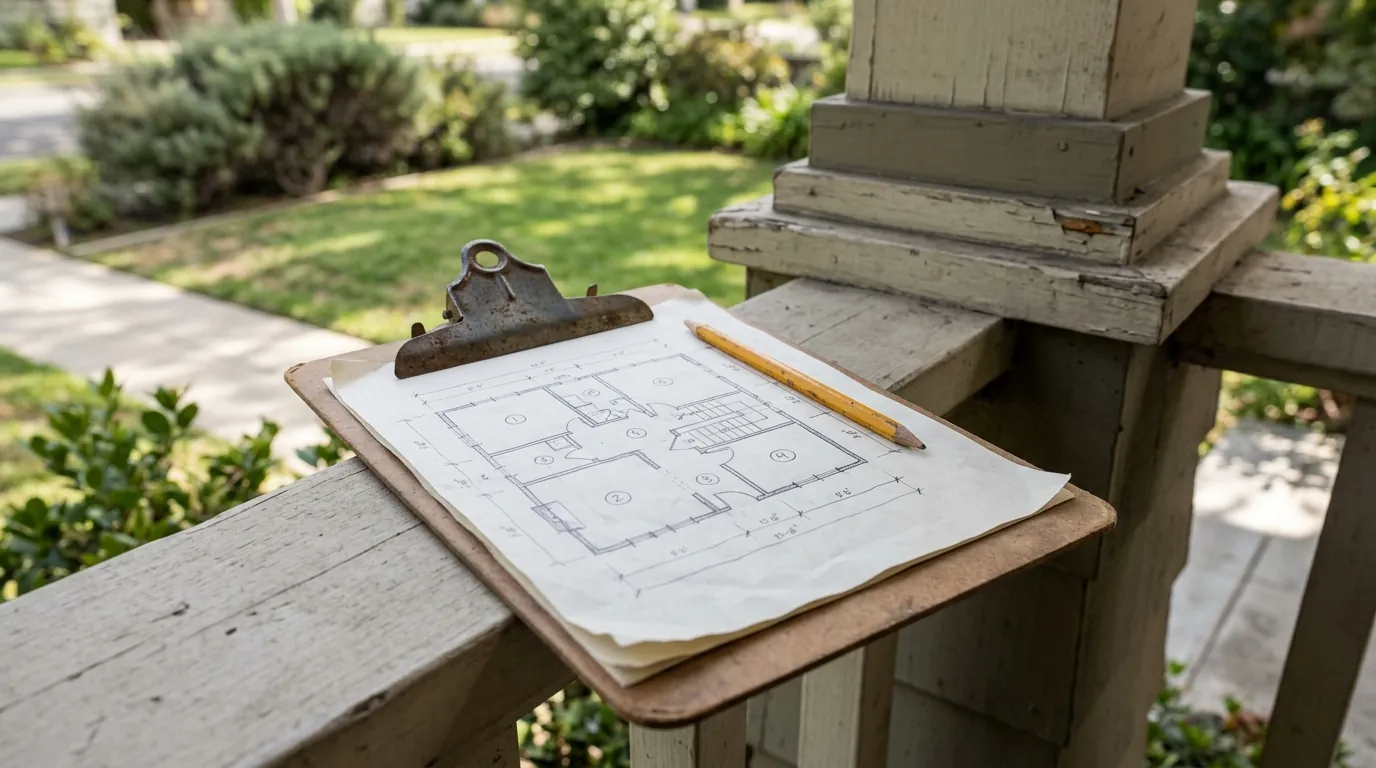
Start with the diagram and walk the house with it. Every numbered finding should match a real place you can see. Pay attention to the inaccessible list, because a long one means part of the house was never evaluated. Ask whether further inspection items will be opened before close, and who will pay if they reveal more damage.
Look at the recommended treatment for each Section 1 item. If drywood activity appears in several separate rooms and the attic, a whole-structure fumigation recommendation is common and reasonable. If the report recommends a local treatment for widespread activity, ask how hidden colonies will be handled. Finally, confirm that the completion notice will be issued before close, since that is the document that shows the work was actually done.
If anything in the report is unclear, call and ask. We would rather explain a finding before close than have a buyer discover after move-in that a further inspection item was never opened.
Escrow inspections across Long Beach housing types
Older districts produce the longest reports. A 1920s bungalow in Rose Park or Belmont Heights on a raised foundation often shows drywood activity in rafter tails and window trim, some earth-to-wood contact at porch steps, and a crawlspace with old plumbing leaks. Those homes are worth inspecting early in escrow because wood replacement on porches and eaves takes time to schedule.
Slab-built ranch homes in Los Altos and El Dorado Park Estates tend to have shorter reports, but attic drywood colonies and subterranean activity at the garage slab edge come up regularly. Downtown and in Alamitos Beach, condo sales often involve the association, because exterior walls, balconies and attics belong to the common area and the HOA may control treatment. Canal-front homes in Naples add dampwood findings on wood near the seawall and on docks, which buyers should read as both a termite and a moisture item. Bluff Park homes facing the ocean add rot on the ocean side, which often lands in Section 1 as fungus damage rather than termite damage.
Where we do real estate termite inspection
- Downtown Long Beach 90802
- North Long Beach 90805
- Belmont Shore 90803
- Bixby Knolls 90807
- California Heights 90807
- Los Altos 90815
- Naples 90803
- Rose Park 90804
- Wrigley 90806
- Signal Hill 90755
- Lakewood 90712
- Downey 90240
- Torrance 90503
- Carson 90745
- Compton 90220
- Norwalk 90650
- Bellflower 90706
- Garden Grove 92840
- Westminster 92683
- Seal Beach 90740
- Cerritos 90703
- Whittier 90601
Not listed? We cover all of Long Beach and the nearby cities; call and we will confirm your street.
Real Estate Termite Inspection questions
Who usually pays for the termite report and Section 1 work in a California sale?
It is negotiable and written into the purchase agreement. Often the seller pays for the report and Section 1 work while Section 2 items are left to negotiation, but buyers and sellers can agree to any split. Your agent will know what is typical for your situation and how it fits the rest of the deal.
How long is an escrow termite report considered current?
A report reflects the day it was written, and lenders and escrow officers usually want one dated within the last few months. If escrow drags on, the home sits vacant for a long stretch, or swarm season passes in between, a reinspection may be requested before close.
Can a buyer use their own termite company instead of the seller's report?
Yes. Buyers can order a separate inspection, and some do when they want a second opinion on the scope. If two reports disagree, the parties negotiate which recommendations to follow. A second report also gives the buyer a baseline for their own records after closing.
Does a completion notice mean the house will never get termites again?
No. It confirms that the listed items were treated or repaired on that date. Drywood termites can swarm into any house in coastal Southern California later, so new owners benefit from periodic inspections and, for some homes, a protection plan after move-in.
Related services
Termite Inspection
A termite inspection is a visual and probing check of every accessible part of the house: attic framing, eaves, window and door.
DetailsTermite Fumigation
Termite fumigation, or tenting, covers the whole house with tarps and fills it with sulfuryl fluoride gas, which penetrates every piece of.
DetailsTermite Damage Repair
Termite damage repair means cutting out wood that termites have hollowed or weakened and installing new material so the structure is sound.
DetailsLocalized Drywood Termite Treatment
Localized drywood termite treatment targets specific colonies instead of the whole structure.
Details