Pellets piling up
Tiny, hard, six-sided pellets under a window, on a sill or below a beam are the classic drywood sign. Sweep them up; fresh piles mean the colony is active.
Termite & pest control in Long Beach, CA
Pellets on a windowsill, wings by the back door or a soft spot in the trim usually mean termites have been at work for a while, and the right fix depends on which kind you have.
We inspect, tent, treat and repair termite damage across Long Beach, Signal Hill, Lakewood and the nearby cities, and we take care of the ants, roaches, rats and bees that come with Southern California living.
Inspection notesSample
Products we work with
Quick answer
Most termite trouble in Long Beach comes from drywood termites, which live inside dry framing and trim and push out small six-sided pellets. When colonies are spread through a house, tenting is usually the most complete fix; when they sit in wood you can reach, a local treatment can do the job. Subterranean termites come up from the soil and are treated at the ground. An inspection tells you which you have.
Treatment finder
Answer four quick questions and see where most Long Beach jobs like yours start. Tap an answer in each row; the suggestion updates as you go.
Suggested starting point
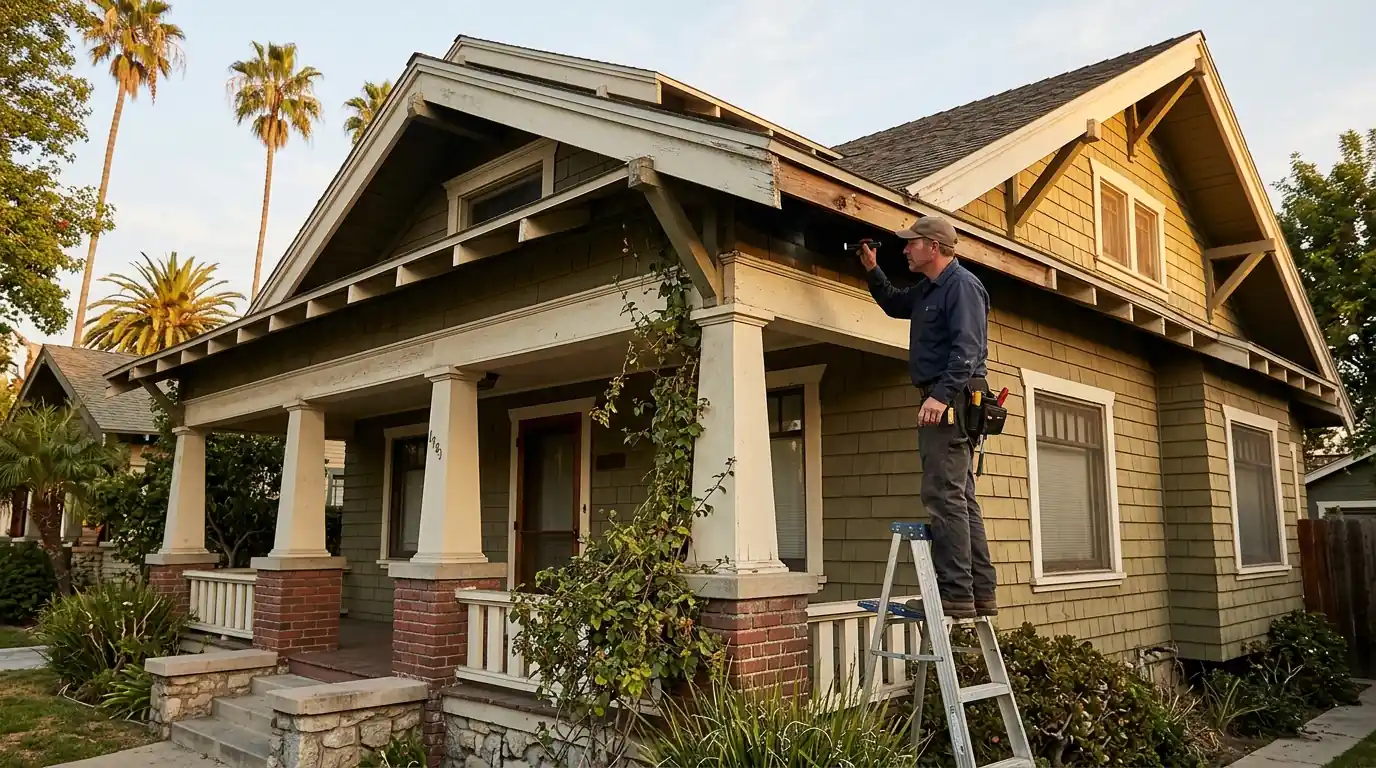
An inspector checks the attic, the crawlspace or slab edge, the garage, the eaves and the trim, identifies the termite type and marks every finding on a diagram, so the treatment is chosen on facts rather than guesses.
How our termite inspection works
Call to confirm itThe inspection confirms or changes this suggestion.
Services
Every one of our 40 services starts the same way: we find out what is really going on before anyone talks about price. Termite work is the core of the business; household and yard pests come along with it.
Reports, plans and building-wide programs
Colonies living inside dry wood
Termites that come up from the soil or wet wood
Damaged wood and prevention
Pests inside the house
Rodents, stinging insects and the yard
What to look for
Termites stay hidden, so the clues are small. These are the ones homeowners most often send us photos of.
Tiny, hard, six-sided pellets under a window, on a sill or below a beam are the classic drywood sign. Sweep them up; fresh piles mean the colony is active.
Swarmers drop their wings within minutes. Piles of identical wings near windows, lights or doors in late summer usually mean drywood termites inside.
Pencil-width tubes running up a slab edge, pier or garage wall are how subterranean termites travel from the soil to the wood.
Paint that bubbles, wood that sounds papery when tapped, or a screwdriver that sinks in easily can mean galleries just under the surface.
Drywood termites push pellets out through pinhead kick-out holes, then seal them. Look along door frames, baseboards and attic framing.
Wood that swells, stays damp or crumbles near a leak can attract dampwood termites and hide subterranean activity.
Tenting or local treatment
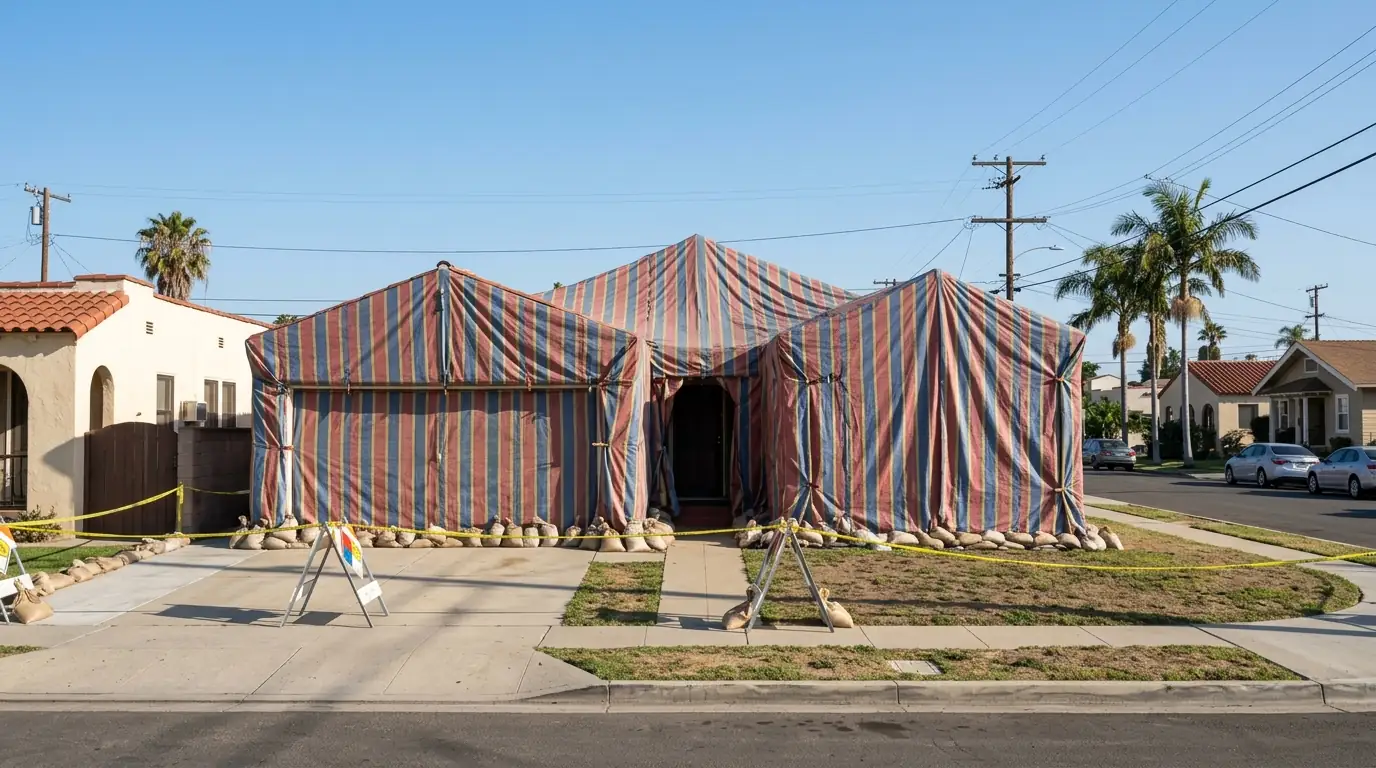
Tenting reaches colonies hidden inside walls and beams that no drill can find.
Drywood colonies are often in more places than anyone can see, which is why fumigation is so common on older Long Beach houses. When the inspection shows activity confined to wood we can reach, a local treatment avoids moving out.
We explain both, with prices, so you choose with the facts in front of you. The tenting or local treatment guide goes deeper, and the tenting cost estimator gives a typical range for your house.
How a job runs
Whether it is one door frame or a whole house under tarps, the work follows the same order. Nothing gets treated until we know what is there.
A person answers day or night. We ask what you are seeing, where, and since when, and book an inspection at a time that works.
We check the attic, the crawlspace or slab edge, the garage, eaves, windows, doors and wood near soil, probing and tapping where damage hides.
Every finding is marked on a floor diagram with notes, so you can see where the termites are and what they have damaged.
You get the treatment choices that fit the findings, local or whole-structure, with typical costs and what each one does and does not cover.
We walk you through prep, do the work, and for tenting we test the air before you go back in. You get the paperwork for your records.
Damaged wood can be repaired after treatment, and a protection plan keeps an eye on the house in the years after.
Long Beach houses and termite seasons
Long Beach is drywood termite country. The marine layer keeps winters mild, late summers run warm and dry, and a lot of the housing is old wood: Craftsman bungalows and Spanish Colonial Revival homes in California Heights, Rose Park, Bluff Park and Belmont Heights, many sitting on raised foundations with a crawlspace underneath.
The postwar ranch tracts in Los Altos, El Dorado Park Estates and next door in Lakewood sit on slabs, where subterranean termites look for cracks and expansion joints. The Cliff May Ranchos in the Plaza have exposed post-and-beam ceilings that drywood colonies like, and the homes along the Naples canals deal with damp wood near the seawalls.
Exquisite Termite works out of the Pine Avenue office downtown and the Downey headquarters on Florence Avenue, which keeps us close to all of it, from Bluff Park to North Long Beach and out to Cerritos and Torrance.
Swarm calendar
Most of the year termites stay out of sight. These are the months they show themselves in and around Long Beach.
Service area
Every Long Beach neighborhood, plus Signal Hill, Lakewood, Downey and the cities around them in Los Angeles and Orange counties.
Working with us
Termites rarely make an emergency, but swarms, bees and rats do not keep office hours. The phone is answered around the clock.
You get a diagram and photos of what we found, not a verbal guess. That makes it easier to compare options or share with a buyer or lender.
When a local treatment will do, we say so. When tenting is the honest answer, we explain why and what the prep involves.
Termite work often uncovers damaged trim, fascia or sill plates. We repair that wood too, so one company sees the job through.
Questions
Look at what the termites leave behind. Drywood termites push small, hard, six-sided pellets out of the wood, so you find little piles that look like coarse sand or ground pepper. Subterranean termites leave mud: pencil-width tubes on the foundation and soil packed into damaged wood. Wings by a window in late summer point to drywood; wings after a spring rain point to subterranean. An inspection confirms it.
No. Tenting is the right call when drywood colonies are spread through a house or hidden in walls and framing nobody can reach. When the activity is limited to a door frame, a few rafter tails or one piece of furniture, a local treatment such as orange oil or a drill-and-inject termiticide can handle it. Subterranean termites are treated in the soil, not with a tent.
Plan on two to three days for most homes. The tarps go up on day one, the fumigant is held for about a day, then the house is aired out and the air is tested before anyone is allowed back inside. Large homes, cool weather and complicated roofs can stretch the schedule, so we give you the real timeline when the job is booked.
Yes. We inspect the property, write the report with findings separated into Section 1 and Section 2 items, attach a diagram, and price the work so buyers, sellers and agents can negotiate with real numbers. If Section 1 work is done, we issue the completion paperwork escrow needs before closing.
Yes. Most homes we tent or treat for termites also deal with Argentine ants, cockroaches, roof rats or spiders at some point, so we handle those too: one-time visits, recurring service, rodent trapping and sealing, bee and wasp removal, and mosquito work in the yard.
Close the room off, vacuum the swarmers and wings, and save a few in a sealed bag or a strip of clear tape so the type can be identified. Swarmers do not bite or damage anything themselves and die within hours indoors. Then call us; the swarm tells us a mature colony is nearby, and the inspection finds where.
Termite Guides
Plain-language guides on termite types, tenting prep, reports for escrow and the pests that come with coastal living.

October 14, 2026
How to identify drywood termite frass in a Long Beach home, the look-alikes that fool people, a simple sweep test and the steps after you find it.
October 13, 2026
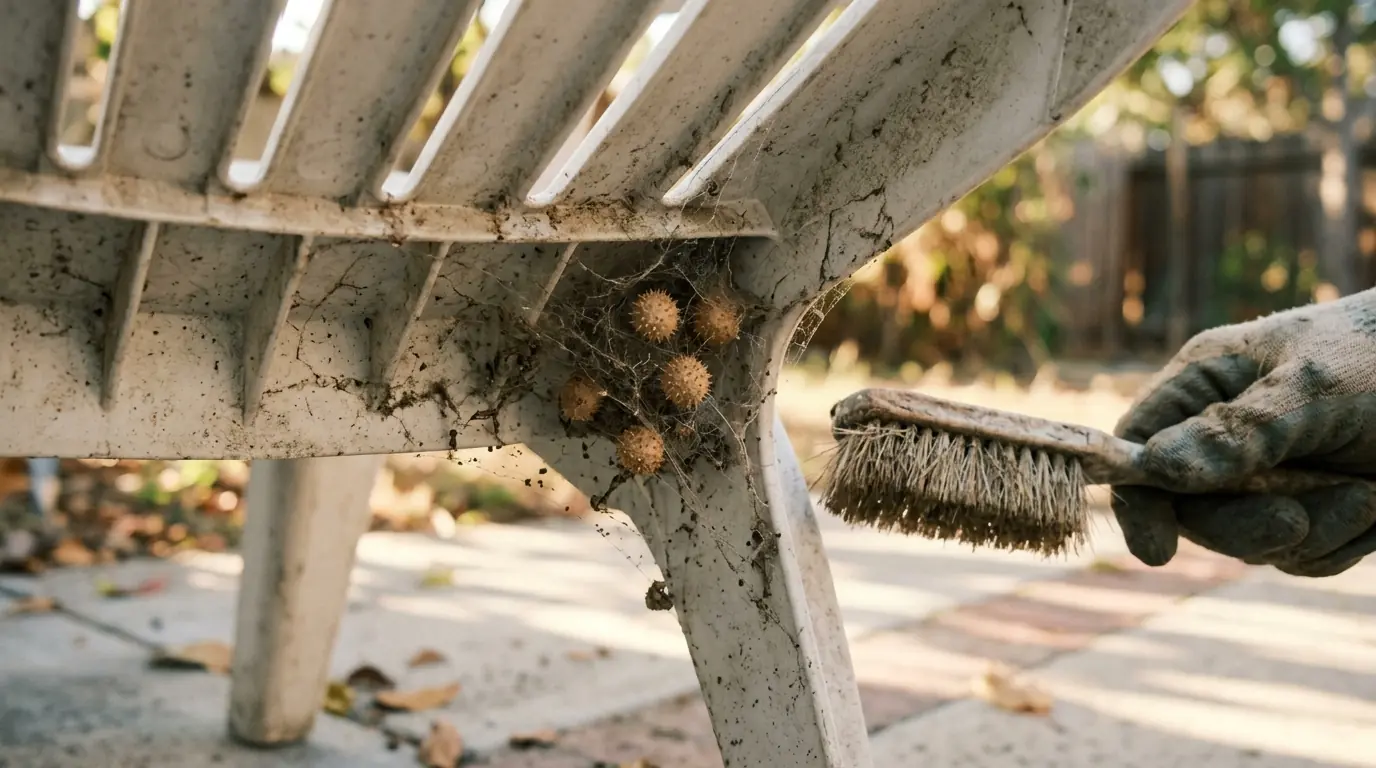
How to spot brown widow spiders and their spiky egg sacs, where they hide around patios, mailboxes and garages, and practical steps to reduce them.
October 9, 2026
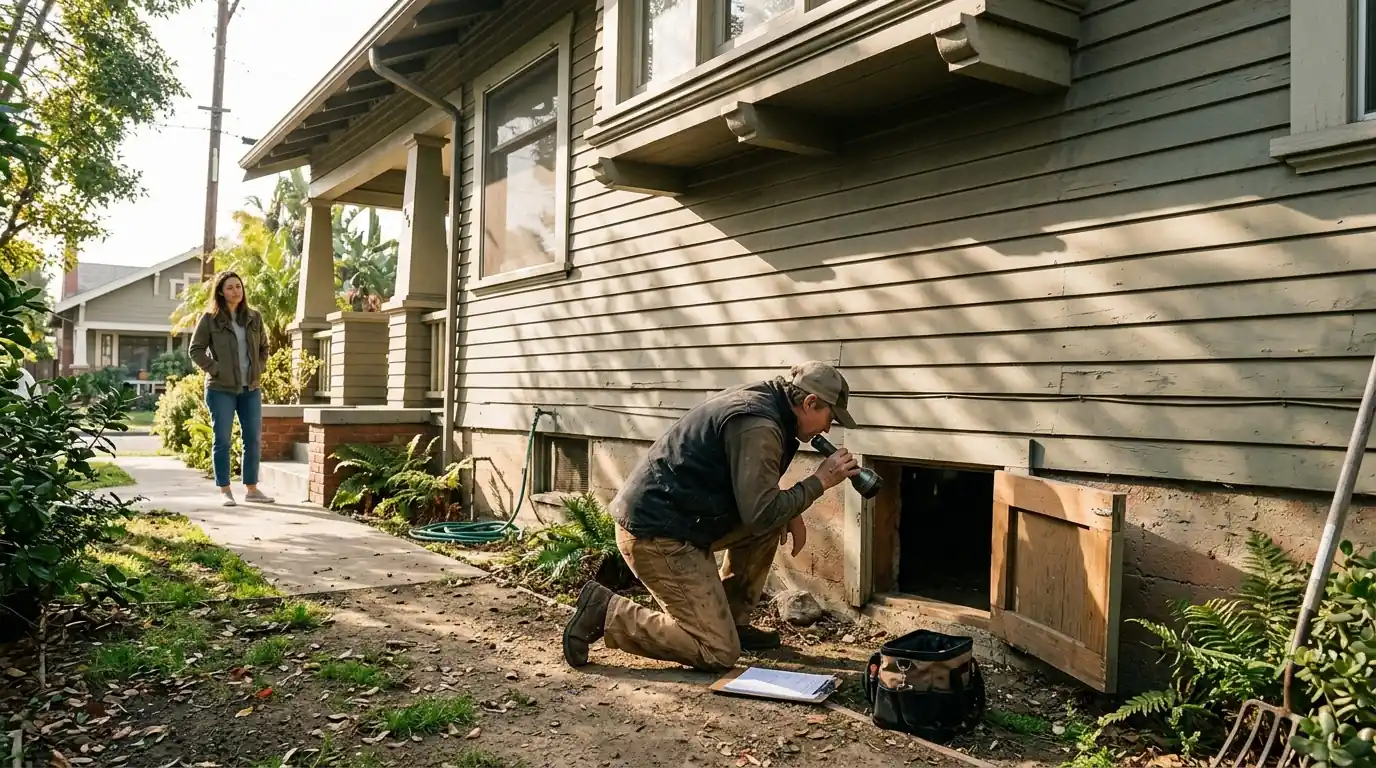
What to look at in the attic, crawlspace, garage and eaves of a pre-war Long Beach home, how to read the report, and how to use escrow timing well.
Call us
Tell us what you found and where. We will ask a few questions, book the inspection and explain what happens next.