In this guide
If you have lifted a patio chair in Long Beach and found a small, round spider with a tangled web and a few spiky tan balls beside it, you have met the brown widow. This species has become one of the most common spiders around homes in coastal Southern California over the past two decades, and in many neighborhoods it now outnumbers the native black widow.
Brown widows are shy and rarely bite, but they live close to where people sit, reach and store things, so it makes sense to know what they look like and how to keep their numbers down. This guide covers identification, the egg sacs that give them away, the spots where they settle around a typical Long Beach house, how they differ from black widows, and what actually reduces them.
Key takeaways
- Brown widows are tan to brown with banded legs and an orange hourglass on the underside.
- Their egg sacs are round, tan and covered in small spikes; remove and destroy them.
- Look under patio furniture, railings, mailboxes, garage shelves and outdoor toys.
- Brown widows are shy and usually less dangerous than black widows, but any bite deserves medical advice.
- Gloves, regular web removal, tidy storage and warmer outdoor lighting reduce them over time.
How to recognize a brown widow
Adult females are the ones you will notice. The body is round and about the size of a pea or a little smaller, and the color ranges from tan to medium brown to a mottled gray-brown. Many have a pattern of light and dark bands on the legs, which look striped when you see them up close. The back of the abdomen often shows a geometric pattern of black, white and orange markings, though older females can look plain brown.
Like all widows, they have an hourglass marking on the underside of the abdomen. On brown widows it is usually orange or yellowish orange rather than red. Males and young spiders are smaller, paler and seldom noticed.
The web is the other clue. Widow webs are irregular and tangled rather than neat circles, with strong, slightly sticky silk. You will usually find them in a protected corner with the spider tucked in a retreat at the back.
The spiky egg sac is the easiest giveaway
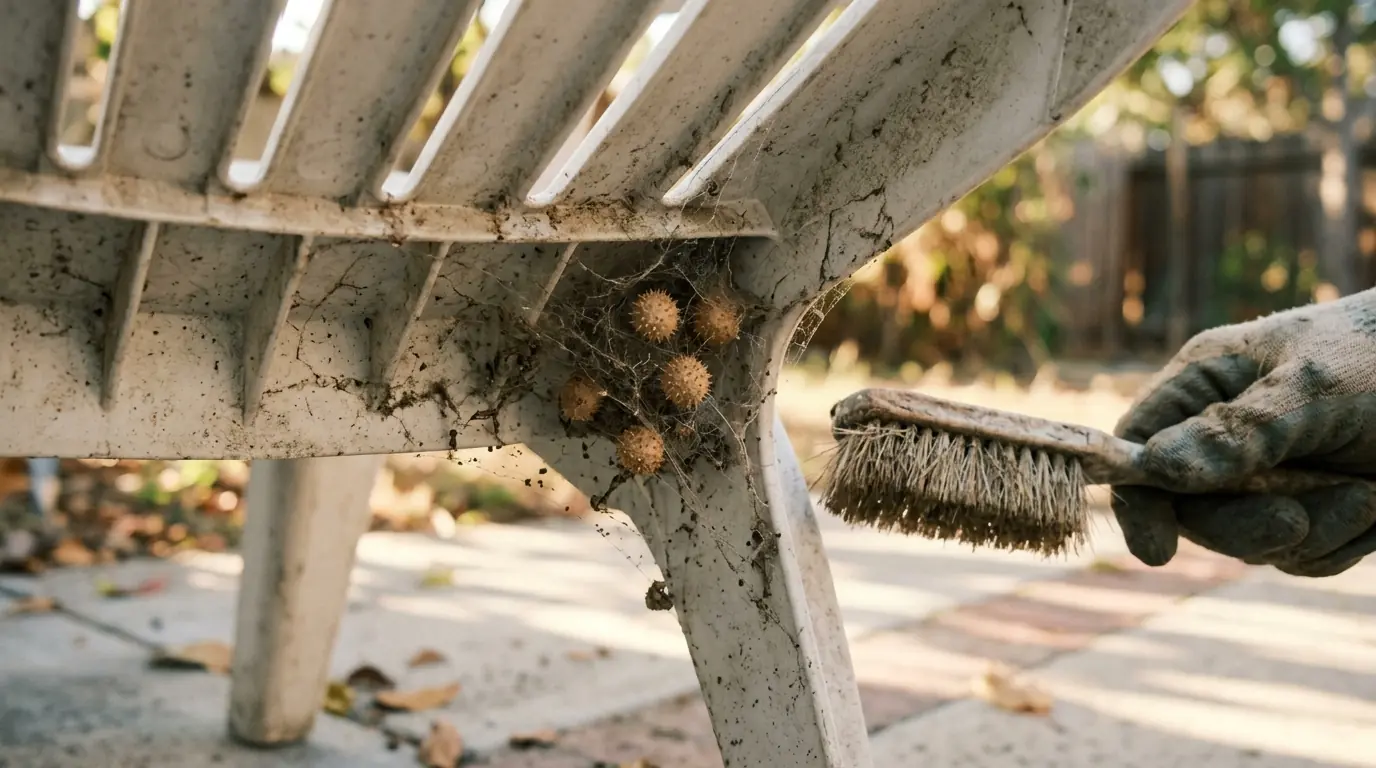
Brown widow egg sacs are distinctive enough that many people find the sacs before they ever see the spider. Each sac is round, about the size of a pea, cream to tan in color, and covered in small pointed bumps that make it look like a tiny spiked ball or a sandbur. A single female can produce many sacs over a season, so it is common to find several clustered together in one web.
Black widow sacs, by comparison, are smooth, rounder or slightly pear shaped, and paler or grayish. If you are finding spiky sacs under furniture or along a railing, you have brown widows. Removing the sacs is one of the most useful things you can do, since each one can hold a large number of eggs.
Where they hide around a Long Beach home
Brown widows like sheltered spots with a little open space below, close to light that draws insects. Mild coastal weather lets them stay active much of the year, with numbers climbing through the warm summer and early fall months. These are the places we check first on a typical house or patio home:
- Under the seats and arms of patio chairs, lounges and outdoor tables, especially plastic and metal furniture left out all year
- Under deck and balcony railings, stair treads and the lip of handrails
- Inside and under curbside and wall-mounted mailboxes, and behind meter boxes
- Garage door tracks, the corners of shelving, and stacks of boxes or flower pots in the garage
- Under the rim of plastic toys, kiddie pools, buckets and recycling bins
- Pool equipment covers, hose reels, barbecue covers and the underside of outdoor cushions
Brown widow vs black widow: the practical differences
Both species live in Long Beach, and both belong to the same group of spiders. The black widow is glossy black with a red hourglass, tends to build lower to the ground in dark, undisturbed places such as woodpiles, wall voids, crawlspaces and the base of shrubs, and is more likely to stay hidden during the day.
The brown widow is lighter in color, has an orange hourglass and spiky egg sacs, and is more willing to build in exposed spots at hand height around furniture, railings and play equipment. In many coastal neighborhoods it has become the more common of the two.
On the medical side, the venom of the two is broadly similar in type, but brown widows usually inject less of it and tend to retreat or play dead rather than bite. That does not mean a bite should be ignored. It means the brown widow is generally considered less dangerous than the black widow, and that bites from either should be treated as a reason to get medical advice.
Bites: what is known and when to see a doctor
Bites from brown widows are uncommon and usually happen when a hand presses against a spider hidden under a chair, inside a glove or in a shoe left outdoors. Reactions vary from person to person. Some people notice only a small red mark, while others have more pain or other symptoms.
If you or a family member are bitten, or think you may have been, wash the area with soap and water, apply a cool compress and contact a doctor or urgent care for advice, especially for children, older adults, anyone with health conditions, or any bite followed by spreading pain, cramping, sweating or feeling unwell. If symptoms are severe, call 911. The national Poison Control line can also give guidance by phone. If you can safely capture or photograph the spider, it helps the doctor know what they are dealing with. We do not give medical advice; the steps above are general and a medical professional should guide any care.
How to reduce brown widows around the house
Spraying a web you can see helps very little on its own, because new spiders move in from nearby and egg sacs are resistant to many sprays. Steady habits around the yard do more. Wear gloves when you lift patio furniture, pots and stored items. Use a broom or a long-handled duster to knock down webs and egg sacs from under chairs, railings and mailboxes, then crush the sacs or bag them and put them in the trash.
Flip or stack outdoor furniture against a wall when it is not in use, store children's toys and buckets upside down in a closed bin, and keep the garage tidy with boxes off the floor. Switch porch and garage lights to yellow or warm LED bulbs, which draw fewer of the night-flying insects that widows feed on. Shake out shoes, gloves and gardening boots left outdoors before putting them on.
Seal gaps where spiders and insects enter the house, such as worn door sweeps, torn window screens and openings around pipes and cables. Fewer insects means fewer spiders over time.
When a professional treatment makes sense
A professional visit is worth it when widows keep coming back despite regular cleanup, when there are young children or pets using the patio, or when the problem is spread across a large yard, a multi-unit building or a commercial property. Our technician starts with an inspection of the outdoor living areas, the garage and the perimeter, removes webs and egg sacs by hand, and applies targeted treatment to the protected areas where spiders build rather than broadcasting product across the whole yard. Treating the insect activity that feeds them is often part of the plan.
Because new spiders arrive from neighboring yards, results hold best with periodic service through the warm months. If you want to talk through what you are seeing, call (562) 636-0445 at any hour.
Reader questions
Should a brown widow bite worry me as much as a black widow bite?
Generally no. The venom is a similar type, but brown widows tend to deliver less of it and are more likely to retreat than bite. That said, reactions vary by person, and any suspected widow bite, especially on a child or an older adult, is a reason to call a doctor or urgent care for advice rather than wait it out.
Is it safe to knock down brown widow egg sacs myself?
For most people, yes, with gloves and a broom or long-handled tool so your hands stay away from the web. Crush the sacs or seal them in a bag and put them in the trash. Avoid reaching under furniture with bare hands. If there are many sacs in a play area or under a deck you cannot reach safely, a professional visit is the easier route.
Why do I keep finding brown widows on my child's outdoor play set?
Play sets offer exactly what brown widows like: shaded undersides, hollow tubes, ledges at hand height and insects drawn to nearby lights. Check under slides, inside tube ends, beneath decks and the underside of seats every week or two during the warm months. Knock down webs, remove sacs, and store loose toys in a closed bin.
Written by Celeste Goodwin, Termite Guides Editor at Exquisite Termite Control.