In this guide
- Why pre-war Long Beach houses carry more termite history
- The attic: what to look for with a flashlight
- The crawlspace and the garage
- Eaves, rafter tails, windows and porches
- Reading the report: Section 1, Section 2 and further inspection
- Using escrow timing so termite work does not slip
- After you get the keys
A 1920s Craftsman in California Heights or a Spanish Colonial Revival house in Bluff Park has old-growth framing, deep eaves, wood windows and a raised foundation with a crawlspace. Those are the features buyers fall for, and they are also the places where a century of drywood termites, a few subterranean colonies and some slow plumbing leaks have usually left a mark. Finding termite history in a house this age is normal. What you want to know is how active it is, how much wood is affected and who will deal with it before you close.
This checklist walks through what to look at yourself during showings, what the inspector will be checking, how to read the report when it lands, and how to use the escrow calendar so termite work does not become a last-week scramble.
Key takeaways
- Termite history is normal in 1910s to 1930s Long Beach homes; the extent and activity are what matter.
- Check attic insulation, crawlspace mudsills, garage walls, rafter tails and wood windows for pellets, tubes and rot.
- Section 1 is active damage or infestation, Section 2 is conditions that invite trouble later.
- Ask how much of the cost is wood repair and what further inspection items could hide.
- Order the inspection early in escrow and get scheduled work dates in writing.
Why pre-war Long Beach houses carry more termite history
Most Craftsman bungalows and Spanish homes in Rose Park, Belmont Heights, Wrigley and Bixby Knolls were built between the 1910s and the 1930s. Many have been tented two or three times over the decades, some never. Western drywood termites have had a long time to find their way into rafter tails, window sashes and attic sheathing, and the mild coastal climate lets colonies keep working most of the year.
Raised foundations add a second set of questions. Wood mudsills and floor joists sit a couple of feet above the soil, which is good when the crawlspace stays dry and the vents stay open, and less good when a planter bed has been built up against the vents or a bathroom drain has dripped for years. Subterranean termites and dry rot both show up in these spaces, often near the original water heater location or under a remodeled bathroom.
None of this is a reason to walk away. It is a reason to look carefully and budget realistically.
The attic: what to look for with a flashlight
If the seller allows it and there is a safe hatch, a quick look in the attic tells you a lot. Use a strong flashlight and stay on the joists. You are not trying to diagnose the house, just to know what questions to ask.
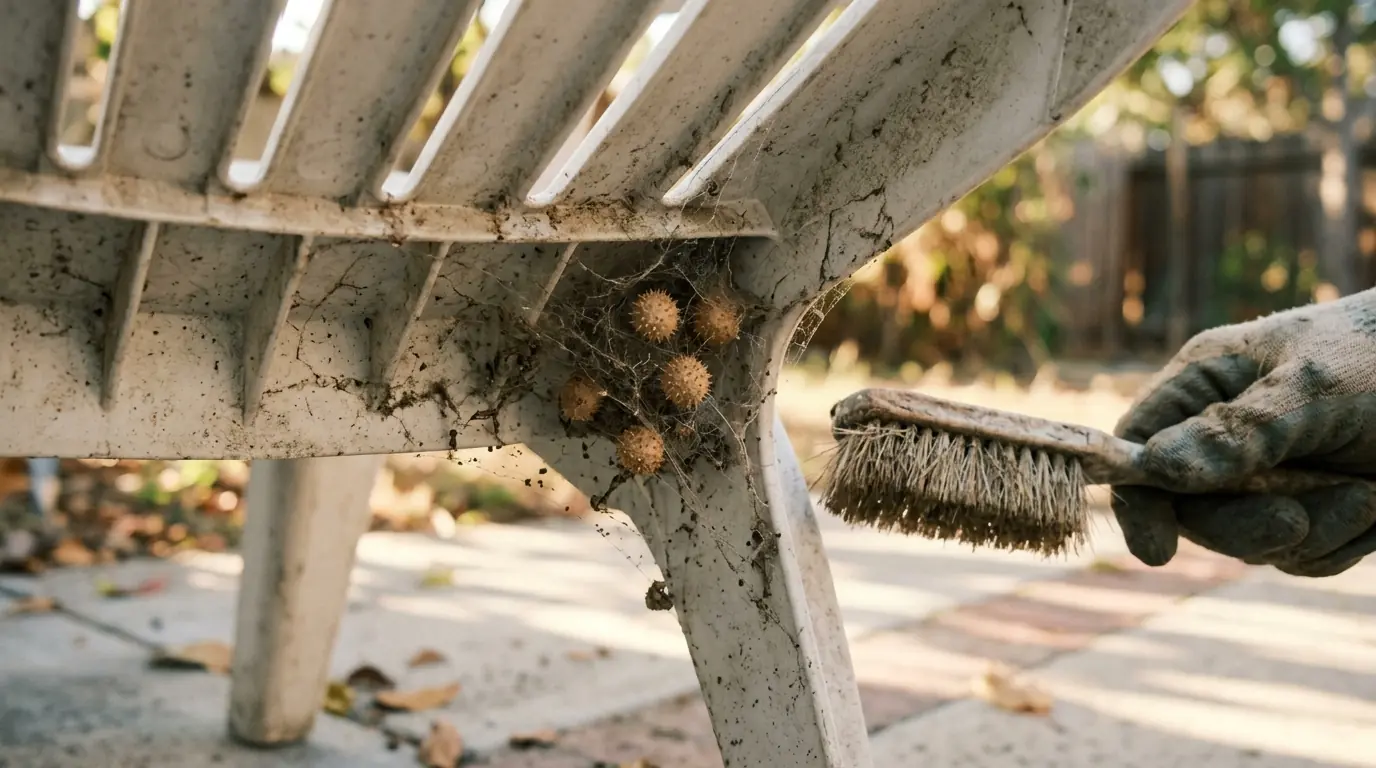
- Small piles of hard, six-sided pellets on the ceiling insulation or on top of beams
- Tiny round kick-out holes in the sheathing or rafters, sometimes patched with a dark plug
- Discolored or soft roof sheathing near the eaves, which points to past roof leaks
- Old drill holes in framing, a sign of earlier local treatment
- Fumigation tags or old reports left on a beam by earlier companies
The crawlspace and the garage
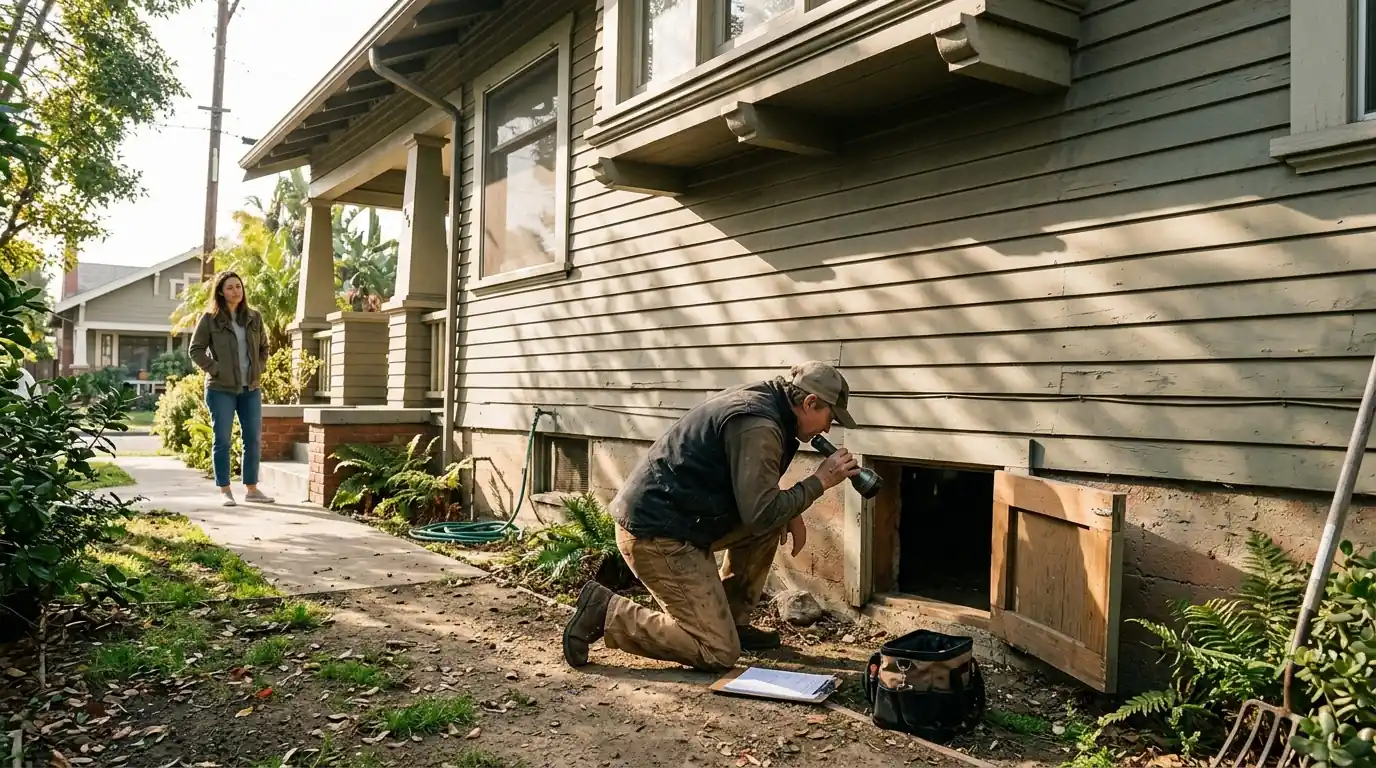
In the crawlspace, the inspector looks at the mudsill along the foundation, the floor joists, posts and piers, and the subfloor under kitchens and bathrooms. Mud tubes climbing the foundation or a pier are the classic sign of subterranean termites. Wood debris left on the soil by past remodels, form boards that were never removed and posts set directly into dirt are earth-to-wood contact problems that often land in the report. A musty smell, damp soil or white fungal growth near a plumbing line points toward rot.
Detached garages on older lots are often the worst wood on the property. Many were built with untreated lumber sitting close to grade, have no foundation vents, and have had decades of hoses, wet leaves and stored firewood against the walls. Look at the bottom of the siding, the door jambs and the plate along the floor. Check the rafters for pellets the same way you would in the house attic. If the garage has an alley entrance, look at the back wall too, since that side is often ignored.
Eaves, rafter tails, windows and porches
From outside, stand back and look up. Craftsman homes have exposed rafter tails that run past the wall line, and the ends of those tails take sun, rain and termites. Peeling paint, a tail that looks shorter or rougher than its neighbors, or a fresh patch of filler are worth pointing out. Spanish homes hide more of their wood behind stucco but still have exposed beams over porches, wood window frames and decorative corbels at the eaves.
Original wood windows are a common spot for drywood colonies, especially on the sunny south and west sides. Pellets on the inside sill or caught in the track are the giveaway. Front porch columns, steps and the beam over the porch opening are also high on the list, since they get weather from more than one direction. Wood fences and gates attached to the house matter too, because a rotted fence post touching the siding is a bridge for subterranean termites.
Reading the report: Section 1, Section 2 and further inspection
California termite reports sort findings into categories. Section 1 covers conditions that are active now: live termite infestation, fungus damage or wood that has already been damaged. Section 2 covers conditions that are likely to lead to problems later but are not active yet, such as earth-to-wood contact, a slow plumbing leak or blocked foundation vents. Further inspection items are areas the inspector could not reach, like a finished-over section of crawlspace or a stuccoed soffit.
On an older house, expect findings in more than one section. The questions to ask are practical. Is the drywood activity in one or two places, or spread through the attic and eaves? Is the recommendation tenting or local treatment, and why? How much of the Section 1 cost is wood repair rather than treatment? Which further inspection items could hide something expensive, and can they be opened before you remove contingencies?
Lenders and buyers commonly ask for Section 1 work to be completed before close of escrow, while Section 2 items are often negotiated. A completion notice from the company that did the work is the document that confirms it was finished.
Using escrow timing so termite work does not slip
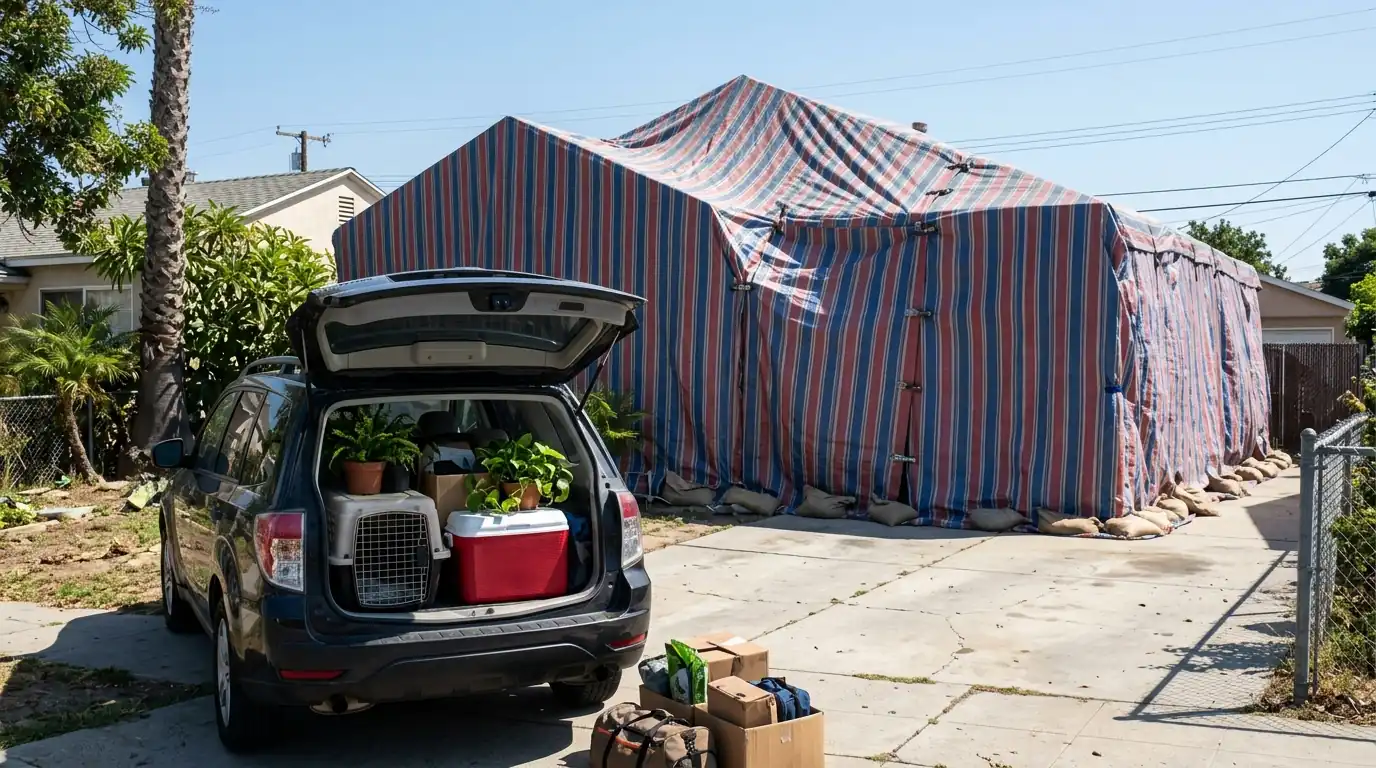
Termite work has lead times that can collide with a 30-day escrow. Tenting needs a date, a gas shutoff and two to three nights out of the house, and in late summer and fall many homes in the same neighborhood are on the calendar at once. Wood repair on rafter tails or a porch beam can wait on materials and on a painter. If the seller is doing the work, ask for the scheduled dates in writing early, not in the last week.
Get the inspection ordered in the first few days of escrow so there is time to read the report, ask follow-up questions and, if needed, get a second opinion while your inspection contingency is still open. If the seller would rather give a credit than do the work, compare the credit with the full scope, including wood repair and the further inspection items, and remember that you will be arranging the work right after moving in.
If you are trying to decide whether a specific finding is a small fix or a sign of something bigger, call us at (562) 636-0445 at any hour and describe what is on the report. We can usually tell you what questions to put back to the seller.
After you get the keys
Even after Section 1 is cleared, an older house benefits from a little ongoing attention. Fumigation and local treatments kill what is present but leave no lasting barrier. Keep soil and mulch below the foundation vents, fix drips under sinks quickly, repaint exposed rafter tails and trim on a schedule, and keep firewood and lumber off the ground and away from the walls. Borate applied to bare wood during a remodel, such as an attic opened up for new insulation, is a good time to add protection.
A periodic inspection every year or two, timed after the late summer swarm season, catches new drywood activity while it is still small enough for a local fix.
Reader questions
The seller says the house was tented five years ago. Does that mean it is clear now?
Not necessarily. Fumigation kills the colonies present at the time but leaves no residual protection, so new drywood swarmers can move in during any swarm season afterward. Five years is enough time for new colonies to start and show pellets. Ask for the old fumigation paperwork and completion notice, then rely on the current inspection for the present condition.
Should I worry about old patched holes in the rafters and trim of a Craftsman?
Old patches usually show that someone treated a colony locally in the past, which is useful history rather than an alarm. What matters is whether there are fresh pellets, new holes beside the patches or soft wood around them. An inspector can tell old work from new activity, and the report will say whether the area needs anything now.
Can I take a credit instead of having the seller fix the termite items?
Often yes, if your lender agrees, though many lenders want Section 1 completed before closing. If you take a credit, make sure it covers treatment plus the wood repair and any painting, and plan to arrange the work soon after you move in, before furniture and rugs make access harder. Your agent can tell you what the lender will accept.
Why does the report list further inspection for a stucco soffit I can see from the yard?
Further inspection means the inspector could not see the wood behind a finished surface without opening it. A stucco soffit, a sealed crawlspace corner or a built-in cabinet can hide framing. If the rest of the house shows activity in that area, it may be worth asking the seller to allow the surface to be opened before your contingency deadline.
Written by Celeste Goodwin, Termite Guides Editor at Exquisite Termite Control.