Quick answer
Downey is home base for us: our headquarters is at 8632 Florence Ave #201, which puts most Downey addresses a few minutes away. We tent and spot-treat drywood termites, treat subterranean termites in raised and slab homes, and handle roof rats in the city's mature street trees, along with ants, spiders, roaches and yellowjackets.
Working out of Florence Avenue
Having our headquarters inside Downey changes how we work here. Inspections can fit around your day rather than a long drive from the coast, follow-up visits for bait stations or protection plans are easy to keep on schedule, and when a tent comes down and clearance testing is due, we are close by. The Long Beach office on Pine Avenue is about fifteen miles away and covers the coast; Downey and the cities around it are mostly served from here.
Downey sits between the Rio Hondo on the west and the San Gabriel River on the east, with the 5, the 105 and the 605 framing it. That location makes it a natural starting point for Norwalk, Bellflower, Paramount, Whittier and the other Gateway Cities as well.
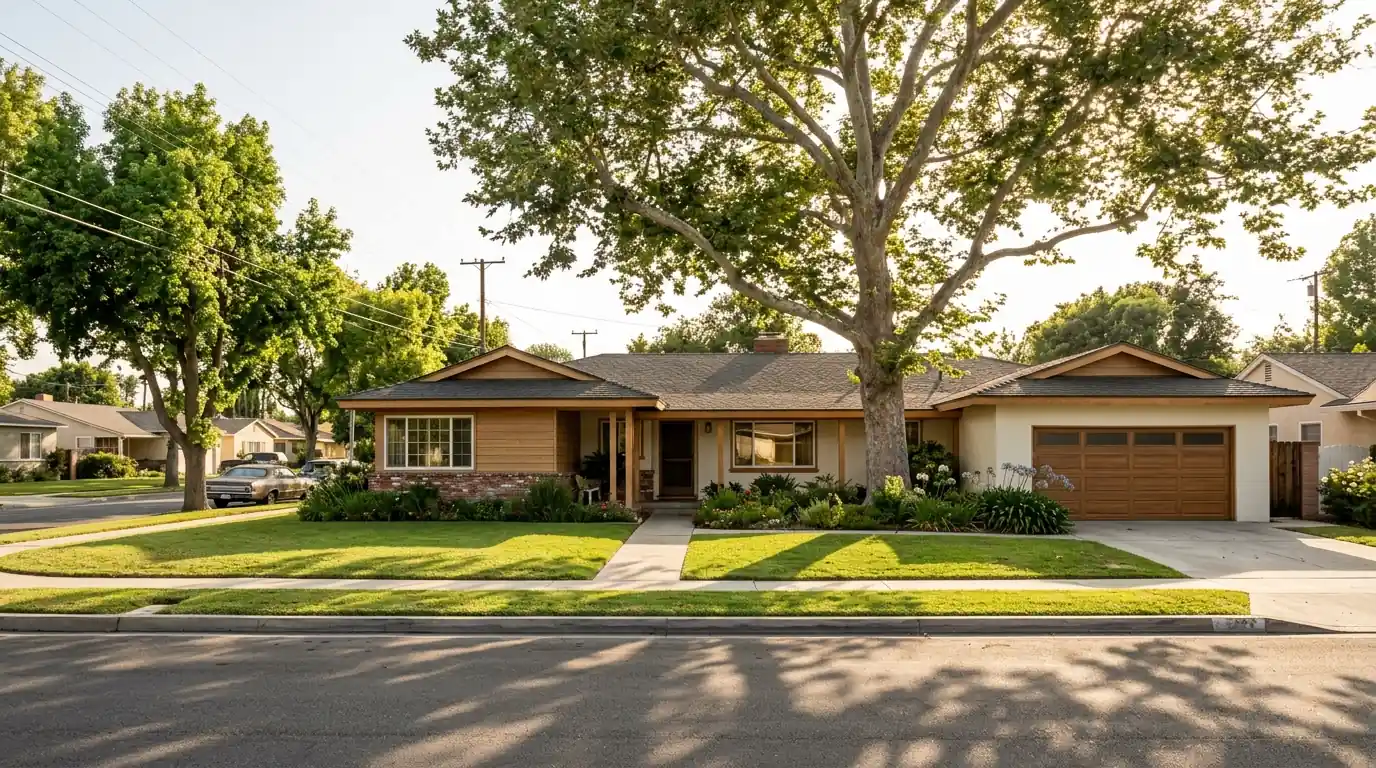
Downey houses and the termites they attract
Downey boomed in the 1950s alongside the aerospace plants that once built Apollo spacecraft parts on the site now home to the Columbia Memorial Space Center. Many of the homes from that era are generous single-story ranches on wide lots, built on slab with wood-framed attics, broad eaves and wood trim. Older pockets closer to Downey Avenue and the original downtown hold 1920s to 1940s bungalows, some on raised foundations with crawlspaces.
The ranch homes mostly bring drywood calls: pellets on the garage floor under a header, a swarm from a fascia board on a hot September afternoon, or blistered paint along a window frame. In the older raised homes, we spend more time in the crawlspace checking piers, stem walls and floor framing for subterranean mud tubes and moisture damage under bathrooms and kitchens.
Street trees, shade and rodents
Downey is known for mature street trees, and many backyards have large shade trees, citrus and avocados planted by the first owners. They make the neighborhoods pleasant and they give roof rats food, cover and a highway to the roof. Branches touching the eaves are a common entry route, along with torn vent screens and gaps where the garage door meets the frame.
Rodent work here usually combines trimming advice, sealing entry points with hardware cloth and metal flashing, and trapping inside the attic until activity stops. The same shade keeps soil damp along foundations, which supports subterranean termites and Argentine ant colonies in planting beds.
Heat and the inland calendar
Downey is far enough from the ocean that summer afternoons run hotter than in Long Beach. That heat brings drywood swarms in late summer and early fall and pushes ants indoors during July and August heat waves. Yellowjackets build up in lawns and wall voids by late summer, and black widows are common in garages and block walls. Spring rains set off subterranean swarm flights, which owners often notice near a back door or in the garage.
What we treat most in Downey
Drywood termites
Found in the broad eaves, garage headers and attic framing of Downey ranch homes, with swarms after the first late summer heat.
Roof rats
Use the city's mature street trees, citrus and avocado trees and dense shade to reach roofs and attic vents.
Subterranean termites
Mud tubes on crawlspace piers in older raised bungalows near Downey Avenue, and at slab cracks in ranch homes.
Yellowjackets
Ground and wall void nests that grow large by late summer in shaded Downey yards and park edges.
Black widow spiders
Common in garages, block walls and stored items in the hotter inland conditions.