Quick answer
Fountain Valley is about eighteen miles from our Long Beach office, a straight drive down the 405. We treat drywood and subterranean termites in 1960s and 1970s tract homes and set up protection plans for ongoing coverage, plus gopher, ant, spider and rodent control for yards near Mile Square Park and the Santa Ana River.
Farmland with water close to the surface
Before it incorporated in 1957, Fountain Valley was known for its artesian wells and its high water table, and the area was farmed for lima beans, sugar beets and other crops. Most of the houses came in the 1960s and 1970s, when tracts of single-story and two-story homes on slab foundations replaced the fields. Many neighborhoods were built by the same few developers, so floor plans and roof framing repeat from street to street.
Moist soil and generous irrigation suit western subterranean termites, which need damp ground to survive. They reach these slab homes through cracks, expansion joints and plumbing penetrations, and through soil or mulch piled against the stucco. On the drywood side, attic framing, fascia, rafter tails and garage door trim are the usual places colonies settle.
Why protection plans fit Fountain Valley tracts
A home here that was tented ten years ago is not protected today. Fumigation kills the colonies present at the time and leaves nothing behind, so drywood swarmers from the next street can start fresh colonies the following summer. A termite protection plan sets up periodic inspections, covers spot treatment for new drywood activity found early and can include monitoring of bait stations on the subterranean side.
For owners who plan to stay in their homes for years, a plan spreads cost over time and catches problems before they spread into multiple rooms. Pricing depends on the size of the home and what is covered, and we explain the terms before anything is signed.
Mile Square Park and the river edge
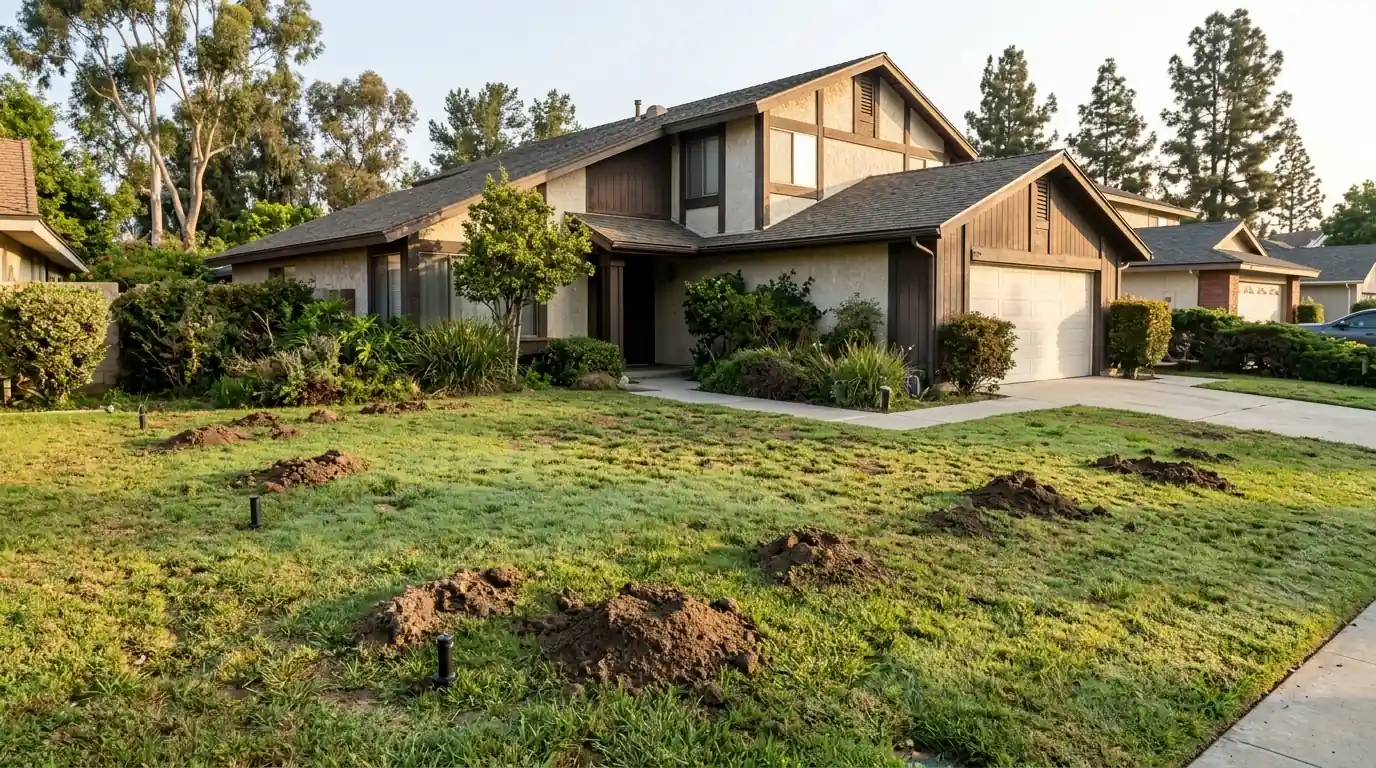
Mile Square Regional Park, a large expanse of lawns, sports fields, lakes and golf courses, sits right in the middle of the city, and the Santa Ana River runs along the eastern edge. Homes on the streets bordering these open areas see more gophers, which push mounds through lawns and garden beds and can damage irrigation lines. They also see more ground-nesting yellowjackets in late summer and more mosquito activity near standing water.
Gopher control works best with trapping in active tunnels and wire barriers under new beds. For mosquitoes, emptying standing water in saucers, buckets and clogged gutters around the yard does more than any spray, since invasive Aedes mosquitoes breed in tiny amounts of water.
A mild climate between coast and inland
Fountain Valley is close enough to the coast to get morning fog in early summer and far enough inland to warm up by afternoon. That middle ground keeps Argentine ants active for much of the year and brings drywood swarms over a long stretch of late summer and fall. Roof rats live in the city's mature trees and palms, and black widows settle in block walls and garages.
What we treat most in Fountain Valley
Subterranean termites
Thrive in the moist, irrigated soil of former farmland, entering slab homes at cracks, expansion joints and plumbing.
Drywood termites
Colonies in attic framing, fascia and garage trim of repeating 1960s and 1970s tract floor plans.
Gophers
Push mounds through lawns and beds on streets bordering Mile Square Park and the Santa Ana River.
Aedes mosquitoes
Breed in small amounts of standing water in saucers, buckets and gutters, biting during the day in shaded yards.
Argentine ants
Active most of the year in the mild climate, trailing indoors during heat and after the first rain.