Quick answer
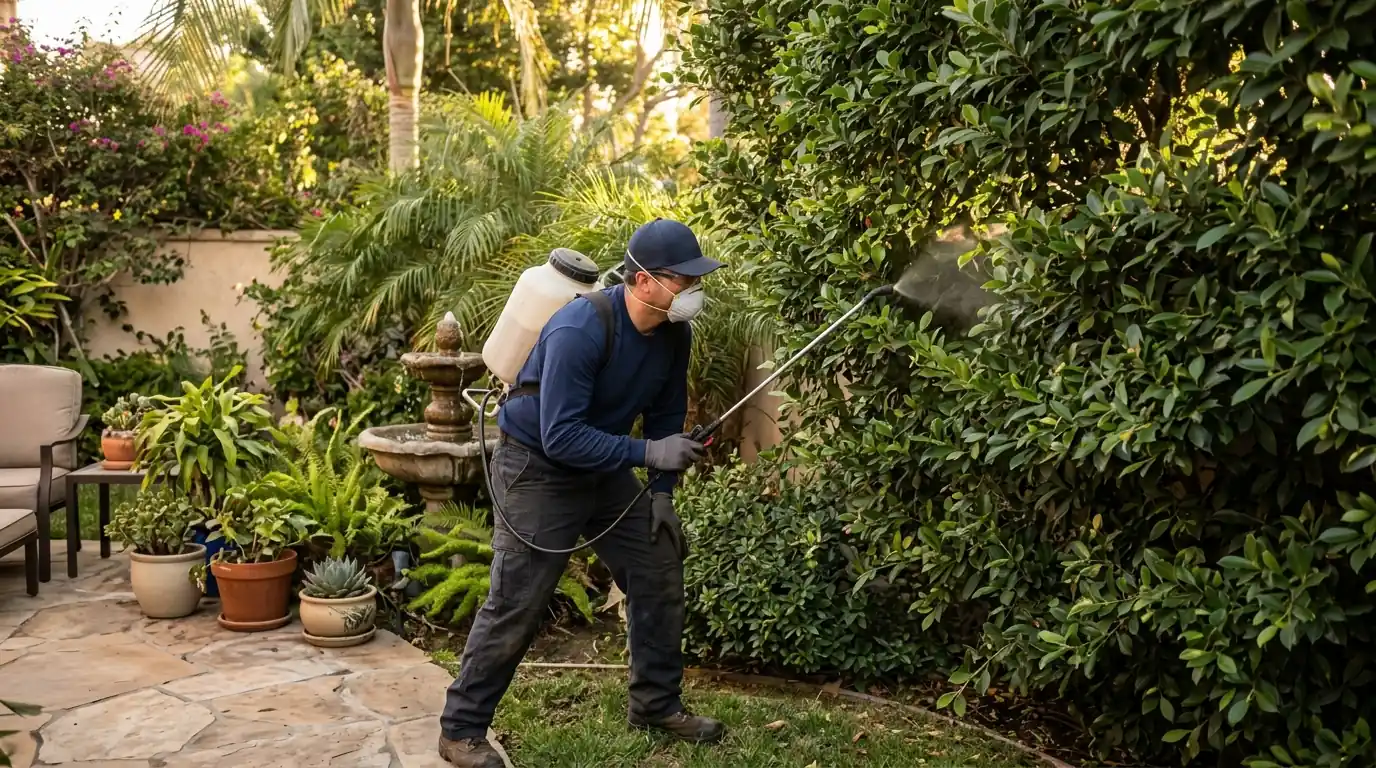
The day-biting mosquitoes now common in Long Beach are invasive Aedes species that lay eggs in tiny amounts of water: plant saucers, bromeliads, clogged rain gutters, buckets, toys and drains. Yard control means finding and removing that standing water, treating what cannot be dumped with larvicide, and applying a residual barrier to the shaded plants where adults rest. The City of Long Beach Vector Control Program handles public areas; source reduction and treatment on private property is the work we do.
Southern California used to have mosquitoes that bit mostly at dusk and bred in ponds, marshes and storm channels. Over the past decade, two invasive species changed that: the yellow fever mosquito, Aedes aegypti, and the Asian tiger mosquito, Aedes albopictus. Both are small, black with white markings, and aggressive daytime biters that go after ankles and legs. They rarely fly far from where they hatched, which means the source is usually within a few houses of where you are getting bitten.
These mosquitoes lay eggs just above the waterline in containers, and the eggs can survive dry for months before hatching when water returns. That makes them hard to eliminate with spraying alone. Our approach is a yard-by-yard hunt for breeding spots, treatment of water that has to stay, and a residual application to the leafy, shaded places where adults rest between bites.
What the city does and what happens on your property
Long Beach is one of the few cities in Los Angeles County with its own health department, and its Vector Control Program monitors and treats mosquitoes in public areas: storm drains, flood control channels, parks, wetlands and other city property. The program also tests mosquitoes for West Nile virus and responds to reports of neglected swimming pools.
Most invasive Aedes breeding, however, happens on private property, in containers in backyards, side yards and patios. A public program cannot reach inside every yard to dump plant saucers or treat a bromeliad bed. That private-property source reduction and treatment is what we do. If you notice a green, neglected pool or a large standing water problem on a neighboring property, the city program is the right place to report it.
Your weekly routine matters more than any spray
An Aedes mosquito goes from egg to biting adult in about a week in warm weather. Dumping and scrubbing containers once a week breaks that cycle before new adults emerge. A residual barrier knocks down adults resting in plants, but if a saucer full of larvae sits nearby, new mosquitoes keep replacing the ones killed.
The eggs cling to container walls just above the water, so a quick dump is not always enough; a scrub or a firm wipe removes them.
- Empty and scrub plant saucers weekly, or fill them with sand
- Flush bromeliad cups with a hose twice a week or remove the plants
- Change bird bath and pet water every few days
- Clean gutters and check that downspouts drain fully
- Store buckets, toys, wheelbarrows and recycling bins upside down or under cover
- Check under tarps, pool covers and AC drip lines for pooled water
Mosquito treatment pricing for Long Beach yards
Mosquito work is usually a seasonal program rather than a single visit, since adults keep drifting in from nearby properties. Pricing depends on yard size, the amount of dense vegetation and the number of water features that need larvicide.
| Typical job | Typical range |
|---|---|
| One-time yard treatment | $145 to $265 per visitSource reduction, larvicide and residual barrier for a typical residential yard. |
| Seasonal program | $95 to $175 per visitVisits about every three to four weeks from late spring into fall. |
| Large yard or heavy landscaping | $185 to $345 per visitBigger lots, dense hedges, ivy and multiple water features. |
| Event treatment | $165 to $285 per visitTreatment a day or two before an outdoor party, wedding or gathering. |
What moves the price
- Yard size and the square footage of shrubs and ivy that need barrier treatment
- Number of fountains, ponds, drains and water features needing larvicide
- Bromeliad collections and potted plants that hold water
- Whether neighboring properties have uncontrolled breeding sources
- How many visits the season requires for your yard
These are typical ranges for planning, not a quote, and the inspection of your yard sets the price. Compare more jobs in the treatment price guide.
How we treat a yard for container-breeding mosquitoes
Walk the whole yard
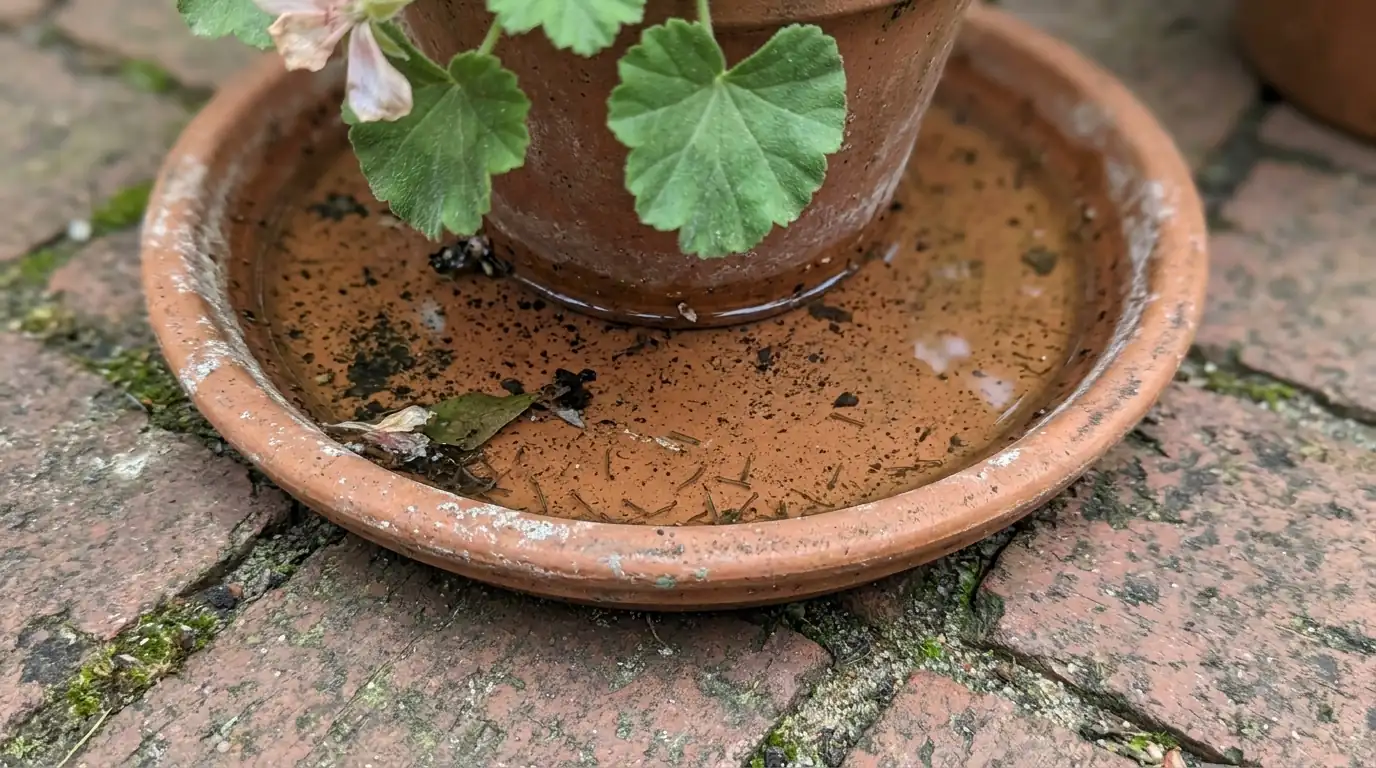
We check every place water collects: plant saucers, pots, bromeliads, bird baths, fountains, buckets, tarps, toys, tires, yard drains, downspouts, gutters, AC drip lines and under decks.
Dump and remove sources
Water that can be emptied is dumped and the container scrubbed, since Aedes eggs stick to the sides above the waterline and survive even when dry.
Larvicide standing water
Water that must stay, such as fountains, ornamental ponds, drains and catch basins, is treated with a labeled larvicide such as Bti or a growth regulator.
Treat adult resting areas
We apply a residual barrier to the undersides of leaves on shrubs, hedges, ivy, shaded fences and the area under decks where adult mosquitoes shelter during the day.
Talk through prevention
We show you the sources we found and the weekly routine that keeps new ones from forming, including gutter cleaning and plant saucer habits.
Repeat through the season
Treatments are spaced about every three to four weeks during the warm months, because new mosquitoes keep arriving from neighboring yards.
Signs your yard is producing Aedes mosquitoes
Bites during the day
Getting bitten in the morning or afternoon, especially around the ankles and behind the knees, points to invasive Aedes rather than the dusk-biting native species.
Small black and white mosquitoes
Aedes mosquitoes are smaller than typical mosquitoes, with white bands on the legs and white markings on the body.
Wigglers in plant saucers
Tiny larvae flicking up and down in the water under potted plants, in a pet bowl or in a bird bath show active breeding nearby.
Bromeliads and water plants
The cupped centers of bromeliads, plus lucky bamboo and water garden plants, hold enough water to raise dozens of mosquitoes.
Clogged gutters
Gutters that hold water after rain or after sprinklers hit the roof can breed mosquitoes for weeks without anyone seeing them.
Bites near shaded patios
Mosquitoes concentrating under dense shrubs, ivy, patio furniture and side yards mark the resting areas where adults wait between meals.
Why mosquito misting systems and foggers fall short
Automatic misting systems and backyard foggers release insecticide into the air on a timer or at the push of a button. They kill some mosquitoes flying at that moment, but the droplets settle quickly, they do not reach larvae in containers, and they also kill bees, butterflies and other beneficial insects. Frequent use can push mosquito populations toward resistance.
Targeted work is more effective. Removing breeding water stops new mosquitoes at the source. Larvicides such as Bti act on mosquito larvae with little effect on most other insects. Barrier treatments applied to the undersides of leaves where mosquitoes rest put the product where the insects actually spend their time. Repellents with ingredients recommended by public health agencies are still the best personal protection outdoors.
Long Beach yards and the spread of invasive Aedes
Invasive Aedes mosquitoes were first found in parts of Los Angeles County in the 2010s and have since become a familiar summer nuisance across Long Beach. They are worst from about June through October, when warm days and irrigated yards keep containers full. A rain shower or a heavy watering day can trigger hatching from eggs laid weeks earlier.
The lush, shaded yards of Bixby Knolls, Los Cerritos and Virginia Country Club, with dense hedges, potted plants and decorative fountains, give adults plenty of resting cover. In Naples and around Colorado Lagoon, people often blame the water nearby, but the day-biting mosquitoes usually come from containers in the yards themselves. Courtyard apartments in Rose Park and Alamitos Beach collect water in shared planters and drains, and the small side yards of Wrigley and North Long Beach bungalows can hide buckets, tarps and old tires that breed mosquitoes all season.
Where we do mosquito control
- Downtown Long Beach 90802
- North Long Beach 90805
- Belmont Shore 90803
- Bixby Knolls 90807
- California Heights 90807
- Los Altos 90815
- Naples 90803
- Rose Park 90804
- Wrigley 90806
- Signal Hill 90755
- Lakewood 90712
- Downey 90240
- Torrance 90503
- Carson 90745
- Compton 90220
- Norwalk 90650
- Bellflower 90706
- Garden Grove 92840
- Westminster 92683
- Seal Beach 90740
- Cerritos 90703
- Whittier 90601
Not listed? We cover all of Long Beach and the nearby cities; call and we will confirm your street.
Mosquito Control questions
Why are mosquitoes biting me in the middle of the day?
Daytime biting is typical of invasive Aedes mosquitoes, the yellow fever mosquito and Asian tiger mosquito, which are now established in much of Los Angeles County. Native Culex mosquitoes mostly bite at dusk and night. Aedes breed in small containers close to homes, so the source is usually in your yard or a neighboring one.
Can mosquitoes breed in a plant saucer or bottle cap?
Yes. Invasive Aedes mosquitoes need only a small amount of water, as little as a bottle cap full, to complete their life cycle in about a week. Plant saucers, bromeliads, pet bowls, toys and clogged gutters are among the most common sources we find.
Does the City of Long Beach spray for mosquitoes in my backyard?
The city Vector Control Program focuses on public areas such as storm drains, channels, parks and wetlands, and it handles disease monitoring and complaints like neglected pools. It does not routinely treat private yards. Removing container breeding and treating resting areas on your property is up to the owner, and that is the service we provide.
How often should a yard be treated for mosquitoes?
During the warm season, residual barrier treatments typically last about three to four weeks before mosquitoes rebuild, depending on rain, sprinklers and how many breeding sources exist nearby. Weekly source reduction by the homeowner between visits makes each treatment last longer and work better.
Related services
General Pest Control
General pest control is a recurring service, usually every other month or quarterly, that treats the outside of the home to stop.
DetailsFly Control
Flies are controlled by finding and removing the breeding material, not by spraying the adults.
DetailsWasp & Yellowjacket Control
Wasp control in Long Beach usually means one of three nests: open paper wasp nests under eaves and patio covers, western yellowjacket.
DetailsCommercial Pest Control
Commercial pest control in Long Beach is a scheduled program built around the site: monthly or twice-monthly service for restaurants, rodent stations.
Details