Quick answer
Owners in California Heights usually want two things: the termites gone and the original house intact. For drywood colonies spread through the attic and walls, tenting removes them without opening plaster or siding. For a single colony in a reachable board, we drill and inject. Raised foundations here also mean crawlspace checks for subterranean termites. Damaged siding, porch railings or window trim are repaired to match the original profiles rather than swapped for something generic.
Treating termites without tearing into a historic house
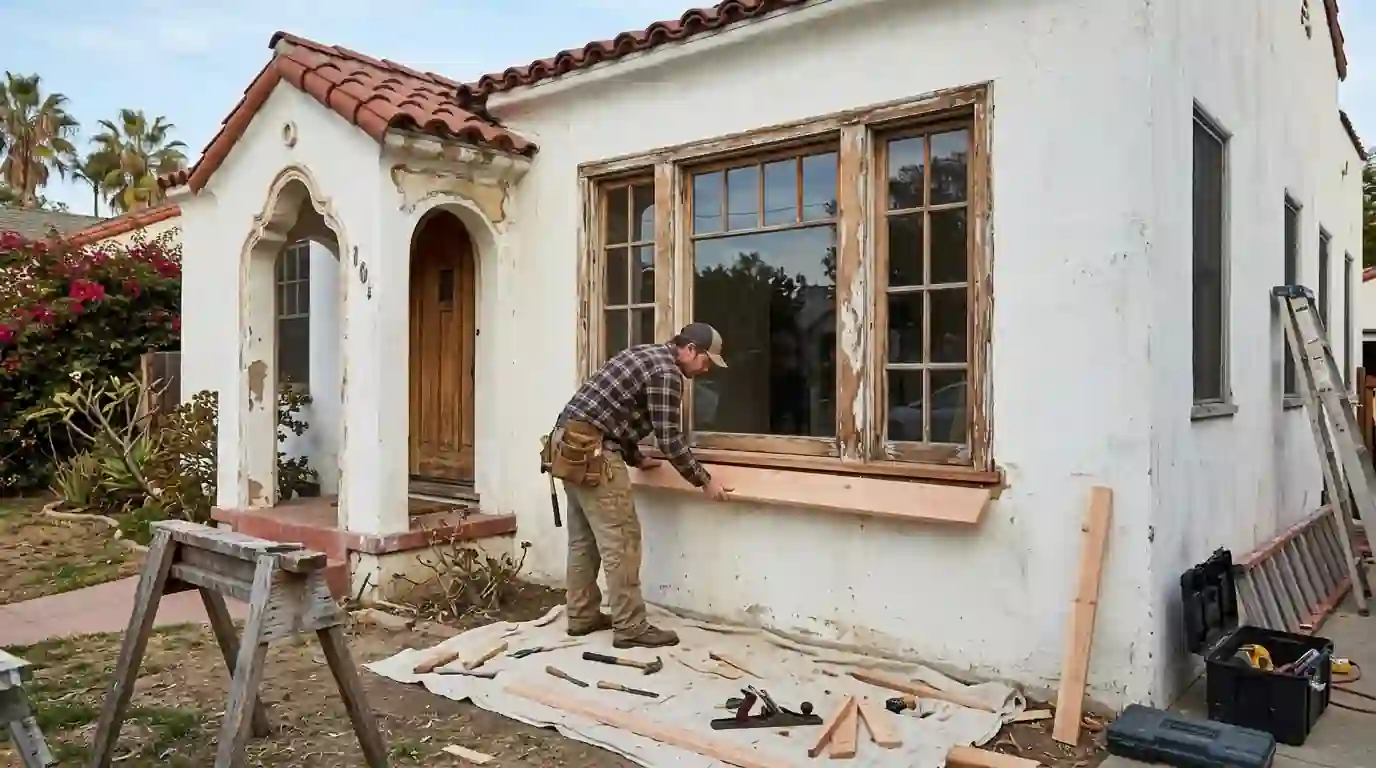
Many Cal Heights homes still have their original redwood or fir siding, plaster walls, wood windows and built-in cabinetry. Those materials are part of the district's character, and owners understandably hesitate when someone suggests opening a wall. Fumigation suits these houses because the gas reaches inside every board without anyone cutting into finishes. It is also why we are careful about drilling: holes for localized treatment are small and get filled, but we only use that method where a colony is clearly contained.
Before recommending anything, our inspector checks pellet locations room by room, taps and probes trim, and looks at the attic framing and sheathing. A home with fresh frass in a dining room built-in, a front window and the attic has more than one colony, and tenting makes more sense than chasing each spot.
Under the floors of the district
Most homes here sit on raised perimeter foundations with crawlspaces. Western subterranean termites reach the framing by building mud tubes up the concrete or through cracks, and they prefer places where soil, mulch or a planter touches the wood. Older homes may also have form boards left buried along the foundation, which termites use like a ramp. We note these conditions, treat the soil around the perimeter where activity exists, and recommend correcting the grade so the problem does not return.
Repairs that respect the original look
When termites or rot have weakened wood, we replace only the damaged sections. That might be a few courses of shiplap siding, a section of window sill, a porch column base or the rafter tails exposed under the eaves. We match board widths and profiles as closely as available lumber allows, and leave the surface ready for paint so it blends with the rest of the house. Treating bare, unpainted framing with borate during a repair adds protection where we have the wood exposed.
If your home is in the historic district and the work affects the exterior, it is worth checking with the city about any review that applies to your project before larger replacements. Routine repair in kind is usually the simplest path.
Living near the airport and the seasons
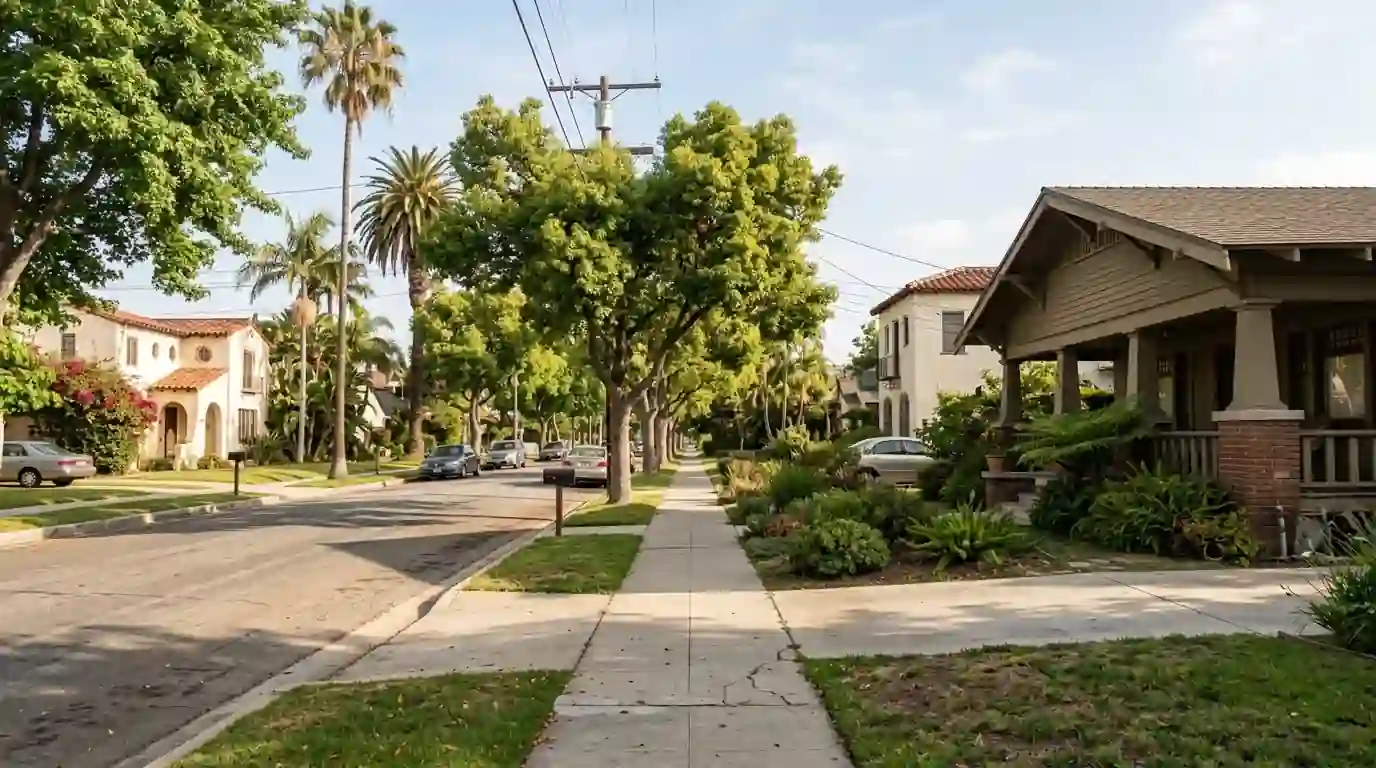
The neighborhood sits just south of Long Beach Airport, with Bixby Knolls to the west and Signal Hill to the south. Mature street trees and backyard fruit trees bring roof rats, and the warm days of late summer bring drywood swarms. Spring rain can trigger subterranean swarmers from a crack in a porch or garage slab. Wide streets usually make parking and tent staging straightforward here, which helps schedules.
What we treat most in California Heights
Drywood termites
Colonies in original siding, wood windows, porch posts and attic framing of 1920s and 1930s homes, often in more than one location.
Western subterranean termites
Mud tubes up crawlspace foundations and piers, especially near planters, buried form boards and downspouts that dump water at the wall.
Roof rats
Nest in palms and fruit trees and enter older attics through gaps around vents and eaves.
Silverfish
Show up in closets, bathrooms and old built-ins where humidity collects behind plaster walls.
Yellowjackets
Nest in ground holes in yards and occasionally in wall voids of older homes during summer and fall.