Quick answer
A Lakewood Village termite inspection covers more than the house. Detached garages with bare framing, wood fences set in soil and backyard sheds are where we often find the first colonies, both drywood and subterranean. From there termites can reach the home. We treat the house based on what we find, from local injection to tenting, and we address fences and garages directly, often by replacing posts and treating exposed framing with borate.
A neighborhood older than the city next door
Lakewood Village predates the famous postwar Lakewood tracts to the north. Its curving streets hold Spanish Revival cottages, Minimal Traditional homes and early ranch houses from the late 1930s and 1940s, many on modest lots with a garage at the back. Some sit on raised foundations, others on slab, and many have had family rooms or bedrooms added over the decades. That mix means we never assume the construction type until we look.
On a raised home we go under the floor; on a slab we look closely at where the slab meets an addition, at plumbing penetrations and at expansion joints, which are common entry points for subterranean termites. In either case the attic gets a full look for drywood pellets and damaged rafters.
Garages and fences: where trouble often starts
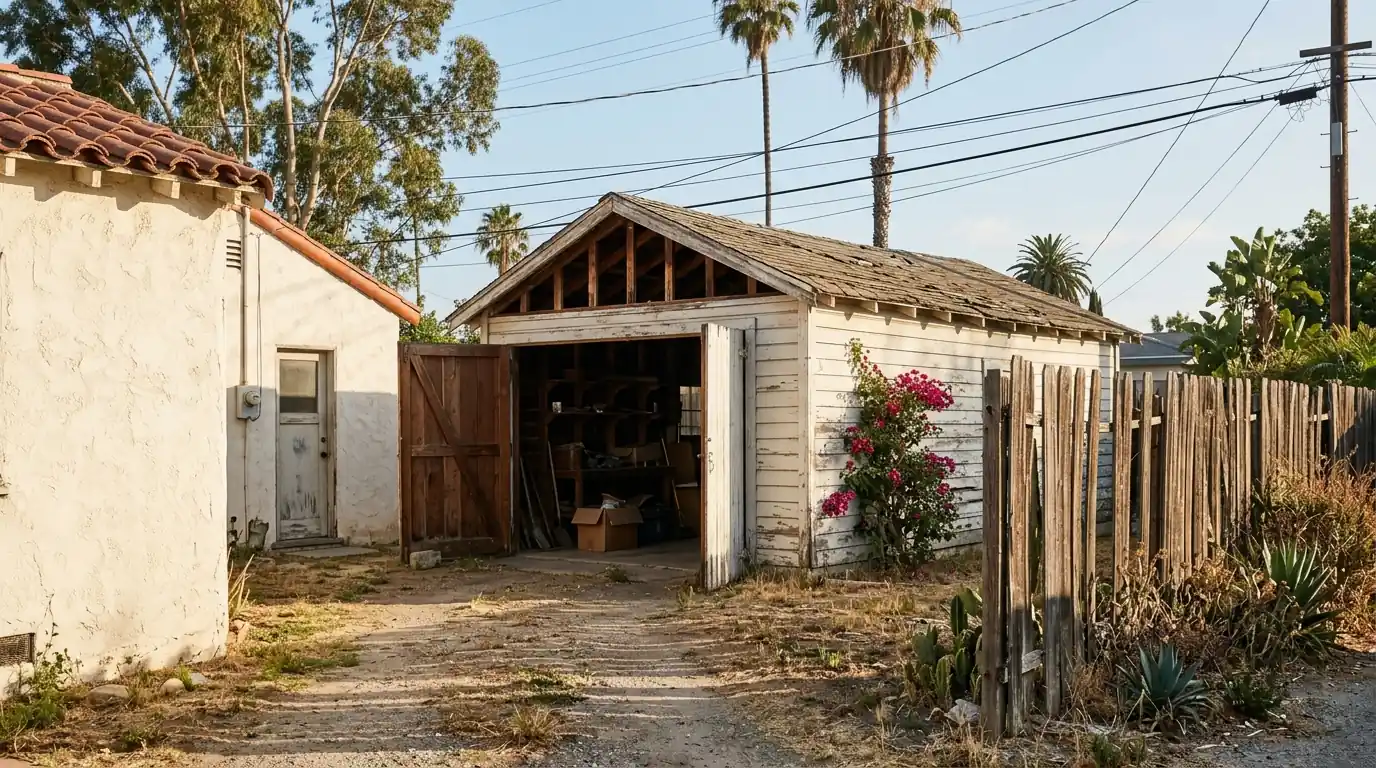
A detached garage built in the 1940s usually has framing that was never painted on the inside, a wood sill plate sitting low on the slab and stored boxes or lumber against the walls. That is an ideal home for both kinds of termites. We regularly find drywood colonies in garage rafters and subterranean tubes coming up behind stored items, even when the house itself is clean.
Wood fences are the other weak point. Posts set directly in soil decay and draw subterranean termites, and the rails often touch the house or garage. When a fence attaches to the structure, it becomes a bridge. Replacing rotted posts with ones set in concrete, keeping a gap between the fence and siding, and treating bare garage framing with borate after any infestation is handled are practical, long-lasting fixes.
Tenting near the airport and on a modest lot
When drywood activity is widespread, fumigation is still the most thorough option. Lakewood Village lots usually leave enough room to drape tarps, and streets have parking for our trucks. Prep is standard: bag food and medicine in fumigation bags, remove plants and pets, open interior doors, water the soil around the walls, and schedule gas shutoff and relight with SoCalGas if needed. The garage can be included under the tarps or treated separately, depending on findings.
Other pests the Village sees
Mature street trees and fruit trees bring roof rats. Lawns near the park strips get gophers. Argentine ants move indoors when summer gets hot. Black widows live in garage corners and under woodpiles, so we wear gloves and check carefully when inspecting stored items.
Many homes here change hands between longtime owners and new families, and a termite report is part of nearly every sale. Expect the inspector to note fence contact, garage sills and any soil that has risen against stucco as Section 2 conditions. Correcting those before listing tends to make escrow smoother, and it protects the house regardless of whether you sell.
What we treat most in Lakewood Village
Drywood termites
Colonies in unpainted garage rafters and attic framing of 1930s and 1940s cottages and ranch homes.
Western subterranean termites
Come up through slab joints, under additions and from fence posts set in damp soil next to the house.
Roof rats
Use mature trees and fences to reach rooflines, then nest in attics and garage storage.
Black widow spiders
Common in detached garages, under woodpiles and in the corners of sheds and fence lines.
Gophers
Tunnel through lawns and planting strips, especially on lots near open green space.