Quick answer
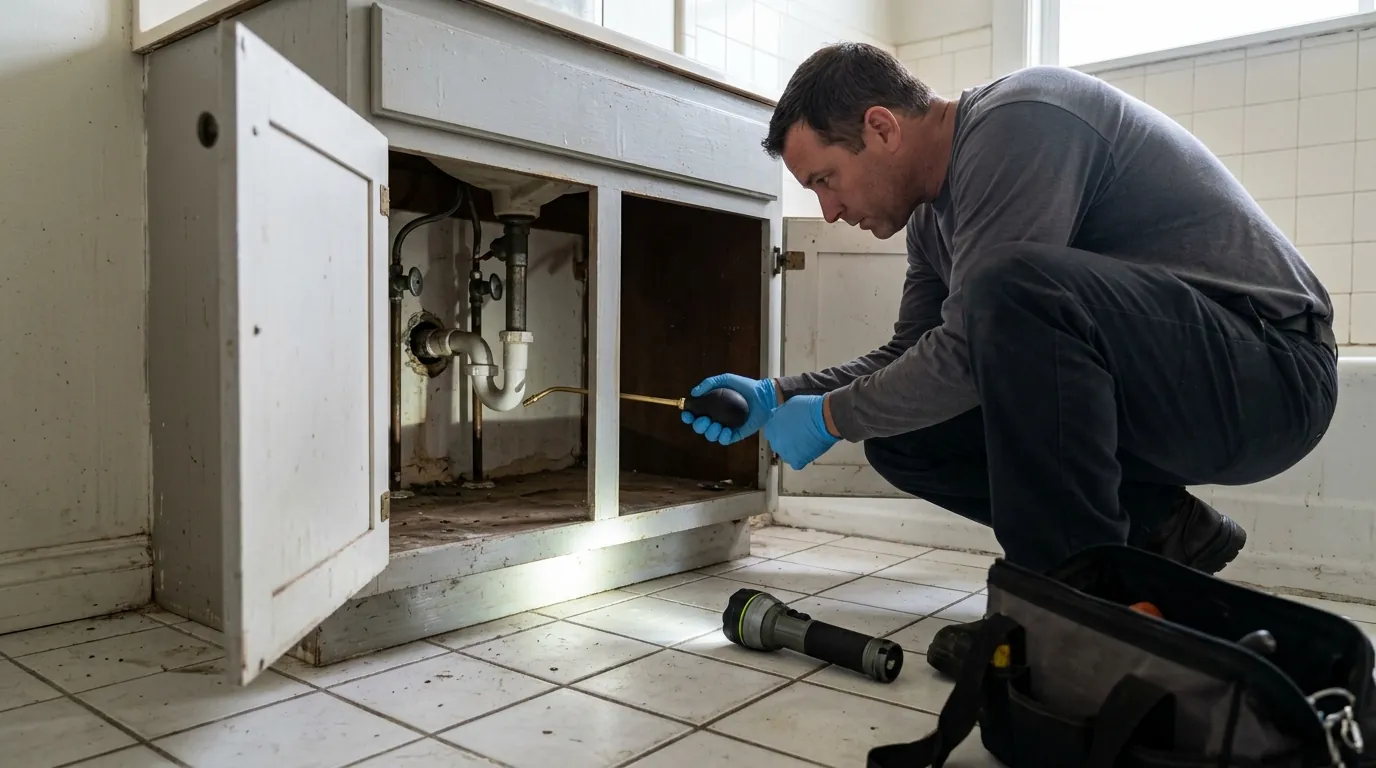
Silverfish thrive where humidity stays high and starchy food is easy: bathrooms, laundry rooms, garages, attics and boxes of paper or fabric. We find the damp harborage, apply dust and residual treatments into wall voids, plumbing chases, baseboard gaps and attic edges, and show you the moisture and storage changes that keep them from rebuilding. Treatment alone fades if the humidity stays, so the moisture fix matters as much as the product.
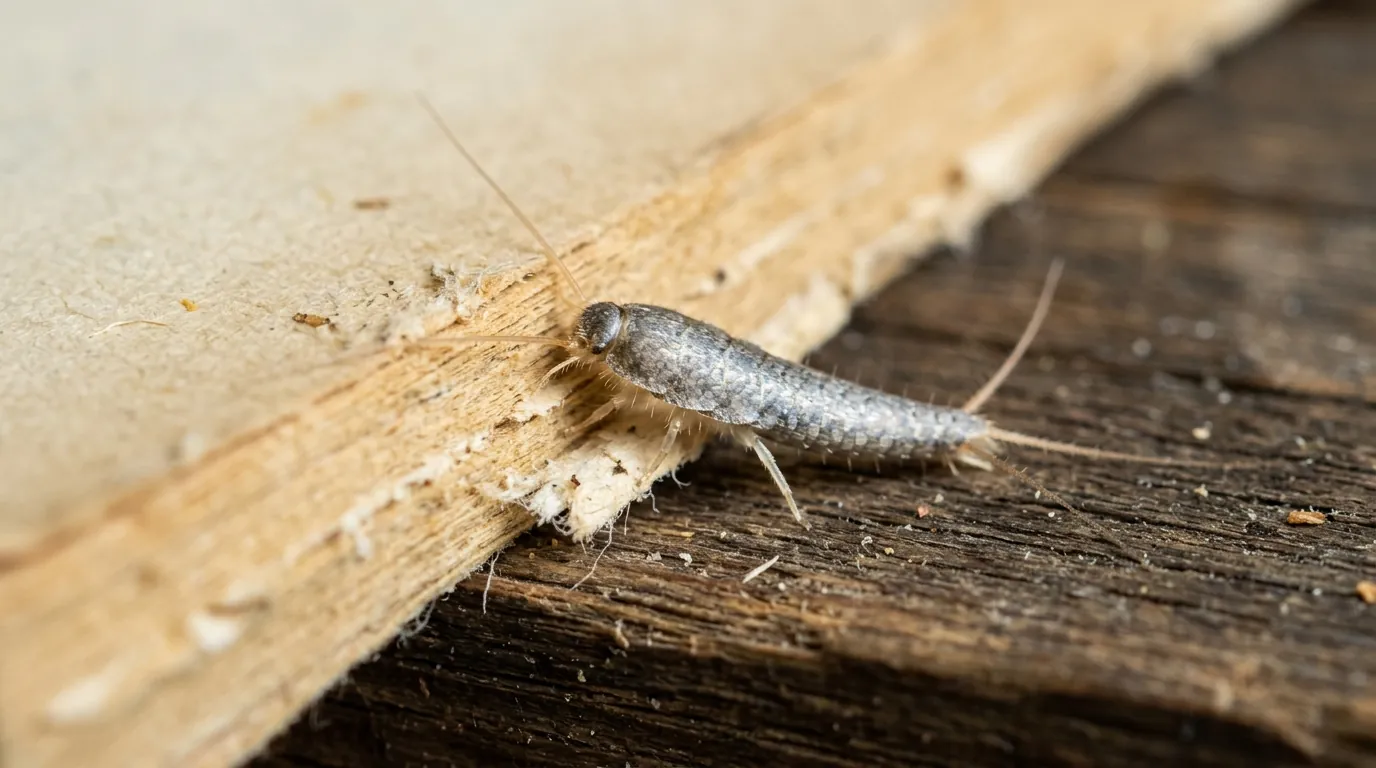
Silverfish are flat, carrot-shaped insects about half an inch long, covered in shiny gray scales, with three long bristles trailing from the tail. They are fast, they avoid light, and they can live for several years. In Long Beach we also see firebrats, a close cousin with a mottled brown look that prefers warmer spots like the area around a water heater or a laundry dryer vent.
Neither insect bites or spreads disease, but they feed on starch and protein: book bindings, wallpaper paste, cardboard, cotton and linen, dry pet food, cereal crumbs, even the sizing on photographs. A small number is easy to ignore. A steady stream in the tub, chewed edges on stored documents or yellowish stains on clothing in a closet tells you they have settled into the walls or the attic and are breeding there, which is when treating the hidden harborage is worth it.
Humidity is the reason silverfish stay, and the reason they leave
Silverfish need relative humidity of roughly 75 percent or more in their hiding spots to keep their eggs viable and their bodies from drying out. Your living room may feel dry, but the void behind a tub surround, the cabinet under a dripping sink or a cardboard box sitting on a garage slab can stay much damper. That microclimate is what holds a colony in place.
So the most effective long-term step is drying those spots out. Run the bathroom exhaust fan during and for 20 minutes after showers, fix slow drips under sinks and at toilet supply lines, keep the dryer vent connected and clear, and avoid storing paper and clothing directly on concrete. A small dehumidifier in a closed laundry room or basement storage area can make a noticeable difference.
When we treat a home and the moisture source is corrected, the population usually declines steadily over a couple of months. When the humidity stays, new nymphs keep hatching from eggs laid in protected cracks, and the treatment slowly loses ground.
How to tell silverfish have moved into the walls
Insects trapped in tubs and sinks
Silverfish cannot climb smooth porcelain. Finding them stranded in the bathtub or a sink basin in the morning is the most common first sign.
Ragged holes in paper
Irregular feeding marks and surface grazing on book covers, cardboard boxes, wallpaper and envelopes, often with the edges scraped thin rather than chewed through.
Shed scales and skins
They molt throughout their lives and leave tiny silvery scales and pale shed skins along shelves, inside drawers and in the bottom of storage bins.
Pepper-like droppings
Small black specks, similar to ground pepper, on shelves, in cabinet corners and on stored paper are silverfish feces.
Yellowish stains on fabric
Linens and clothing stored in damp closets can show faint yellow marks and thin patches where silverfish fed on starch or sizing.
Sightings at night
Turning on a bathroom or garage light late at night and seeing several dart into baseboard cracks means harborage is close to that spot.
The steps we take to clear silverfish from a home
Inspect the humid zones
We check bathrooms, under sinks, laundry areas, water heater closets, the garage, the attic and any crawlspace, using a moisture meter on suspect walls and noting leaks, poor ventilation and stored paper.
Find the harborage points
Silverfish hide in plumbing penetrations, gaps behind baseboards, under loose floor trim, inside wall voids and in attic insulation. Those cracks are where treatment has to go.
Dust the voids
We puff a labeled insecticidal dust into wall voids through outlet and plumbing openings, behind toilets and tubs, and into attic edges. Dust stays active in dry voids for a long time.
Apply crack and crevice residual
Baseboards, cabinet bases, closet corners, garage shelving and door thresholds get a targeted residual application rather than a broad spray across open surfaces.
Point out moisture fixes
We show you the drips, missing exhaust fans, blocked vents and damp boxes that keep the population going, and which ones to correct first.
Check results and retreat
Because silverfish are long-lived and slow to reproduce, we review sightings after several weeks and retreat any active spot that remains.
Typical silverfish treatment pricing
Most silverfish jobs are a single thorough treatment with one follow-up, priced by how many rooms and spaces hold harborage. A garage with boxes and an attic full of old insulation take more time than a single bathroom.
| Typical job | Typical range |
|---|---|
| Bathrooms, kitchen and laundry | $185 to $325 per visitVoid dusting and crack treatment in the main wet rooms of the home. |
| Whole house with garage | $265 to $445 per visitLiving areas, closets, garage shelving and storage, plus door and slab edges. |
| Attic or crawlspace add-on | $115 to $235 per visitDusting attic perimeter and insulation edges or underfloor framing. |
| Follow-up visit | $95 to $175 per visitInspection and retreatment of remaining active areas after several weeks. |
What moves the price
- How many rooms show activity and how widely the insects have spread
- Amount of stored paper, cardboard and fabric in the garage, closets and attic
- Whether the attic or crawlspace needs dusting and how easy it is to reach
- Active plumbing leaks or high humidity that keep conditions favorable
- Clutter that blocks access to baseboards and wall openings
- Whether firebrats near the water heater or dryer are also present
These are typical ranges for budgeting, not a quote, and your price is set after we inspect the home. Compare more jobs in the treatment price guide.
Protecting books, documents and stored clothing
The real cost of silverfish is damage to things you cannot replace: family photographs, letters, record album sleeves, a box of old tax papers or a stored wedding dress. Because they feed slowly and out of sight, people often discover the damage years after it started.
Moving valuables into sealed plastic bins with tight lids, off the floor and away from exterior walls, protects them far better than cardboard. Cedar does very little against silverfish, so do not rely on it.
- Store paper and textiles in lidded plastic bins, not cardboard boxes
- Keep stored items off garage slabs and away from damp exterior walls
- Wash or dry clean clothing before long storage to remove starch and food residue
- Check stored books and photos once or twice a year for scales or grazing
- Keep dry pet food and cereal in sealed containers
Store sprays versus targeted void treatment
Spraying a household insecticide across a bathroom floor kills the few silverfish you can see and does almost nothing to the ones living inside the wall or under the tub. Those surfaces get mopped, the product breaks down, and the population behind the trim keeps breeding. Repeated surface spraying also scatters insects deeper into the structure.
Professional work concentrates on the places they actually live. Insecticidal dust placed inside wall voids and plumbing chases stays in position for months and coats the insects as they move through. Residual products in cracks reach them where they rest during the day. Paired with moisture correction, this approach reduces activity throughout the home rather than in one visible spot.
Why the coast keeps Long Beach silverfish busy
The marine layer that rolls in most mornings from May through July keeps humidity high in homes close to the water, and that suits silverfish. Older apartments in Alamitos Beach and Belmont Shore, with bathrooms that lack exhaust fans and closets on exterior walls, are where we find them most often. Seawall-side homes in Naples also tend to run damp, especially in ground-floor storage.
Inland, the issue shifts to garages and attics. In Lakewood Village and the Los Altos ranch tracts, detached and attached garages hold years of cardboard boxes on bare concrete, and older attic insulation traps humidity from below. In the 1920s Craftsman homes of California Heights and Bixby Knolls, original wall cavities, plaster gaps and plumbing runs that have been patched many times give silverfish plenty of protected space. Water heater closets in these older homes are a favorite spot for firebrats.
Where we do silverfish control
- Downtown Long Beach 90802
- North Long Beach 90805
- Belmont Shore 90803
- Bixby Knolls 90807
- California Heights 90807
- Los Altos 90815
- Naples 90803
- Rose Park 90804
- Wrigley 90806
- Signal Hill 90755
- Lakewood 90712
- Downey 90240
- Torrance 90503
- Carson 90745
- Compton 90220
- Norwalk 90650
- Bellflower 90706
- Garden Grove 92840
- Westminster 92683
- Seal Beach 90740
- Cerritos 90703
- Whittier 90601
Not listed? We cover all of Long Beach and the nearby cities; call and we will confirm your street.
Silverfish Control questions
Are silverfish a sign of a bigger moisture problem?
Often they are. A steady silverfish population usually means somewhere in the home stays humid, such as a slow leak under a sink, a bathroom without ventilation, or damp storage on a slab. It does not always mean serious water damage, but it is worth finding the source, since the same conditions can support mold and attract other pests.
Do silverfish damage clothes and books?
Yes. They feed on starch, glue, sizing and natural fibers, so they graze on book bindings, wallpaper paste, photographs, cardboard, cotton and linen. The damage builds slowly over months or years, which is why stored items in garages, closets and attics are most at risk.
How long does it take to get rid of silverfish?
Most homes see fewer sightings within a few weeks of treatment, with steady decline over one to two months. Silverfish live a long time and their eggs sit in protected cracks, so a follow-up is common. Reducing humidity at the harborage shortens the timeline considerably.
What is the difference between silverfish and firebrats?
They are closely related and cause the same kind of damage. Silverfish are shiny and silvery gray and prefer cool, damp places. Firebrats are mottled brown and gray and prefer warm spots near water heaters, furnaces, dryers and hot water pipes. Treatment is similar, but we focus on different areas of the home for each.
Related services
General Pest Control
General pest control is a recurring service, usually every other month or quarterly, that treats the outside of the home to stop.
DetailsPantry Pest Control
Pantry pests are solved by finding and discarding every infested food package first, then treating the cracks and shelf joints where larvae.
DetailsSpider Control
Spider control works by removing webs and egg sacs, treating the cracks and sheltered spots where spiders hide, and reducing the insects.
Details