Quick answer
Drywood termites can live inside solid wood furniture, cabinets, picture frames and antiques with no soil contact at all. We confirm the infestation from the pellets and kick-out holes, then treat the piece with localized drill-and-inject treatment through small holes, careful spot heat where the finish allows, or by including it in a whole-house fumigation. We also inspect the home, because a termite in furniture can be a symptom of a larger colony in the framing.
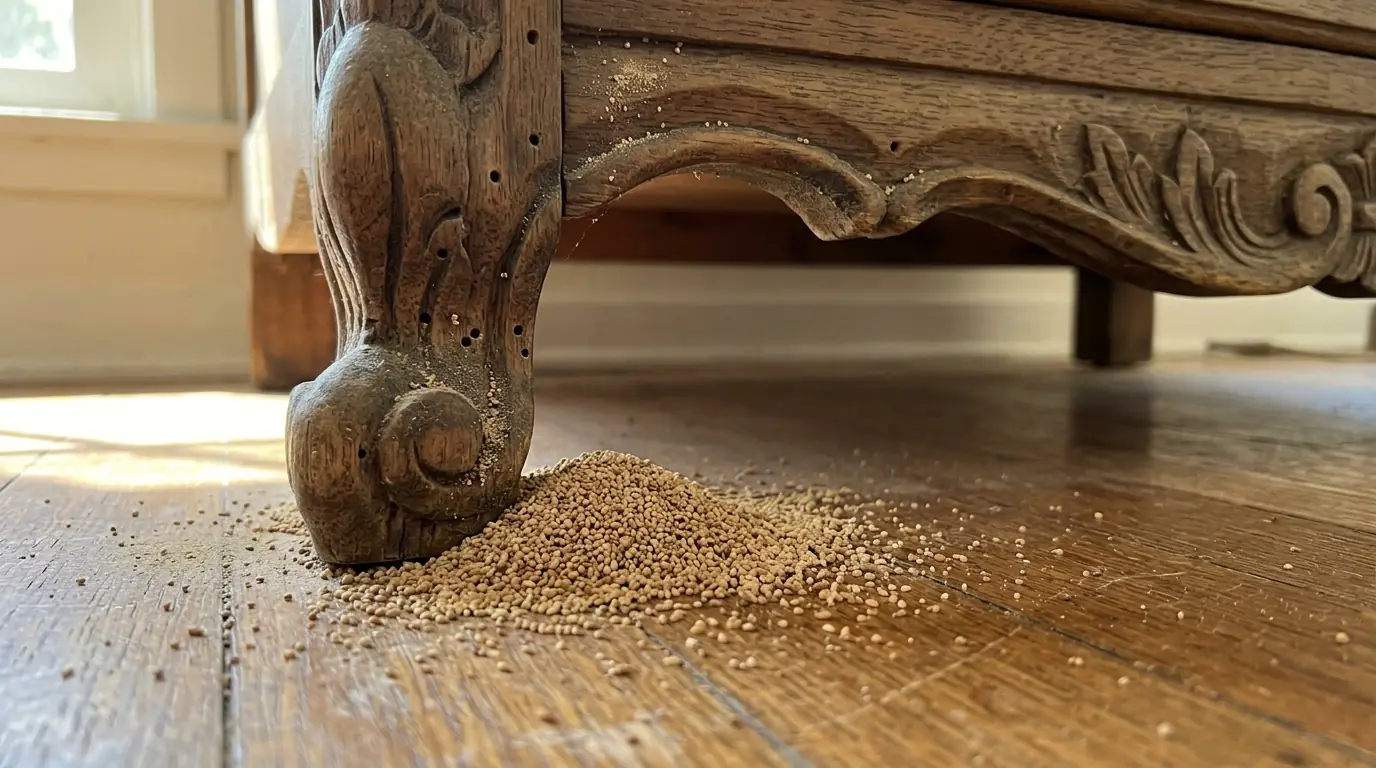
Western drywood termites need nothing more than dry wood to live in, which makes furniture a perfectly good home. A colony can start inside a solid oak dresser, a mahogany sideboard, a bookcase, a wood bed frame or the back of a picture frame. The first sign is almost always the same: a small pile of hard, six-sided pellets the color of sawdust or coffee grounds on the floor below the piece, often refilling after you sweep it up.
Furniture infestations are common in coastal Southern California, and they raise two questions. First, how do you kill the termites in the piece without damaging its finish, veneer or value? Second, did the termites come from the house, or did they arrive in the furniture and spread into the house? We answer both, treat the piece in the way that fits its construction and finish, and look over the surrounding structure so you are not fixing the symptom and missing the cause.
Drill-and-inject, spot heat or fumigation for a single piece
Drill-and-inject treatment is the most common choice for one infested piece. We drill holes about the diameter of a pencil lead or slightly larger in places that will not be seen, such as drawer bottoms, the back panel or the underside of a top, and inject a labeled termiticide or orange oil into the galleries. The holes are filled with wax or wood filler that matches the area. It works well when the activity is limited and the galleries can be reached.
Spot heat raises the temperature of the wood high enough to kill termites inside. It avoids drilling, but it is not right for every piece. High heat can soften some finishes, loosen old glue joints, crack thin veneers and damage shellac and lacquer. We use it only on solid, sturdy wood where we are confident the finish will tolerate it, and we monitor the surface temperature as we work.
When a piece is heavily infested, too valuable to drill, or the house itself has activity in several places, including it in a whole-structure fumigation is often the best option. The gas reaches every gallery in the furniture as well as the framing, with no drilling at all.
Signs termites are living in your furniture
Pellets piling under the piece
Tiny hard pellets with six ridged sides collecting under a drawer, cabinet leg or shelf, and coming back after cleaning, are the classic drywood sign.
Pinhole kick-out openings
Very small round holes, sometimes plugged with a papery patch, in a side panel, drawer bottom or back where termites push pellets out.
Blistered or sunken finish
Thin spots in paint or varnish that sound hollow or give slightly under a fingernail can mean galleries just below the surface.
Swarmers near the furniture
Winged termites or shed wings on a windowsill or floor near a cabinet, especially on a warm day in late summer or early fall.
Pellets inside drawers
Drawers with pellets collecting in the bottom, even when the outside of the piece looks clean, point to activity in the case or runners.
Recently bought used or antique
A piece brought home from an estate sale, antique shop or older relative that starts dropping pellets within months may have arrived infested.
How we treat termites in a piece of furniture
Confirm it is drywood termite
We check the pellets, holes and wood to rule out powderpost beetles, which leave fine flour-like dust, and carpenter ants, which leave coarse shavings with insect parts.
Map activity in the piece
We tap and probe the case, drawers, legs and back, and use a moisture meter and light to find where galleries are and how far they extend.
Inspect the surrounding house
Floors, baseboards, window trim, door frames and, where reachable, the attic and crawlspace near the piece are checked for pellets and kick-out holes.
Choose the right treatment
Based on the piece, its finish and what we find in the house, we recommend drill-and-inject, spot heat, or including it in a whole-structure treatment.
Treat with care for the finish
For injection, we drill very small holes in hidden spots such as drawer bottoms and backs, inject a labeled termiticide or orange oil and fill the holes.
Follow up for new pellets
We ask you to sweep away all pellets after treatment and watch for fresh ones. New pellets after several weeks mean we return and re-treat that area.
Typical costs for treating termites in furniture
Price depends on how large and complex the piece is, how far the activity has spread, and whether the house also needs treatment. A single small side table is a short visit. A built-in cabinet or a large armoire with several active areas takes more time, and a house-wide problem changes the plan.
| Typical job | Typical range |
|---|---|
| Inspection of piece and nearby rooms | $125 to $245 per visitIdentifying the pest and checking the rooms and structure around the furniture. |
| Drill-and-inject treatment of one piece | $185 to $485 per unitSmall hidden drill holes, injected termiticide or orange oil, and filled holes. |
| Spot heat on a piece | $285 to $745 per unitControlled heat on a solid wood piece where the finish and construction allow it. |
| Built-in cabinets or several pieces | $465 to $1,385Multiple pieces or built-ins treated in the same visit, depending on access. |
What moves the price
- Size and construction of the piece, solid wood or veneer over core
- Type and value of the finish, including original lacquer or shellac
- Number of active areas found inside the piece
- Whether the furniture is freestanding or built into the wall
- Activity found in the surrounding trim, floors or framing
- Whether the piece can be included in a planned whole-house treatment
These are typical ranges, not a quote, and the price is set after we inspect the furniture and the home around it. Compare more jobs in the treatment price guide.
Is the furniture the problem or a symptom
Drywood termites in furniture usually got there one of two ways. Either the piece arrived with a colony inside it, or swarmers from a colony already in the house landed on it and moved in. The answer changes the plan. A dresser that came from an estate sale six months ago and is the only spot with pellets is likely an isolated problem. A bookcase pushed against a wall with pellets also coming from the baseboard, the window trim or the attic above points to a colony in the structure.
That is why we never treat only the furniture without looking at the house. We check the trim, floors and window frames in the room, and, where we can reach them, the attic and crawlspace near the piece. Treating a cabinet while a colony keeps working in the wall behind it means more pellets within the year. If we find activity in several areas, we explain whether localized treatment of the house is still realistic or whether whole-structure fumigation makes more sense.
Moving furniture into or out of a home
If you are bringing an antique, a vintage cabinet or used furniture into your home, look it over first. Check the underside, the back, the inside of drawers and the floor where it was stored for pellets and tiny round holes. If you see signs, ask for the piece to be treated before it comes inside, or keep it in the garage away from wood framing until it has been inspected.
When you are moving out of a home that is being fumigated, or moving furniture from a home with a known drywood problem, plan ahead. Items moved out before a fumigation are not treated by it, so a piece with activity should stay inside the tent or be treated separately. If you are moving into a home after fumigation, any furniture you bring in is not protected by that treatment, since fumigation leaves no lasting barrier.
- Inspect used and antique pieces before they come inside
- Keep suspect furniture away from wood framing until checked
- Leave infested pieces inside the house during a fumigation
- Sweep pellets after treatment so new ones are easy to spot
Why Long Beach furniture is a common drywood target
Long Beach is drywood termite country, and the mild, dry coastal climate suits them well in both houses and furniture. Older homes in Bluff Park, California Heights, Bixby Knolls and Los Cerritos often hold heirloom pieces, built-in china cabinets, original window seats and bookcases that have been in place for decades. Those built-ins are part of the structure, so termites in them are almost always tied to a colony in the house, and we treat them with the surrounding framing in mind.
Antique and vintage shops along Retro Row on 4th Street and in other parts of the city, along with estate sales in the older neighborhoods, mean many households bring in solid wood pieces with a long history. Condos and apartments in Alamitos Beach and downtown often have limited options for tenting, so localized treatment of furniture and built-ins is common there. Swarms in late summer and early fall, roughly August to October, are when most people first notice pellets or wings near a favorite piece.
Before we come to look at the piece
- Do not sweep up the pellets right before the visit
- Note when you first saw pellets and whether they return after cleaning
- Empty the drawers and shelves of the piece if you can
- Clear some space around the furniture so we can see all sides
- Tell us where the piece came from and how long you have had it
- Mention any original or valuable finishes we should protect
Where we do furniture & antique termite treatment
- Downtown Long Beach 90802
- North Long Beach 90805
- Belmont Shore 90803
- Bixby Knolls 90807
- California Heights 90807
- Los Altos 90815
- Naples 90803
- Rose Park 90804
- Wrigley 90806
- Signal Hill 90755
- Lakewood 90712
- Downey 90240
- Torrance 90503
- Carson 90745
- Compton 90220
- Norwalk 90650
- Bellflower 90706
- Garden Grove 92840
- Westminster 92683
- Seal Beach 90740
- Cerritos 90703
- Whittier 90601
Not listed? We cover all of Long Beach and the nearby cities; call and we will confirm your street.
Furniture & Antique Termite Treatment questions
Can drywood termites spread from my dresser into the walls of my house?
They can. Mature colonies send out winged swarmers that can start new colonies in nearby wood, including trim, framing and other furniture. That is one reason we treat an infested piece promptly and check the surrounding room, attic and crawlspace at the same visit.
Will the drill holes damage my antique?
We place holes in hidden areas such as drawer bottoms, backs and undersides, keep them small and fill them afterward. For valuable antiques where any drilling is a concern, we discuss alternatives, such as including the piece in a whole-house fumigation or treating it separately without drilling, before doing any work.
How do I tell termite pellets from powderpost beetle dust?
Drywood termite pellets are hard, oval and have six ridged sides, like tiny seeds, and they form small piles. Powderpost beetle dust is fine and flour-like, often sifting out of round exit holes. Carpenter ants leave coarse shavings with insect parts. We confirm which one it is before any treatment.
Should I throw out a piece of furniture that has termites?
Usually not. Most infested furniture can be treated and kept, and many pieces with minor activity show little damage once treated and the holes are filled. Replacement makes sense only if the structure is badly weakened. Discarding the piece without checking the house can also miss a colony in the framing.
Do I need to move furniture out of the house before tenting?
Most wood furniture should stay inside during fumigation so it is treated along with the house. That is often the easiest way to treat an infested piece. Food, medicine, plants and pets are what need to be bagged or removed. Furniture moved out before tenting will not be treated by it.
Related services
Localized Drywood Termite Treatment
Localized drywood termite treatment targets specific colonies instead of the whole structure.
DetailsTermite Fumigation
Termite fumigation, or tenting, covers the whole house with tarps and fills it with sulfuryl fluoride gas, which penetrates every piece of.
DetailsOrange Oil Termite Treatment
Orange oil treatment uses d-limonene, an extract from orange peels, injected into drywood termite galleries through small drilled holes.
DetailsTermite Heat Treatment
Heat treatment raises the temperature inside the wood of a house, or of one section of it, until drywood termites die, usually.
DetailsWood-Boring Beetle Treatment
Wood-boring beetles lay eggs in or on wood, and the larvae tunnel inside for one to several years before chewing round exit.
Details