Quick answer
We cover the southern part of Los Angeles County from our Long Beach office on Pine Avenue and our Downey headquarters, including Signal Hill, Lakewood, Bellflower, Paramount, Downey, Norwalk, Cerritos, Compton, Carson, Gardena, Torrance and Rancho Palos Verdes. Most calls are drywood termites in attics and eaves, subterranean termites at slabs and crawlspaces, ants, roaches and roof rats.
Two offices, one stretch of the county
Los Angeles County is enormous, with 88 incorporated cities and large unincorporated pockets, so we do not pretend to work all of it. Our routes run through the southern cities that sit between the coast and the 5 freeway. The Pine Avenue office in downtown Long Beach puts the harbor side, Signal Hill, Carson and the South Bay a short drive away on the 405 and the 710. Our Florence Avenue headquarters in Downey sits close to Norwalk, Bellflower, Paramount, Whittier and the northern Gateway Cities by way of the 105 and the 605.
Splitting the territory that way keeps drive time reasonable. A fumigation in Torrance and an inspection in Norwalk can run on the same day without anyone crossing the whole basin at rush hour, and a follow-up visit to check bait stations in Cerritos is a quick hop rather than an expedition.
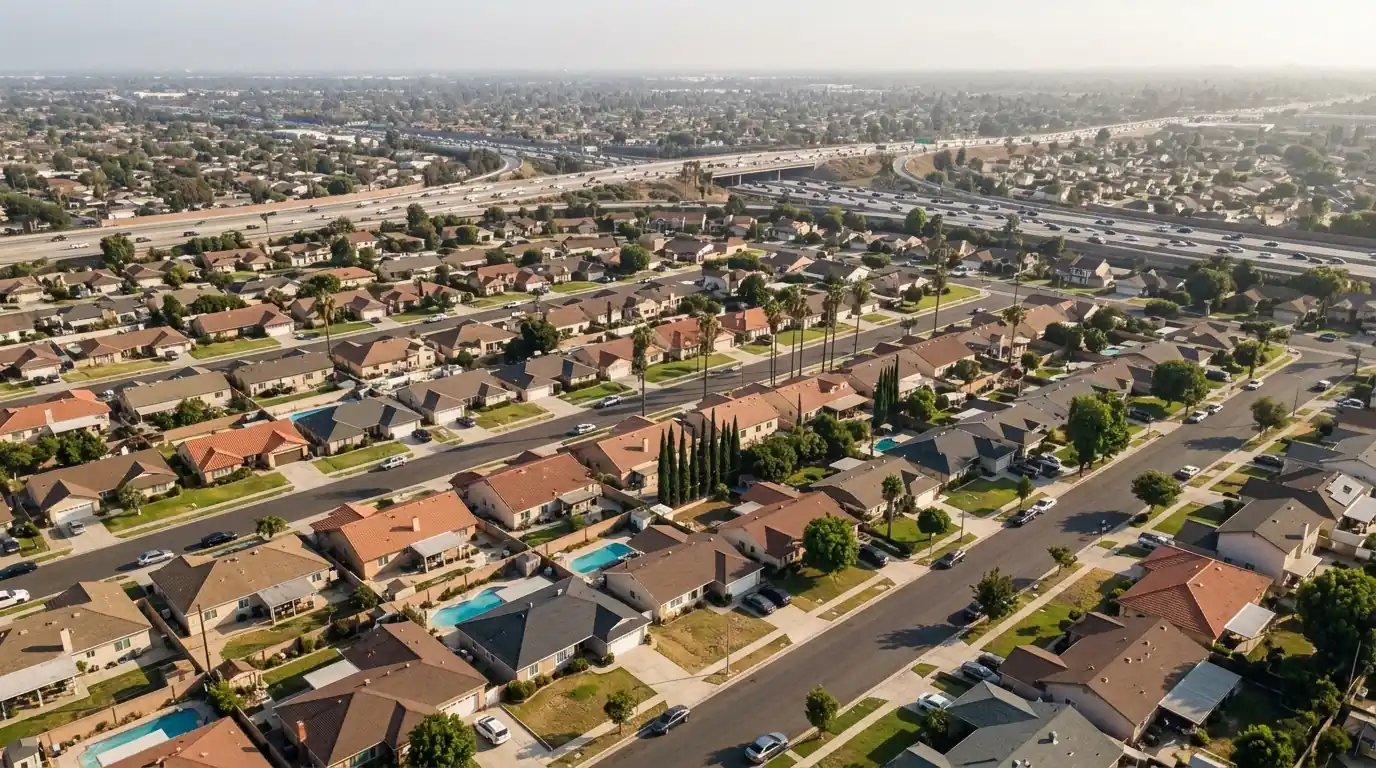
Why a house in Torrance and a house in Norwalk get different findings
Climate changes fast as you move inland from the beach. The marine layer that hangs over Long Beach, Torrance and the Palos Verdes Peninsula keeps wood cool and damp for much of the year, which suits dampwood termites around decks and leaking fixtures and keeps drywood colonies busy in eaves that rarely bake. Ten or fifteen miles inland, in Downey, Norwalk or Whittier, summer afternoons run noticeably hotter and drier, and that heat is what triggers the big drywood swarm flights in late summer and early fall.
Subterranean termites follow the soil and irrigation more than the temperature. Lawns watered every morning, planters built against stucco and sprinklers that soak the base of a wall show up on inspection reports from every city in the county. Spring swarms after a rain, usually between February and May, are the moment most owners first notice them.
The housing eras we see from city to city
The southern county was built in waves. The oldest neighborhoods, in Long Beach, Old Torrance and Uptown Whittier, hold 1910s to 1930s bungalows and Spanish Revival homes on raised foundations with crawlspaces, where we look for mud tubes on piers and rot at the sill plate. The postwar boom filled Lakewood, Downey, Paramount, Bellflower, Compton and Norwalk with 1940s and 1950s houses, some raised and many on slab. Carson, Cerritos and the newer parts of Torrance came later, with 1960s and 1970s tracts, block walls and larger attics.
Each era fails differently. A raised Craftsman tends to show subterranean damage in the floor framing and drywood pellets in the attic. A slab ranch hides subterranean entry at expansion joints, plumbing penetrations and the garage slab edge. Stucco tracts from the 1970s often have drywood in the fascia, rafter tails and the wood trim around garage doors, which is why our inspectors carry a ladder to every job.
How the rules differ between Long Beach and the rest of the county
Long Beach runs its own health department and its own vector control program, which is unusual in Los Angeles County. Most neighboring cities rely on county services and on regional mosquito and vector control districts for surveillance of day-biting Aedes mosquitoes and similar public health pests. That matters when a mosquito problem crosses a backyard fence into the next city: the agency that answers a complaint may change at the city line.
Termite work itself follows state rules everywhere in the county. California expects a written inspection report, and the Structural Pest Control Board oversees how fumigations and other wood-destroying pest work are done and recorded. For a home sale in any of these cities, the report separates Section 1 findings, which are active infestations or damage, from Section 2 conditions such as earth-to-wood contact or excess moisture.
What we treat most in Los Angeles County
Drywood termites
The most common termite call in coastal LA County cities, found in attic rafters, eaves, window trim and furniture, with piles of small six-sided pellets under kick-out holes.
Western subterranean termites
Soil-nesting colonies that build mud tubes up slabs and foundation walls in every city we cover, swarming on warm spring days after rain.
Argentine ants
Long trailing colonies that pour into kitchens across the county during summer heat and right after the first rains, often from irrigated planters.
Roof rats
Climbers that live in palms, ivy and fruit trees from the South Bay to Whittier and travel along power lines and fences into attics.
German cockroaches
A constant in the dense apartment buildings and restaurant corridors of Long Beach, Bellflower, Gardena and Compton, spreading through shared plumbing walls.