Quick answer
Heat treatment raises the temperature inside the wood of a house, or of one section of it, until drywood termites die, usually by holding the core of the wood at about 120 degrees Fahrenheit or higher for a set time. Heaters and fans push hot air through the structure under tarps while sensors track wood temperature. Most households return the same day, but heat leaves no residual protection.
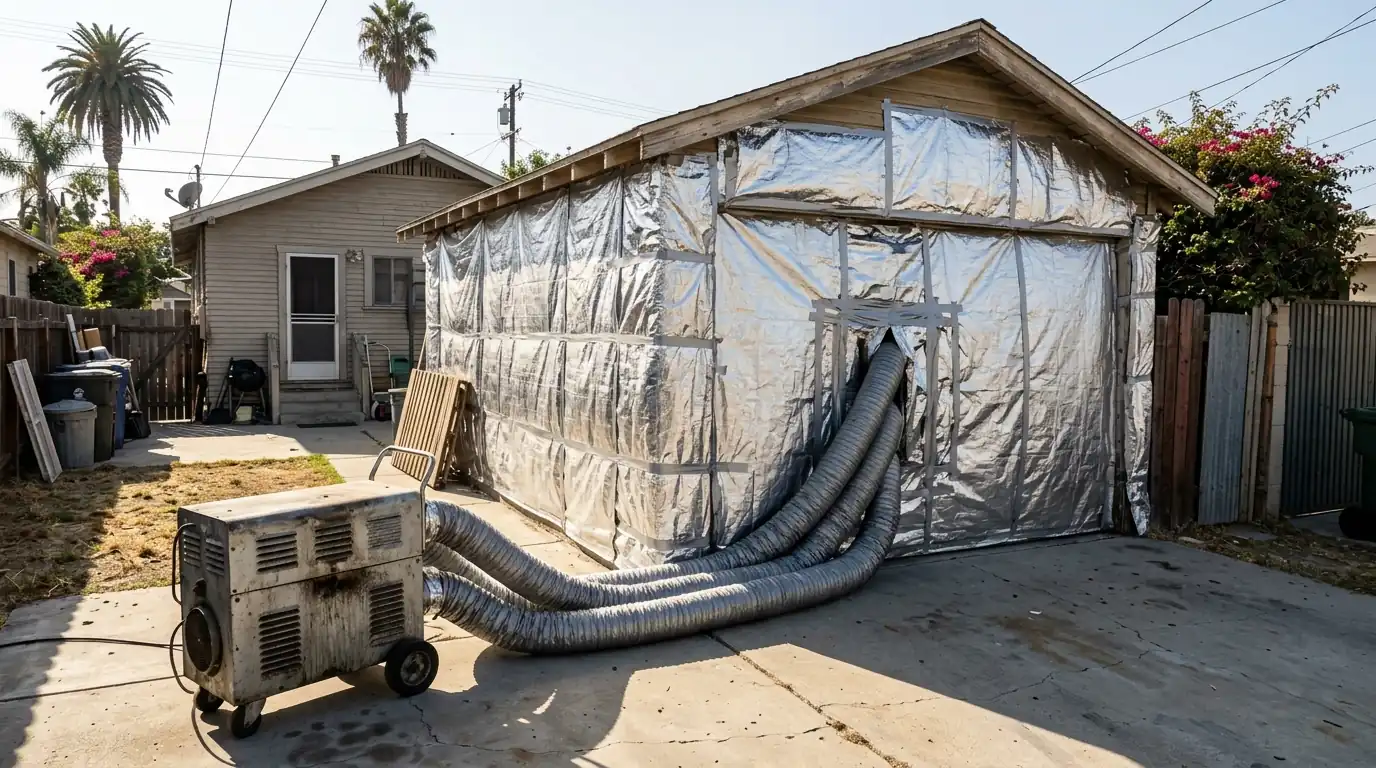
Drywood termites cannot survive sustained heat. If the wood around a colony reaches a high enough core temperature and stays there long enough, every termite in it dies, including the eggs and reproductives. Heat treatment uses that fact. Large propane or electric heaters force hot air into the house or a tented section, fans move it into wall cavities and attics, and probes placed inside the wood report the temperature in real time.
Heat is attractive because there is no fumigant gas, no gas company shutoff for most jobs and usually no overnight stay away. It also has real limits. Thick framing, insulated walls, tile floors and some construction types can keep parts of the wood from reaching temperature. Heat-sensitive belongings have to be removed or protected. We recommend heat when the house and the activity suit it.
Where heat struggles and why it matters
Heat has to travel from the air into the wood and then to the center of each board. Thin trim heats quickly. A thick beam, a sill plate sitting on concrete or a stud behind plaster and insulation heats slowly, and some may never reach the target if the air cannot get to them. That is the main weakness of heat compared with fumigation.
Concrete slabs and foundations act like heat sinks, pulling warmth out of the wood that sits on them. Tile floors and dense masonry do the same. Insulated exterior walls keep hot air away from the studs inside. We place probes in the hardest-to-heat spots precisely so we can see when the coldest wood reaches temperature. If we cannot reach a target in some areas, we tell you and suggest supplemental local treatment.
Because of those limits, heat suits some homes better than others. Open attics, lightly framed garages and rooms with exposed wood are easier. Homes with dense framing, heavy insulation and thick masonry are harder, and fumigation may be more reliable there.
Homes and situations that suit heat
Activity limited to one area of the house
A garage, an attic section or one wing can be tented and heated on its own, which treats hidden colonies in that zone without involving the whole house.
Households that want to avoid fumigant
People with strong preferences against gas treatment often choose heat, accepting its limits in exchange for a chemical-free method.
Smaller, simpler structures
Single-story homes with open attics, light framing and few dense materials heat more evenly and predictably.
Detached garages and studios
Outbuildings with exposed framing and few contents are some of the easiest structures to heat thoroughly.
A tight schedule
Most heat jobs finish in a single day, so residents often sleep at home that night.
How a heat treatment day unfolds
Assess the structure
We inspect the activity and the building, noting insulation, wall types, tile, concrete and anything that could block heat from reaching the wood.
Remove heat-sensitive items
Candles, medicine, electronics, vinyl records, plants, aerosol cans and anything that can melt or burst are removed or protected before heating starts.
Place probes in the wood
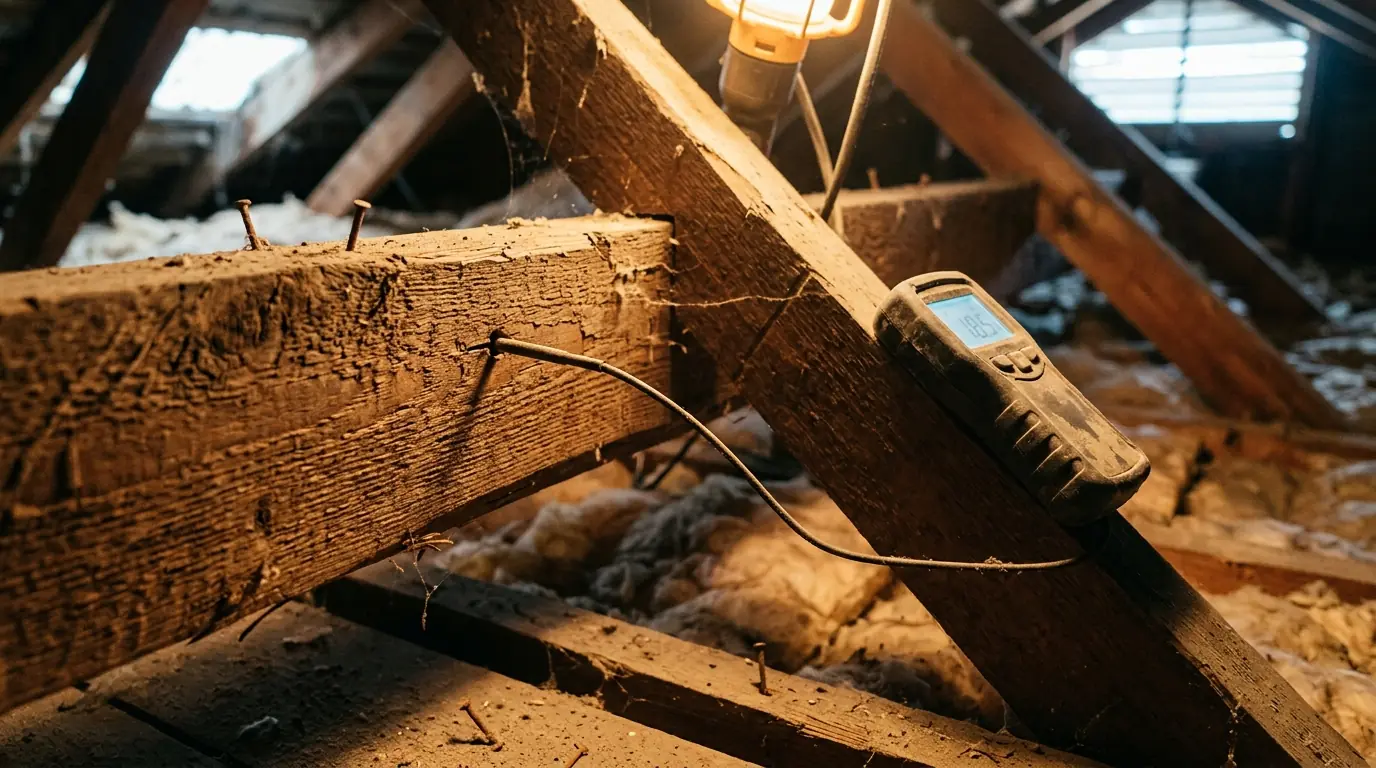
Temperature probes go into the thickest and hardest-to-heat pieces of wood, such as beams and sill plates, so we know the coldest spots reach temperature.
Tarp and heat the structure
The area is covered with insulated tarps, and heaters and fans push hot air through the space while we monitor readings.
Hold the target temperature
Once probes show the wood core at the target, heat is held long enough to kill termites throughout the treated wood.
Cool down and walkthrough
The tarps come off, the house cools and we walk through with you to check that nothing was damaged and to review the readings.
What heat treatment costs for Long Beach structures
Heat is priced by the volume of the area treated and how hard it is to heat evenly. A detached garage with open framing is a small job. A two-story house with insulated walls and tile floors takes more equipment, more time and more monitoring.
| Typical job | Typical range |
|---|---|
| Single room or attic section | $585 to $1,465One zone tented and heated, such as a garage or one end of the attic. |
| Detached garage or studio | $865 to $2,140Outbuilding with open framing and few contents. |
| Whole single-story home | $2,385 to $4,860Heated in one day, with probes in beams, sill plates and attic framing. |
| Larger or two-story home | $3,985 to $7,240More heaters, longer heating time and extra monitoring for upper floors. |
What moves the price
- Cubic volume of the area being heated
- Insulation, plaster, tile and concrete that slow heat transfer
- Thick beams and sill plates that take longer to reach temperature
- Amount of contents that must be removed or protected
- Roof design and how tightly the area can be covered
Expect these to vary by house: they are typical heat treatment ranges, not a quote, and the inspection decides both fit and price. Compare more jobs in the treatment price guide.
Protecting belongings from the heat
Air temperatures inside a treated area can rise well above the wood target, so anything that melts, warps or bursts must come out. Candles, crayons, lipstick, medicine, aerosol cans, propane cylinders and pressurized containers are common items on the removal list. Electronics, vinyl records, photographs, musical instruments and some plastics should be removed or protected.
Food can generally stay, but chocolate and similar items will melt. Plants and pets must leave. Fire sprinklers in some buildings can be set off by heat and need to be addressed before treatment. We give you a written list for your home and go through it with you so nothing important gets damaged. Ask us about appliances, wine and anything else you are unsure of before the day.
- Candles, wax, crayons and cosmetics
- Medicine and vitamins
- Aerosols, propane and pressurized containers
- Electronics, records, photos and instruments
- Plants, pets and fish tanks
Choosing between heat, tenting and local injection
Heat sits between fumigation and local treatment. Like fumigation, it treats a whole area, including hidden colonies inside walls. Like local treatment, it avoids fumigant gas and usually avoids an overnight stay. Its weakness is uneven heating in dense structures, which fumigation does not share.
For a single-story home with open framing and widespread but moderate activity, heat can be a good choice. For a two-story home with plaster walls, insulation and tile, fumigation is usually more reliable. For one or two reachable colonies, local injection is the simplest option. None of the three leaves lasting protection in the wood, so ongoing inspections matter after any of them.
We also look at what is practical for your household. A family that cannot be away for two nights may accept the limits of heat. A family selling the house and needing a clean escrow report on a dense older home may prefer the certainty of fumigation. Some homes end up with a mix: heat for the garage, local injection for a porch beam and a plan to watch the rest. The inspection is where that decision gets made, and we explain the reasoning in writing.
How Long Beach construction affects heat treatment
Construction age matters a lot. Many 1920s homes in California Heights and Bluff Park have plaster and lath walls, thick old-growth framing and raised foundations. The plaster slows heat into the studs, so these homes often need more equipment and longer heating, or a combination of heat in the attic and garage with fumigation or local treatment elsewhere.
Postwar ranch homes in Los Altos, El Dorado Park Estates and Lakewood Village usually have drywall, lighter framing and open attics. Attic heat jobs are often straightforward in those homes, though the concrete slab pulls heat from sill plates and needs careful probe placement. Detached garages across Long Beach, especially older ones in Belmont Heights and Wrigley with open stud walls, are among the best candidates for heat. Late summer and fall swarm season brings the most calls, and warm afternoons outside help heat jobs run more efficiently.
Getting ready for a heat treatment
- Remove candles, medicine, aerosols and anything that melts
- Unplug and remove sensitive electronics, records and instruments
- Take pets, plants and fish out of the treated area
- Open closets, cabinets and drawers so hot air circulates
- Move furniture slightly away from exterior walls
Tenting soon? Use the fumigation prep checklist.
Where we do termite heat treatment
- Downtown Long Beach 90802
- North Long Beach 90805
- Belmont Shore 90803
- Bixby Knolls 90807
- California Heights 90807
- Los Altos 90815
- Naples 90803
- Rose Park 90804
- Wrigley 90806
- Signal Hill 90755
- Lakewood 90712
- Downey 90240
- Torrance 90503
- Carson 90745
- Compton 90220
- Norwalk 90650
- Bellflower 90706
- Garden Grove 92840
- Westminster 92683
- Seal Beach 90740
- Cerritos 90703
- Whittier 90601
Not listed? We cover all of Long Beach and the nearby cities; call and we will confirm your street.
Termite Heat Treatment questions
Can we sleep at home the night after a heat treatment?
In most cases, yes. Heat jobs usually finish in a day, and once the house cools and we complete the walkthrough, you can move back in. Larger homes sometimes take longer to cool, so plan for a late return just in case.
Will heat treatment damage my walls, floors or furniture?
When the house is prepared properly and temperatures are monitored, damage is uncommon. Items left inside that are sensitive to heat, such as candles, some plastics and electronics, can be affected. We go through a removal list with you and watch readings closely to avoid overheating any area.
Does heat treatment work on subterranean termites?
Heat is a drywood termite method. Subterranean colonies live in the soil, and heating the house does not reach them. Subterranean termites are treated with soil termiticides or bait stations that reach the colony underground.
How do you know every board reached a high enough temperature?
We place probes inside the thickest and hardest-to-heat wood, such as beams, sill plates and framing near concrete. The treatment continues until those probes show the target temperature has been held. If a spot cannot reach target, we note it and recommend a local treatment for that area.
Related services
Termite Fumigation
Termite fumigation, or tenting, covers the whole house with tarps and fills it with sulfuryl fluoride gas, which penetrates every piece of.
DetailsLocalized Drywood Termite Treatment
Localized drywood termite treatment targets specific colonies instead of the whole structure.
DetailsOrange Oil Termite Treatment
Orange oil treatment uses d-limonene, an extract from orange peels, injected into drywood termite galleries through small drilled holes.
DetailsTermite Inspection
A termite inspection is a visual and probing check of every accessible part of the house: attic framing, eaves, window and door.
DetailsTermite Protection Plan
A termite protection plan is a recurring agreement where we inspect your home on a set schedule, usually once or twice a.
Details