Quick answer
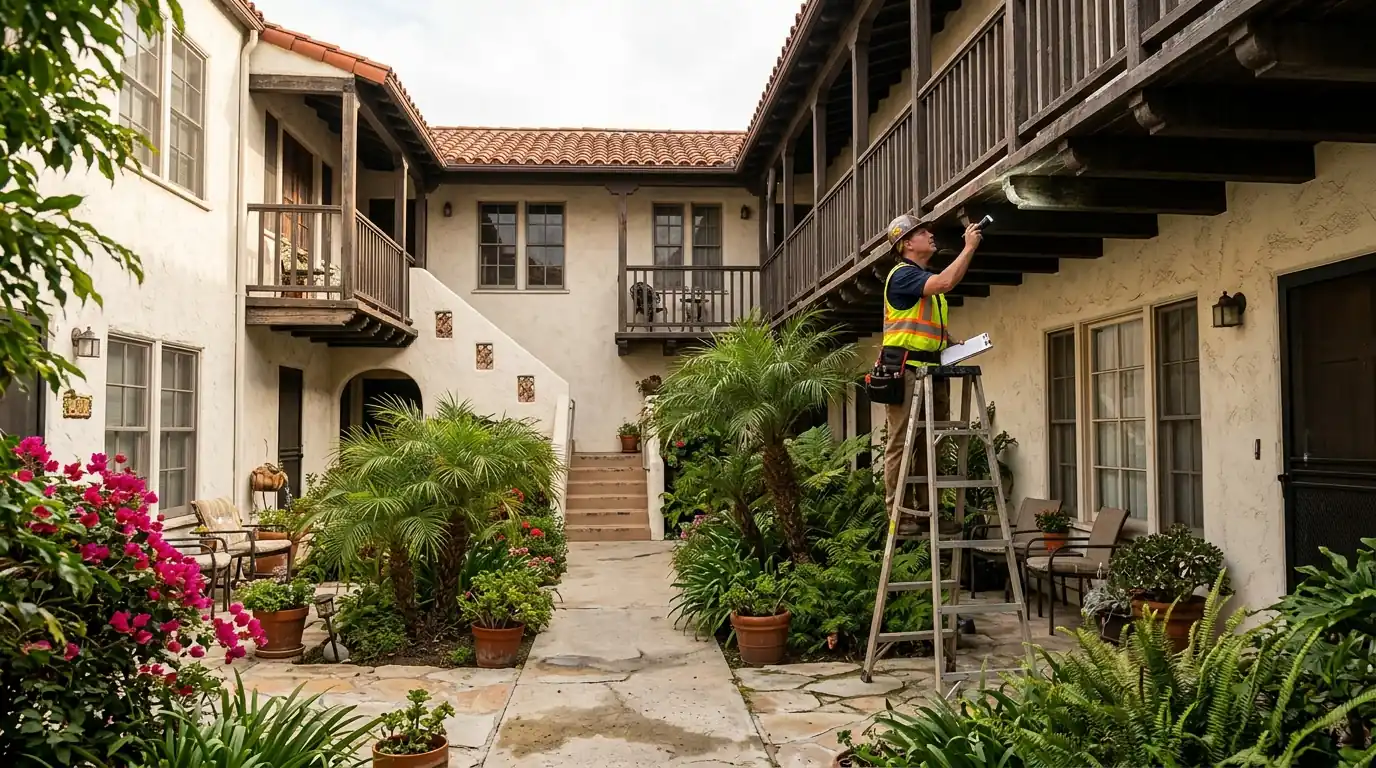
Condo and HOA termite treatment starts with an inspection of every unit and common area so the board knows where activity is and who is responsible. From there, we plan treatment for the building as a whole, whether that is fumigating a complex in phases, treating drywood spots unit by unit, or treating soil around the foundation, and we coordinate notices, access and resident prep.
In a single-family house, the owner decides and the work starts. In a condominium or a townhome association, the board has to know whether the damaged wood is common area or part of a unit, what the governing documents say about responsibility, and how to give residents enough notice to prepare. Termites do not respect those lines, so a plan has to account for the whole structure.
We work with boards and property managers to inspect the building, map findings by unit and by common element, and present options in a form the board can vote on. Once a plan is approved, we handle the scheduling, the resident instructions and the treatment itself, then provide records the association can keep with its maintenance files and reserve study.
Sorting unit responsibility from common area responsibility
Most condominium documents give the association responsibility for the structure, exterior walls, roof, attics and shared framing, while owners handle interior finishes and anything inside their unit's boundaries. Townhome communities vary more, sometimes making each owner responsible for their own roof and attic. The inspection diagram helps here, because it shows exactly where each finding sits.
We do not decide responsibility, but we describe findings in a way that lets the board and its attorney or manager apply the documents. A drywood colony in a shared ridge beam, a balcony joist that belongs to the common element and pellets inside a kitchen cabinet are written up separately, so the board can see which are association items and which are owner items.
Limited common elements, such as a balcony or a patio that only one unit uses, are where disputes most often start. Some documents assign their repair to the owner and the structure beneath to the association, so a clear location on the diagram saves time.
Situations that call for an association-wide approach
Pellets reported by several owners
When more than one unit reports drywood pellets, the colonies are often in shared attic framing or exterior walls, and treating units one at a time leaves gaps.
Damage on balconies and stair landings
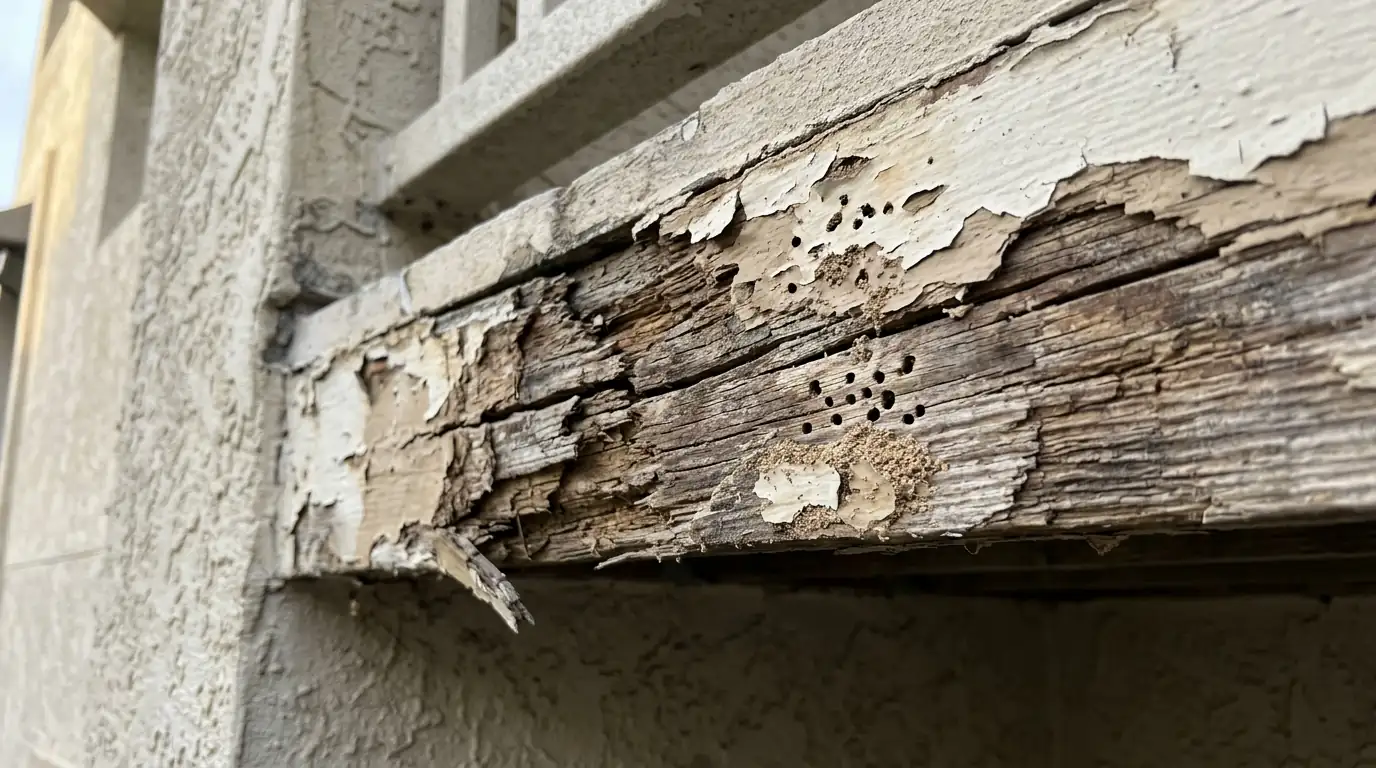
Wood balconies, exterior stairs and walkway framing are usually common area and are prone to both drywood activity and moisture decay worth checking together.
Shared attics over a row of units
Townhome rows and garden-style buildings often share a continuous attic. A colony in one section can spread to the next without anyone noticing.
Mud tubes in garages or carports
Subterranean tubes on parking structure walls, storage lockers or ground-floor slabs point to soil activity that needs a building-level treatment.
A reserve study or exterior project
Painting, siding or balcony repair projects are the right time to inspect, since framing is exposed and repairs can be folded into the same contract.
A unit sale flags common area findings
An escrow report on one unit may list damage in shared framing. The board then needs its own inspection to decide how to respond.
How we take a condo building from first report to finished treatment
Meet with the board or manager
We review the governing documents, past termite records and known problem areas, and agree on how to reach each unit for inspection.
Inspect every unit and common area
Attics, crawlspaces, garages, balconies, stairs and exterior walls are inspected along with each interior unit we can access, and findings are diagrammed by location.
Present options to the board
We lay out whole-building fumigation, phased fumigation, local treatments and soil treatment where relevant, with pricing and a schedule for each.
Resident notice and prep plan
Once approved, we prepare resident instructions and a timeline so owners and tenants know when to vacate, how to bag food and what to do with pets and plants.
Treatment in coordinated phases
Large complexes are often done building by building. We manage tarps, gas shutoff coordination, secondary locks and clearance testing for each phase.
Records for the association file
After the work, the board receives a summary of treated areas, completion notices and recommendations for repairs and follow-up inspections.
What condo and HOA termite projects typically run
Association work is priced per building or per unit depending on the treatment. Building size, roof shape, the number of units and how residents are relocated during fumigation all affect the number. These ranges reflect common Long Beach building types.
| Typical job | Typical range |
|---|---|
| Association inspection, per unit | $65 to $145 per unitInterior and common-area findings diagrammed and grouped by building for the board. |
| Fumigation of a garden-style building | $3,285 to $9,840Two-story building with eight to sixteen units, including tarps, monitoring and clearance testing. |
| Local drywood treatment in common areas | $485 to $2,365Drill and inject treatment of shared attic framing, balcony beams or stair stringers. |
| Soil treatment around a building | $1,385 to $4,960Liquid termiticide trenching and rodding along foundations, planters and slab edges. |
What moves the price
- Number of units and buildings, and whether they can be fumigated together or in phases
- Roof shape, height and attached structures that change how tarps are fitted
- Common area wood such as balconies, stairs and carports that need separate treatment
- Resident access and coordination with tenants and owners who live elsewhere
- Need to work around businesses or shared utilities on mixed-use properties
Every association is different, so read these as typical figures and not a quote; the building inspection fixes the scope and the price. Compare more jobs in the treatment price guide.
Fumigating an occupied building without chaos
Fumigation means every resident leaves for roughly two to three days while the building is tarped, filled with gas and then aired out and tested. In a sixteen-unit building, that is sixteen households finding somewhere to stay, bagging food and medicine, removing pets and plants, and returning on the same day. The planning is as important as the treatment.
We give the board a sample resident notice with dates, a prep checklist and a contact number answered around the clock. We arrange gas shutoff and relighting with SoCalGas where the building has gas service, install secondary locks on entry doors and post warning signs. Re-entry happens only after clearance testing shows the gas level inside is down to the allowed limit.
- Give residents at least several weeks of notice
- Plan relocation for anyone who cannot easily stay elsewhere
- Remind owners to inform their tenants directly
- Collect access keys for units whose occupants will be away
When unit-by-unit treatment is the better call
Not every association needs a full tent. If the inspection shows drywood activity confined to a few accessible areas, such as one balcony beam and two window frames, local drill-and-inject treatment can resolve it without relocating residents. That approach costs less and disrupts fewer people, but it depends on the colonies being found and reachable.
The risk with local treatment is the colony nobody saw, which may be inside a closed wall or a low attic section. For older buildings with widespread activity in shared framing, phased fumigation is usually more reliable. We explain that tradeoff in writing so the board can weigh cost against the likelihood of repeat treatment.
A middle path also exists. Some boards fumigate the buildings with the heaviest activity and treat the rest locally, then put the whole complex on a yearly inspection schedule to catch what was missed.
Termites in Long Beach condo stock, from courtyards to towers
Long Beach has a wide range of association buildings. In Alamitos Beach and along Ocean Boulevard, 1920s and 1930s courtyard buildings converted to condos have original wood framing, wood windows and shared attics where drywood colonies often move across several units. Newer garden-style complexes near Los Altos and the Traffic Circle have wood balconies and stairs that combine drywood activity with salt air and moisture decay. Salt air near the beach speeds up paint failure on that wood, which opens fresh entry points for swarmers.
Downtown high-rise towers near Pine Avenue and the East Village rarely tent, but they still get drywood activity in wood trim, cabinets and wood ceilings, and subterranean activity in planters at podium level. Townhome communities in Bixby Knolls and near El Dorado Park often have continuous attics down a row of units and wood fencing tied into the buildings, which brings soil contact. Each type needs a different plan, and we tailor the board presentation to the building actually in front of us.
What boards can do before we inspect
- Gather past termite reports, completion notices and dates of any prior fumigation
- Share the governing document sections on maintenance responsibility
- Send residents an access notice for the inspection date
- Collect keys or arrange entry for units with absent owners
- List known leaks, balcony repairs or soft wood residents have reported
Tenting soon? Use the fumigation prep checklist.
Where we do condo & hoa termite treatment
- Downtown Long Beach 90802
- North Long Beach 90805
- Belmont Shore 90803
- Bixby Knolls 90807
- California Heights 90807
- Los Altos 90815
- Naples 90803
- Rose Park 90804
- Wrigley 90806
- Signal Hill 90755
- Lakewood 90712
- Downey 90240
- Torrance 90503
- Carson 90745
- Compton 90220
- Norwalk 90650
- Bellflower 90706
- Garden Grove 92840
- Westminster 92683
- Seal Beach 90740
- Cerritos 90703
- Whittier 90601
Not listed? We cover all of Long Beach and the nearby cities; call and we will confirm your street.
Condo & HOA Termite Treatment questions
How do we fumigate a condo building when some owners refuse to leave?
Fumigation cannot proceed with anyone inside, so every unit must be vacated and checked before the gas goes in. Boards usually rely on their governing documents for access and work with their manager and attorney on reluctant owners. We help by giving clear written notices and explaining the safety requirements so residents understand why it matters.
Can one condo owner hire a termite company for their unit alone?
An owner can have their unit inspected, and local treatment inside their own cabinets or trim is often possible. If the activity is in shared walls, attics or the exterior, the association usually needs to approve and coordinate the work, since it involves common area and other units.
Does a condo complex have to tent every building at the same time?
No. Large complexes are often fumigated building by building on separate dates, as long as each building is a closed structure that can be tarped on its own. Phasing spreads cost and limits how many residents are displaced at once, though each phase follows the same prep and clearance steps.
What records should an HOA keep after termite treatment?
Keep the inspection report and diagram, the completion notice for each building treated, the dates of fumigation or local treatment and any repair invoices. Those records help with future escrow requests from owners who sell, with reserve planning and with deciding when the next inspection is due.
Related services
Termite Fumigation
Termite fumigation, or tenting, covers the whole house with tarps and fills it with sulfuryl fluoride gas, which penetrates every piece of.
DetailsCommercial Termite Control
Commercial termite control covers inspection, treatment and records for buildings that are leased, occupied by a business or held as investment property.
DetailsLocalized Drywood Termite Treatment
Localized drywood termite treatment targets specific colonies instead of the whole structure.
DetailsTermite Inspection
A termite inspection is a visual and probing check of every accessible part of the house: attic framing, eaves, window and door.
DetailsTermite Damage Repair
Termite damage repair means cutting out wood that termites have hollowed or weakened and installing new material so the structure is sound.
Details