Quick answer
Torrance is about fourteen miles from our Long Beach office along the 405 or Pacific Coast Highway. We inspect and fumigate for drywood termites, treat subterranean colonies under raised and slab homes, provide reports for home sales, and handle ants, roof rats and spiders across the city, from Old Torrance to the west side tracts closer to the coast.
Old Torrance and its planned beginnings
Torrance started in the early 1910s as a planned industrial town, laid out with help from the Olmsted Brothers firm, and the original downtown around El Prado and Sartori Avenue still shows it. The homes near that core date from the 1910s through the 1930s: bungalows and period revival houses, many on raised foundations with crawlspaces, wood siding and wood-framed porches.
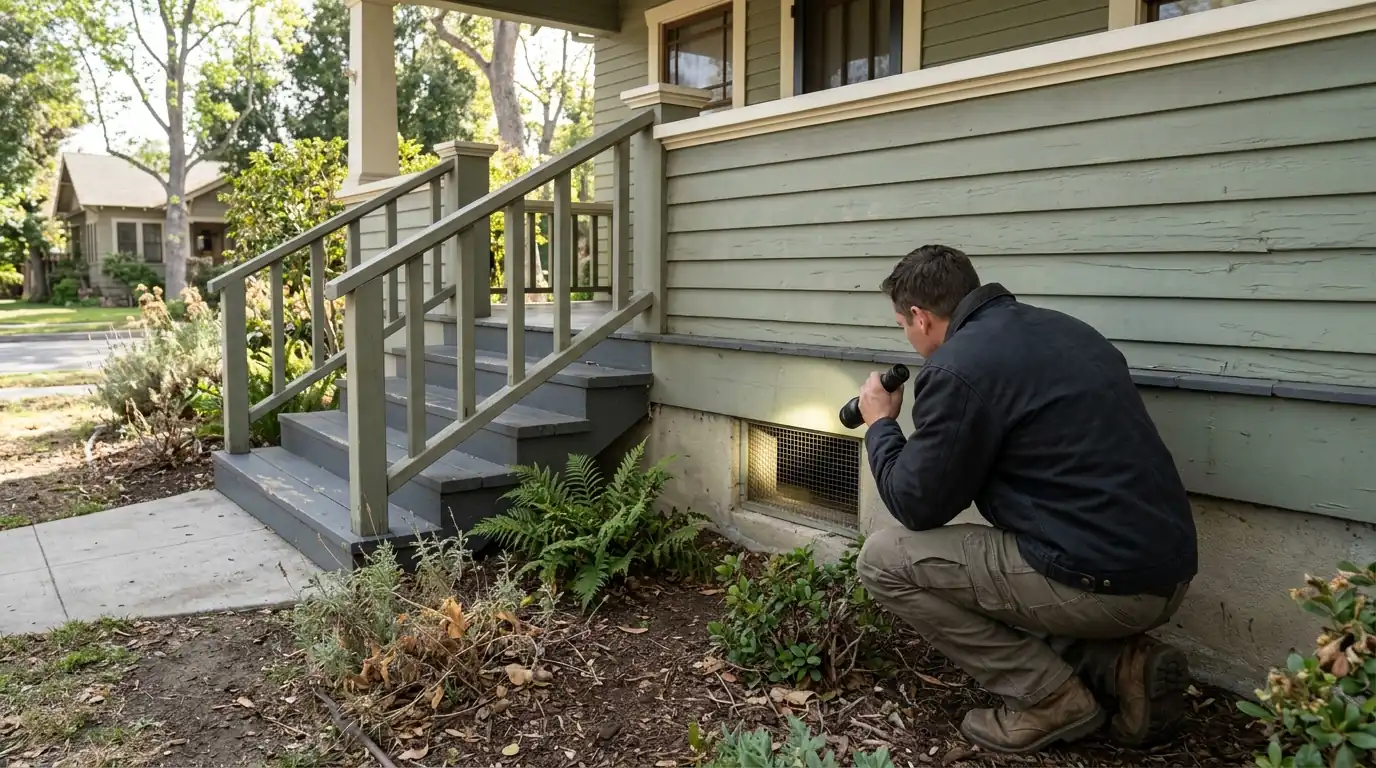
These houses need the most thorough inspections in the city. We go into the crawlspace to check piers, sill plates and floor framing for subterranean termite tubes and moisture damage, then into the attic for drywood colonies in the original lumber. Wood porches and steps, where they meet the soil, are frequent trouble spots for both termites and wood rot.
The tract boom from the 1950s through the 1970s
Most of Torrance filled in after World War II as the city grew outward from its industrial core. Neighborhoods north and west of Del Amo Fashion Center, through the central part of the city and out toward the coast, are mostly single-story and two-story tract homes built on slab between the 1950s and the 1970s, with stucco walls, wood fascia and attached garages.
In these houses, drywood termites are the main concern. Colonies settle into attic rafters, garage door headers, fascia on the sunny sides of the house and the wood trim around windows. Subterranean termites show up at slab cracks, around plumbing and at the seams of later additions. A real estate inspection here usually focuses on the attic, the eaves and the garage, where most of the evidence lives.
Coastal fog on the west side, warmer air inland
Torrance has its own short stretch of beach, and the neighborhoods closest to it sit under the marine layer on many mornings. That moisture shows up in wood decks, fences and window sills on the ocean-facing side of the house, where dampwood termites and fungus decay are more common. Moving east toward the 405 and the 110, summers get warmer and drier, which favors the drywood swarm flights of late summer and early fall.
The difference matters for planning. A west side home might need wood repair alongside termite treatment, while a central or north Torrance home is more likely to need tenting or spot treatment for drywood alone.
Home sales and termite reports in Torrance
Home sales in Torrance often include a wood-destroying pest inspection, and the report follows the standard California format: Section 1 lists active infestations and damage, and Section 2 lists conditions that could lead to future problems, like earth-to-wood contact or excess moisture. Buyers and lenders frequently ask for Section 1 items to be cleared before close of escrow.
We write those reports with specific locations so both sides understand the findings, and when work is done we provide a completion notice. If the house needs fumigation before closing, plan the date early, since the household has to be out for about two to three days.
What we treat most in Torrance
Drywood termites
Colonies in attic rafters, garage headers and sunny fascia of postwar tract homes, and in the original lumber of Old Torrance houses.
Subterranean termites
Mud tubes on crawlspace piers and sill plates under raised Old Torrance homes, and at slab cracks in tract houses.
Dampwood termites
Wet deck framing, fences and window sills in fog-prone west side neighborhoods closer to the beach.
Roof rats
Live in palms and backyard trees across the city and slip into attics through torn vent screens and roof gaps.
Argentine ants
Summer trails into kitchens from irrigated yards, heaviest in the warmer central and north parts of the city.