Quick answer
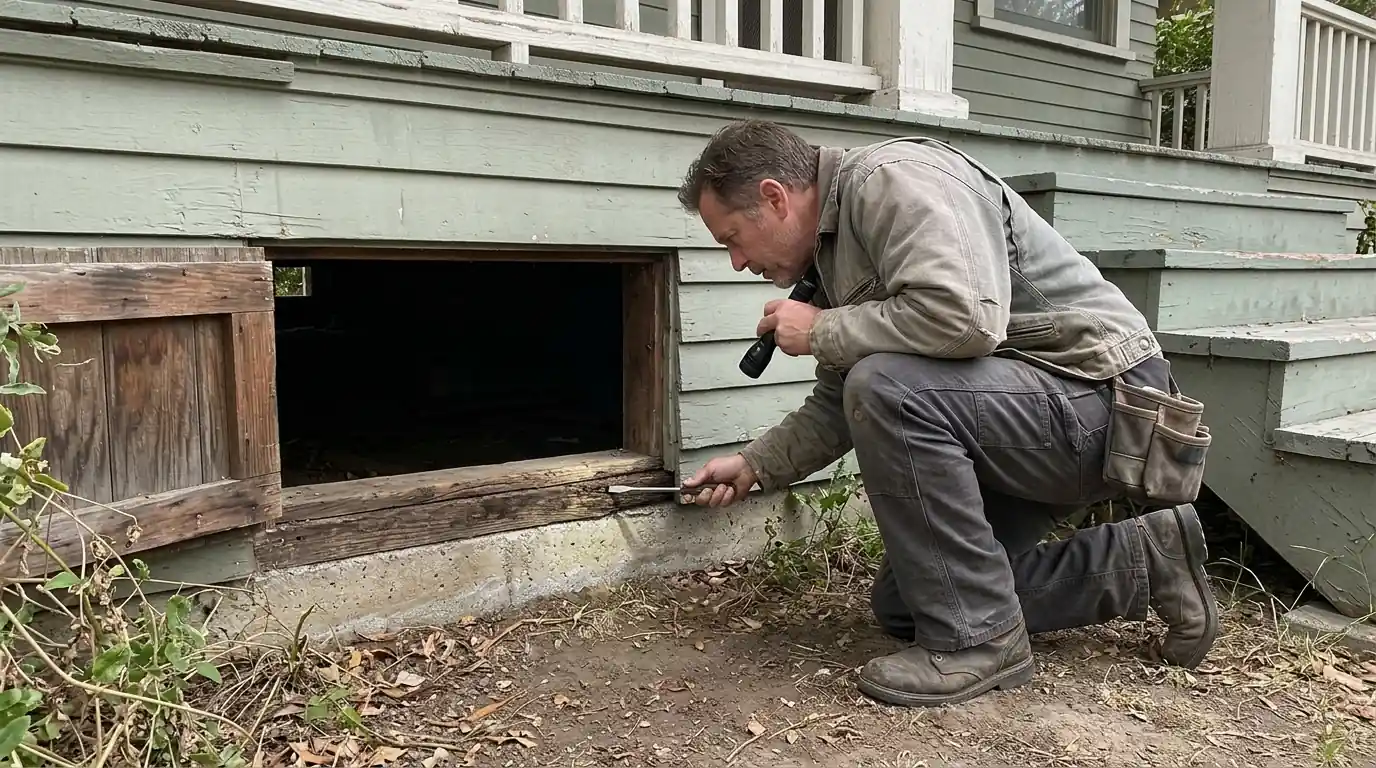
A termite inspection is a visual and probing check of every accessible part of the house: attic framing, eaves, window and door trim, the garage, the crawlspace or slab edge, and the yard where wood meets soil. In Long Beach we look for all three termite types, then give you a written report with a diagram, the findings and the treatment options that fit what we found.
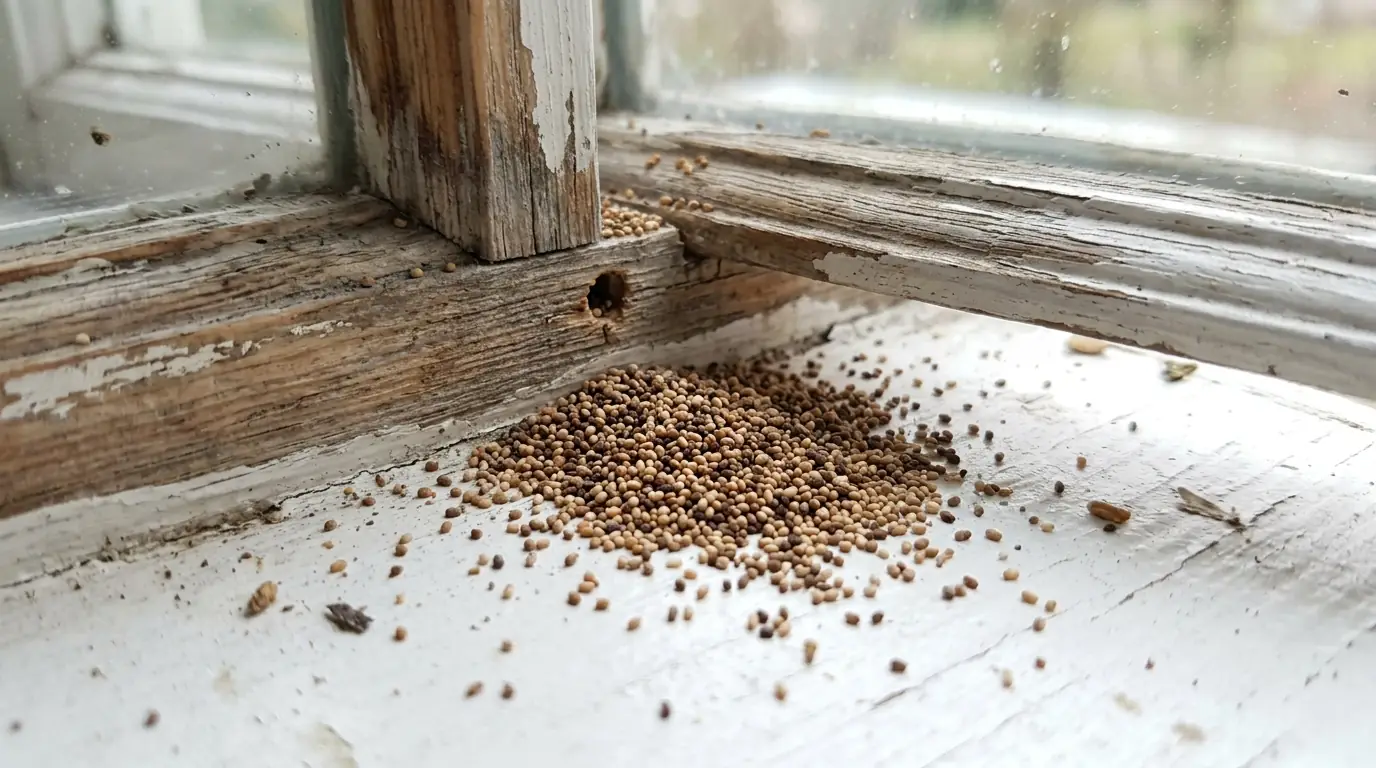
Most calls start with a small clue. Pellets that look like coarse ground pepper on a sill, a few discarded wings near a slider door, or a thin brown tube running up the stem wall of a garage. Those clues mean something, but on their own they do not tell you which termite you have, how far the colony reaches or whether the activity is old or current. An inspection answers those questions before treatment.
We work through the house in a set order so nothing gets skipped. The inspector starts outside, reads the foundation, the grade, the eaves and the roof edge, then moves through the garage and living space, up into the attic and down into the crawlspace if the house has one. Every finding goes on a diagram of the structure, which is the document you keep and the one any treatment plan is built on.
Telling drywood, subterranean and dampwood activity apart
The treatment that fixes one termite does nothing for another, so identification is the most useful thing an inspection produces. Drywood termites live entirely inside the wood they eat. They leave clean, smooth galleries that cut across the grain and they push out hard, six-sided pellets that pile up below the opening. In coastal Long Beach they are the termite we find most often, especially in attic framing and on the sunny south and west faces of a house.
Subterranean termites come up from the soil. Their galleries follow the softer spring wood along the grain and are lined with a mix of soil and saliva, so damaged wood looks dirty inside. They need moisture, which is why they show up near leaking hose bibs, sprinkler overspray and planters packed against stucco. Dampwood termites are larger, need wood that stays wet and are usually tied to a specific leak, a rotted fence post or lumber touching soil.
Clues that tell you it is time for an inspection
Pellets collecting on flat surfaces
Drywood termites push fecal pellets out through tiny kick-out holes. Small piles on sills, baseboards, attic insulation or the garage floor that come back after you sweep are a classic sign.
Wings near windows and lights
Swarmers shed their wings within minutes of landing. A scatter of identical, translucent wings on a sill or under a porch light points to a colony close by.
Mud tubes on the foundation
Subterranean termites build pencil-width tubes of soil to cross concrete. Look along stem walls, piers in the crawlspace, garage slab edges and the back of stucco weep screeds.
Wood that sounds hollow
Tap trim, fascia or exposed beams with a screwdriver handle. A papery or hollow sound, or paint that blisters and dimples over the wood, deserves a closer look.
Buying, selling or refinancing
Even with no visible clue, a sale or a large remodel is a sensible time for a full inspection, since repairs are cheaper to plan before walls are closed or escrow opens.
How we inspect a Long Beach house, room by room
Exterior walk and grade check
We circle the house looking at the soil line, planters against stucco, wood siding that touches dirt, fence posts tied into the structure, and eaves and rafter tails where drywood colonies often start on the sunny side.
Garage and service areas
Garages hide a lot. We probe the sill plate, check the bottom of the jambs and the garage door trim, and look behind stored boxes along the walls where pellets and mud tubes go unnoticed for years.
Living space and trim
Inside, we check window and door frames, baseboards, built-in cabinets and hardwood floors. We note sticking doors, blistered paint and any pellet piles, and we ask where you first saw the clue that prompted the call.
Attic framing and roof sheathing
Through the attic hatch we look at rafters, ridge boards, the underside of sheathing and the insulation surface. Pellets often sit on top of insulation directly under an active gallery.
Crawlspace or slab perimeter
On raised foundations we go under the house to check mudsills, girders, piers and plumbing leaks. On slab homes we inspect the perimeter, plumbing penetrations and any expansion joints we can reach.
Written report and walkthrough
You get a report with a diagram marking each finding, the termite type, whether activity looks current, inaccessible areas we could not see, and the treatment choices that make sense for those findings.
What a termite inspection usually costs in Long Beach
Inspection pricing depends mostly on the size of the structure, how many separate buildings are on the lot and whether you need a formal report for a sale. A standard check for a single-family home on a typical Long Beach lot sits in the lower range; detached garages, granny flats and multi-unit buildings add time.
| Typical job | Typical range |
|---|---|
| Standard home inspection with written findings | $95 to $185Single-family house up to about 2,000 square feet with attached or detached garage. |
| Larger home or extra structures | $165 to $295Bigger floor plans, accessory dwelling units, workshops or second garages on the same lot. |
| Duplex to fourplex building | $185 to $385Each unit, shared attic and laundry areas inspected and diagrammed on one report. |
| Follow-up inspection after treatment | $85 to $165A later visit to recheck an area once treatment or repairs have been finished. |
What moves the price
- Square footage and the number of separate structures that need to be diagrammed
- Whether the attic and crawlspace are reachable or blocked by storage or low clearance
- Raised foundation homes take longer than slab homes because of the crawlspace crawl
- Need for a formal real estate report with Section 1 and Section 2 findings
- Multi-unit access, such as coordinating entry into several occupied apartments
These are typical ranges for Long Beach and nearby cities, not a quote; the exact price is set once we know the size and access of your property. Compare more jobs in the treatment price guide.
What an inspector can and cannot see
A termite inspection is visual and uses probing and tapping, not demolition. We do not open finished walls, lift roofing or pull up carpet. That means some areas are always listed as inaccessible: the inside of wall cavities, the space under built-in tubs, areas behind heavy furniture or stored items, and attic corners where the roof pitch is too low to reach safely. A good report names those areas plainly instead of implying they were checked.
If something suggests activity inside a closed space, such as pellets falling from a ceiling seam, we note it as a further inspection item. You can then decide whether to open the area or treat it in a way that reaches hidden colonies. Clearing storage away before we arrive shrinks that inaccessible list.
- Wall cavities and the inside of closed soffits
- Areas under tile, carpet and floor coverings
- Roof surfaces and low attic eaves
- Spaces blocked by stored items or furniture
Reading the report you receive after the visit
The diagram is the heart of the report. It is a simple floor plan of the house with numbered marks for each finding, so you can walk to the spot and see exactly what we saw. Each number links to a short description: the termite type, the location, whether the activity looks current, and whether there is damage that may need repair.
California separates findings into two groups. Active infestation and existing damage are Section 1 items. Conditions likely to invite termites later, such as wood touching soil, a plumbing leak or excess moisture in the crawlspace, are Section 2 items. Treatment options sit next to each finding, ranging from a single spot treatment to whole-structure fumigation when activity is spread through the house.
Keep the report with your house records. When you call us a year or two later about new pellets, the old diagram shows whether the spot was treated before, which changes how we read the new evidence.
How often a house here should be checked
In a mild coastal climate drywood termites can swarm into a house every year, and a new colony grows slowly enough that it may take a few years before you notice pellets. That slow start is exactly why a routine check helps. For most Long Beach homes, an inspection every one to two years catches new colonies while they are still small enough for a local treatment rather than a tent.
Older homes with original wood siding, exposed rafter tails or a crawlspace benefit from yearly checks. Newer slab homes with stucco and limited exposed wood can usually go two years. Any time you remodel, reroof or open walls, ask us to look at the exposed framing while it is visible, because that is the one chance to see wood that will otherwise stay hidden for decades. Exposed framing is also the right moment to apply a borate treatment to bare wood.
What we tend to find under Long Beach roofs and floors
Housing age shapes almost every inspection here. In California Heights and Bixby Knolls, many 1920s and 1930s homes sit on raised foundations with a crawlspace, original redwood or fir framing and wood windows. We regularly find drywood colonies in the attic and in rafter tails, and subterranean mud tubes on the piers where a planter or a leaking line keeps the soil damp.
Further east, the 1950s ranch tracts of Los Altos and the streets near Cal State Long Beach sit on slabs. There the crawl is replaced by a careful look at the slab edge, the garage sill plate and plumbing penetrations, where subterranean termites slip through hairline gaps. Attics in those tracts are low and packed with insulation, so pellets on top of the insulation are often the first clue. Along the coast, from Bluff Park to Belmont Shore, salt air and the marine layer keep exposed wood damp in the morning and dry by afternoon, and we watch fascia and window trim on the ocean side for both drywood activity and early rot.
Getting the house ready for the inspector
- Clear a path to the attic hatch and leave a step ladder nearby if you have one
- Move boxes about a foot away from garage walls so the sill plate is visible
- Open side gates, sheds and any detached garage or studio
- Make sure the crawlspace access panel is not painted shut or blocked by plants
- Keep pets in a closed room for the walkthrough
- Save any pellets, wings or insects you found in a sealed bag for us to look at
Where we do termite inspection
- Downtown Long Beach 90802
- North Long Beach 90805
- Belmont Shore 90803
- Bixby Knolls 90807
- California Heights 90807
- Los Altos 90815
- Naples 90803
- Rose Park 90804
- Wrigley 90806
- Signal Hill 90755
- Lakewood 90712
- Downey 90240
- Torrance 90503
- Carson 90745
- Compton 90220
- Norwalk 90650
- Bellflower 90706
- Garden Grove 92840
- Westminster 92683
- Seal Beach 90740
- Cerritos 90703
- Whittier 90601
Not listed? We cover all of Long Beach and the nearby cities; call and we will confirm your street.
Termite Inspection questions
How long does a termite inspection take on a typical Long Beach home?
Most single-family homes take about 45 minutes to an hour and a half. A raised foundation house with a full crawlspace, a large attic or a detached garage and studio takes longer. Multi-unit buildings depend on access to each unit.
Do I need to be home while the inspector works?
Someone needs to let us into the house, garage and any locked structures, and it helps to have you there for a short walkthrough at the end. If you cannot stay the whole time, a family member, tenant or property manager can let us in and you can go over the report with us by phone afterward.
Can pellets on a windowsill be from an old colony that is already dead?
Yes, pellets can stay in walls and trim long after a colony is gone, and they can shake loose during a remodel or an earthquake. That is why we look for fresh signs, such as pellets that return after cleaning, clean kick-out holes and live insects in probed wood, before calling activity current.
Will the inspection tell me whether I need the whole house tented?
It will tell you how widespread the activity looks and whether the colonies we found are reachable. When drywood activity shows up in several separate areas or inside spaces we cannot reach, fumigation is usually the more reliable choice. When it is limited to one or two accessible spots, a local treatment often fits.
Related services
Real Estate Termite Inspection
A real estate termite inspection produces the state-format California wood destroying pests inspection report.
DetailsTermite Protection Plan
A termite protection plan is a recurring agreement where we inspect your home on a set schedule, usually once or twice a.
DetailsTermite Fumigation
Termite fumigation, or tenting, covers the whole house with tarps and fills it with sulfuryl fluoride gas, which penetrates every piece of.
DetailsLocalized Drywood Termite Treatment
Localized drywood termite treatment targets specific colonies instead of the whole structure.
DetailsSubterranean Termite Treatment
Subterranean termite treatment targets the colony in the soil rather than the wood alone.
Details