Quick answer
In Zaferia the pests follow the mix of buildings. Cockroaches and rats move between restaurants, markets and the apartments behind them through alleys and shared walls. The older bungalows on the side streets carry drywood termites in their trim and attics, and some have subterranean activity under raised floors. We treat kitchens and storefronts on a regular schedule, seal rodent entry points at the alley side, and plan termite work house by house after an inspection.
A streetcar-era district with mixed-use blocks
Zaferia began as a small community of its own before it became part of Long Beach, and its main streets still show that history: low commercial buildings right at the sidewalk on Anaheim Street, with homes and two-story apartment buildings filling the blocks behind. That pattern matters for pest control. A bakery, a taqueria or a corner market shares an alley, a trash enclosure and sometimes a wall with residential units, so food, water and shelter are never far apart for cockroaches and rodents.
We see the same thing on block after block. A restaurant has its own service plan, but the duplex behind it does not, or the reverse. Pests simply move to whichever side gives them the easiest living. The best results come when owners on a shared alley treat at roughly the same time and keep dumpster lids closed.
Handling German and American cockroaches in shared walls
Two different cockroaches turn up here, and they need different approaches. German cockroaches are small, tan and live indoors, crowding into warm spots near stoves, refrigerators, dishwashers and the plumbing behind kitchen walls. They spread from unit to unit through pipe chases and outlet boxes. We use gel baits, insect growth regulators and careful crack and crevice work, and we revisit until the population is gone, because one treatment rarely reaches every egg case.
American cockroaches are the large reddish ones that come up from sewers, storm drains and alley drains, especially on hot summer nights. Indoors they are mostly passing through. For them we treat drains, the base of exterior walls and alley-side entry points, and we seal gaps under doors and around pipes.
Keeping rats out of buildings that face an alley
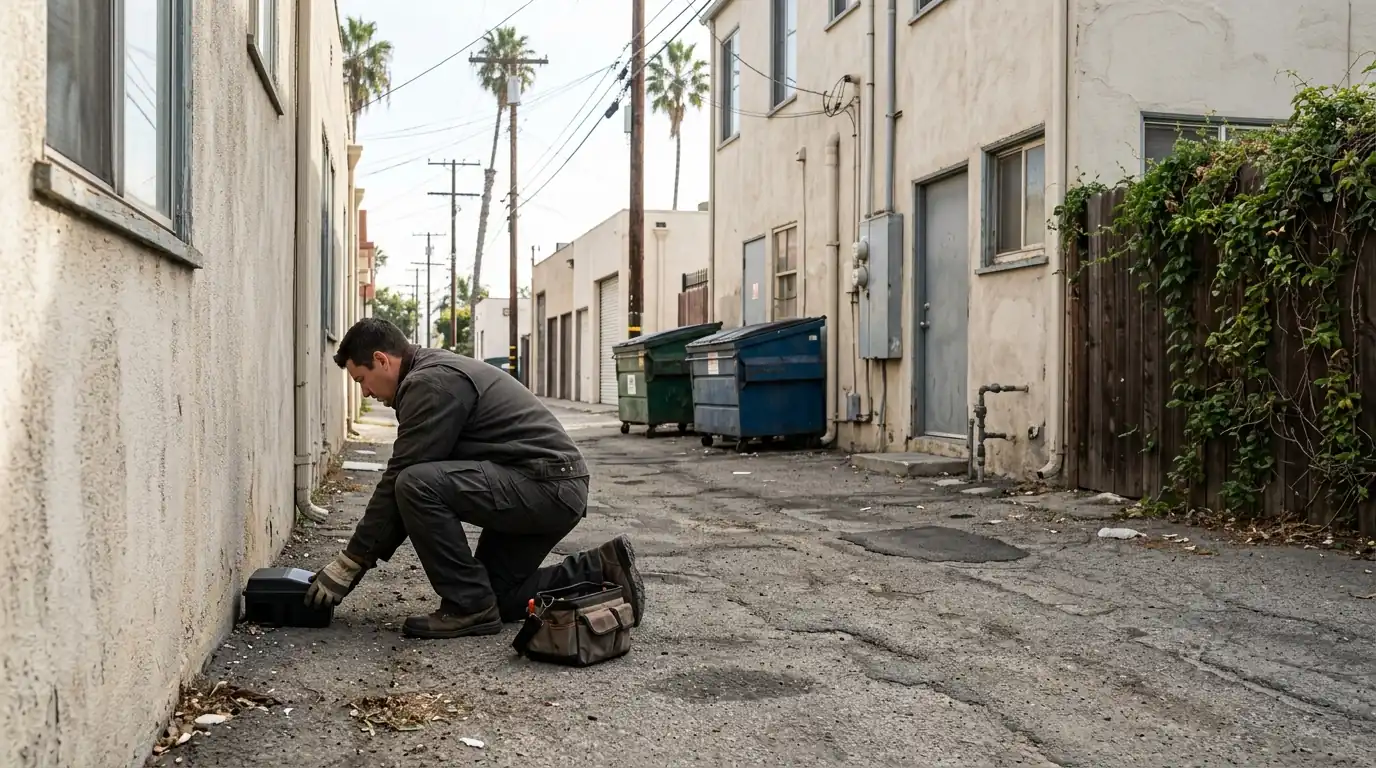
Alleys run behind most Zaferia blocks, lined with garages, fences and trash bins. Roof rats climb the fences, wires and overgrown vines; Norway rats burrow under garage slabs and enter through gaps at the base of walls. In commercial spaces we install exterior bait stations where appropriate, set traps indoors and seal door sweeps, utility penetrations and roof vents. In homes we focus on the attic and the crawlspace. Removing ivy from fences and keeping firewood or lumber off the ground near the house cuts down nesting spots.
Termite work on the side-street bungalows
The houses between Anaheim and Seventh Street are mostly modest bungalows from the 1920s and later, many with wood siding, wooden porches and a crawlspace. Drywood termites show up as pellets beneath window frames, eaves and door casings; subterranean termites leave mud tubes on foundation walls and piers. Because lots are small and houses sit close together, tenting needs careful planning for tarps, gas shutoff and neighbors. When the infestation is limited, local treatment of the affected boards is often the more practical choice, and we explain the tradeoff on the report.
What we treat most in Zaferia
German cockroaches
Crowding behind stoves and refrigerators in small apartments and restaurant kitchens, and spreading through shared plumbing walls between units.
American cockroaches
Large reddish roaches coming up from alley drains and sewers on warm nights, wandering into ground floor units and storefronts.
Norway rats
Burrowing beside garage slabs and trash enclosures along alleys, then entering buildings through gaps at the base of walls.
Drywood termites
Pellets under window frames, eaves and porch trim on the 1920s bungalows on side streets, with swarms in late summer.
House flies
Breeding in dumpster residue behind restaurants and markets, worst in hot weather when collection is a day late.