Quick answer
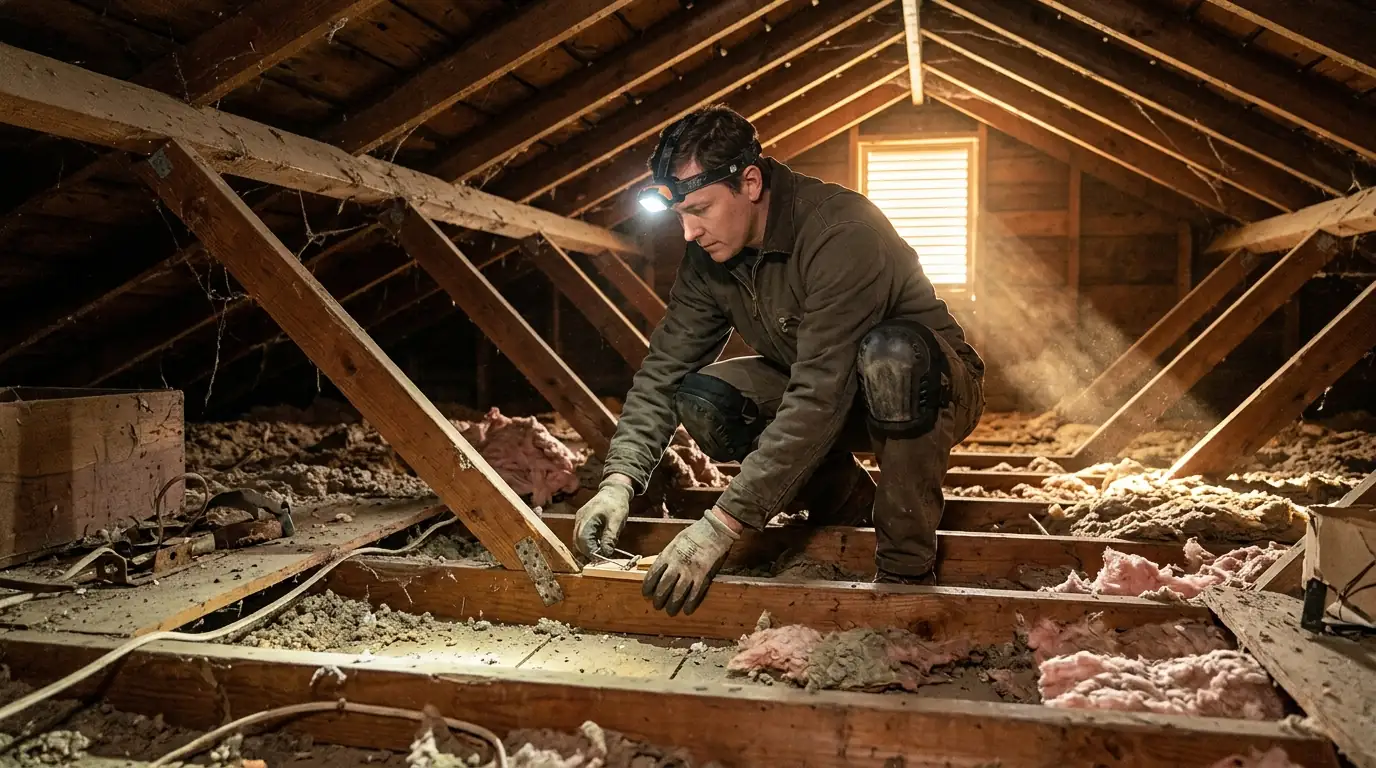
Rodent control starts with knowing which animal you have: roof rats in attics and trees, Norway rats in alleys and under slabs, or house mice in walls and cabinets. We inspect for droppings, rub marks and runways, trap the animals already inside the structure, place tamper-resistant exterior bait stations where appropriate, and plan the entry sealing so new rodents cannot replace them. Trapping without sealing only buys time.
Long Beach has all three of the common urban rodents. Roof rats are slender, agile climbers that live in palm trees, ivy, bougainvillea and fruit trees and travel along fences and power lines into attics. Norway rats are heavier burrowers that favor alleys, sewers, foundations and the industrial areas near the harbor. House mice are small enough to slip through a gap the width of a pencil and settle into kitchen walls, cabinet bases and garage storage.
Each one behaves differently, so the plan changes with the species. A roof rat problem centers on the attic and the trees touching the roof; a Norway rat problem centers on burrows, ground-level gaps and garbage. We begin with a full inspection inside and out, then remove the animals already living in the structure before the openings are closed. Sealing a house with rats still inside traps them in the walls, which creates a worse problem.
Clues that tell us which rodent is living with you
Scurrying overhead at night
Running and scratching in the ceiling or attic after dark, often just after sunset and before dawn, is the classic sign of roof rats.
Droppings and their shape
Roof rat droppings are about half an inch with pointed ends; Norway rat droppings are larger and blunt; mouse droppings are small, like dark rice grains.
Gnawed fruit and nuts
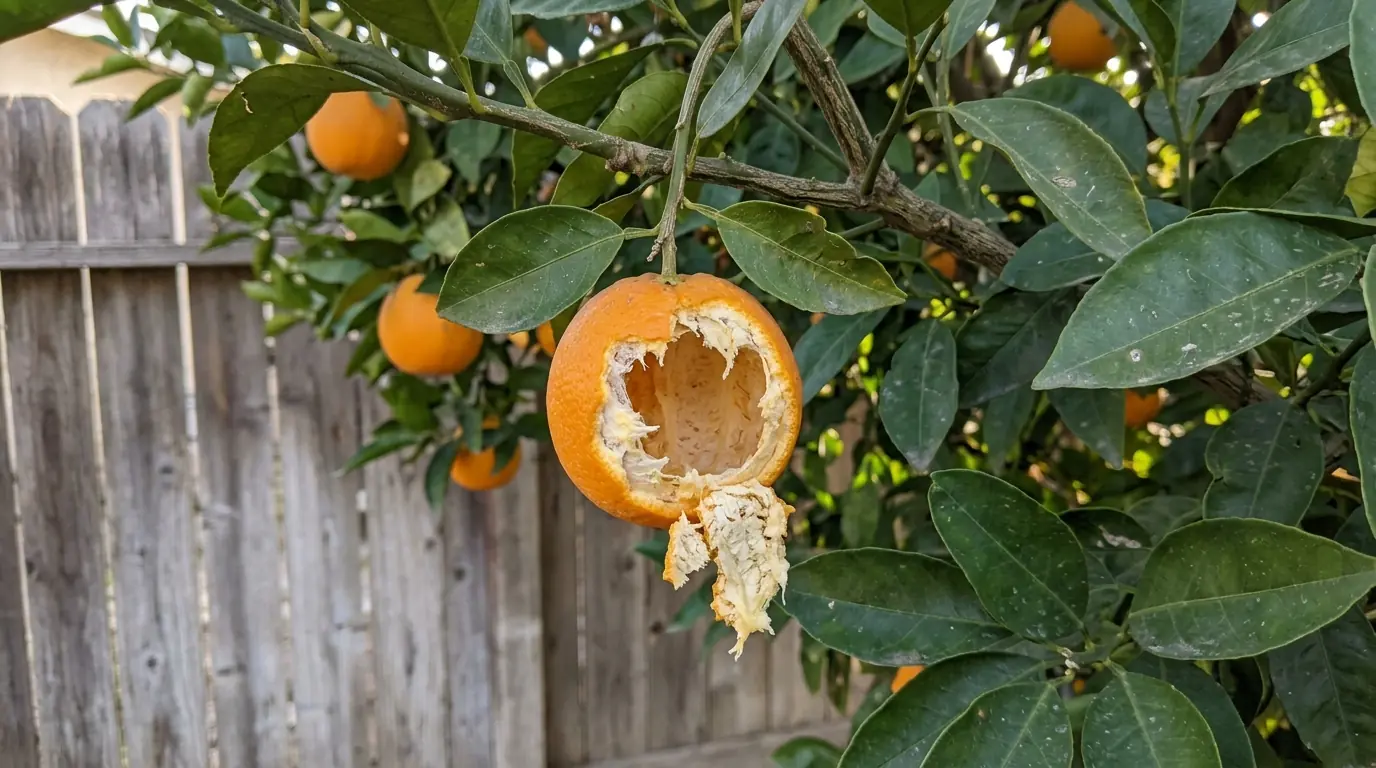
Hollowed oranges still hanging on the tree, chewed avocados or a pile of shells under a palm point to roof rats feeding in the yard.
Greasy rub marks
Dark smudges along walls, beams, pipe openings and the edges of attic access holes show repeated travel routes.
Burrows along foundations
Holes about two to four inches across under slabs, beside walkways or under shrubs, often with smooth worn edges, signal Norway rats.
Chewed wiring or insulation
Shredded insulation, tunnels through attic batts and gnawed wire coatings are both damage and nesting material, and can create fire risk.
Pets fixated on a wall
Dogs and cats staring at, pawing or sniffing one stretch of wall or cabinet often hear rodents moving in the void.
Our sequence for getting rats and mice out
Inspect inside and out
We check the attic, crawlspace, garage, kitchen and exterior, noting droppings, runways, nests, rub marks, entry gaps, tree branches touching the roof and food sources such as fruit trees and pet food.
Identify species and entries
Droppings, burrows and damage tell us the species. We mark every likely entry point so trapping and sealing are planned around the actual travel routes.
Trap animals inside the structure
Snap traps placed along runways in the attic, garage and under cabinets remove the rodents already inside. We avoid placing poison bait indoors, where rodents can die in walls.
Place exterior bait stations
Where appropriate, locked tamper-resistant stations go along fences and foundations to reduce outdoor pressure, positioned away from children and pets and following label rules.
Check and reset traps
We return on a schedule to remove catches, reset traps and judge activity. Most attic jobs need several checks over a few weeks before captures stop.
Seal once activity stops
When trapping shows no new animals, we close the entry points so the structure is protected. That sealing work is covered in our exclusion service.
Clean up contamination
Droppings and nest material are removed with proper precautions and treated with a disinfectant, and heavily soiled insulation can be replaced.
Why we trap inside instead of putting poison in the attic
Rodenticide placed indoors seems like an easy fix, but it creates problems we try hard to avoid. A poisoned rat does not die on the spot. It often crawls into a wall void, under insulation or into a soffit before dying, and the odor that follows can last for weeks in warm weather. Dead rodents also draw blow flies and carpet beetles.
Traps give certainty. We know how many animals have been removed, where they were traveling and when activity stops. That tells us when it is safe to seal the openings without trapping a live animal inside.
Outdoors, bait is used only in locked, anchored stations placed where children and pets cannot reach the bait. California restricts many second-generation anticoagulant rodenticides because of their harm to owls, hawks, bobcats and other wildlife, so our station programs follow current rules and focus on reducing pressure around the structure.
Health risks of rodent droppings and nests
Rats and mice contaminate everything they travel across with urine, droppings and hair. They can carry bacteria such as salmonella and leptospira, and their fleas and mites can move onto people and pets once the rodents are removed. Dried droppings in attics break apart and become dust when disturbed.
Never sweep or vacuum droppings dry. Wet them with a disinfectant first, wear gloves, and pick them up with paper towels. For a large attic accumulation, professional removal is safer.
- Spray droppings and nest material with disinfectant and let it sit before cleanup
- Wear disposable gloves and a well-fitting mask for any cleanup
- Bag waste tightly and place it in an outdoor trash bin
- Wash hands thoroughly and launder any clothing worn in the attic
Rodent removal pricing for Long Beach properties
Most rodent jobs are priced as an initial visit plus a series of trap checks. Cost rises with the size of the attic, the number of entries and how established the population is. Exclusion sealing and attic cleanup are priced separately once we know the extent.
| Typical job | Typical range |
|---|---|
| Inspection and initial trap setup | $185 to $345 per visitFull inspection, species identification and trap placement in attic, garage and kitchen. |
| Follow-up trap checks | $85 to $165 per visitRemoving catches, resetting and moving traps, usually two to four visits. |
| Exterior bait station program | $45 to $95 per monthTamper-resistant stations serviced monthly along fences and foundations. |
| Attic droppings cleanup | $385 to $1,240 per unitRemoving droppings and nest material and disinfecting, priced per attic by size and condition. |
What moves the price
- Species involved, since roof rats in an attic need different work than mice in a kitchen
- Attic size, height and how easy it is to move around in it
- How many active entry points and travel routes we find
- Fruit trees, palms, ivy or pet food that keep drawing rodents to the property
- Whether droppings and soiled insulation need cleanup
- Number of follow-up visits needed before captures stop
These are typical ranges, not a quote, and the inspection sets the price for your property. Compare more jobs in the treatment price guide.
Yard changes that make the biggest difference
Rodents stay where food and shelter are easy. Removing those keeps pressure off your house and makes trapping finish faster. Pick ripe fruit promptly and clear fallen citrus and avocados daily during the season. Trim tree branches and vines at least a few feet back from the roofline so roof rats cannot jump across.
Thin dense ivy on fences and walls, which roof rats use as both highway and nesting cover. Store pet food and birdseed in metal cans, feed pets indoors, and keep trash bins closed with lids that fit. Stack firewood and lumber off the ground and away from the house. These steps do not replace trapping and sealing, but they decide whether the next family of rats moves in.
Roof rats, palms and alleys across Long Beach
Long Beach is roof rat territory. Mexican fan palms and queen palms with uncut fronds, citrus and avocado trees in backyards, and blankets of ivy on fences give roof rats food and cover close to almost every home. In Bixby Knolls, Los Cerritos and California Heights, mature trees overhanging older roofs are a constant route into attics, especially through gaps at roof returns and around the original vents on 1920s homes.
Closer to the water and downtown, Norway rats are more common. Alleys behind homes in Belmont Shore and Alamitos Beach, restaurant dumpsters along the Promenade and the industrial edges near the port and the LA River support large populations that burrow under slabs, garages and detached laundry rooms. In North Long Beach and Wrigley, we see both species, plus house mice in older apartment buildings. Activity often climbs in the fall, when cooler nights push rodents indoors and fruit trees are full.
Where we do rodent control
- Downtown Long Beach 90802
- North Long Beach 90805
- Belmont Shore 90803
- Bixby Knolls 90807
- California Heights 90807
- Los Altos 90815
- Naples 90803
- Rose Park 90804
- Wrigley 90806
- Signal Hill 90755
- Lakewood 90712
- Downey 90240
- Torrance 90503
- Carson 90745
- Compton 90220
- Norwalk 90650
- Bellflower 90706
- Garden Grove 92840
- Westminster 92683
- Seal Beach 90740
- Cerritos 90703
- Whittier 90601
Not listed? We cover all of Long Beach and the nearby cities; call and we will confirm your street.
Rodent Control questions
How do I know if I have roof rats or Norway rats?
Roof rats are slender with a tail longer than their body, climb well and are usually found in attics, trees and upper walls. Norway rats are stockier with a shorter tail, burrow in soil and are found at ground level, in crawlspaces and under slabs. Droppings help too: roof rat droppings are pointed, while Norway rat droppings are larger and blunt.
How long does it take to get rats out of an attic?
Most attic jobs take two to four weeks of trapping before captures stop, depending on how many animals are present and how quickly entries are found. We seal the structure only after activity ends. A large or long-running population can take longer, and fruit trees or ivy nearby can keep new rats arriving.
Can rats get into a house through the toilet?
It is possible but uncommon. Norway rats live in sewers and can swim up drain lines, which is more likely in older buildings with damaged sewer connections. Far more often, rats enter through gaps in the roof, foundation vents, garage doors, utility penetrations and openings around pipes.
Why does the attic smell bad after rodent control?
A strong odor usually means a rodent died somewhere inside the structure, often after eating poison and crawling into a void. Odor can also come from heavy urine and droppings in insulation. Locating and removing the carcass, cleaning the area and treating the odor is the fix, and trapping instead of indoor baiting prevents it.
Are ultrasonic rodent repellers worth buying?
Research has not shown them to be reliable. Rodents may avoid the sound briefly but quickly get used to it, and the sound does not pass through walls or insulation. Removing the animals with traps, cutting off food and sealing entry points is what actually solves a rodent problem.
Related services
Rodent Exclusion
Rodent exclusion is the physical work of closing every opening a rat or mouse can use: roof returns, attic and foundation vents.
DetailsGeneral Pest Control
General pest control is a recurring service, usually every other month or quarterly, that treats the outside of the home to stop.
DetailsFlea Control
Lasting flea control in Long Beach means treating three places at the same time: the pet (through your veterinarian), the indoor areas.
DetailsPantry Pest Control
Pantry pests are solved by finding and discarding every infested food package first, then treating the cracks and shelf joints where larvae.
DetailsCommercial Pest Control
Commercial pest control in Long Beach is a scheduled program built around the site: monthly or twice-monthly service for restaurants, rodent stations.
Details