Quick answer
In a Los Altos ranch home, subterranean termites usually enter through cracks in the slab, expansion joints, plumbing penetrations or where a patio or addition meets the original floor. Drywood termites live in the attic framing and the exposed eaves. We treat subterranean colonies by drilling and injecting termiticide through the slab and trenching outside, and handle drywood with spot treatment or tenting. Argentine ants are the most frequent non-termite call here.
How termites get through a concrete floor
People are often surprised to find subterranean termites in a house on a slab. Concrete does not stop them; gaps do. In these 1950s tracts the common paths are the cold joint where a family room addition meets the original slab, shrinkage cracks under carpet, openings around bathtub drains and the line where a patio slab abuts the house. Termites build tubes through these gaps and emerge into baseboards, door jambs and the bottom plate of interior walls.
Signs inside include blistered paint at baseboards, mud lines on the bottom of drywall, and swarms in spring coming out of a floor crack or around a tub. Outside, we look for tubes on the stem wall below the stucco and for wood siding or trim that sits below grade.
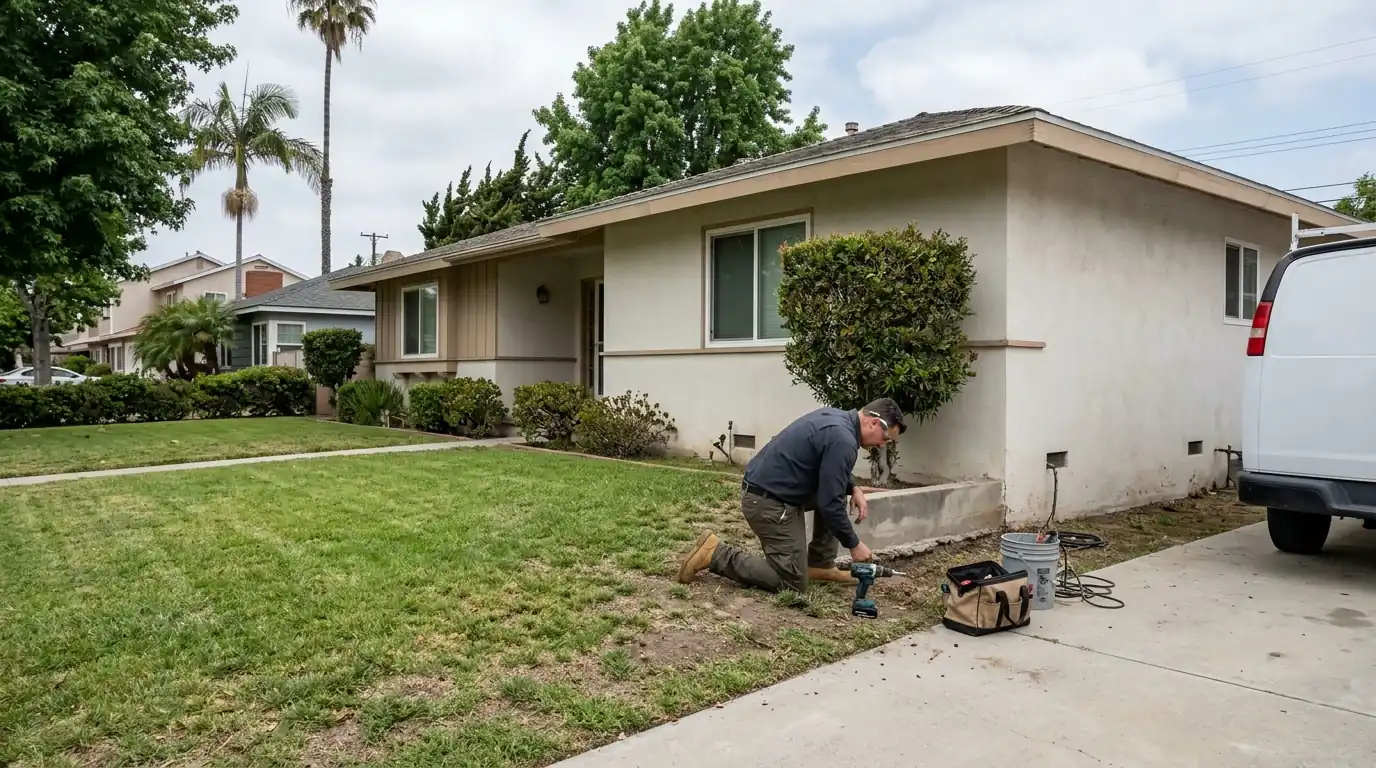
Slab drilling and exterior trenching
Treatment for a slab home typically combines two parts. Outside, we trench and rod liquid termiticide into the soil along the foundation. Inside or through patios and garage floors, we drill small holes at spaced intervals near the affected wall or crack, inject termiticide beneath the concrete, then patch the holes. In finished rooms we plan drill points to hit carpet edges, closets or tile grout lines where we can, and we discuss flooring before starting.
When owners prefer to avoid drilling, bait stations around the exterior offer a slower path. For the attic, drywood termites are handled separately. Ranch homes here have low-pitched roofs and shallow attics, so access can be tight, and when activity spreads through the eaves and rafters, fumigation is usually the cleaner answer.
Argentine ants in a neighborhood of lawns
Lawns, shade trees and sprinkler systems give Argentine ants ideal outdoor conditions, and the ants push indoors when the weather swings: a hot week in summer or the first heavy rain of winter. Trails run along sidewalks, foundation edges and under stucco weep screeds into kitchens and bathrooms. Spraying the trail you see inside does little, because colonies are huge and connected. We treat outside, along foundations and at entry points, with non-repellent products and baits the workers carry back, and we point out moisture sources such as dripping irrigation that keep the colonies strong.
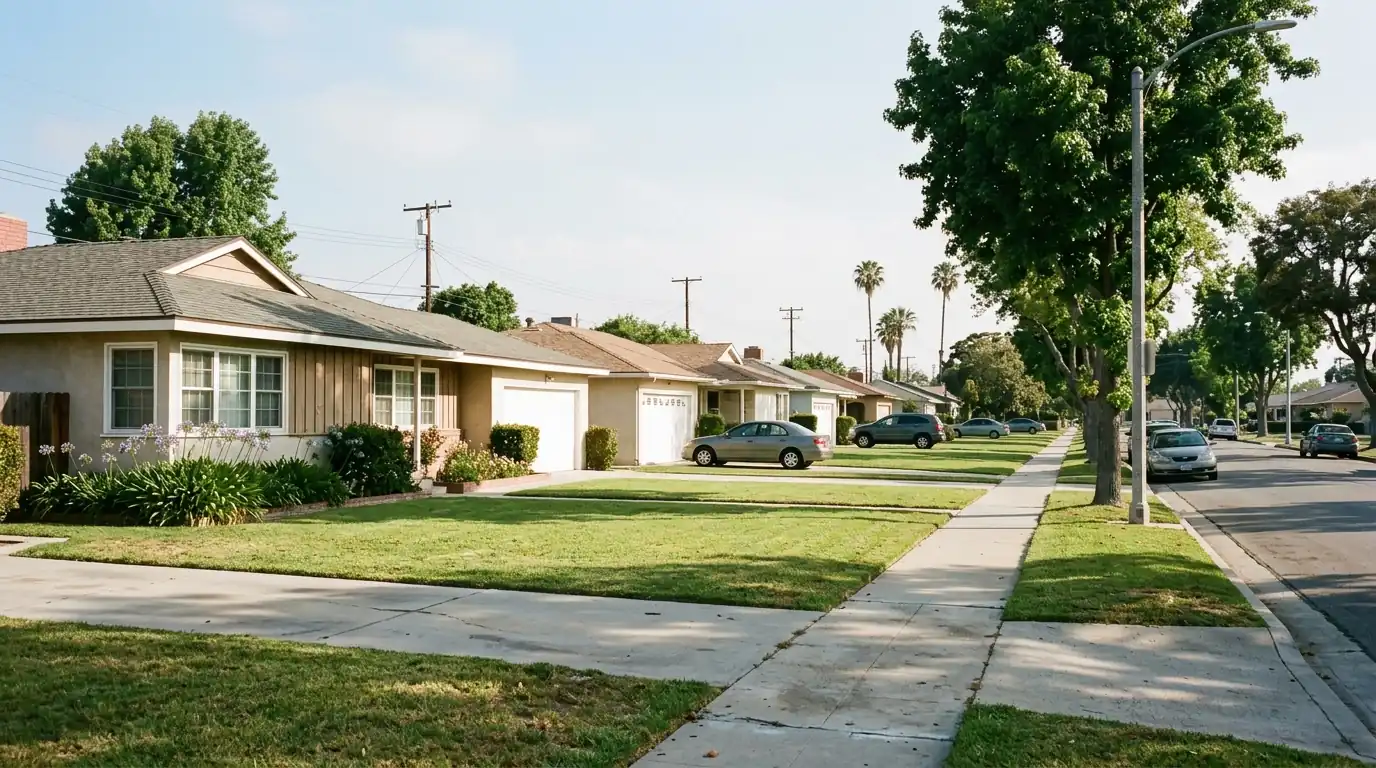
Near campus and the parks
Homes close to Cal State Long Beach and the parks around the neighborhood see gophers in lawns and occasional roof rats in mature trees. Rental homes near campus turn over often, and a termite report at sale or a check between tenants catches problems before they spread. Streets are wide and parking is easy, which helps when we tent or drill.
What we treat most in Los Altos
Western subterranean termites
Enter 1950s slab homes through expansion joints, addition seams, tub drains and patio slab edges, then show up in baseboards.
Drywood termites
Colonize shallow attic framing and exposed eave rafters on single-story ranch homes.
Argentine ants
Run trails from lawns and planter beds into kitchens during heat waves and after the first winter rain.
Gophers
Mound up lawns and parkway strips, especially on blocks near open green space.
Pantry moths
Indian meal moths in flour, rice and pet food, common in homes with stocked pantries.