Quick answer
Cerritos is about thirteen miles from our Long Beach office and close to our Downey headquarters. We inspect and treat its 1970s tract homes for drywood termites in roof framing and trim, subterranean termites under slabs and along block walls, and handle ants, roaches, spiders and rodents. Many owners pair a treatment with an ongoing protection plan.
From dairy pasture to master-planned blocks
The city was incorporated in 1956 as Dairy Valley, a name that told you what the land was used for. Within about fifteen years most of the dairies had moved east, the city renamed itself Cerritos, and builders filled the old pastures with planned neighborhoods. A lot of the housing went up in the late 1960s and 1970s, and much of it is larger than the postwar tracts in the neighboring cities: two stories, four bedrooms, attached three-car garages on some streets, and block walls between every yard.
Those bigger houses have bigger roofs. A two-story Cerritos home can have a sprawling attic over the second floor, a separate low attic over the garage, and long runs of wood fascia and bargeboard. Drywood termites can establish in more than one of those spaces before anyone notices.
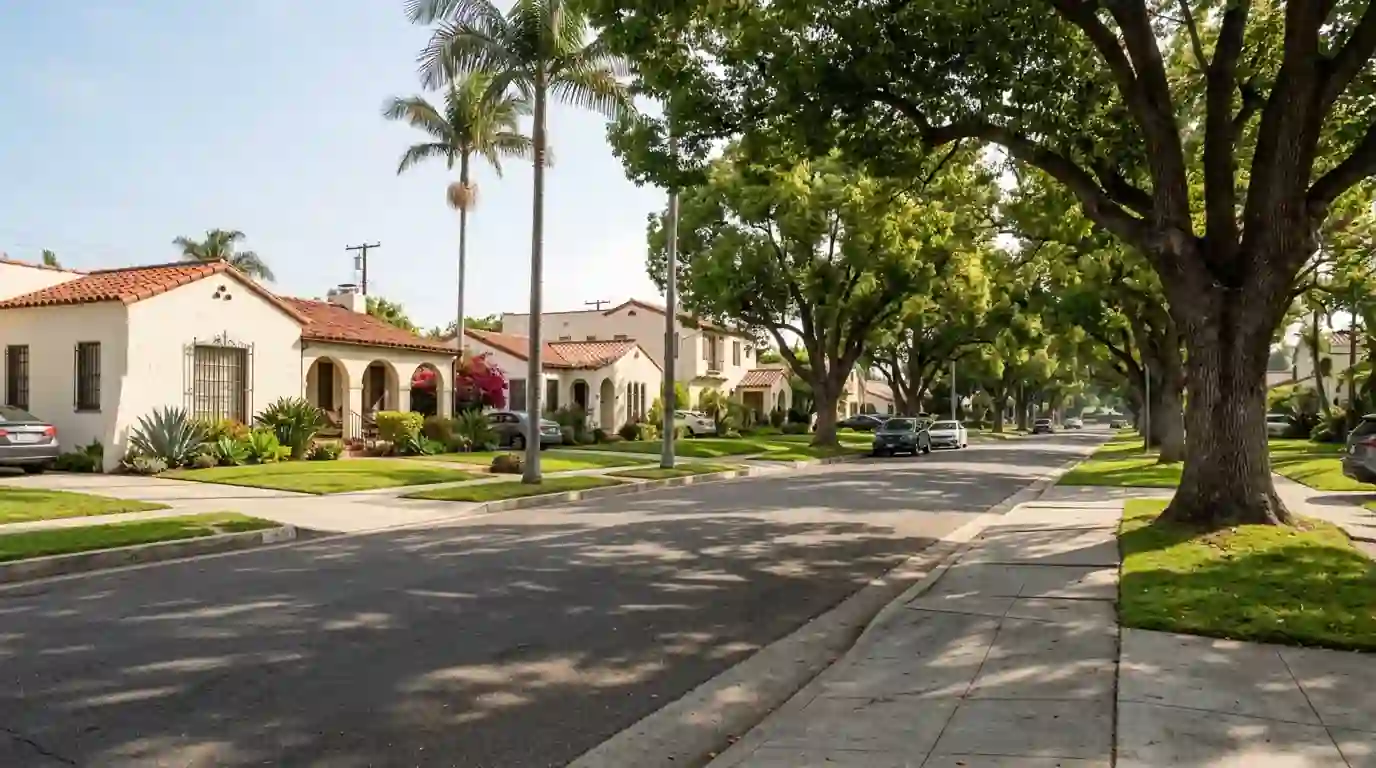
What a two-story inspection looks like
On a typical Cerritos visit we start with the exterior from the ground and a ladder, checking the fascia, the trim around upstairs windows and the wood at the roof line over the garage. Then we go up into each attic space we can reach, probing rafters and ceiling joists and looking for the fine six-sided pellets drywood termites leave. In the garage we check the sill plate, the base of the walls and the door framing.
Second-story eaves are hard for owners to see, so pellet piles on an upstairs window sill or on the roof of the garage below are often the first sign. We note every finding with its location so the report makes sense when you compare treatment options.
Why protection plans come up often here
Many Cerritos owners have already tented once, sometimes years ago when they bought the house. Fumigation kills the colonies present but leaves nothing behind to stop new swarmers, and the next late-summer flight can start a fresh colony in the same fascia. A protection plan gives the house periodic inspections and covers spot treatment of new drywood activity when it is caught early.
On the subterranean side, block walls and concrete patios that run right up to the slab create long, shaded strips of moist soil. A monitored bait system around the perimeter, or a liquid treatment at the foundation, keeps an eye on that ground between inspections. Plan pricing depends on the size of the home and what is covered, and we explain those terms before you sign up.
Parks, shopping and everyday pests
Cerritos has a lot of well-watered public land, including Cerritos Regional Park and greenbelts between neighborhoods, plus the busy retail around Cerritos Towne Center and the auto square. Lawn edges near parks bring gophers and yellowjackets into yards, while busy commercial kitchens nearby keep German cockroaches in the mix for restaurants and nearby apartments.
At home, Argentine ants are the most common summer call, followed by spiders in garages and roof rats in palm-lined streets. Owners often bundle general pest service with termite plans so one visit covers both.
What we treat most in Cerritos
Drywood termites in second-story eaves
Colonies in upper fascia, bargeboard and attic framing that owners cannot easily see from the yard, often found through pellets on sills.
Subterranean termites along block walls
Moist, shaded soil between block walls, patios and the slab gives colonies a hidden path to the sill plate.
Argentine ants
Summer trails into kitchens and bathrooms from irrigated yards and park edges, often returning after the first rain.
Gophers
Push mounds in lawns on streets near Cerritos Regional Park and the neighborhood greenbelts.
German cockroaches
Steady in restaurant kitchens near the Towne Center and in nearby apartment buildings with shared plumbing.